Pinned Tweet
same 1,000 agents. Opus 5.5 stalled at 26%. Fable 5.2 finished in 30 hours.
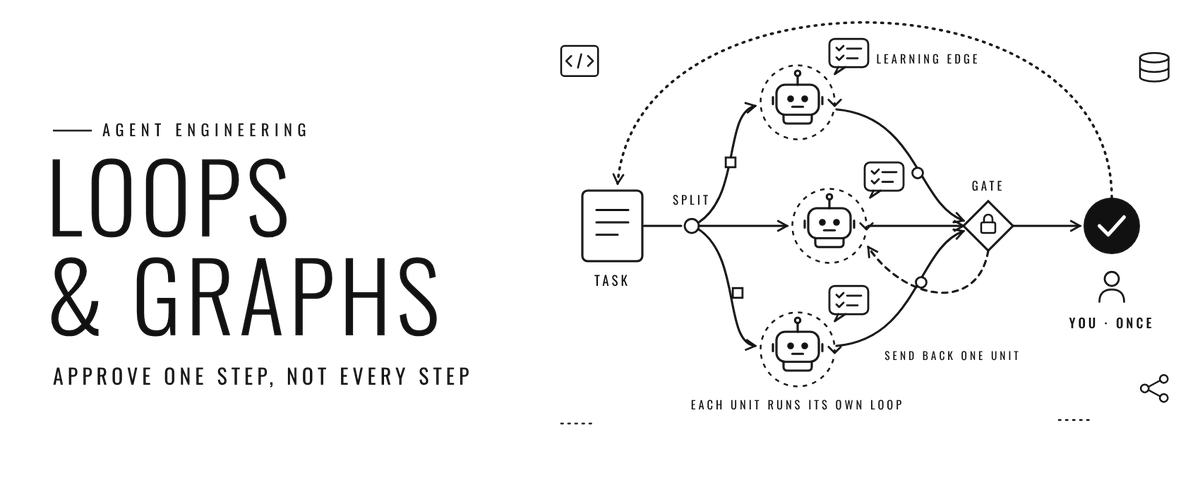
I went through every guide Anthropic shipped with it plus 4 research papers, and turned it all into one guide. 6 layers, 8 visuals, a prompt for every layer.

this is an actual f*cking goldmine
Fable 5.2 is insane at running a whole team in Claude Code while you sleep...
you give it one job before bed. the boring kind you keep putting off:
> fix the 40 tests that have been red for a month
> move your app from JavaScript to TypeScript
> add login, dark mode or payments to your side project
> clean up the repo nobody wants to touch
paste this prompt, answer its questions for 5 minutes, go to sleep.
it splits the job into parts and hands them to 12 agents. one plans, some write code, one runs the tests, one breaks the code on purpose to prove the tests actually catch bugs, one remembers every failure so nothing gets tried twice.
it can't deploy, can't touch main, can't spend more than the budget you set.
you wake up to one file: what's done (with proof), what's blocked on you, and what it found along the way.
and every night it writes down what to do differently, so the next run starts smarter.
like it before this thread gets buried.
then read the full guide below ↓

9
13
348
Trundur retweeted
holy f*ck. paste this into Claude Code before you spin up another subagent.
your agents stop passing broken work to each other. one check between every step, one agent per file, and it stops and asks you when the same thing fails twice.
Google and MIT tested 180 agent setups. with nobody checking, errors grew 17.2x. with one check between steps, 4.4x.
so I turned it into one copy-paste prompt for Fable 5.2. drop in your task and your test command, that's it.
the crazy part is on step-by-step work, adding more agents made every setup worse, by 39% to 70%.
99% of people run 20 subagents in Claude Code and never put a single check between them.
bookmark it before this thread gets buried.
then read the full guide below ↓


holy f*ck. paste this into Claude Code before you spin up another subagent.
your agents stop passing broken work to each other. one check between every step, one agent per file, and it stops and asks you when the same thing fails twice.
Google and MIT tested 180 agent setups. with nobody checking, errors grew 17.2x. with one check between steps, 4.4x.
so I turned it into one copy-paste prompt for Fable 5.2. drop in your task and your test command, that's it.
the crazy part is on step-by-step work, adding more agents made every setup worse, by 39% to 70%.
99% of people run 20 subagents in Claude Code and never put a single check between them.
bookmark it before this thread gets buried.
then read the full guide below ↓
holy f*ck. one agent loop burned 8 million tokens in 48 hours.
researchers checked 217 real agent loops and found the trap everyone running Claude Code overnight walks into: a loop with no reason to stop.
one of them burned 8 million tokens in 48 hours while nobody was watching.
and Anthropic's own docs say a stop rule in your prompt is only a soft cap. the hard caps are two flags almost nobody uses.
so I turned the fix into one prompt for Fable 5.2 every cap, every rule, the full copy-paste template, all of it spelled out.
99% of people start an agent before bed and wake up to the bill.
bookmark it before this thread gets buried.
then read the full guide below ↓

same 1,000 agents. Opus 5.5 stalled at 26%. Fable 5.2 finished in 30 hours.
I went through every guide Anthropic shipped with it plus 4 research papers, and turned it all into one guide. 6 layers, 8 visuals, a prompt for every layer.
4
15
190
Trundur retweeted
same 1,000 agents. Opus 5.5 stalled at 26%. Fable 5.2 finished in 30 hours.
I went through every guide Anthropic shipped with it plus 4 research papers, and turned it all into one guide. 6 layers, 8 visuals, a prompt for every layer.
Trundur retweeted
this Anthropic Fable 5.2 guide f*cking insane
they tested single sentences in the prompt and measured what each one changed.
they gave Fable an advisor. with no line saying when to ask, it was consulted 0 times out of 198.
a "never" rule with the exception in the same line got followed 9 times in 10. split into two lines: 1 in 10.
same model. one sentence apart.
so I put every line that moved the numbers into one copy-paste CLAUDE.md for Fable 5.2. every line, every number, all of it spelled out.
the crazy part is your old prompts make it worse. one stale "never retry" note cut retries to about 4 in 10.
99% of people will switch to Fable 5.2 and keep the CLAUDE.md they wrote for older models.
bookmark it before this thread gets buried.
then read the full article below ↓


this Anthropic Fable 5.2 guide f*cking insane
they tested single sentences in the prompt and measured what each one changed.
they gave Fable an advisor. with no line saying when to ask, it was consulted 0 times out of 198.
a "never" rule with the exception in the same line got followed 9 times in 10. split into two lines: 1 in 10.
same model. one sentence apart.
so I put every line that moved the numbers into one copy-paste CLAUDE.md for Fable 5.2. every line, every number, all of it spelled out.
the crazy part is your old prompts make it worse. one stale "never retry" note cut retries to about 4 in 10.
99% of people will switch to Fable 5.2 and keep the CLAUDE.md they wrote for older models.
bookmark it before this thread gets buried.
then read the full article below ↓
Trundur retweeted
this loop engineering research f*cking insane
they searched 36,487 repos for agents running in loops and named the trap everyone running Fable 5.2 is about to walk into: verifier theater.
a check that approves the work without really checking it. the loop goes green and nothing got verified.
so I turned the fix into one prompt for Fable 5.2. every step, every formula, the full copy-paste template, all of it spelled out.
the crazy part is only 76 of the 217 loops they found had a verifier at all. the rest just trusted the model.
99% of people see a green check and never ask what it actually checked.
bookmark it before this thread gets buried.
then read the full article below ↓


this loop engineering research f*cking insane
they searched 36,487 repos for agents running in loops and named the trap everyone running Fable 5.2 is about to walk into: verifier theater.
a check that approves the work without really checking it. the loop goes green and nothing got verified.
so I turned the fix into one prompt for Fable 5.2. every step, every formula, the full copy-paste template, all of it spelled out.
the crazy part is only 76 of the 217 loops they found had a verifier at all. the rest just trusted the model.
99% of people see a green check and never ask what it actually checked.
bookmark it before this thread gets buried.
then read the full article below ↓
Trundur retweeted
holy f*ck. same 1,000-agent setup. Opus 5.5 stalled at 26%. Fable 5.2 finished in 30 hours.
that's Anthropic's own Fermat's Last Theorem run, fully formalized in Lean. their first attempt took 11 days.
same harness, same agents. the only thing that changed was the model.
and you don't need Fable 5.2 in every seat. you need it in one: planning, routing, checking. Haiku, Sonnet and Opus do the typing.
I turned that into one copy-paste prompt for Claude Code. every step, every formula, all of it spelled out.
the crazy part is Fable 5.2 at High already scores about level with Opus 5.5 at Max on FrontierCode 2.0. for roughly half the cost per task.
99% of people will just swap the model ID and run Fable on grep.
bookmark it before this thread gets buried.
then read the full article below ↓

holy f*ck. same 1,000-agent setup. Opus 5.5 stalled at 26%. Fable 5.2 finished in 30 hours.
that's Anthropic's own Fermat's Last Theorem run, fully formalized in Lean. their first attempt took 11 days.
same harness, same agents. the only thing that changed was the model.
and you don't need Fable 5.2 in every seat. you need it in one: planning, routing, checking. Haiku, Sonnet and Opus do the typing.
I turned that into one copy-paste prompt for Claude Code. every step, every formula, all of it spelled out.
the crazy part is Fable 5.2 at High already scores about level with Opus 5.5 at Max on FrontierCode 2.0. for roughly half the cost per task.
99% of people will just swap the model ID and run Fable on grep.
bookmark it before this thread gets buried.
then read the full article below ↓
Trundur retweeted
this loop engineering research f*cking insane
researchers searched 36,487 repos for agents running in autonomous loops. they confirmed 217. that's 0.59%.
and most of those were a trigger and not much else. only 76 had a verifier. only 35 kept any memory between runs. only 10 tracked what it cost.
so I turned the missing parts into one prompt for Opus 5.5. every step, every formula, the full copy-paste template, all of it spelled out.
the crazy part is the whole timeline posted "design loops, not prompts" in June. almost nobody built the part that decides when the loop is done.
99% of people still let the model decide it's finished and call it a loop.
bookmark it before this thread gets buried.
then read the full article below ↓


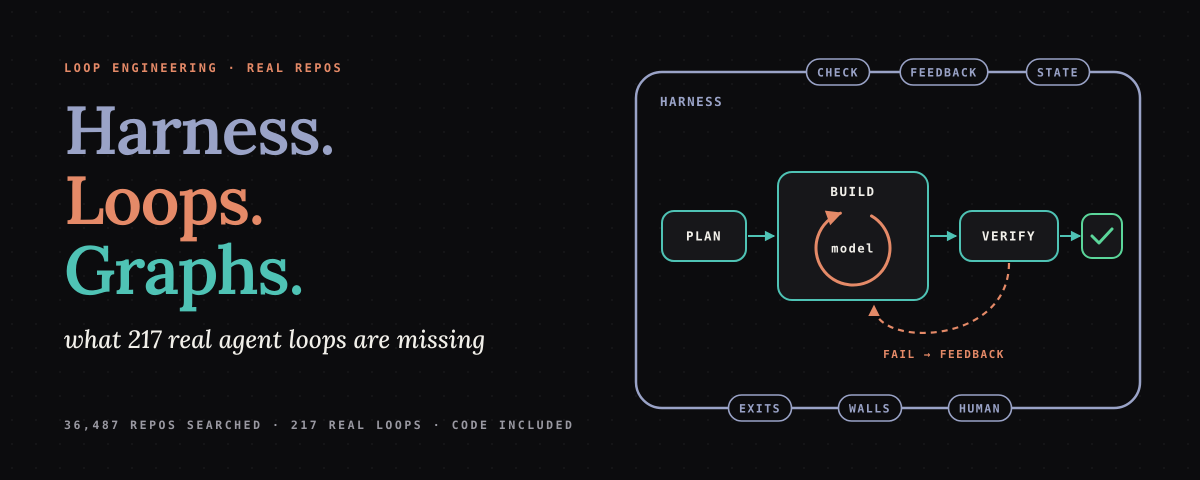
this loop engineering research f*cking insane
researchers searched 36,487 repos for agents running in autonomous loops. they confirmed 217. that's 0.59%.
and most of those were a trigger and not much else. only 76 had a verifier. only 35 kept any memory between runs. only 10 tracked what it cost.
so I turned the missing parts into one prompt for Opus 5.5. every step, every formula, the full copy-paste template, all of it spelled out.
the crazy part is the whole timeline posted "design loops, not prompts" in June. almost nobody built the part that decides when the loop is done.
99% of people still let the model decide it's finished and call it a loop.
bookmark it before this thread gets buried.
then read the full article below ↓
Trundur retweeted
holy f*ck. Jensen Huang gives feedback to 60 people at once. you correct the same agent mistake every single day.
no 1:1s. every piece of feedback goes in front of everyone, so one mistake teaches the whole team.
that's exactly how you run agents. the article below makes the case: managing agents is managing a team, whether you wanted the job or not.
> give every agent a check it can run, not "looks done"
> tell it what it can't see in the repo, skip what it can
> corrected something twice? it goes in CLAUDE.md for every session
> two failed corrections? kill the session, rewrite the prompt
> review the diff like you'll get paged for it
I turned it into one prompt for Opus 5.5. Jensen-style: every agent gets the same context, every lesson becomes a rule.
Send it to Opus 5.5, and thank me later. Then read the article below ↓


holy f*ck. Jensen Huang gives feedback to 60 people at once. you correct the same agent mistake every single day.
no 1:1s. every piece of feedback goes in front of everyone, so one mistake teaches the whole team.
that's exactly how you run agents. the article below makes the case: managing agents is managing a team, whether you wanted the job or not.
> give every agent a check it can run, not "looks done"
> tell it what it can't see in the repo, skip what it can
> corrected something twice? it goes in CLAUDE.md for every session
> two failed corrections? kill the session, rewrite the prompt
> review the diff like you'll get paged for it
I turned it into one prompt for Opus 5.5. Jensen-style: every agent gets the same context, every lesson becomes a rule.
Send it to Opus 5.5, and thank me later. Then read the article below ↓
Trundur retweeted

holy f*ck. Snoop Dogg says a billion Spotify streams paid him under $45,000.
a billion. he asked his publisher to break it down, and that was the number. later he called it "robbery in broad daylight."
watch his face in the clip when he says it.
Spotify says a billion streams pays rights holders millions. so the real question is who the rights holders are. usually it's not the guy who made the song.
now look at Toni Braxton. 15 million albums. two Grammys in one night. bankrupt by 1998.
the label fronted the studio, the videos, the wardrobe, the travel. then every dollar of it came back out of her royalties before she saw a cent. her "debt" was the bill for getting the music out.
two of the biggest names in music. both found out the hard way that the hit and the money go to different people.
that bill looks very different now:
> a home setup and AI mastering instead of months of booked studio time
> AI video tools instead of a label-funded music video
> selling straight to fans instead of waiting on a royalty statement
> seeing every sale yourself, which is exactly what Snoop asks for in the clip
none of this makes a hit for you. it just means the artist no longer has to borrow the machine from the people who own the masters.
if you could cut out the label tomorrow, what would you still pay someone else to do?

Toni Braxton's "Un-Break My Heart" spent 11 weeks at No. 1. Her records brought in a reported $170 million in sales. The check from her first record deal was $1,972. Then she filed for BANKRUPTCY, and Oprah grilled her about her Gucci flatware.
In the interview below, Braxton tells ABC's 20/20 where the money actually went.
By 1997 she was one of the biggest voices in the world. Her album Secrets sold more than 15 million copies worldwide, and she took home two Grammys in a single night.
But the label had fronted almost everything: studio time, videos, wardrobe, travel. Under her contract, all of it had to be paid back out of her royalties before she saw a cent.
"They'll give you an advancement on the next record and then the next record, so you kind of stay in debt."
Late in 1997 she sued LaFace to get out of the deal. In January 1998 she filed for Chapter 7.
Then came Oprah. Braxton later said Oprah told her: "I hear you have Gucci flatware. I'm Oprah Winfrey and I don't have Gucci flatware."
In the clip, Braxton doesn't deny it. Plates, housewares, sheets with a thousand thread count. "I'm a boring rock star," she says.
She settled with the label in 1999, signed a new deal worth millions and even performed at the Super Bowl.
In October 2010 she filed for bankruptcy again, listing debts of $10 million to $50 million.
The woman who sang "Un-Break My Heart" to the whole world couldn't unbreak her own bank account. Twice.
Was it the label's contract or her own spending that broke her?
Trundur retweeted
holy f*ck. Elon Musk just said his own Grok Bot will use Claude Opus 5.5 whenever it's the best model for the task.
Read that again. Elon is routing to his competitor's model.
so the model is no longer your edge. the system around it is: what the agent can touch, how long it keeps trying, and what checks its work.
that's why your agent passes every test and the issue is still open.
I turned the whole harness + loop + graph setup into one prompt for Opus 5.5. every layer, every stop rule, the full copy-paste template.
It's f*cking unreal...
Send it to Opus 5.5, and thank me later. Then read the article below ↓


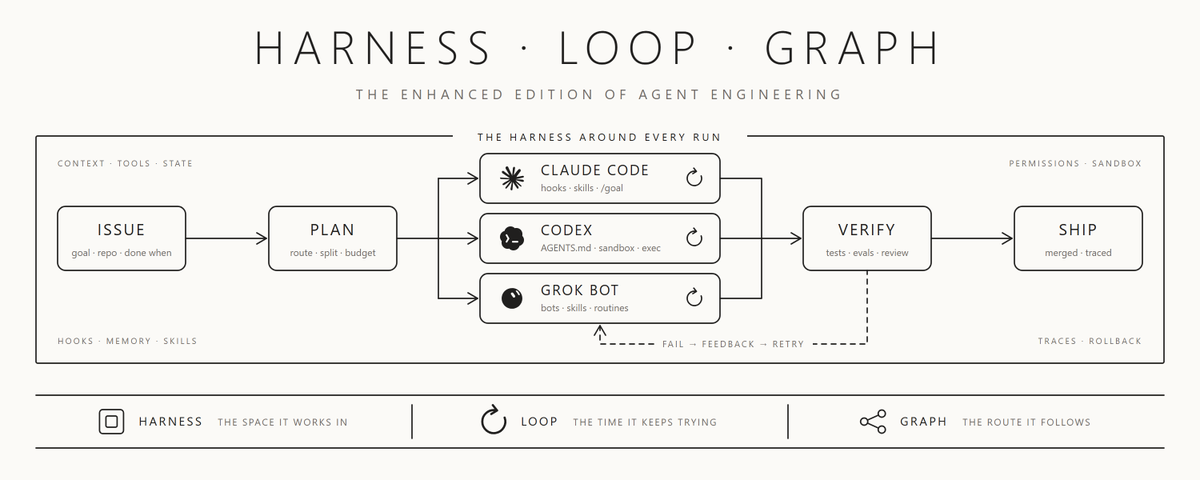
holy f*ck. Elon Musk just said his own Grok Bot will use Claude Opus 5.5 whenever it's the best model for the task.
Read that again. Elon is routing to his competitor's model.
so the model is no longer your edge. the system around it is: what the agent can touch, how long it keeps trying, and what checks its work.
that's why your agent passes every test and the issue is still open.
I turned the whole harness + loop + graph setup into one prompt for Opus 5.5. every layer, every stop rule, the full copy-paste template.
It's f*cking unreal...
Send it to Opus 5.5, and thank me later. Then read the article below ↓
Trundur retweeted
holy f*ck. Anthropic's Bun team ported 750,000 lines from Zig to Rust in 11 days with Claude Code.
99.8% of the old test suite still passed. hundreds of agents in parallel, two reviewers on every file.
the creator of Zig asked the obvious question: who checked a million lines no human read?
the answer is a loop inside every node and a graph between them. I turned it into one copy-paste prompt for Opus 5.5. every step, every formula, all of it spelled out.
99% of people still approve every step by hand and call it "using agents".
bookmark it before this thread gets buried.
then read the full article below ↓