

Rotating acct ft. a new historian each wk. Don’t use content w/o permission. Founder & manager Khodadad Rezakhani. Tweets this week: Long Hiatus
Joined September 2019
- Tweets11.9K
- Following1.4K
- Followers19K
- Likes725






Pinned Tweet
Please do NOT unpin!
This is a rotating weekly account where each week, a new historian hosts the account & tweets about their research, publications, & interests. Open to scholars (including grad students) of history & related topics. If you like to join, contact @sasanianshah!
We are taking a Summer break for the month of August (if US congress can do it, why can’t a Twitter account?) & will be back in September with more historians and more history!
In the meantime, DM here or @sasanianshah if you want to host the account for a week.
By the end of the course the lists are dramatically different. While things like the internet and electricity still make most lists, spoken and written language, optics, printing, the mechanical clock, medicine, currency, and even law make appearances. 4/5 ~jws
Good morning all! Cat drama has subsided, so let's finish the story of the US Bureau of Mines! Yesterday we talked about the establishment of the bureau in 1910 and the many things the bureau did in the first 1/2 of the 20th century. 1/10 ~jws #Mining

The bureau always saw itself as an engineering R&D org. The safety part, the reason it was created in the first place in 1910, would prove to be it's undoing. When safety was stripped away, the bureau had a hard time persuading those in power to keep it alive. 9/10 ~jws
Hi all! I had some cat drama today (all cats are currently fine) so I'll post part II of the US Bureau of Mines story tomorrow morning.
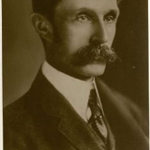
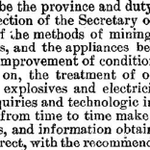
Hi everyone! Today lets talk more about #mining, and efforts to both encourage and regulate it. Specifically the establishment of the US Bureau of Mines in 1910. (sorry, not a lot of pictures today.) 1/12 ~jws

By WWII, the Bureau was engaged in explosive testing and regulation, helium production, coal mine safety research, training mine rescuers, synthetic fuel research, all sorts of mineral and metal research, mineral economics, health and safety research, and much more. 11/12 ~jws