
The design, development and operation of Unmanned Aerial systems for commercial and security roles
UK, Hong Kong & South Africa
Joined April 2015
- Tweets1.3K
- Following348
- Followers432
- Likes4








UAS Int retweeted

in 2018, paul graham said funding high schoolers would be "an evil thing to do"
but YC just funded this 16 year old building a ballistic missile startup (their youngest solo founder ever) lol
and his company is already testing missiles in active operations in Ukraine
here's what Polemos does:
> the problem is that guided missiles are so expensive that armies can see more targets than they can afford to hit
> so Polemos is building AI-guided missiles cheap enough to fire in huge numbers, on production lines that already exist
> that way, when a recon drone spots a target, the army can actually afford to hit it
> a human just approves the shot, then the nearest launcher fires and the AI steers the missile in within seconds
pretty insane (and impressive!) thing for a Latvian high schooler to be doing

Launching @polemos_inc (YC F26) today.
Precision strike was built for a different era: expensive, slow to produce and fielded in small numbers. Polemos is building it for the war that’s actually coming, with networked launch systems that strike in mass and AI guidance carrying every round through the terminal phase. It’s all designed to be mass-produced from day one, to protect us from the warfare of tomorrow.
Precision, at scale.
Shoutout to @zeroonecreative for the video
UAS Int retweeted

A drone flying with no battery tether sounds impossible until you see it. GuRu wirelessly transmitted power through the air to directly run an untethered drone from 30 feet away and has kept one flying for 96 hours straight. Power beaming is moving out of science fiction fast.
UAS Int retweeted

This is f*cking wild. Someone asked Anthropic CEO Dario Amodei what a kid finishing high school should do right now. He didn't sugarcoat it:
"AI can do entry-level law work. It can do entry-level finance. It can do entry-level consulting.
AI will also eliminate jobs, and probably a large number of them"
In 42 seconds, he lists the first careers in the line of fire: junior law, junior finance, junior consulting
He's already put a number on it: half of entry-level white-collar jobs disrupted within 1 to 5 years
Every shift before this one, from farms to factories to the internet, gave people time to catch up. This one, he says, cuts deeper and moves faster
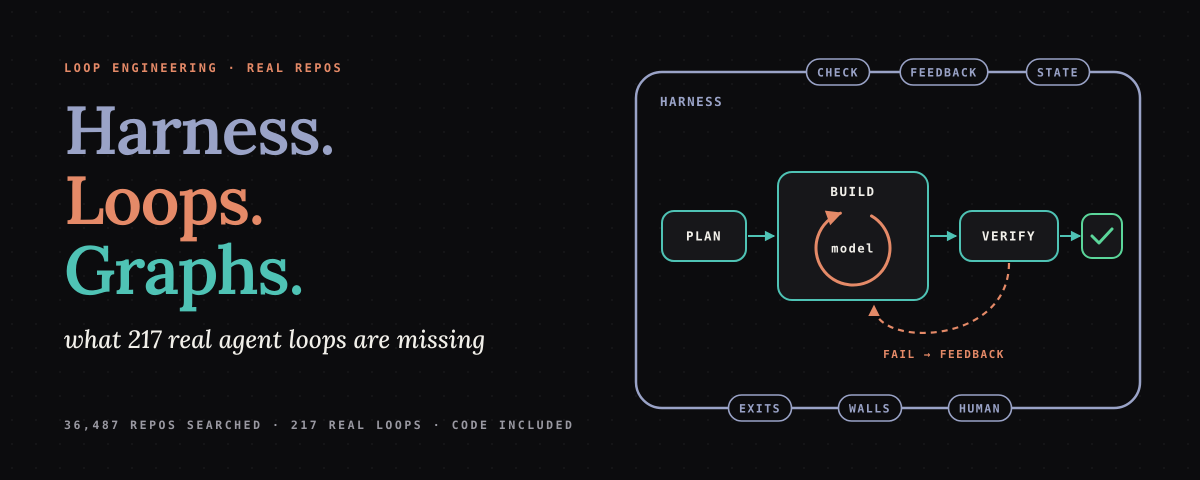
Chatting → Prompting → Agents → Harness → Loops → You Run the AI
His advice is simple: learn to use AI. But using it is now the bare minimum. What sets you apart is a harness that runs it for you
Bookmark this before your feed buries it
Every repo below costs nothing:
Ready-made Claude plugins for legal, finance, sales, HR and data
github.com/anthropics/knowle…
Analyst-grade agents: models, memos, research notes
github.com/anthropics/financ…
Skills for Excel, Word, PowerPoint and PDF
github.com/anthropics/skills
An agent that does financial research on its own
github.com/virattt/dexter
An agent that researches any topic in depth
github.com/assafelovic/gpt-r…
Ask your spreadsheets and databases questions in plain English
github.com/sinaptik-ai/panda…
Agents that work as a team, each with its own role
github.com/crewAIInc/crewAI
A harness with everything built in
github.com/langchain-ai/deep…
Anthropic's SDK for building your own agents
github.com/anthropics/claude…
A memory layer so your agents remember context
github.com/mem0ai/mem0
A loop that keeps the agent going until the job is done
github.com/snarktank/ralph
An agent that clicks through websites and fills forms for you
github.com/browser-use/brows…
Automate busywork with drag-and-drop workflows
github.com/n8n-io/n8n
18 free lessons on building agents
github.com/microsoft/ai-agen…
Total cost: $0
It won't be AI that takes your seat. It'll be someone who built a harness
95% will keep sending résumés for work AI already does, the 5% with a harness will be the ones managing it
Save it and forward it to anyone starting their first job
Then follow the guide below and build your harness while everyone else is still waiting ↓

UAS Int retweeted

this is f*cking insane...
a guy reverse-engineered his Ray-Ban Meta glasses with Opus 5.5 and turned them into JARVIS for the race track
it reads the track in real time, draws the racing line on the asphalt and tells him when to brake, turn in and counter-steer
his lap: 1:52.4 → 1:47.1. minus 5.3 seconds in one session
here's how it works step by step:
step 1 → the glasses stream what he sees to his phone, 30 frames a second
step 2 → a vision model finds the asphalt, the curbs and the next corner in every frame, even with his head shaking
step 3 → Opus 5.5 plans the racing line: outside → apex → outside, and paints it right on the road
step 4 → green = full throttle. red = braking zone. orange = you're in the corner
step 5 → before every turn: "BRAKE · 80 m", countdown, then "turn in", then "apex"
step 6 → when the rear slides, it shows the drift angle and which way to counter-steer
step 7 → the voice in his ear: "brake… now", "hold the apex", "full throttle"
step 8 → a mini-map in the corner compares his line with the ideal one and shows the lap delta live
under the hood:
→ no cloud, everything runs on the phone
→ if it loses the road, the line fades out instead of lying to you
→ every lap is saved, so it learns where you lose time
F1 teams pay millions for a race engineer. he made one out of sunglasses

REA is pure f*cking treasure right now
it lets your AI agent reverse engineer any app, down to the binary
Opus 5.5 reads how a feature works, then rebuilds its own version from scratch
but one wrong number can pass every check
in this article :

Readers added context they thought people might want to know
Ray-Ban Meta glasses have no display/AR for road overlays; video is rendered visualization. Poster's follow-up shares hypothetical prompt using ~5 fps video call to computer, not claimed 30 fps on-phone real-time.
x.com/N01ennn/status…
meta.com/ai-glasses/ray…
vrarwiki.com/wiki/Ray-Ban_M…


UAS Int retweeted
It’s the first #RhinoFriday of Rhino Month, so we’re taking the opportunity to re-introduce ourselves as a charity, and how with your support we are helping rhinos. 1/5

UAS Int retweeted

Seen @uforce_global 's new MV11? It carries our STING interceptors — launched straight from a sea drone. Just like with Hornet Vision CTRL – launch location can be anywhere: field, forest, water, any moving platform.
And this time it's a box on a boat🐝
UAS Int retweeted

Russia has begun mass production of the Volna Kupol Garant electronic warfare system,designed to disrupt and blind Starlink satellite terminals.
Volna Kupol system could disrupt Starlink connections in targeted areas, making it harder for Ukraine to coordinate operations and use Starlink-linked drones to locate Russian troops, convoys and positions.
Iran could also seek the system from Russia after confiscating hundreds of Starlink terminals during and after the war, and such capability could help Iran prevent the terminals from being used inside the country.
UAS Int retweeted

The University of Michigan put their entire robotics degree on GitHub.
Not one course. The whole curriculum.
ROB 101 — Computational Linear Algebra for Robotics
ROB 311 — How to Build Robots and Make Them Move
ROB 501 — Mathematics for Robotics
ROB 530 — Mobile Robotics
Every lecture video on YouTube. Every textbook on GitHub. Every problem set, every exam, every line of code.
Professor Jessy Grizzle said it best when they launched it:
"Linear algebra has become the language of computer vision, machine learning, robotics, and autonomy."
So instead of making students wait four semesters of calculus before touching a robot... they built a curriculum that starts with the math that actually matters, applied to real robotics problems from day one.
This is what open education looks like when a top-10 engineering school decides to mean it.
Free. GitHub. YouTube.
📌 [github.com/michiganrobotics]
Follow for more robotics resources!
——
Weekly robotics and AI insights.
Subscribe free: 22astronauts.com

UAS Int retweeted

Grok Bot by Elon Musk just replaced a $294,000 Wall Street research desk. Six AI agents, $200 a month, doing the work BlackRock pays people six figures for.
The guy who built it published every prompt.
What that desk cost before the bots:
> $27,000 a year for the Bloomberg terminal
> $22,000 for Refinitiv
> $50,000 for sell-side research
> $15,000 for AlphaSense
> $180,000 for the junior analyst who reads all of it until 2am so somebody senior can trade on it before the open
$294,000 a year. The agents cost $2,400. Same brief, 122 times cheaper, and it is there before the open.
Six agents split that desk. Each one gets its own computer in the cloud, and they all write into the same vault.
> FILINGS reads every 10-K, 10-Q and 8-K on a 100-ticker watchlist overnight and flags the ugly parts: going concern language, auditor changes, restatements
> EARNINGS reads the call transcript within 24 hours and tells you if the CFO got quieter than he was last quarter
> SECTOR does one pass per sector and picks up the rule change nobody read
> INSIDER catches Form 4 buys over $1 million and new positions from Two Sigma, Third Point and D.E. Shaw the day the 13Fs land
> CHATTER counts mentions on X and flags any ticker three standard deviations louder than its own 30-day normal
> CHIEF OF STAFF reads the other five at 5:30am, bins anything only one of them flagged, and emails you the ranked brief at 6
One analyst covers 30 names. Six agents cover 3,000 and finish before the open.
You show them the job once. They repeat it every night with your laptop shut.
Every research floor on Wall Street was priced on reading being slow and people being expensive. Both of those stopped being true this month.
So you wake up, read for five minutes, and know what moved on every name you hold. That used to be somebody's entire job, and he got a bonus for it.
The article below is the step by step guide to building the whole AI trading machine. Save & read it, you will want it open while you build.


UAS Int retweeted

I still don't understand why everyone is not using this yet. Thanks to it, a year ago I increased my income to 17,000 dollars a month
Andrey Karpathy, co-founder of OpenAI, published a simple idea that got 16 million views: stop using AI to write code, use it to build a second brain
You point Claude Code to a folder, drop any source in there (an article, transcript, PDF) and Claude reads it, links it, and saves it into a living wiki of everything you know. It compounds like interest: the more you feed it, the smarter it gets
Here is the gist:
Install Obsidian, create a vault, open it in Claude Code
Paste the file with Karpathy's wiki idea and tell Claude to build it
Claude creates three folders: raw for sources, wiki for its pages, CLAUDE
which runs everything
Drop any source into raw and say "ingest this"
Ask questions across everything, forever
Five minutes to set up, and you never start with an empty chat again
The full step-by-step guide is in the article. Save to bookmarks


UAS Int retweeted

another example: a developer used the exact same $8 ESP32-S3 chip and local AI setup to build a real-time object recognition camera
the fact that this is running entirely offline, on an eight-dollar microcontroller, without any cloud API calls, is wild...
it captures the video feed, processes it locally through the model, and identifies objects in real-time.
we are entering an era where you can just glue intelligence onto any physical object for less than $10.
the hardware barrier is completely shattered.

forget the $699 AI pins. this $8 chip just shattered the barrier for local AI hardware.
a developer just forced a 28.9 million-parameter LLM onto a standard ESP32-S3 microcontroller. it costs roughly 8 dollars, runs completely offline, and draws the power of a single LED.
conventional wisdom said a model of this size simply would not fit. the chip only has 512 KB of fast SRAM and 16 MB of flash.
the breakthrough is architectural. the developer moved the bulk of the embedding table into flash memory and memory-mapped it. the chip only needs to pull about 450 bytes per token, keeping the active working memory inside the fast SRAM.
this means you can now embed a capable language model into a physical node for the price of two coffees.
and we are already seeing the beginnings of this custom physical hardware. in the video, a creator built a minimalist voice-controlled universal remote using an ESP32.
it captures voice and remotely controls the computer over bluetooth LE. he simply says "open chrome and open 20 new tabs", and the custom hardware executes it instantly.
we have spent years watching model sizes explode upward. but the true frontier is the opposite direction.
when an eight-dollar chip can power offline intelligence and custom physical interfaces, AI becomes local infrastructure rather than a cloud service.
UAS Int retweeted

Anthropic engineer:
"You're not supposed to prompt Claude. You're supposed to build a system that prompts itself."
In 45 minutes she shows exactly how Anthropic builds agents that remember, fix their own mistakes and get smarter with every run.
This beats any paid course on agents I've seen.
Watch it, then read the guide on building loops below.



UAS Int retweeted
Claude Code creator:
"I don't prompt Claude anymore. I have loops that figure out what to do. My job is to create loops."
in 30 minutes Boris breaks down his daily Claude Code setup, step by step
the person who built the tool doesn't use it the way most people think
no prompts, no chat box, just loops running on their own
I broke down 17 Claude features most people have never found
full guide in the post below


UAS Int retweeted

👀 Quite the development.
At 120m, I'd be very surprised if this new Chinese submarine isn't ANOTHER new class of nuclear-powered boats.
navalnews.com/naval-news/202…
