






Ugra retweeted

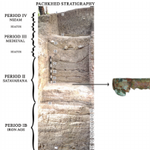
I have updated my old note on the significance of the Aśvattha or sacred pipal tree in Vedic-Harappan traditions and how they converge with further notes and insights. Republishing it now. Sharing the link as a reply below this post.
Please read and share if you like it :)

Ugra retweeted

MAJOR development. After several years of on and off attempts, I have finally solved the etymology of the ethnonym Kurd, which currently has no solution in academia. It comes from Proto-Indo-European *kr̥t-í- “cut” → Proto-Indo-Iranian *kr̥ti- → Proto-Iranian *kr̥ti- → *kur(ə)ti- (“cut”, but also an outer “garment”) → *Kurt(i)- (adopted as a tribal name) → *Kurt → *Kurd (by the 3rd c. CE) → Kurd (from a tribal identity to an ethnonym).
The first image, an etymological tree, sets out and justifies each sound change, if you want to see how the derivation is linguistically proven. It also contains the historical details on each form where attested. X reduces image resolution, so to read it clearly, expand the image and open it in a new tab. The second image shows the garment in question: the thick, tent-like traditional shepherd’s cloak made of dense felted wool, or wool mixed with goat hair.
Specifically, the name Kurd comes from this outer-garment sense, which was later adopted as a tribal name. Among Iranian languages, the garment word first appears in Avestan as kərəti-, in instructions on how Zoroastrians should wear it together with the sacred shirt and belt. In Parthian, kórt-ēn was the garment boys received as a coming-of-age gift when they reached manhood (which is linguistically a close match to the word Kurd, as the stem's predicted outcome of the Parthian would eventually become Kórd/Kurd since that gloss predates t > d). The word has cognates across the Iranian world, living and extinct, such as Khotanese, Ossetian, Sogdian and Bactrian.
There is historical evidence that Kurd still carried a secondary garment meaning in the early Islamic period, as the word was borrowed into Classical Arabic for a type of garment: kurdī, from the narrator Ibn Abī al-Zinād (d. 790 CE in Baghdad), in Abū Dāwūd 915 (before 889 CE), and kurdiyya in Ibn al-ʿArabī (d. 1148 CE), among others. The hadith reads: “…from ʿĀʾisha, with this report. He said: and he took a kurdī that belonged to Abū Jahm. It was said: O Messenger of God, the khamīṣa was better than the kurdī.” This is important because it shows the t > d form unlike Kurt-(ek), and other forms that passed through west Iranian languages later on via Sogdian. They are still from the same root however.
Tribal names and clans very often come from places, animals, objects and so on. The Kurdish tribe Sanjabi is named after the squirrel fur, Herki is named after a citadel, etc. Kurds are first attested in history specifically as a tribe by Eratosthenes, Strabo and others. The older reading of Kurd as “nomad” has no etymological basis in any Iranian language, and many Kurdologists/Iranologists today regard it as an anti-Kurdish narrative with no basis in the historical record (see Boris James). Some earlier academics unknowingly built on Arabic mistranslations and deliberate misreadings, which are now corrected. There were also at least 11 Iranian nomadic tribal organisations on the plateau before Islam with no Kurdish identification, and 5 Iranian tribal organisations on the plateau that never had a Kurdish tribal affiliation which completely contradicts this narrative.
The main sound-change question left open in my tree is how r̥ became ur, since it normally gives ar or ər. There are several resolutions, but it is not yet clear which one it is. The u-form *kur(ə)ti- may have spread by borrowing, as a garment from the East Iranian lands: ur is the usual outcome in Parachi, Sanglechi-Ishkashmi and Shughni (Clayton 2022), and Sogdian kurθ- probably passed into Persian kurta. Or it may be a regular change in some western dialect, as in Balochi kurt “did” < *kr̥ta- (Korn 2003).
Several scholars already tie the garment word to the root for “cut”. Abaev derives Ossetian kærc “fur coat” from Old Ossetian *karti-, which “corresponds perfectly” to Avestan kərəti- “garment” (that is, *kr̥ti-), perhaps from *(s)ker- “to cut”; he calls Ossetian kuræt a loan. Bailey derives Khotanese kīḍakyä “garment” from kart- “to cut, tailor”, comparing kərəti-. Henning took Sogdian kurθ- “garment” as the same word as kərəti-, and Benveniste linked Persian kurta to the Sogdian. Sims-Williams, publishing Bactrian kuratīg “shirt”, calls it “a word of unknown but probably non-Iranian origin”, which would leave room for a substrate source such as the BMAC (2007: 224). Although Sims-Williams did not gloss through the full extent of the Iranian forms, or look too deeply into it.
I have opted otherwise, and agree with the other scholars who do derive it through Iranian, because of the following reasons. Avestan kərəti-, Ossetian kærc and Khotanese kīḍ- show the regular outcomes of *kr̥ti- at opposite ends of the Iranian world. The root has an Indo-European etymology, *(s)ker-t- “cut”, shared with Vedic kṛtí- “dagger”, and the Pahlavi commentary renders kərəti- as kirrēnīdag “cut”. The forms Sims-Williams compares are the u-forms, and they can all be accounted for within Iranian. The Sogdian θ comes from the regular change ty > θy. Persian kurta, Arabic qurṭaq, Pashto kurta and Ossetian kuræt are loans. A word with a regular Iranian etymology doesn’t need a substrate source.
To clarify for anyone who doesn't know, the stem is important for derivation as it carries the evidence of descent, while the the suffixes don’t necessarily. A stem passes down through Iranian forms and goes through its regular sound changes, so kurt- with t, kurθ- with θ and kurd with d each show where a form sits on the tree. Suffixes are added afresh by each language and are often swapped or borrowed depending on the application and context.
Given this etymology, the identification of the Cyrtians with the Kurds is even stronger than it already was, as the forms are an exact match. Identifications with the Carduchi, Qardu, among other folk proposals have become even more improbable, both linguistically and historically, than they already were.


A timely reminder for pop-historians on Twitter who are dating Kerala-related stuff to very low or recent antiquity.


Ugra retweeted

A hidden bias in human language challenges 70 years of science sciencedaily.com/releases/20…

The facial reconstruction of the world's earliest prosthetic-eye bearer (2900 BCE) has been done (preprint of M Ramezani et al.) using MDCT techniques. The individual was recovered at the site of Shahr-i-Sokhta. The type of ancestry at this site mirrors that of the broader regional distribution, including the Rakhigarhi woman.


The ancient Greeks were not aware of any mountain ranges other than the Caucasus (Kaúkasos) and they applied that term liberally to others they came into contact with. Except the average Himalayan peak (6k metres) was 3x the former. This led to a further gargantuan consequence - the rivers (like the Indus) that arose from the upper reaches were more massive than anything that they had encountered. The phalanx chiefs were acutely aware that every Indian river they forded was a chasm that cut their rear lines.


This is a counterfactual take - in the same kanda, Rama enquires about the vārttā (economy) and makes very pointed enquiries to Bharata about the state of the fortress and the citadels. He even asks a specific question about the gender-ratio of elephants in the royal armoury. The Witzelian nonsense about pastoralism is taken too far. I will not even start with the Mahabharata.


It's interesting that in both mahAbhArata and rAmAyaNa, the citizens of ayodhyA and hastinApura offer to accompany the exiled princes to the forest (araNya) - in ayodhyA kANDa and vana parva respectively
Given that the historical core of the epics is very much in the vedic period - it suggests that the "rAjA" was more of a leader than a monarch in those times, and the "prajA" often followed the rAjA. The rAja's sovereignty was not over a tract of land (bhUmi) but a jana (a collection of tribes).
These weren't extremely settled, sedentary populations, but populations that were on the move. It wasn't a big deal for them to wind up their settlements and move with their preferred leader.
But the epics are obviously a textual palimpsest, having been edited and redacted well into the mahAjanapada epoch and early classical times even.
So while they retain a v ancient memory of the vedic age mobility, the princes also reflect the norms of the classical times, by beseeching the citizens to return to their homes thus maintaining territorial stability


This is a significant meta-lexicography signal and provides additional context to Indra's preeminence. I have written elsewhere that the "Indra-deifying Era" had abundance mindsets whose intensity has not been repeated or matched in the Indian long period cycles since.


Modern anthropology identifies three recurring traits of ritualism in surplus-rich societies. Unsurprisingly, the Rgveda offers sustained and copious evidence of these traits - the yajamana, paśuyajña, detailed multi-day rites, orchestration by specific roles (Hotr, Advaryu..), a sacred drink with its own manual (Soma). This was the abundance mindset of an exceedingly productive agricultural society.

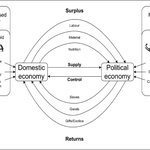
One of the strongest puzzles in Bronze Age economics is that vast amounts of IVC goods reached West Asia but almost nothing of West Asia is in the IVC. How was it paid back? It could be that there was a political economy which necessitated the one way transfer.

Ugra retweeted

Karnataka's gods and faiths, on its stones, century by century. Nearly 8,000 dated inscriptions from every district of Karnataka, 4th to 19th century, and over 3,000 more not yet dated. Shiva is named most, then Vishnu, the Jinas and the Goddess. Watch them spread across the state in the video, and see the numbers in the flyer. Explore every stone: nakshe.mythicsociety.org
#Karnataka #Inscriptions #History #Epigraphy #Nakshe #MythicSociety
