
Sports Business and Financial News
Hyderabad, India
Joined March 2017
- Tweets5.7K
- Following856
- Followers3.2K
- Likes4.4K


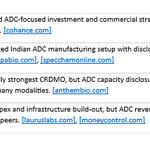
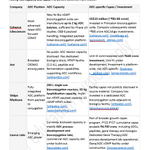

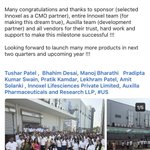
Shukra pharma from 5 cr revenue to 44 core revenue A how turnaround has happened here
Can the medical tech continue ?
9 new subsidiaries - what’s happening here

One sme mentions -we were working at 124%, and now we are working at 128% of our capacity”
Substantial orders and the necessary raw materials are available to support the commencement of production and supplies.
Stock corrected 35% from top
RoE- 27%
PE fy28 - 15
Rewards will come soon
Point is we are happy with fii buying stocks or will buy growth
Bad 2 weeks but good future ahead
2
9
2,072
Lonza - one statement to start thinking about - in all new deals for 2026 - 70% of all new deals are about integrated services something for @SyngeneIntl @SaiLifeSciences to start acting on
1
19
2,037
Why Steamhouse now sits at an interesting and can be a good compounding play for next 2-3 years . Steamhouse pioneered the community boiler system in India. We sell steam and nitrogen to industries like chemical, pharmaceuticals, textiles, plywood, food processing, tyre industries.By outsourcing their steam requirements to Steamhouse, these industries can now focus on their core manufacturing activities, operations, while we provide a reliable, efficient, and scalable steam solution.We believe our steam-as-a-service model represents a structural shift from traditional captive boiler ownership to outsourced steam solutions.Today, our business operates through three verticals: • Generation and distribution of steam, • Purchase and distribution of steam, • Generation Separation and distribution of Nitrogen.community boilers can achieve thermal efficiency of 80% to 83% compared with around 50 to 65% for the conventional captive boilers. Our USP is our knowledge of steam distribution for kilometers. We have established more than 60 kilometers of steam pipeline infrastructure across industrial clusters in Gujarat.s.We currently have four projects under execution at Jhagadia, Vapi, Nandesari, and AMC (Ahmedabad Municipal Corporation) Pirana, along with three projects planned through IPO proceeds at Ankleshwar, Panoli, and Dahej. Beyond Gujarat, we are also expanding our footprint .with a planned project at Tarapur
3
13
2,027
Steamhouse q2 : market gave a clear feedback that we didn’t like your numbers . Did it disappoint on volume was ahead of estimates - on ebidta per tonne was a disappointing . But the real story is something people are ignoring Fy27 currently looking at 90/ 120 metric tonnes capacity additions depending on Ahmedabad finalisation and another 60 tonnes in fy28
Based on this company confident on 25% volume growth in fy27 and 35% in fy28
Annual ebidta per tonne being guided at 1100 which currently stands at 900
Fy27 revenue could be potentially at 550 cr based in new capacitors and fy28 could be 650-700 cr based on 35% volume growth
Fy27 ebidta can be 110-120 cr and fy28 can be 180-200 cr
1
5
423
One of the beneficiaries of the wars cooling down could be TFS
Most interesting parameter - traffic reduced 3% yoy but their spends increased 18% .Like to like still 5-6%
As the new airports scale up and breadth increase in delhi ,mumbai and vizag airports i think PAT can go to 570-580 crores , and Fy28 can be closer to 600-650 crores - mcap is just 15000 crores for a 37-38% margin company
1
5
1,560
Kirloskar oil engines - expanding in power gensets in the americas and focus on getting margins back .We are getting a 14-15% margin company at just 2 times mcap to sales .
New growth vectors are becoming tangible: DEUTZ agreement (advanced-emission validation, Americas focus) and KAS maiden billing (defense/aerospace), though revenue impact remains unquantified.
this came as a surpise in the koel concall - Defense & Aerospace: Kirloskar Advanced Systems (KAS) begins commercial execution
Material development: “Kirloskar Advanced Systems completed its maiden commercial billing,” formally marking entry into “high-precision defense and aerospace systems.”
Product scope described later: “system integration, ground powering units… rocket launchers and shells,” spanning multiple defense-centric categories.
8
1,233
Glenmark - watch out in next 6 months
Approval for pre clinical trial ISB 2301 is engineered as a "pentaspecific" (five-pronged) antibody that combines five distinct binding targets in a single molecule, an architecture specifically designed to solve why standard immunotherapies fail in solid tumors. Instead of relying on a single immune pathway or tumor marker, it simultaneously locks onto three different tumor markers while activating two separate types of killer immune cells. [1, 2]
For full technical details on the filing, see IGI's official IND announcement on GlobeNewswire. [1]
Why Its Mechanism Stands Out to Biotech Investors
•Triple-Antigen Targeting (Solving "Tumor Escape"): Solid tumors are genetically messy and often mutate or hide a single target protein to evade drugs. By binding to three tumor-associated antigens (TAAs) at once, ISB 2301 increases tumor selectivity and makes it much harder for cancer cells to escape detection. [1, 2]
•Dual Immune Cell Engagement (T Cells + NK Cells): Most modern T-cell engagers only recruit T cells, which struggle to penetrate dense solid tumors. ISB 2301 activates both T cells and Natural Killer (NK) cells, pairing fast-acting innate immunity (NK cells) with long-lasting adaptive immunity (T cells). [1, 2]
•Three-in-One Attack Mode:
Beyond physically bridging immune cells to cancer cells, the molecule is engineered to trigger antibody-dependent cellular cytotoxicity (ADCC), block immune checkpoints (preventing the tumor from turning immune cells "off"), and sustain a Type 1 immune response. [1]
•Standard Manufacturability on a Validated Platform: Complex multispecific antibodies often fail because they are too difficult or expensive to mass-produce. ISB 2301 is built on IGI's proprietary BEAT® platform—the exact same engineering backbone that produced ISB 2001 for AbbVie—and can be manufactured using standard antibody production processes. [1]
I always thought politicians change their color the fastest but i was so wrong
The newest entrant are business channels - 20 days back - we are the worst market and now we are the best market
Biggest message they are not experts - please don’t waste time hearing them - believe industry macro - read company reports and company concalls and ignore these 24 hour media giving 100 picks and telling them they we told you
#happy investing
8
723
Gujarat Themis biosyn - Deteiled concall - need more time to go through
But below statement stands out from macro perspective stands out
•The industry setup/urgency was framed as structural undersupply: management referenced external consultant data claiming global fermentation capacity is “one-seventh of what is required over the next three to four years.” This underpins why GTBL chose to move “boldly” now rather than incrementally.
Hexagon Nutrition’s new launch—VIT A+ (commercialized in September 2026 in partnership with Particles for Humanity)—targets the large-scale African food fortification market, representing a meaningful B2B volume and margin expansion opportunity relative to the company's current scale. [1, 2]
While Hexagon Nutrition has not disclosed exact revenue projections for VIT A+, the size of the opportunity can be broken down through its addressable market, product economics, and company context.
1. Addressable Market & Scale
•Massive serving capacity. A single commercial production batch of VIT A+ yields enough encapsulated vitamin A palmitate to fortify roughly 600 million servings of food. [1]
•Broad staple food reach. VIT A+ is formulated for mass-consumed African staples—specifically bouillon cubes, wheat flour, and sugar. Many African nations enforce mandatory food fortification programs, creating steady institutional and FMCG demand. [1, 2]
•Solving a core industry bottleneck. Standard vitamin A degrades rapidly in hot, humid climates during shipping, storage, and cooking. In testing, VIT A+ retained more than three times as much vitamin Aas standard commercial alternatives after 12 months in high-heat, high-humidity conditions. [1]
2. Commercial & Adoption Advantages
•Zero CapEx for customers. VIT A+ acts as a "drop-in" ingredient that works with existing food manufacturing and dosing equipment. Food producers do not need to buy new machinery to switch, which lowers adoption friction. [1]
•Higher-value premix mix. Commercial food fortification accounted for roughly 30% of Hexagon’s premix sales volume in FY25, and management aims to grow that share to 40% by 2030. Proprietary, encapsulated ingredients like VIT A+ help differentiate Hexagon from commodity premix suppliers and support stronger margins in its B2B2C premix segment (which typically earns 35–40% gross margins).[1, 2, 3]
•Existing distribution footprint. Hexagon already exports to over 75 countries and operates a subsidiary in South Africa, giving it an established commercial network to push VIT A+ across West and Sub-Saharan Africa
The Total Addressable Market (TAM) for VIT A+ can be viewed across three tiers—from the broad global ingredient market down to Hexagon Nutrition’s immediate target niche in Africa.
Because VIT A+ is a specialized, encapsulated vitamin A palmitate ingredient rather than a finished consumer food product, the relevant TAM is measured at the B2B ingredient level rather than retail food sales.
1. Broad Global Ingredient TAM (USD 750M – USD 1.34B)
• Global food-grade vitamin A market. According to Data Bridge Market Research, the global food-grade vitamin A ingredient market is valued at roughly USD 748.6 million (2025) and is projected to grow at a 5.0% CAGR to reach USD 1.11 billion by 2033.
• Global vitamin A palmitate market. Looking specifically at vitamin A palmitate—the chemical form used in VIT A+—market estimates place the global value at roughly USD 1.34 billion in 2026, growing toward USD 2.11 billion by 2034 (this figure includes cosmetic and supplement applications alongside food fortification).
• Broader food fortifying agents. For wider context, the entire global food fortifying agents market (covering all vitamins, minerals, and amino acids) stands at approximately USD 118.4 billion in 2026.
2. Regional TAM: Middle East & Africa (USD 29M – USD 38M)
• Direct regional vitamin A market. The overall vitamin A ingredient market across the Middle East and Africa (MEA) is estimated by Data Bridge Market Research at roughly USD 29 million to USD 31 million (growing at ~3.5% annually toward USD 38.3 million by 2032).
• Why the dollar figure looks modest. Vitamin A is a high-potency micronutrient added in tiny quantities—typically just 0.5 mg to 30 mg per kilogram of flour, sugar, or oil. While billions of servings are fortified annually, the raw ingredient dollar value is concentrated in relatively small tonnage.
3. Hexagon’s Serviceable Addressable Market (SAM)
Hexagon’s immediate commercial focus is large-scale staple fortification in Africa, specifically targeting bouillon cubes, wheat flour, and sugar.
• Mandatory fortification tailwinds. Dozens of African nations enforce mandatory vitamin A fortification for staples like wheat flour, maize meal, sugar, and cooking oil. For example, in Kenya alone, over 1.67 million metric tons of wheat flour and 541,000 metric tons of maize flour are fortified annually under government mandates.
• The "bouillon" growth wedge. Bouillon cubes are consumed daily by hundreds of millions of households across West and Central Africa. Because bouillon undergoes intense heat and humidity during storage and cooking, standard vitamin A degrades rapidly. VIT A+ directly unlocks this segment by retaining over three times more vitamin A than standard commercial alternatives.
• Capturing value through premixes. Rather than selling pure vitamin A as a standalone commodity, Hexagon blends VIT A+ into custom multi-micronutrient premixes (combining vitamin A with iron, zinc, folic acid, and B vitamins). Selling finished premix blends multiplies the revenue per kilogram compared to selling raw vitamin A alone.
1
382
One of the worst concall ever was from dishman - i felt managment has had no clue for the future
Think about it France in second year just reported one million euro revenue
5
1,045
#dishman pharma
Award of consistent npa has to go to dishman pharma
Promoters need to wake up and smell the coffee - why not accept that they can’t run a company
Just sell and find a new buyer who can run this asset properly
#7 years and counting when they last reported consistent revenue and profit
15
1,557
Stock now respecting future potential - hoping it to be a one billion mcap company in 3 years based on 600-700 cr ebidta
2
246
Amanta healthcare Mcap 660 Cr -Amanta Healthcare is an integrated manufacturer of sterile liquid parenteral products (IV fluids, injections, ophthalmic & respiratory solutions). They operate through three distinct revenue channels:Domestic Branded Generics- steriport . exports -Exports to 21 countries across emerging & semi-regulated markets, - partners . Manufactured through injection Stretch-Blow Moulding (ISBM) — used for SteriPort polypropylene bottles; Amanta was the first in India to bring ISBM technology to IV fluid packaging.this can withstand temperatures beyond 130 degrees and only have 5-6% market sure .Over time steriport can go to higher market share and this small company is market leader .Extensive Regulatory Certifications
WHO-GMP certified
ISO 9001:2015, ISO 13485:2016, ISO 14001:2015, ISO 45001:2018
Vertically Integrated Operations
In-house Formulation & Development (F&D) laboratory, dedicated Regulatory Affairs team, and a PIC/S-compliant facility. This gives end-to-end capability from R&D to manufacturing to sales.
Asset-Light Capacity Expansion-The new SteriPort line is being installed at the same existing facility, giving revenue of 110 cr from the line
Manaksia coated good concall guiding for 1300 cr revenue margin to touch 12% solar plant to reduce power cost by half 550 cr H1 and 750 cr H2 Fy28 1700 cr - entry to four more countries Debt to peak out in next 3 months Order book 450 cr
Mcap 1200 cr6x at ebidta level for fy28
3
11
1,244
I know most of you think I am day dreaming but Shilpa Medicare if all cards click can do 1 billion dollar sales in fy31
The US$ 1 Billion Growth Bridge
Based on the scaling parameters of their individual high-value assets and capacity expansions, the long-term consolidated top-line revenue bridge maps out visually into three distinct blocks:
[FY31/32 Consolidated Goal: US$ 1.0 Billion (+$8,400 Cr) Total Revenue]
│
├──► 1. Specialty CDMO Block: US$ 400 Million (Raichur Assets)
│ • Oxylanthanum Carbonate (OLC): Full commercial scale across US, EU, and Japan.
│ • Mature Multi-Ton Peptides: Global generic GLP-1 bulk supply at absolute peak.
│ • NCE Pipeline Conversions: At least 3–5 novel molecules hitting steady commercial scale.
│
├──► 2. Biologics & Biosimilars: US$ 300 Million (Dharwad Assets)
│ • Nivolumab Biosimilar: Scaled global export supply to Orion Corporation.
│ • Recombinant Human Albumin: High-volume commercial blood product & excipient sales.
│ • Emerging Modalities: Commercial-stage Antibody-Drug Conjugates (ADCs).
│
└──► 3. Core Generic Portfolio: US$ 300 Million (API + Complex Formulations)
• Oncology API Dominance: Expanded global market share via low-cost leadership.
• Differentiated Formulations: Global rollouts of patches (Rotigotine) and injectables.
Three Core Triggers to Unlock the Billion-Dollar Mark
For the company to push past the upper limits of our previous projections and capture the extra $150–200 million needed to hit a full billion, three absolute execution triggers must materialize:
1Global Blockbuster Scaling for OLC: The Oxylanthanum Carbonate (OLC) contract cannot remain a localized U.S. product. Unicycive and its regional out-licensing partners must successfully capture a combined 12% to 15% market share across the U.S., Europe, and Japan. Because Shilpa is the exclusive master manufacturer, this peak global penetration is the single largest lever to supercharge the CDMO column past the $400 million mark.
2Capturing the Global GLP-1 Shortage Wave: Shilpa's recent US$ 50 million capital commitment to scale up peptide blocks at Raichur must hit immediate, high-yield utilization. By 2030, a massive wave of global patents for second-generation weight loss and diabetes blockbusters (like Semaglutide) will expire. Shilpa must leverage its multi-ton solid-phase peptide synthesis (SPPS) capacity to become one of the primary global contract manufacturers supplying these complex generic blockbusters.
3Flawless Biologics Out-Licensing Execution: The clone-to-vial campus at Dharwad must maintain an unblemished regulatory compliance record with the USFDA and EMA. If their major biosimilars—anchored by the Nivolumab partnership with Orion—face zero regulatory approval delays or clinical holds between FY28 and FY30, the exponential manufacturing ramp-up will cleanly deliver the projected $300 million biologics baseline.
What This Means for Shareholders (The Margin Shift)
Achieving US$ 1 Billion in sales fundamentally changes Shilpa's underlying profitability.
Because the high-growth blocks (Specialty CDMO and Biologics) carry vastly superior pricing power compared to the legacy generic API business, Shilpa's consolidated operating profit (EBITDA) margins are modeled to expand from their current ~30% baseline toward 38% to 40%
at peak utilization. This operational leverage means a billion-dollar top-line could translate into an annual EBITDA generation capacity of over ₹3,200+ crore by the turn of the decade.
#shilpa Medicare