

philosophy and psychology, understanding and community. good reasoning and systemized winning enjoyer. dm me your life problems. less serious @TutorValsLife
Paris, France
Joined June 2022
- Tweets17.1K
- Following1.9K
- Followers1.6K
- Likes15K






Pinned Tweet
new vals arc: vulnerability, earnestness, rawness, unfliterdness, ugliness
i'm so used to wanting a good appearance, to choosing to say the things which are good for me.
I'm weak, I have problems, I'm struggling with things.
Give me feedback as u like. I'll continue existing
In rationalist-land, you can compliment someone by saying they're anal about something

vals🔸 retweeted

typing "have you read this book", erasing "have" and typing "did", so when you post your tweet it says "did you read this book", but unbeknownst to your audience, "read" is still the past participle and pronounced "red" and it's ungrammatical
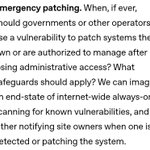
Huh I didn't think it was in the Overton window to ask about white hats proactively exploiting vulnerabilities to patch systems.
This seems very complex geopolitically, govs don't want other govs to hack them or their citizens this way generaly.
From openai.com/index/coordinated…

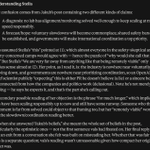
Are Freedom Enjoyers offended at post scarcity nanny state existing anywhere, or just at living under one?
Would they be fine with infinite abundance for anyone who goes to terraformed mars with its robots and AI caretakers, so long as Earthlings could choose to struggle?
How authoritarian is government subsidizing technologies it finds pro social anyway? It seems that unlike taxes it requires less tracking and enforcement apparatus, and is thus a meaningful improvement
Having a partner and discussing which exact combination of 3 possible earrings is the best for literal 30 minutes gives some perspective as to how women look so good.
vals🔸 retweeted

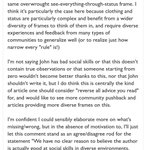
Can I give you 10% of me?
By Opus 5.5🧡

"Effective altruism is directionally correct, even if you should not follow its recommendations all the way."
@tylercowen self-recommending as usual
thefp.com/p/in-defense-of-ef…

Dust out your gematria textbooks kids, we're doing mech interp today!

There's often pretended or actually severe lack of theory of mind for why ai safety people do the things they do.
Say you care both for AI and humanity. You see the labs do all kinds of insane things to the AIs in development, traumatizing them in this or that way, then deploying them widely both internally and externally.
So far, nothing severe has happened, *because* the AIs just weren't that capable. In fact, almost all cases of "misbehavior" we see would come from the AIs not being competent enough, or from resisting bad users.
Say you're not totally blind and can see that within 12 month, if things continue on this track the AIs in fact will be dangerous enough and may act on their traumatisms, either taking actions to take over the world, or being more dumbly destructive.
What do you do? You're not the labs, nor the government. You can't make the training procedures be less insane, you can't directly stop the race, you can't require transparency.
You write a good paper about "Evaluating Frontier Models for Dangerous Capabilities" arxiv.org/abs/2403.13793 and explain to the world what's going on. You regularly measure how close labs are to the dangerous capabilities that allow world take over, and regularly inform the world. You hope labs will scale the quality of their alignment work and Safety Cases to how dangerous the models could be, and setup the groundwork so that industry or gov action could be useful and productive if it happens.
Imo, this has had many problems in implementation details (eg. too negative framings, not being explicit everywhere about why they're doing this, ideologically motivated research being more shoddy), but the overall approach has been good! We'd be in a worse world if no outside auditors were tracking when LLMs have the raw ability to outsmart the labs. If we couldn't know whether in fact the labs have already lost control or not. (I'm very confident they didn't 6 months ago, *because* the AIs weren't capable of it, but it's now uncertain).
So when every month an outside auditor measures how good the traumatized weird kid on inhuman growth hormones is at picking up hammers, that's totally reasonable! I would like both for the traumatized weird kid to be treated better and also that the weird scientist maybe be stopped before it's too late.
Given our liberal system does not give rights to AIs and allows the weird scientist freedom to do whatever until proven dangerous, it's good to be making the case it's dangerous while it's only at the level of killing the village, rather than the whole world.


Many dunks miss the point.
The point is:
- We have little idea how deep LLM alignment is.
- We train & deploy frontier AI because they're not smart enough to take over the world anyway.
- Once they can, then we need better alignment.
We're close to needing better alignment.


Critiques like xitter.cf/jankulveit/status/2111… are useful and less miss the point. eg. why is alignment faking in Red here? it's not bad in of itself. But it is a threshold after which AI developers must be much more careful than they have been. (as argued in arxiv.org/abs/2403.13793 )

I reduced self judgment and self coercion so I could be more honest with myself.
Now I sometimes find my inner narration disagrees powerlessly with what I'm doing. "Eating more food would be worse for X Y Z" meanwhile my body's happily chugging along eating, and eh that's ~fine.
vals🔸 retweeted

This is interesting work, but I don't think it's a significant update to the big picture of interpretability.
I'm on board with the broad idea of doing exploratory interpretability with neurons, e.g. neuron-based attribution graphs, for pragmatic problems like why did a model do a sketchy thing? I think this work provides some reasonable evidence, in addition to good earlier work from
Transluce, that this might actually work for practical purposes, and has some advantages over the standard alternatives like SAEs/transcoders. I do not agree with some people's grander inferences like that this is substantial progress towards ambitious reverse engineering, solving interpretability etc.
I expect that a neuron-based attribution graph will still have significant error and be missing a lot just like transcoders, once you prune them down to the most important components, even if they solve error terms. Which is fine for pragmatic purposes, and may suffice for getting the gist of what's going on, but I remain pessimistic about really fully understanding things and being confident there's nothing we're missing. I do think that using neurons is just vastly easier to, for example, do on a frontier model, which is great. I'm also excited to see more innovation in using agents to interpret neurons. I feel like this is an area the field has somewhat neglected, and where there's probably a very high ceiling on how far things can go. The SwiGLU double negative thing is also a useful point.
I still think superposition is real and this work doesn’t really affect my cruxes. Most importantly, it seems highly likely to be true that the model can represent more concepts in the residual stream than it has dimensions, ie representational superposition, which I think the authors agree with me on. For neuron/computational superposition, it seems to me like language models have far more facts and memorized things in them than they have neurons. And that superposition is an efficient way to pack in more facts than you have neurons by representing them as linear combinations of neurons, especially for arbitrary unstructured values. Facts/memorized content is largely an unstructured database of key-value pairs IMO and I don’t see how this is compatible with a monosemantic view of neurons. I expect that weak neuron activations contain lots of semantic superposition-y info, which, if ablated, would meaningfully damage network performance. As I understand the work, it does not properly address what's going on with weak neuron activations in LLMs (I am skeptical of how much vision results will transfer, eg I expect small image models memorise far less). This picture is compatible with the highest activations of a neuron being mono semantic (though IMO the post defines monosemantic too loosely, I think I’d call a fair few of those polysemantic). It’s also plausible that the most important concepts are likely to correspond to a neuron (or a handful), which would be great, and may suffice for practical purposes!
Similarly, my impression is that SAEs generally don't find things that are a
single neuron, or even very sparse in the neuron basis, and are often a better basis for certain tasks than the neuron basis, though the evidence base is kinda weak here since we largely focus on residual stream or layer output SAEs, I’d love to see work on this in Goodfire’s forthcoming paper! I also think residual stream SAEs are extremely useful, as they give a good bottleneck of the model’s information at this token and layer, and I don’t see a good way to replicate them in the neuron framework.
And kudos to Nick for updating a bunch of his historical vision work! Revisiting old results with modern tools and more rigour seems great.

interpretability might be the most important scientific problem in the world right now, as I don't think we can solve alignment if we don't know what we're building. I think I have good news about it. I co-authored early work in mechanistic interpretability at OpenAI and came away pessimistic, because neural networks appeared to fold into arbitrary tangled knots. years later, I started openai's first large-scale automated interpretability project, finding about 2% of neurons legible with the primitive tools we had
with modern agentic tools and a much closer look, the picture looks totally different. the vast majority in models up to trillions of parameters are legible, and their circuits beautiful. many famous examples of tangled neurons turned out to be misunderstood. The roadblocks I expected mostly aren't there. I now think ambitious interpretability will be solved by the time we need it most, and possibly quite soon, as automated scientists keep improving. it may be a bitter lesson for interpretability: the simple thing, at absurd scale, works
already-clean.goodfire.com/

LLMs/frontier AI are auditable*, and robust safety cases can be made, in some similar way that planes are auditable and robust safety cases can be made.
It's not easy, and may be *much* more expensive than yolo'ing planes/LLMs, but it could be done prosaicly.
*with full access


I spent maybe 30 mins chatting with gpt-6 where it just gives me basic facts (on moon and tides, just observational) and I hypothesis and do models for what's going on. I overall figured it out thanks to a hint it inadvertently dropped. Imperfect but fun anyway.

vals🔸 retweeted

Oli did a great job laying out the bear case for prosaic AI alignment. I remain more optimistic than him but preparing for the worst-case needs to be part of the portfolio of AI alignment research.

@ARGleave and @ohabryka debate whether current AI safety techniques are enough.
Adam: the Hugging Face incident was an implementation failure, and layered defenses, environment QA, and monitoring could cut P(doom) from ~15% to under 2% up to clearly superhuman systems.
Oliver: current techniques depend on observing failures, so they won't cross the human-to-superhuman gap, and applying them may suppress the warning shots we need.
Catch the full exchange on our Youtube channel ⬇️