

35+ years in enterprise technology, still curious. Principal Business Strategist at MonkDB. Exploring AI, data and how intelligence becomes action.
Hyderabad, India
Joined September 2026
- Tweets193
- Following45
- Followers42
- Likes106
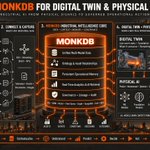





Agents do not need another vector store. They need a living, governed view of the business.
A table catalog can tell an agent where data lives. It cannot, by itself, maintain real-time operational context, business meaning, persistent memory, and policy aware action.
We are building an AI lakehouse that brings those primitives together such as CDC, multi-model data, ontology, memory, lineage, and governance on one shared foundation.
The goal is simple. No sidecar intelligence stack, no stale copies, no blind agents.
1
1
53
Most enterprise AI stacks have models, vector search and orchestration.
What they still lack is a governed place for business meaning, persistent memory and tool execution.
That missing layer is what we are building.
36
MonkDB unifies data, meaning, memory and governed execution, not merely data storage and analytics.
Its differentiation is the combination of:
- A Rust-based distributed engine
- Native multi-model processing
- Built-in CDC and real-time streaming
- Enterprise ontology and shared business meaning
- Persistent memory of entities, events, decisions and outcomes
- Runtime governance covering identity, policy, lineage, residency and audit
- Governed MCP tools for applications and AI agents
- Flight SQL and standard SQL interoperability
- Deployment across cloud, on-premises, edge and sovereign environments
Pointed products may offer parts of this stack. MonkDB’s advantage is bringing these capabilities together within one operational foundation.

1
36
AI queries rarely touch one data type. They combine vectors, documents, structured records, time-series and live streams.
Our new white paper explores unified query planning, hybrid search and how MonkDB brings these paths into one execution foundation.
#AI #Databases
lnkd.in/p/dixie_Pw

1
43
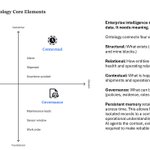
What is ontology? A shared definition of enterprise entities and their relationships.
Why does it matter? It gives fragmented data consistent business meaning.
When is it useful? When applications and AI agents must connect events, evidence, policies and outcomes to make reliable decisions.
That is the foundation for context aware, governed and reliable enterprise intelligence.
#Ontology #EnterpriseAI #AILakehouse

2
126
Six leading procurement AI frameworks agree that autonomy does not eliminate human judgement.
But who enforces when AI acts, humans approve or risk triggers escalation?
Our paper shows how MonkDB turns responsible AI principles into governed, explainable procurement action.
#ProcurementAI @heykrishnac
lnkd.in/p/djJpqW39

1
100
#Jev is designed for fast, bounded judgement but not broad reasoning.
MonkDB supplies the missing enterprise layer such as live context, persistent memory, evidence and governance.
Jev decides. Rules validate. LLMs or humans handle exceptions.
Outcomes return to MonkDB as organisational memory.

74
Models will keep changing. Enterprise memory, context and governance cannot.
This article explores why MonkDB is being built as the model-neutral intelligence core connecting trusted data to explainable action.

Every decision gets expensive when context must be rebuilt across six systems.
Events, history, vectors, documents, relationships and rules live apart. Latency, cost and risk compound.
MonkDB brings them into one governed engine. Context assembled. Decisions accelerated.
lnkd.in/p/dBK34_cE

1
70
A machine begins to overheat.
Kafka carries the alert. Snowflake holds its history. Elastic searches the logs. Pinecone retrieves the maintenance manual. Neo4j maps the dependencies.
Each tool performs its role but the decision still depends on connectors, data copies and cross system correlation. By the time the complete context is assembled, the machine may already have failed.
MonkDB handles this differently. It brings live telemetry, historical behaviour, logs, documents, vectors, asset relationships and business rules into one governed engine.
It can identify the probable cause, assess production impact, retrieve the correct procedure and recommend the next action with evidence.
The difference is simple:
Traditional stacks detect the event across multiple systems. MonkDB understands its significance in one and helps the enterprise act before the alert becomes downtime.
Want to try?
1
38
Delighted with the results. Early MonkDB internal benchmark results
On a five node test cluster, MonkDB demonstrated family specific processing throughput ranging from 6.84 million to 1.81 billion rows per second across tabular, vector, JSON, full-text, graph, geospatial and time-series workloads.
These are preliminary internal engineering results but not ingestion rates, production guarantees or apple-to-apple comparisons across data families. We are preparing the complete methodology, including hardware, datasets, query definitions and reproducibility results.
What matters is not one isolated number. It is MonkDB’s ability to process multiple data families within one governed operational-intelligence engine.
More to follow.
1
53
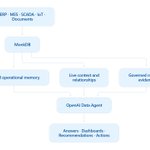
OpenAI is turning ChatGPT into an enterprise work interface that can connect with approved systems, analyse information, create dashboards and support actions.
The distinction is simple: OpenAI provides the reasoning and interaction layer, while MonkDB provides governed enterprise memory, connected context and real-time operational intelligence.
For example, when a plant manager asks why a production line may miss its target, MonkDB can correlate live machine signals, maintenance history, quality, inventory and production orders then provide the cause, impact, evidence and recommended action.
MonkDB does not compete with this development. But makes enterprise agents more contextual, explainable and actionable.

1
79
I just published From Conversational Analytics to Instant Business Answers medium.com/@subramanyamchall…
#EnterpriseAI #ConversationalAI #DataEngineering #RealTimeAnalytics
37
where models stop and where the enterprise intelligence layer begins?
DeepSeek-V4.1-Flash is a signal of where AI is heading: smarter architectures, sparse computation, native multimodality and radically better inference efficiency.
But model efficiency is only half the equation.
What happens beyond the model?
Persistent memory. Enterprise context. Relationships. Provenance. Governance. Real-time data. And deciding what information the model actually needs before it reasons.
The next AI infrastructure battle isn't just more intelligent models but making the entire intelligence loop efficient:
Data → Memory → Context → Model → Reasoning → Action → Learning
The model may be the brain. The real advantage is everything that makes the brain useful.
🤖 Made with AI

1
51
Where and why #Rust ?
For systems where latency, memory efficiency, concurrency, reliability and predictable resource usage matter but not just developer productivity.
AI infrastructure is moving closer to the metal.
Rust is increasingly becoming the language for that layer.
What's your thoughts?
1
37
The dragonfly offers a surprisingly powerful engineering lesson: Intelligence is not about processing everything but about knowing what matters, remembering what matters, and acting at the right moment.
linkedin.com/posts/krishna-c…

1
34
How do we deliberately engineer a Trust Factory?
linkedin.com/posts/krishna-c…

37
I just published How We Should Benchmark
Enterprise AI Memory Beyond LoCoMo medium.com/@subramanyamchall…