

WSxM: a software for scanning probe microscopy and a tool for nanotechnology. Free download at https://xitter.cf/t.co/veCqa5tUbY
Joined June 2020
- Tweets238
- Following163
- Followers446
- Likes170





🔊#WSxMpaperofthemont Y K Knelissen, J Escrig, ..., M G Mateu, J R Perilla, W H Roos, A Valbuena «Inositol Hexakisphosphate Promotes Open Pore State in HIV Capsid Protein Lattice by Reconfiguring Subunit Contacts» in @acsnano 1/3 👇

The authors use high-speed 🏎️ #AFM (HS-AFM) to directly visualize individual HIV-1 capsid pores 🕳️ switching between conformations, and reveal how IP6 shifts this dynamic equilibrium 2/3
pubs.acs.org/ancac3/article/…

🔊#WSxMpaperofthemonth A López-Perrote & E M Martín-Cuevas,..., @FMorenoHerrero, et al «CONCR lncRNA organizes a 3′-end structural domain that engages DDX11 for DNA replication and sister chromatid cohesion» in @MolecularCell 1/3 👇

The authors use #AFM to reveal how RNA folds and functions. Here, #AFM and cryo-EM uncover the architecture of CONCR, a long non-coding RNA that helps cells replicate DNA and keep newly copied chromosomes together 2/3
cell.com/molecular-cell/full…

🔊#WSxMpaperofthemonth @OscarGtzVar & @erzambu93, @pablerasares, Gomez-Herrero, Gnecco, Colchero, @jg_vilhena, @Cristinagomezu1, «Unveiling surface and subsurface atomic vacancies in MoS2 with lateral force microscopy» in @NatureComms 1/3 👇

The authors show that atomically-resolved lateral force microscopy can distinguish surface and subsurface defects in MoS₂ through their distinct friction signatures. 2/3
nature.com/articles/s41467-0…

🔊#WSxMpaperofthemonth
Q. Gao et al., «Substrate-Induced One-Dimensional Borophene-Silver Hybridization» in #JACS 1/3 👇

In this work, the authors report substrate-induced 1D borophene-silver hybridization: atomic-scale coupling between borophene and Ag that turns the interface itself into an ordered 1D hybrid structure. 2/3
pubs.acs.org/doi/full/10.102…

🔊#WSxMpaperofthemonth
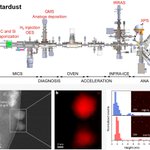
G. Tajuelo-Castilla et al., «The important role of hydrogen in the formation of silicon carbide in evolved stars» 🌟✨ in @NatureAstronomy 1/4 👇

Starting from atomic C, atomic Si and H₂, they reconstruct the chemical pathway from atoms → molecules → nanodust, helping clarify how stellar environments produce the grains that later seed planets 🪐and interstellar matter ✨🌠 3/4
🔊 #WSxMpaperofthemonth
M. Alkorta, K. Rothe, N. Néel, T. Frederiksen @thofrederiksen, J. Kröger «Coupling of Molecular Vibrational Modes across a Vacuum Barrier» in #JPhysChemC @AmerChemSociety 1/3

CO-functionalized tips are famous for ultrahigh resolution imaging, but what about their role in spectroscopy? The authors show how tip flexibility affects inelastic electron tunneling spectroscopy (IETS) by probing a single melamine isomer on Cu(001) 2/3 pubs.acs.org/doi/full/10.102…

🔊 #WSxMpaperofthemonth
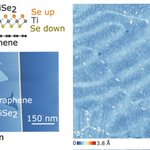
D Călugăru, Y Jiang, H Guo @HaoG95, S Sajan, Y Wang, H Hu, J Yu, B A Bernevig, F de Juan, M M Ugeda @m_ugeda «Observation of an obstructed atomic band in a transition metal dichalcogenide» in @NaturePhysics 1/3

The authors show an unusual electronic state in monolayer NbSe₂. It’s not topological, but not a standard atomic band either. The electrons are centered at an empty spot in the lattice, not on any atom: an obstructed atomic band nature.com/articles/s41567-0… 2/3
