
Professor @UCSF, @PharmChemUCSF, CVRI, and @UCSFCancer Genetically encoding unnatural amino acids to study biological processes and to develop biotherapeutics.
San Francisco
Joined December 2021
- Tweets30
- Following67
- Followers272
- Likes23


Lei Wang retweeted

Each year, we highlight companies that received sizeable early-stage funding in the previous year. Enlaza Therapeutics is developing protein-based therapeutics that bind irreversibly to their target go.nature.com/4gzF8eR


Lei Wang retweeted
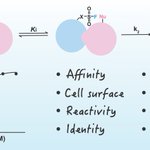
The first session ‘Cell surfaces and their interactions’ features talks from @CarolynBertozzi, @ZevGartner, Balyn Zaro @ZaroLab, Lei Wang @WangUCSF & @AashishManglik


Lei Wang retweeted

Arginine Accelerates Sulfur Fluoride Exchange and Phosphorus Fluoride Exchange Reactions between Proteins (Lei Wang and co-workers) @WangUCSF #openaccess onlinelibrary.wiley.com/doi/…

Our department is hiring! Ladder Rank Faculty Position – Assistant, Associate, or Full Professor: We seek creative, innovative scientists who define and address fundamental questions in diverse areas relevant to our Department. aprecruit.ucsf.edu/JPF05273.
2
9
296
Biospecific Chemistry allows for the selective covalent targeting of endogenous biomacromolecules in vivo without altering the biomacromolecules themselves.
pubs.acs.org/doi/full/10.102…

The forefront of click chemistry, Phosphorus fluoride exchange (PFEx), reaches new heights in protein environments! Our research reveals PFEx activates through proximity, showing unique properties. dlvr.it/T3fcWL
@Chem_CP


Online now: Genetically enabling phosphorus fluoride exchange click chemistry in proteins dlvr.it/T3fcWL

How does proximity-enabled SuFEx (the new generation of click chemistry) behave in protein context? - find out in Chemical Science pubs.rsc.org/en/content/arti…
@ChemicalScience @PaulKlauser


What if we have AI as editors!

Rejection of your paper or grant has NO relevance to the opinion of #research community. It is nothing but the opinion of one person.
Several examples:
1. The first paper on graphene was rejected from Nature because “it did not constitute a sufficient scientific advance”. Later, it was awarded a Nobel prize.
2. The first manuscript showing the microbiome-brain connection was published after 7 submissions that took 3 years. Today, this field has exploded. I expect it will get a Nobel prize in the future.
3. Theodore Maiman tried to publish a paper describing the first operating laser in Physical Review Letters and… got a rejection!
4. Peter Ratcliffe, who worked on cells’ response to changes in oxygen levels, got his key paper rejected from Nature (see photo). Later, he was awarded a Nobel Prize for this work.
And there are many other examples…
.
And yet I see so many young scientists stressing about rejections. For some reason, they seem to genuinely expect that the editors should know which study is truly worth it.
As a result, many rejections are met with surprise and disbelief:
“How could they reject it? They publish so much trash, and yet they think our detailed 3-year-long study is not interesting to the community! WHY?”
.
Well, the reality is:
- Most editors have very little time to delve into your study. They can easily FAIL to recognize the potential impact of your study. Proper communication in the cover letter and clear writing style can help (although only to a limited degree).
- Many reviewers have little idea about the science in your paper. But they can have a big ego. So, if they have a bad day or were rejected recently, it’s easy for them to find 1000 technical reasons to reject your paper as well.
- Most scientists genuinely don’t know if your discovery can make any impact. If we could predict the course of science, we would be living very differently!
My message is simple:
Forget about objectivity. Academia is a very subjective world. Fight for objectivity but don’t take it for granted.
A great study will be found, cited and recognized. Disregard of where it’s published.
A bad study requires a high-impact journal to be found and cited. But the long-time recognition might be a problem.
High-IF journals are simply billboards. Their rejections do NOT represent the opinion of a scientific community.
You can get rejected but don’t reject yourself!
Believe in your results.
#AcademicTwitter #AcademicChatter

4
597
We have developed a covalent nanobody that binds its target irreversibly via PERx. Using this nanobody as delivery vehicle for radionuclides enhances PET imaging and antitumor effects! Thanks to fantastic colleagues at UCSF. @PaulKlauser @mikeevans_ucsf pubs.acs.org/doi/10.1021/acs…

Amazing science and tremendous impact! Congrats to Kevan!
Science World Honors Kevan Shokat for High-Impact Cancer Research cancer.ucsf.edu/news/2023/02…
1
5
442


We feel so very honored! Lucky to apply click chemistry to glycobiology; both fields are pioneered by this year's Nobel Laureate!
This post is from an account that no longer exists. Learn more
1
7
Our latest #research on creating covalent linkages between proteins and carbohydrates, published with
@SpringerNature in @NatureChemistry, allowing one to irreversibly lock proteins with bound carbohydrates for researching and engineering. rdcu.be/cXgml

Our latest #research with @YinShenLab on creating covalent linkages between proteins and RNAs, published with @SpringerNature in [@NatureChemistry], allowing one to irreversibly lock proteins with bound RNA in vivo for researching and engineering. rdcu.be/cW2bZ

Congrats to Barry for the awoken "sleeping beauty"! Congrats to @CarolynBertozzi -- seeing her group started from UCB when I was a graduate and being amazed ever since! Thanks all for the great chemistries for our chemical biologists.

BREAKING NEWS:
The Royal Swedish Academy of Sciences has decided to award the 2022 #NobelPrize in Chemistry to Carolyn R. Bertozzi, Morten Meldal and K. Barry Sharpless “for the development of click chemistry and bioorthogonal chemistry.”

2
8
Amazing day 1 at #QBIChemBio22 with ~500 chemical biologists from @UCSF @UCB_Chemistry @Stanford_ChEMH

8
Lei Wang retweeted

Two drugs are better than one—blocking drug action in the periphery while maintaining CNS pharmacology (mTOR, Lrrk2 and Her2). #Glioblastoma @bignerdzzy and Waweisslab.UCSF.edu @UCSFCancer @HHMINEWS @UCB_Chemistry @MichaelJFoxOrg nature.com/articles/s41586-0…

Lei Wang retweeted

#Tumor cells can be tricky and good at evading the #ImmuneSystem, but an exciting new therapy can help target those cells for destruction. “We suspect that this could lead to deeper and longer responses for cancer patients,” UCSF’s Charles Craik says. ucsfh.org/3xpMRXv
AddThis | Home authors.elsevier.com/a/1fZJ~… Our attempt to fight the SARS-CoV-2 and variants. Thanks to all co-authors for your incessant efforts during the pandemic. Thanks to @Chem_CP for constructive and prompt reviewing and open access.
4