

Building the capital-raising workspace for advisers and founders: routes, evidence, next actions. Adviser waitlist open.
London, uk
Joined August 2026
- Tweets96
- Following53
- Followers143
- Likes101






Wayfin retweeted

Another outstanding piece of analysis from @credistick 👇
If an LP wants to build a diversified venture portfolio, part of the job is then finding managers who bring a range of opportunities. In today’s concentrated market that can be tricky, as you can invest in five different funds and still end up with a lot of the same bets. Which is great if they all work out. Less great if they don’t.
Dan puts some data behind this. Across 5 megafunds’ seed portfolios, he saw an avg of ~87% of labelled investments were in AI. EMs covered more ground… Still a focus on AI (avg of 55% in one example), but more than twice as likely to back a wider ranges of businesses.
There's so much talk about how tough it is for EMs right now (and it is), and this data illustrates the important role they play inthe ecosystem. They’re willing to put the time (and 💸💸) into ideas that aren’t yet obvious to the rest of the market.

The average emerging manager backs more than twice as many outlier profiles than a megafund, per investment.
Pooling 5 EM portfolios increases the range of investments significantly, while the same is not true for the more homogenous megafunds.
At the earliest stages, venture capital is built on discovery; innovation relies on an appetite for companies outside of "legible" categories.
Megafunds' revealed preference is to dominate existing categories, rather than drive discovery. So, the market will continue to rely on small and emerging managers for discovery.
Thanks to @dealroomco for letting me loose on their data to test this hypothesis.
Full report available here:
research.joinodin.com/#/pape…

Wayfin retweeted

I redid the startup founder signals that lead to top tier VCs investing in the seed / A, after incorporating some feedback.
This added ex-frontier lab and cyber security near the top, IIT as a positive, and educated in China as a negative.
The main changes were;
- extended founding year to 2019-2026, ~2x'd the number of startups
- unified and added some signals
Here are the new signals:


Which startups are most likely to get an investment from top tier VCs?
I looked at ~60 attributes across 5000 startups and these were the 15 strongest.
#1 is being from a top tier fund. MBA is a negative signal
Full list of signals below:

Wayfin retweeted

Founders need founder friends.
The bigger your company gets, the fewer people can relate to what you're going through.
Go find some 🤗
Wayfin retweeted

Today we’re out of stealth, and we’ve raised a $40m seed round co-led by @creandum and @usv, to bring Instant Robot Learning to life.
For the past few months, we‘ve been busy building a new company.
Machenta.
This follows results from a new kind of robot foundation model we’ve built, which I’m so excited to share with you today!
Usually, it takes hours/days of data collection and training to teach a robot.
We’ve built a model that learns tasks instantly: one demonstration, no further training.
A model trained entirely in simulation, without a single pixel of real-world data.
A model where teaching robots is so quick and easy, it feels like physical vibe coding.
A model for robots that learn like humans do, from someone like you.
Welcome to the era of Instant Robot Learning.
Thank you @Kathi_Wilhelm, @rebeccakaden, @hkanji, @jonno_evans and all of our angels for your support!
@Machenta_
Learn more: machenta.com/blog/instant-ro…
See below for what you can do with Instant Robot Learning!
Wayfin retweeted

The US government will give your startup up to $2M and take 0% equity.
It's called America's Seed Fund, run by the National Science Foundation.
What you get:
• Up to $305K to start (Phase I)
• Up to $2M total per company for R&D
• 0% equity: you keep your company and your IP
• Funding across AI, robotics, semiconductors, energy, medical devices and more
What you don't need:
• A VC
• A warm intro
• A pitch deck to get started
You start with a short online pitch and hear back in about 1–2 months.
ThousandEyes started with NSF funding as a 2-founder team. Cisco later bought it for around $1B.
The condition: you're a US small business building deep tech, meaning something based on real science or engineering.
Next deadline: Nov 4, 2026.
Bookmark it and send it to the deep tech founder who thinks VC is the only way.
Start your Project Pitch here: seedfund.nsf.gov

Wayfin retweeted

[Partner Content]
Are private assets here to stay? 📷
As more companies pivot away from public listings, private markets have transformed from a niche choice into a foundational pillar of institutional finance.
Read more about private assets with Barings: cityam.com/financial-literac…
#PrivateMarkets #AssetManagement #PrivateEquity #FinanceNews #UKBusiness #Investments
Wayfin retweeted

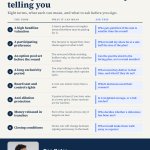
A GP doesn't open your data room assuming you lied. They assume the documents drifted — deck sells the future, model survives a stress test, cap table records what happened. Four places they rarely agree, and what each tells an investor. New piece below.
🤖 Made with AI

Wayfin retweeted

Congrats to @SpamRoss, @mduvall_, and @numeral (YC W23) on their $100M Series C!
Numeral automates sales tax compliance end to end, from registrations and calculations to filings and payments.
They handle US sales tax plus VAT and GST across more than 90 countries, all in one system. More than 3,500 businesses run their compliance on Numeral, including Supabase, Eight Sleep, and Graza, with transaction volume up 327% in the past year.
Wayfin retweeted
Wafer (@wafer_ai) is building a fast AI inference cloud that uses agents to optimize GPUs and run open-source models at industry-leading speeds. The result is the low cost of open source with the latency of a much smaller model.
Four months after launching the cloud, they went from zero to $8 million in ARR and just raised a $40M Series A.
In this episode of Founder Firesides, YC's @snowmaker sits down with Wafer co-founders @gpusteve and @gpuemi to talk about going from UChicago undergrads to building one of the fastest-growing AI infrastructure companies in just over a year. They share how a college side project became Wafer, how they got GLM 5.2 running 2-3x faster than anyone else in the market, and why speed, not just cost, is pushing enterprises toward open-source models.
00:48 — What Wafer Does
01:35 — Going From $0 to $8M ARR in Four Months
04:21 — Scaling Faster Than They Could Keep Up
09:14 — How AI Makes AI Faster
11:21 — The Pivot That Changed Everything
14:41 — Why Open-Source Models Are Taking Off
18:03 — From a College Side Project to Wafer
23:33 — Advice for Starting and Joining Startups