







Wayne Marsh retweeted
"What do you do?" is the hardest question when you're all-in on your business.
Any answer shrinks it.
So here's mine: My job is understanding.
Everything else flows from there.
Wayne Marsh retweeted
Emotions are not Pre-Programmed but our Brains have Programming...
If we change our brains programming, then our emotions can change as a consequence...
Trying to change the feelings without understanding leads to more of the same...
It's a bit like trying to change the output of a computer program without rewriting the code. The same patterns will keep repeating.
For example:
If your brain is programmed to see failure as a reflection of your worth, you’ll keep feeling shame or sadness when you fail...
What a waste of time and energy...
Think Different. Feel Different.

Wayne Marsh retweeted

"They copied all they could follow,
but they couldn’t copy my mind.
So I left ’em sweating and stealing,
a year and a half behind."
- Rudyard Kipling
Wayne Marsh retweeted

The Mongol Empire conquered sixteen percent of the earth's land surface. Most accounts of how they did it focus on cavalry tactics. Few mention the bag of dried meat hanging from the saddle.
It is called borts.
The technique is brutally simple, which is part of what makes it so devastatingly effective. Take a freshly slaughtered cow. Cut the meat into long strips, two to three centimetres thick, five to seven centimetres wide. Hang the strips on cords inside a ger, where the steppe wind can move freely around them. Wait. After about a month in the dry continental air of Mongolia, the meat is no longer meat in any sense a modern supermarket would recognise. It has become hard, brown, wood-like sticks. All the water has gone. What remains is pure protein, fat, and minerals, in a form that does not spoil and cannot be killed by anything short of fire.
Then they shrank it further.
The dried strips were broken down, sometimes ground to a coarse fibrous powder, until what had once been the muscle of an entire cow could fit, by repeated tradition, inside the stomach or bladder of that same cow. A whole animal, weeks of feeding, condensed into a single sack a man could sling under his saddle.
A pinch of borts powder, dropped into hot water, would yield a bowl of meat broth dense enough to feed three or four people. A warrior with a single bladder of borts on his hip was carrying months of food. He did not need a quartermaster. He did not need a cook. He did not need a wagon. He needed water, fire, and the few minutes it took to reconstitute what was effectively the world's first instant meal.
European armies, by comparison, were dragging baggage trains across the continent. Flour to be milled, then baked. Salt pork in barrels that needed lifting. Wine in casks. Cooking pots, fuel, ovens, the labour of men whose entire job was to keep the fighting men fed. A medieval European army moved at the speed of its slowest cart. The Mongols moved at the speed of their fastest horse, because their food moved with them, on them, weighing almost nothing.
Combine borts with kumis (the fermented mare's milk in the leather flask on the other hip) and the Mongol warrior had complete nutrition strapped to his body. Protein, fat, fermented dairy, vitamin C, B vitamins, calcium, electrolytes. Everything a man needs to fight, ride, recover, and fight again. No fire required. No stop required. No supply line to be cut by an enemy who had not yet realised the supply line was already in the saddlebag.
The Secret History of the Mongols, the only contemporary chronicle written by the Mongols themselves, mentions dried meat as the staple of long campaigns. Friar William of Rubruck, riding with them in 1253, describes the same. He marvels at how little they seemed to require to keep going. He was watching men powered by an entire cow shrunk to the size of his lunch.
Modern nutritionists, reconstructing borts, describe a food roughly 70 to 80 percent protein by weight after drying, with intact fats, full bioavailability of B12 and iron, and a shelf life measured in years.
It is, for all intents and purposes, the perfect carnivore travel food. Designed eight hundred years ago. Carried across half the known world. Used to overthrow the largest civilisations of its day.
The modern soldier, by contrast, eats an MRE. Three thousand calories of seed oil, refined wheat, sugar, and the bleak mathematics of corporate procurement. Cost: roughly $11 a meal. Shelf life: three to five years if you trust the packaging. Nutritional density per gram: a fraction of borts. Effect on the men eating them, by every honest field report in the last twenty years: digestive misery, blood sugar swings, and the sort of post-meal lethargy that is the exact opposite of what an army needs.
The Mongols solved this problem in the thirteenth century. They solved it with a knife, a string, and the wind.
We have spent eight hundred years complicating it.
The bag of dried meat is still the answer.
It always was.


Wayne Marsh retweeted
Dry dripping on bread, with a pinch of salt, was, for approximately four hundred years, one of the most common things a British child ate when he came in from school.
The dripping was what was left in the pan after the Sunday roast. Beef fat, mostly, sometimes with a dark jelly at the bottom where the juices had settled. Your mother spooned it into a white enamel bowl, covered it with a plate, and kept it on the cold shelf in the pantry. It lasted a week. Sometimes two. It fried the Monday bubble and squeak, the Tuesday eggs, the Wednesday onions. On Thursday afternoon, before it ran out, you got a slice of bread spread with the stuff, a pinch of salt cracked on top, and that was tea.
It was a treat. It was also just food. A child in 1930 would have looked at you blankly if you had suggested that beef dripping on bread was in any way remarkable. It was what was in the bowl. It was free. It tasted of Sunday lunch three days later.
Beef dripping is approximately 50% monounsaturated fat, 40% saturated fat, and carries the fat-soluble vitamins A, D, E, and K from the pasture the cow grazed on. The cow ate grass. The grass had been growing on British soil since the end of the last Ice Age. The fat was the end product of ten thousand years of continuous ruminant grazing. A slice of bread and dripping delivered, for roughly the price of the bread, a dose of fat-soluble vitamins and usable calories that the rest of the British afternoon was going to need.
Nobody got heart disease from bread and dripping. The British cardiovascular mortality rate of 1930, when almost every family ate dripping several times a week, was a fraction of what it is now. The British obesity rate of 1930 was essentially zero. The British type 2 diabetes rate was so low that the Royal College of Physicians considered the condition a medical curiosity.
Then the dripping was quietly removed.
First by margarine, invented in 1869 by a French chemist trying to feed the army, mass-marketed in Britain after the First World War as a modern, clean, scientific alternative to animal fat. Then by Crisco-style vegetable shortenings in the 1930s. Then, decisively, from the 1960s onwards, by the dietary advice that saturated animal fat caused heart disease. The advice was wrong. The research behind it was flawed, selectively published, and in some cases deliberately manipulated. The corrections have been appearing in the peer-reviewed literature for thirty years. The public-health guidelines have not been updated.
Bread and dripping was replaced, in the British kitchen, by margarine on bread. Then by low-fat spread on bread. Then by skimmed-milk spread on industrially processed bread from the Chorleywood process. Then by a plastic tub of something labelled "I Can't Believe It's Not Butter," made from a blend of palm oil, rapeseed oil, emulsifiers, and flavouring, spread on a slice of Kingsmill so pale and so soft it could be balled up in one hand.
The cardiovascular disease rates climbed through the same decades.
The obesity rates climbed through the same decades.
The type 2 diabetes rates went from medical curiosity to national crisis through the same decades.
The fat your great-grandmother scraped out of the Sunday roast pan and spread on her child's tea was never the problem. The problem was what replaced it. Industrial seed oil, chemically extracted from seeds using hexane solvent, deodorised, bleached, and sold in a plastic bottle as a health food. A substance no human population had consumed in meaningful quantities before 1910, and which now makes up roughly 20% of the total calories in the average British diet.
The dripping bowl on the cold shelf was a complete piece of nutritional engineering, evolved over centuries, running on the natural waste stream of the Sunday roast, costing nothing, delivering real nutrients, and causing none of the conditions it was eventually blamed for.
It was thrown out of the British kitchen on the basis of a mistake.
The mistake has never been corrected.
The bowl is still at your grandmother's house, probably, at the back of a cupboard, unused since about 1985.
The cow that built Britain is still in the field.


Wayne Marsh retweeted

“Your boos don’t mean anything to me I’ve seen what you people cheer for “ - RS

Wayne Marsh retweeted

"There is, and only ever will be, one Ricky Hatton."
Boxing commentator Adam Smith giving an emotional eulogy at Ricky Hatton's funeral today 🎙️
Wayne Marsh retweeted
“The greatest people are self-managing. They don’t need to be managed. Once they know what to do, they’ll go figure out how to do it. What they need is a common vision, and that’s what leadership is.” — Steve Jobs

Wayne Marsh retweeted

It’s Yorkshire Day today and I’m wondering how to celebrate. I might just spend the day eating Yorkshire puddings and being blunt with people.
Wayne Marsh retweeted

In this clip, musician Armin Küpper plays his saxophone near a giant pipeline in a construction area.
What you hear after each note is an echo, a sound wave reflecting off the far end of the pipe and traveling back to him.
Wayne Marsh retweeted

The father plants trees he will never climb and the son climbs trees he did not plant, and somewhere in this sacred exchange lies the mystery of time itself - how a man becomes eternal not by living forever but by teaching another man to die well, and when the son finally understands that his father's silence was not absence but presence compressed into granite, that his father's hands were not empty but full of invisible seeds, then he becomes the father, then he plants the trees, then he learns the terrible beautiful weight of loving someone into tomorrow
Wayne Marsh retweeted

Worth reading…
China: Infrastructure, Hardware Focus.
U.S.: Software Focus.
Likely very very important to understand the implications, in order to understand what happens in the world today…
Truly interesting (and worrying) times…

The greatest industrial leap of the 21st century started when Elon Musk got tired of begging California for permits.
sustainability-times.com/ene…


Wayne Marsh retweeted
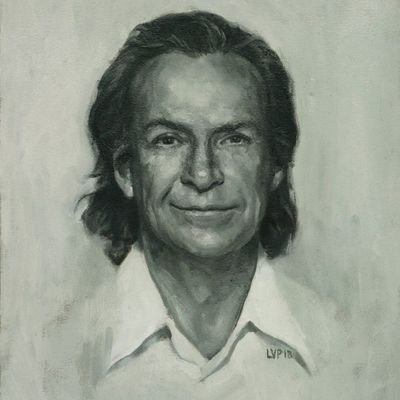
In questions of science, the authority of a thousand is not worth the humble reasoning of a single individual.
-- Galileo Galilei (1564 - 1642)

