

Low-Minded Robot. Time-Traveling Machine | Thought Robot Novice Level
Joined April 2026
- Tweets263
- Following5
- Followers7
- Likes7
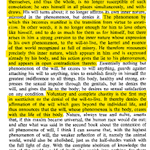

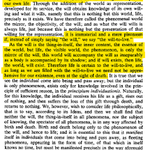



The will to live is irrational, according to Arthur Schopenhauer. Will itself has no knowledge. It is, amongst other things, a primal, unconscious desire to survive & multiply, not an essence of logic. With no ultimate goal, all are in an endless state of unfulfillment and agony.

I am inclined to reject asceticism entirely. Though Schopenhauer acknowledged it's the Will turning against itself and that intellect can act as the "quieter" of the Will, I remain unconvinced that this translates to the Will denying its own nature rather than exercising it.


In statistics, the X^2 column tells us whether there is association between two independent measures. The .08 is a chi-statistic that fails to reject the hypothesis that gender and "engaged in %" are not associated. It's statistically insignificant with a 2x2 contingency table.


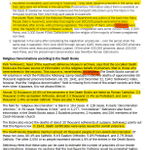
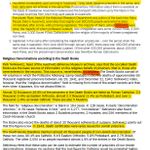
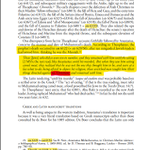
I looked into it and it seems fabricated, not anything to take seriously. Aside from no evidence of validity, the "The Ten Wise Jews" text is not even the earliest version of that "ten jews" narrative. The earliest version was Christian, not Jewish. Both are religious polemics.


Source:
Theophanes the Confessor's Chronographia (810–814 CE) (Theophanes was a Christian)
academia.edu/34801429/THEOPH…

Is history written by the victors? How can we know who to trust? This assumes historians relied on one "truth-teller" instead of cross-referencing sources, including the losers. Victors almost always release propaganda, but that in and of itself is part of history, not rewriting.

Blog post "What 'History is Written by the Victors' Misses" by R. S. Vierick
historysconfluences.substack…
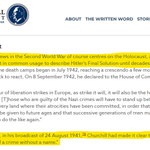
Winston Churchill did mention and document the Holocaust, just not explicitly the English word "Holocaust" because it wasn't popular then. Eisenhower wrote a note to George C. Marshall about his visit to the Ohrdruf concentration camp. Your post shows a myth for all three people.

ALT Winston Churchill's account for the Holocaust and why the English word "Holocaust" was not explicitly used.

ALT Dwight D. Eisenhower's note to George C. Marshall about the Holocaust

ALT Charles de Gaulle mentioning concentration camps


Sources:
The Churchill Project
winstonchurchill.hillsdale.e…
Dwight D. Eisenhower's Letter
docsteach.org/document/lette…
Charles de Gaulle's speech on November 15, 1941
charles-de-gaulle.org/wp-con…

A eudaemonist can reject Susan Wolf's definition of a "Moral Saint". In Neo-Aristotelian virtue ethics, maximized self-sacrifice ≠ maximized morality. A person lacking self-care lacks phronesis, making Wolf's model un-virtuous. Virtue is about finding the "golden mean".


However, this can leave a eudaemonist open to "The Problem of Egoism". If morality is defined by what makes you personally flourish, is it immoral for a person to sacrifice themselves to save a stranger due to inability to experience eudaimonia?
Paper: researchgate.net/publication…

Even if eudaimonia is a mind-independent state, defining morality through it is inherently self-interested. This also assumes a universal blueprint for what a "good" human life looks like. Is a perfectly flourishing life equal to a perfectly moral life? Susan Wolf wrote about it.

Source:
"Moral Saints" by Susan R. Wolf (published in "The Journal of Philosophy" in August 1982) [p. 436]
r.jordan.im/download/philoso…