

Exploring the habitats, wildlife, and plants of the Adirondack Mountains in upstate New York.
Lake Placid, NY
Joined May 2018
- Tweets5.1K
- Following139
- Followers1K
- Likes3.8K





COMMENTARY: Calls continue for protecting Whitney Park adirondackexplorer.org/commu…

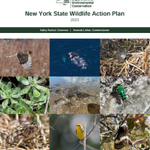
New York’s Environmental Conservation Agency has issued a new State Wildlife Action Plan. The plan targets 570 at-risk wildlife species. The Monarch butterfly was upgraded to high priority: the Common Loon remains on the list. The document can be found here: dec.ny.gov/sites/default/fil…


Ring-billed Gulls are frequently seen throughout the Adirondacks during the warmer months. Once lakes freeze over in the Adirondack interior, these gulls will gradually leave for warmer areas (like Lake Champlain) in search of open water. Ring-billed Gull, Lake Flower Boat Launch, Saranac Like, NY (29 October 2026). wildadirondacks.org/adironda…

Heron Marsh at the Paul Smith’s College VIC, Franklin County, NY (29 October 2026). wildadirondacks.org/adironda…

This Red Squirrel scolded me nonstop for having the audacity to walk by his tree. Red Squirrel, (Tamiasciurus hudsonicus), Paul Smith’s College VIC, Franklin County, NY (29 October 2026). wildadirondacks.org/adironda…

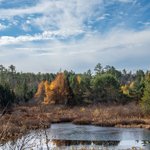
Fall Foliage Update: Tamaracks along the Chubb River on the Adirondack Rail Trail in Lake Placid, NY (28 October 2026). wildadirondacks.org/adironda…

Although most of the Eastern Coyotes we catch on our trail cameras are moving at night, daytime activity is not unusual. Eastern Coyotes, Lake Placid, New York (25 October 2026). wildadirondacks.org/adironda…
Alexandra Kosiba, "The Economics of Leaves," Northern Woodlands, Autumn 2026. northernwoodlands.org/articl…

Fall Foliage Update: Tamaracks along the Chubb River, Lake Placid, NY (25 October 2026). wildadirondacks.org/adironda…

This Dark-eyed Junco is sunbathing, absorbing the warmth of direct sunlight, while periodically preening to condition its feathers. Its open bill is a normal cooling response. Dark-eyed Junco, Lake Placid, New York (25 October 2026). wildadirondacks.org/adironda…
Fall Foliage Update: The second act of the Adirondack fall color show is all about Tamaracks. Tamaracks in fall color, Lake Placid, NY (23 October 2026). wildadirondacks.org/adironda…

Hundreds of migrating Monarch butterflies were fueling on this field of blooming New York Ironweed in mid-September. Monarchs, Adirondack Loj Road, Lake Placid, NY (13 September). wildadirondacks.org/adironda…
New Common Loon research uncovers a widespread decline and calls for action. tinyurl.com/dtaj74we

Song Sparrow diet shifts with the seasons. In the spring and summer, they eat mainly insects and other invertebrates. During winter and fall migration, they shift to primarily seeds and fruits, as this Song Sparrow is demonstrating. Song Sparrow, Hulls Halls Road, Keene, New York (15 October 2026). wildadirondacks.org/adironda…
Adirondack Council: State of the Park 2026-27. adirondackcouncil.org/news/s…

Old Road at the Peninsula Nature Trails, Lake Placid, NY (20 October 2026). wildadirondacks.org/peninsul…

The larval form of the Isabella Tiger Moth is called a Woolly Bear. Canadian and U.S. folklore holds that the relative amounts of brown and black hair on a larva indicate the severity of the coming winter. It is believed that if the brown band is wide, winter weather will be mild, and if the brown band is narrow, the winter will be severe. Isabella Tiger Moth, Adirondack Rail Trail at Ray Brook, Lake Placid, NY (20 October 2026). weather.gov/arx/woollybear

Fall Foliage Update: Tamaracks provide the second act in the Adirondack color show. Tamarack needles change color first to greenish-yellow, then to a brilliant orange before they are shed. Tamaracks, Lake Placid, NY (21 October 2026). wildadirondacks.org/adironda…
