

The B2B ghostwriter behind 39+ founders, with 50M+ client impressions and $120K in pipeline. Sharing playbooks on content, personal branding & audience growth.
X and LinkedIn ghostwriter
Joined August 2026
- Tweets2.5K
- Following128
- Followers289
- Likes337





Pinned Tweet
I've ghostwritten for 39 founders, clients, and brands on X and LinkedIn since 2023.
20 lessons I've learned that I wish I knew earlier:
1. Your hook decides whether people read the rest.
2. One post should deliver one main idea.
3. Specific numbers beat vague claims.
4. Simple words reach more people.
5. Your first 280 characters matter the most.
6. Viral posts don't always bring clients.
7. Your profile should explain what you do in seconds.
8. Strong opinions attract the right audience.
9. Stories make boring topics interesting.
10. Your replies can bring more followers than your posts.
11. Good formatting makes posts easier to read.
12. Repeating your best ideas builds recognition.
13. Your client's real experiences are content gold.
14. A weak hook can bury a great insight.
15. Impressions mean little without the right audience.
16. The best content answers real buyer questions.
17. You can reuse one idea in 10 different ways.
18. Consistency matters, but quality determines whether people stay.
19. You don't need 10,000 followers to get clients.
20. The best posts make readers feel understood.
My biggest lesson:
You can spend 3 hours writing a post nobody cares about if you spend zero minutes understanding who it's for.

William Salim retweeted
You post "5 lessons on marketing."
My question: which of those 5 lessons have you actually tested, observed, or researched?
If you can't show me the evidence, I'd question why you're teaching it.
This is how to see content from a world-class writer's POV: every claim you make needs proof.
Tried something once? Tell me what happened.
Studied 10 examples? Show me the patterns you found.
Done something for 5 years? Tell me what you've seen work repeatedly, and when it works.
But this is where people get it wrong:
Just because something worked for you once doesn't mean it'll work for everyone. And just because you noticed a pattern doesn't mean you know what caused it.
Let's say you studied 20 creators.
You noticed 15 of them use personal stories in their most popular posts.
Great. That's worth sharing.
But then you write: "Personal stories get more engagement."
Hold on. How do you know the stories caused the engagement?
Maybe those creators already had large audiences. Maybe the topics were stronger. Maybe something else made those posts take off.
You haven't tested any of that.
See what I mean?
You don't need 100K followers, a million-dollar business, or 10 years of experience to write something worth reading.
You can break down a post, compare two approaches, explain a decision you made, or share the results of a small experiment.
Just know the difference between what you've observed and what you've actually proven.
That's how I'd judge the strength of a post.
And that's how you can earn credibility long before you have impressive credentials.
William Salim retweeted
10,000 followers who will never buy from you can be worth less than 100 who might.
If you're using X to get clients, stop treating every new follower as equally valuable.
A founder who needs your service is worth more to your business than 100 random accounts.
Attract the right people.
William Salim retweeted
Sometimes I remember how lucky I am to work remotely.
No daily commute.
No hours wasted in traffic.
More time for work, family, and life.
I don't want to take this freedom for granted.
Thank You, God. 🙏
William Salim retweeted
I think we've forgotten how beautiful it feels to have enough.
A warm meal waiting at home.
Enough money to sleep without worrying about tomorrow.
A job that pays the bills without stealing your entire life.
A few people who genuinely love and care about you.
The internet will always make you feel like you're falling behind.
Like you should be earning more, achieving more, and becoming more.
But sometimes, the life you're desperately trying to escape is the life someone else is praying for.
And maybe that's worth appreciating a little more.

William Salim retweeted
Want to know the only true form of failure?
Giving up on yourself.
It's not getting rejected by 20 potential clients.
It's not spending 6 months building something that nobody buys.
It's not publishing 100 tweets and barely getting any likes.
It's not watching people your age make 10x more money than you.
It's not starting over at 25, 30, or even 40.
Those things hurt.
They make you question your skills, your decisions, and sometimes your entire future.
But none of them means you've failed.
You can recover from a bad business decision.
You can learn from a failed project.
You can find another client after getting rejected.
You can rebuild after losing everything.
As long as you're willing to try again, there's still a chance your life can change.
And sometimes, that chance is all you need.
So take a break if you're exhausted.
Cry if you need to.
Start from zero if you have to.
Just don't give up on the person you're still becoming.
Your story isn't over yet.
You post "5 lessons on marketing."
My question: which of those 5 lessons have you actually tested, observed, or researched?
If you can't show me the evidence, I'd question why you're teaching it.
This is how to see content from a world-class writer's POV: every claim you make needs proof.
Tried something once? Tell me what happened.
Studied 10 examples? Show me the patterns you found.
Done something for 5 years? Tell me what you've seen work repeatedly, and when it works.
But this is where people get it wrong:
Just because something worked for you once doesn't mean it'll work for everyone. And just because you noticed a pattern doesn't mean you know what caused it.
Let's say you studied 20 creators.
You noticed 15 of them use personal stories in their most popular posts.
Great. That's worth sharing.
But then you write: "Personal stories get more engagement."
Hold on. How do you know the stories caused the engagement?
Maybe those creators already had large audiences. Maybe the topics were stronger. Maybe something else made those posts take off.
You haven't tested any of that.
See what I mean?
You don't need 100K followers, a million-dollar business, or 10 years of experience to write something worth reading.
You can break down a post, compare two approaches, explain a decision you made, or share the results of a small experiment.
Just know the difference between what you've observed and what you've actually proven.
That's how I'd judge the strength of a post.
And that's how you can earn credibility long before you have impressive credentials.
William Salim retweeted
In 2023, someone paid me to write posts on X.
That project gave me a simple piece of proof.
A SaaS founder had ideas, limited time, and a need for clearer writing.
I could listen, organize the material, and turn it into publishable content.
The work has expanded into a more structured GTM and ghostwriting process since then.
I now add buyer research, homepage review, sales notes, and message checks around the writing.
The core skill is still the same.
I have to understand what the founder means before I can write it clearly for somebody else.

William Salim retweeted
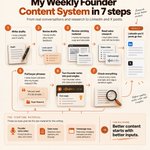
A normal week in my founder-content business includes 7 jobs before X posts go live:
• I write X drafts
• I revise drafts after client feedback
• I review homepage copy and old posts
• I read sales notes and call transcripts
• I pull buyer phrases into my buyer-research file
• I turn founder notes into clear post angles
• I check every claim, example, and vague sentence again
One sales note may give me a repeated objection.
One founder voice note may contain a useful product decision.
One homepage line may reveal a message that needs clarification.
Sales notes, founder voice notes, and homepage lines give me the starting material for the writing.

William Salim retweeted
Who the hell decided how you're supposed to live your life?
Who decided you need a degree to succeed?
A 9-to-5 to be respected?
A certain income by 30?
Most of these rules were made up by other people.
You're allowed to question them.
You're allowed to create your own path.
It's your life.
Live it on your own terms.
William Salim retweeted
Give me an X profile with no followers, no testimonials, and no impressive results.
I'd still know how to turn it into a $100K personal brand that Gary Vee would follow.
I'll reveal a technique I use to make any personal brand stand out on X:
Find a popular piece of advice in their industry.
Then ask: "What would have to be true for this advice to actually work?"
For example, everyone tells freelance writers to raise their rates.
That's great advice for someone with 10 qualified leads and only 3 available client slots.
But what about someone who received 2 inquiries in 3 months and couldn't close either?
Would raising their rates solve anything?
I'd turn that distinction into a post:
"Before you raise your freelance rates, check these 2 numbers: how many qualified leads you get and how many you close.
If you have more demand than capacity, higher rates may make sense.
If you barely have any inquiries, you might need to fix your offer or find a better way to reach buyers first."
See what we did?
We found a limitation in advice people repeat every day. And gave readers a way to know when to apply it.
That's one technique I'd use when someone has no impressive results to show.
Find the conditions everyone leaves out of popular advice.
You can establish yourself as an authority in any niche simply by addressing the gaps everyone else is missing.
William Salim retweeted
Getting zero likes on a post can hurt more than getting 10 negative comments.
At least criticism tells you someone noticed.
Silence makes you wonder whether anyone cares.
But every creator has to learn how to keep showing up without applause.
That's where real consistency begins.
William Salim retweeted
If your mood depends on how many impressions your tweets get, X will destroy your peace.
One day, 10,000 views make you feel like a genius.
The next day, 50 views make you question everything.
Your analytics measure content performance.
They don't measure your worth as a person.
Give me an X profile with no followers, no testimonials, and no impressive results.
I'd still know how to turn it into a $100K personal brand that Gary Vee would follow.
I'll reveal a technique I use to make any personal brand stand out on X:
Find a popular piece of advice in their industry.
Then ask: "What would have to be true for this advice to actually work?"
For example, everyone tells freelance writers to raise their rates.
That's great advice for someone with 10 qualified leads and only 3 available client slots.
But what about someone who received 2 inquiries in 3 months and couldn't close either?
Would raising their rates solve anything?
I'd turn that distinction into a post:
"Before you raise your freelance rates, check these 2 numbers: how many qualified leads you get and how many you close.
If you have more demand than capacity, higher rates may make sense.
If you barely have any inquiries, you might need to fix your offer or find a better way to reach buyers first."
See what we did?
We found a limitation in advice people repeat every day. And gave readers a way to know when to apply it.
That's one technique I'd use when someone has no impressive results to show.
Find the conditions everyone leaves out of popular advice.
You can establish yourself as an authority in any niche simply by addressing the gaps everyone else is missing.
William Salim retweeted

SaaS founders:
What's one growth decision you wish you had better data for?
- Pricing
- Retention
- Customer acquisition
- Product priorities
- Revenue forecasting
I've worked with 50+ B2B and SaaS companies over 17 years.
Reply with yours. I'll share how I'd approach it.
William Salim retweeted
When your had 20 customers, a spreadsheet was enough to track account value.
Now you have 500, and the cost of serving each customer is scattered across sales, support, and engineering.
Can you still tell which customers are profitable?
How to find out in your data: 🧵
William Salim retweeted
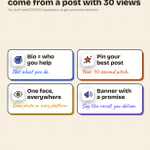
Your next $2,000 client could come from a post with 30 views.
You don't need 100,000 impressions to get someone's attention.
You need the right person to see the right message at the right time.
Stop writing only for the algorithm.
Write for the people who might hire you.

William Salim retweeted
In 2022, I promoted Gumroad affiliate products on X.
In 2023, I started getting paid to write for founders and businesses.
Paid founder writing gave me a clearer picture of the work I enjoy.
A founder can send me a messy voice note, a sales-call thought, or a half-written draft.
I have to understand the idea before I can write it well.
The work requires three questions:
- What does the founder mean ?
- Who should care about this post ?
- Which example proves the point ?
Over time, I added buyer research, positioning, messaging, and GTM context around that writing process.
The service now includes buyer research, positioning, messaging, GTM strategy, and LinkedIn plus X ghostwriting.

William Salim retweeted
The advice I wish I could’ve given myself two years ago, right before I lost my dad in 2024:
Ask your parents about their childhood while you still have the chance.
There are stories you'll never hear otherwise.
Ask them what they dreamed of becoming when they were young.
Who their first love was.
What their biggest fear was.
What their parents were like.
What they struggled with before you were born.
What they wish they had done differently.
Because before they became your parents, they were once young people with their own dreams, fears, and struggles.
And there's a whole part of their lives you probably know nothing about.
I lost my dad 2 years ago.
And sometimes, I wish I had asked him more questions.
Questions I never thought to ask when he was still around.
Now, there are stories I'll never get to hear from him.
So please, while you still have the chance, sit down with your parents.
Ask them about their lives.
Listen to their stories.
Record their voices if you can.
One day, those conversations might become some of your most precious memories.

In 2022, I promoted Gumroad affiliate products on X.
In 2023, I started getting paid to write for founders and businesses.
Paid founder writing gave me a clearer picture of the work I enjoy.
A founder can send me a messy voice note, a sales-call thought, or a half-written draft.
I have to understand the idea before I can write it well.
The work requires three questions:
- What does the founder mean ?
- Who should care about this post ?
- Which example proves the point ?
Over time, I added buyer research, positioning, messaging, and GTM context around that writing process.
The service now includes buyer research, positioning, messaging, GTM strategy, and LinkedIn plus X ghostwriting.
William Salim retweeted
I test SaaS positioning and messaging with 3 questions:
Cover the logo and read the first screen.
The ICP should be able to answer 3 questions:
• Which team uses the product?
• Which task changes after buying?
• Which tool or manual process handles the task today?
Take “AI-powered platform for modern teams.”
The phrase gives the reader a technology label and a broad audience.
Now add the missing buyer facts.
Useful positioning names the ICP, the job they are trying to finish, and the workaround they use today.
