

Founder, Accreditation Council for Medical Affairs (ACMA) | Founder & CIO, White Manna Capital Partners — a biotech and pharma–focused hedge fund.
New Jersey, USA
Joined December 2020
- Tweets206
- Following337
- Followers101
- Likes60




What a great time at the Life Sciences Product Launch Summit! Thanks to everyone who participated my session Medical Affairs Readiness—The Critical Driver of Successful Product Launches.


18
What worries me most about this shift is how fundamental research actually happens.
Scientific progress doesn’t run on a four-year election clock. Ironically, as AI accelerates drug discovery, political friction risks pulling us backward.
AI tools are already shrinking the time it takes to spot targets, design candidates, and analyze trial data. We’re fast approaching an era where developing new life-saving treatments takes far less time than it used to, and we are still working through our “trust” issues with the technology.
That speed makes steady, reliable funding even more critical.
Consider what happens to a promising cancer trial mid-stream. Patients are enrolled, clinics are dedicated, and data is coming in. If a new administration suddenly shifts priorities and puts that funding on ice, the fallout is immediate.
You can’t just pause a clinical trial and expect to pick it back up four years later.
Patients lose access to treatments, trial integrity gets ruined, lab teams disband, and years of effort get washed away, delaying breakthroughs that people are waiting on right now.
Oversight is essential, and public research money must be spent responsibly.
However, proper accountability is very different from filtering granular scientific grants through political filters.
Every leadership team brings new goals, that's standard in government.
Yet, as AI condenses discovery timelines to fit almost within a single presidential term, locking science to political swings creates unnecessary risk.
We should be designing a research pipeline built for rapid innovation, not one that gets recalibrated every four years.
Diseases like cancer and Alzheimer’s don't care about election cycles.
If we want real progress, medical research needs stable support, independent expert peer review, and long-term continuity.
hubs.ly/Q04xZ2Yn0
#MedicalResearch #ClinicalResearch #DrugDevelopment #ArtificialIntelligence #HealthcareInnovation #CancerResearch #LifeSciences #NIH #FutureOfMedicine #AIinHealthcare

1
26
I sit down with Jason Cicardo, Founder & CEO of Discount RX Savings, to unpack how prescription discount cards actually work, why insured patients may still benefit, and what most people never think to ask at the pharmacy.
Save on prescriptions:
hubs.ly/Q04xPzXk0
15
Check out my latest article: How the Patent Cliff Will Redraw the Pharmaceutical Investment Landscape linkedin.com/pulse/how-paten… via @LinkedIn

51
Ideas meet over lunch.
Great sessions pause, but the conversations don’t.
This break is where insights turn into real connections, collaborations, and a few unexpected ideas.
#MedicalAffairs #Networking #ConferenceLife #PharmaCommunity #LunchBreak
28
Dr. Michael Ybarra, Chief Medical Officer, outlines how PhRMA exposes the biggest misconceptions about drug pricing, the shocking truth about hospital markups (340B), and how the "Pill Penalty" is threatening new medicines.
As a practicing emergency physician, shares how prevention has been the most effective investment in public health. Reflecting PhRMA’s position, he maintains that policy should protect individuals’ ability to choose and access physician-recommended vaccines without unnecessary barriers.
Dr. Ybarra points to a wave of pharmaceutical innovation ahead, including mRNA cancer vaccines, expanded uses for GLP-1 therapies, and continued breakthroughs in rare disease. As well as where he expects rapid advances in technology and medicine to reshape the therapeutic landscape by 2030.
#mRNA #Cancer #vaccines #GLP-1 #ACMA #TheWillSolimanPodcast #Pill Penalty #RareDisease

1
54
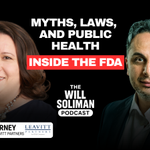
What really happens behind FDA decisions? I sat down with former FDA Chief of Staff, Julie Tierney, to unpack what most people get wrong about regulatory science.
If you care about the intersection of science, regulation, and public health, this conversation is worth your time.
Watch here: hubs.ly/Q044xFkT0
#ACMA #FDA #RegulatoryAffairs #LifeSciences

31
Rob's story is a testament to overcoming a rare disease and the power of persistence to find purpose beyond your initial dreams. It’s a must-listen for.
Watch here hubs.ly/Q03-DPFD0
#RareDisease #UpliftingAthletes #Leadership #Inspiration

236
U.S. primary care is at a breaking point. We fund it at just 6–7%, while global peers invest double for better outcomes.
Result? 6-month wait times.
The Choice for 2026: Use AI to streamline access or to automate care denials?
Full episode: youtube.com/watch?v=ZRqIvIB6…
2
117
Meet Chatbot Ria, the Reimbursement Intelligence Assistant inside ACMAi. Ria delivers verified, citation-backed insights directly from payer documentation, SOPs, and clinical data - instantly and compliantly.
#ACMAi #PACS #Reimbursement #PayerIntelligence
43
Activity ≠ Impact.
If Medical Affairs performance = “# of interactions,” we’re measuring motion, not value. In 2026, AI lets us quantify insight quality, evidence-gap closure speed, educational outcomes, scientific share of voice, and speed to consensus.
What’s your team optimizing for?
#AI #Pharma #Insights

1
23
ACA SUBSIDIES COULD EXPIRE.
That could mean higher premiums for millions of Americans.
What’s really happening in Washington, what both parties agree on, and why this matters to your healthcare costs.
Watch here:
hubs.ly/Q03Y3y7_0
2
44
Navigating healthcare requires understanding the business behind the care.
Unexpected bills are a major friction point. The solution often comes down to communication and negotiation. I discussed the mechanics of payment options and how a strategic conversation can significantly reduce patient liability.
aol.com/articles/3-things-im…
#Healthcare #Pharma #ACMA
1
23
2026 will be a major shift that impacts medical affairs & medical science liaison (#MSL) organizations more than ever.
With recent FDA policy changes like national priority vouchers, medical affairs and MSL teams will need to be that much more effective to launch well. IRA coverage is going to mean medical affairs and MSLs prove value not just efficacy. Being able to deal with payer objections and understanding value based contracting will be huge.
Finally, 2026 will be the year where AI augmented scientific exchange goes prime time. Medical affairs/MSL professionals will have no choice but be AI literate. Those that aren't will be left behind.
Let me know in the comments what you think

55
If #ACA subsidies lapse, there will be fewer covered lives, and more payer volatility, Which means more prior authorization denials and step edits impacting patient access to care. We need to get this right
42
The #1 skill that separates top MSLs from the rest (and it isn’t science).
#MedicalScienceLiaison #MedicalAffairs #Pharma
53
From retail pharmacy to Medical Affairs "Rookie of the Year" in 2024.
Kat Eisman didn't just break into the industry; she dominated it.
"You really have to ask yourself: How bad do you want this?"
Enjoy the episode: youtu.be/JMjzG6cUlP4?si=Dj7K…
#MSL #Pharma #MedicalAffiars
62
