


Pinned Tweet
Important Benefit
The objective is to become acquainted with the various views and schools of thought, and to understand their respective degrees and ranks, so that everyone who is entitled to a right is given his due, and the Muslim knows where to place his foot and arrive at the correct judgement.
أبو ميمون retweeted
Those of us who have the means must ask ourselves honestly: what have we actually done for our imprisoned brothers and sisters? Have we supported their families, eased their burdens, stood by them when they needed us most?
If your answers fall short, then say Alhamdulillah, for the opportunity to make amends remains, and it is not too late to act.
Start small and local, then widen your reach. You can begin by researching the organizations already serving Muslim prisoners and their families — such as HHUGS, which Shaykh Ahmad specifically recommended and those who know the Shaykh understand that he does not involve himself in this area of dawah, which is itself a sign of the weight he gives to supporting the Aseer and their families.
Once you find a trustworthy organization, they will connect you to a Muslim prisoner. Once connected, write to them, give financially if you are able, and raise awareness so that others in your community can take part too.
And if you cannot give, do not underestimate the value of awareness and sincere du'a.
Let us not allow our imprisoned brothers and sisters, nor the families they left behind, be forgotten. Their hardship should not be something we merely hear about and move past. Let us take practical steps, each according to ones ability.
We ask Allah to free the prisoners, relieve their hardship, protect and provide for their families, and make us a means of helping those the world has overlooked — at a time when holding fast to the Sunnah has become strange. #FreeTheAseer

Abu Nasr al-Sijzi on the Later Opponents of Ahl al-Sunnah
Al-Hafiz Abu Nasr al-Sijzi (d. 444 AH), may Allah have mercy on him, said:
“Then, after these people—that is, the Mutazilah—Ahl al-Sunnah were afflicted by a group who claimed that they were from the people of following [the Sunnah], yet their harm was greater than the harm of the Mutazilah and others.
They are:
Abu Muhammad ibn Kullab, Abu al-Abbas al-Qalanisi, and Abu al-Hasan al-Ashari…”
He then said:
“All of them are Imams of misguidance, calling the people to oppose the Sunnah and abandon hadith…”
Risalat al-Sijzi ila Ahl Zabid, p. 222

Most people’s mistakes arise from believing in what is familiar or what they hear from family, teachers, or those known for their virtue.
For this reason, Imam Ayyub al-Sakhtiyani told his student: "If you want to know the errors of your teacher, sit with others."
This emphasizes that relying solely on familiar authorities can blind one to mistakes, and one should seek broader perspectives to discern the truth.
Takfir of the One Who Excuses Others
Among the issues that a number of people have objected to, regarding it as a characteristic of extremism, is the issue of takfir al-adhir (declaring the one who excuses others to be a disbeliever).
They have portrayed it as something with no basis in the past, a recent development, and a matter whose foundations were innovated. This stems from ignorance of its true nature.
I will therefore present a few words here to clarify the issue in a way that will neither bore the seeker of ilm nor cause him confusion.
The Meaning of al-Adhir
Takfir al-adhir is a compound expression formed through an idafah construction. There is no ambiguity concerning the meaning of takfir, as everyone knows what it entails. Rather, the source of the error lies in the nature of the adhir (the one who excuses).
I have observed that most of those who object conflate matters, then build the conclusions of their investigations upon this error. Whatever is founded upon falsehood is itself false.
So, here is what is meant by the adhir:
The adhir is one who rules that a person is a Muslim despite knowing that he has committed an act that is the opposite of Islam. The opposite of Islam is disbelief. Thus, according to the adhir, someone who associates partners with Allah out of ignorance is not a polytheist. In other words, despite having committed an act that contradicts Islam - an act necessarily known to be disbelief that expels a person from the religion - he has not, in the adhir's view, departed from the fold of Islam.
The issue, therefore, rests upon two matters:
First: The nature of the act.
The act must be something whose being disbelief is undisputed and is necessarily known to be so.
By stipulating this condition, we exclude the issue of abandoning the prayer and similar matters whose rulings are comparable to it. Applying this issue to such matters, as some insist upon doing, is unrelated to the actual point of contention.
Second: Knowledge that the act occurred.
The adhir must know, or it must have been established to him, that the person committed the act.
This excludes someone who is ignorant of the state of the person- that is, someone for whom the act itself has not been established in the first place and who therefore does not declare him a disbeliever. Such a person is not called an adhir.
Furthermore, the basis of the adhir's excusing the polytheist rests upon two matters: his ignorance of the true nature of Islam and his denial of the revealed texts.
Whoever claims that two contradictory realities can coexist in a single person rejects both realities and does not truly know either of them. Permitting the coexistence of two contradictions also entails permitting the absence of both from the subject in question.
Thus, when the adhir says, "So-and-so committed shirk, but he is not a polytheist," he is asserting the coexistence of two contradictions. It also entails permitting the possibility that a person can be neither upon Islam nor upon disbelief.
Furthermore, the condition of the adhir is like that of someone who entered Islam without abandoning shirk. Such a person has not understood the true nature of Islam, which is incompatible with the true nature of disbelief; therefore, his Islam is not affirmed.
Likewise, according to this underlying principle, the adhir has not understood the true nature of Islam, because knowledge enables one to distinguish what is known from other things. Yet, according to his madhab, shirk cannot be distinguished from Islam.
This also constitutes a denial of the revealed texts that affirm the polytheism of the polytheists. He has therefore failed to declare a disbeliever the one whom Allah has declared a disbeliever.
This is an implication that must be imposed upon him.
If he claims that there is a distinction between the polytheist mentioned in the Quran and a person who affiliates himself with Islam but commits an act on account of which Allah declared the polytheists to be disbelievers, then this is an imaginary distinction.
To pursue this argument is to turn away from the reality of the matter, for those mentioned in the Quran are even more deserving of the supposed impediment that the adhir claims prevents shirk from being attributed to the person who affiliates himself with Islam.
It is therefore established that the adhir is not someone for whom the occurrence of the act by a particular individual has not been established.
Nor is he someone who says that so-and-so is a polytheist but should not be executed or subjected to the rulings of apostasy until the proof has been established against him.
Rather, the adhir is one who acknowledges that the act occurred, or that the factor necessitating the ruling is present, but then claims that the act has no effect because an impediment exists.
He therefore says: "He committed shirk, but he is a Muslim."
There are many further aspects of this issue that warrant detailed investigation, but this much is sufficient to clarify the precise nature of the matter, based on what my studies have led me to understand through discussions with tulab al-ilm and mashayikh.
Nevertheless, it is best not to delve too deeply into this matter, especially for those who have not studied this chapter under a scholar as the chapter of Names and Rulings is a difficult one, and many have failed to grasp it properly.
And Allah knows best.

Shaykh Sulaymān al-‘Alwān briefly explains the third nullifier (i.e., whoever does not takfīr the mushrikīn is a kāfir). youtu.be/VsUtqNyk1Zo?si=SDQS…
Heed the noble Shaykh’s words! This matter has been misunderstood and used to takfīr the Muslims! A longer thread will be posted soon.

This is also an established principle from the Salaf, not something newly introduced by the Imams of the Najdi dawah, as some who have not studied this chapter claim.
Below are statements from some of the past Scholars discussing this matter. May Allah make them beneficial for those who love goodness:
Imam Abu al-Husayn the jurist and Qur'an reciter al-Malati said:
"All the people of the Qibla have no disagreement that whoever doubts a disbeliever is himself a disbeliever; because the doubter in disbelief has no faith; for he does not know disbelief from faith. Thus, there is no disagreement among the entire Ummah, the Mu'tazila and those below them, that the doubter in a disbeliever is a disbeliever."
Al-Tanbih fi al-Radd 'Ala Ahl al-Ahwa' wa'l-Bida' (p. 40-41)
Imam Ibn al-Wazir al-Yamami said:
“There’s no doubt that whoever doubts in the Kufr of an idol worshipper, it becomes obligatory to make takfir upon him. And whoever doesn’t make takfir upon him (i.e. the idol worshipper), he is considered a kafir and there’s no reasoning for that except that his Kufr is known in the Din by necessity.”
Ar-Rawdh al-Basim (2/509) and Al-‘Awasim wal-Qawasim (2/281-282)
Imam Sharaf al-Din al-Hajjawi said:
"Or does not declare as a disbeliever one who adheres to a religion other than Islam, like the Christians, or doubts their disbelief, or validates their creed, or says something by means of which he seeks to misguide the Ummah or declare the Companions as disbelievers—he is a disbeliever."
Al-Iqna' fi Fiqh al-Imam Ahmad ibn Hanbal (4/298)
Imam Ibn Shihab al-Din al-Alusi said:
"These are “Muslims” who do not declare others disbelievers, and calling someone who worships other than Allah a ‘Muslim’ such a person is more in need of mental treatment than of being presented with hujjah."
Bugh yat al-Talib fi al-Radd 'ala al-Nabhani (1/54)
Shaykh Safi al-Din al-Hindi said:
“Consensus is established on applying the label to one who adopts a specific religion—whether he does so by imitation, ijtihad, or obstinacy.”
Nihayat al-Wusul (8/3840)
Shaykh Saʿd al-Din al-Taftazani said:
“There is no dispute regarding the disbelief of those among the People of the Qiblah who persist in acts of obedience throughout their lives while believing in the eternity of the world, denying resurrection, or denying knowledge of particulars—and likewise if any of the nullifiers of faith occur from them.”
Sharh al-Maqasid (3/461)
Shaykh Ibrahim ibn Umar al-Baqi said:
"Then the shaykh (al-Nawawi) transmitted from al-Qadi Iyad, approving of him: 'that whoever does not declare as a disbeliever one who adheres to a religion other than Islam, like the Christians, or doubts their takfir, or validates their creed, is a disbeliever, even if he outwardly manifests Islam and believes it.
Likewise, we rule the takfir of every speaker who says something by means of which he seeks to misguide the Ummah or declare the Companions as disbelievers.'"
Tanbih al-Ghabi ila Takfir Ibn Arabi (1/32)
Shaykh al-Islam Ibn Taymiyyah said:
"For this reason, everyone who does not worship Allah alone must inevitably be worshipping other than Him, thus being a polytheist. There is no third category among humanity. Rather, one is either a monotheist or a polytheist, or one who mixes these, like the corrupted people of other religions (e.g., Christians) and those who resemble them among the misguided who claim to be Muslim."
Majmu' al-Fatawa, (14/282)
Shaykh Sulayman ibn Suhman said:
“Declaring the disbeliever to be a disbeliever is among the foundational matters of the religion (masaʾil al‑usul) concerning which ignorance is not excusable;
no one has any excuse for neglecting to act upon it.”
Subul al‑Salam Sharh Nawaqid al‑Islam, (p. 100–101)
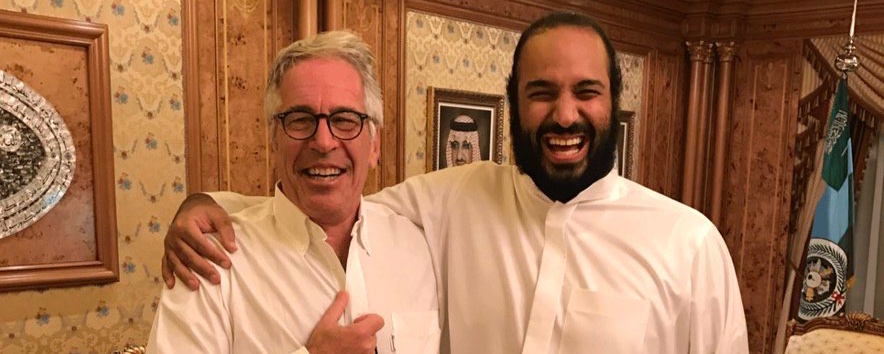
Of All the People You've Ever Heard Of in the World, MBS Is the Most Disbelieving, the Worst in Character, and the Most Contemptible
— Shaykh Hassan Hussein Adam

أبو ميمون retweeted

Major Kuf r found amongst Modern Day Rulers (1/3)
• Calling to Unity of Religions
• Establishing Man-Made Courts
• Aiding Mushrikeen against Muslims
• Nationalism, not differentiating between Muslims and non Muslims except on basis of Nationality
• Accpeting UN charter
The modern Khawarij/Ghulaat Declare the Ummah Disbelieving Collectively and Do Not Recognize the Islamic Rites
Imam Muhammad ibn Abd al-Wahhab (may Allah have mercy on him) said:
“Whoever outwardly manifests Islam, and we merely suspect that he has committed a nullifier of Islam, we do not declare him a kafir on the basis of suspicion, because certainty is not removed by doubt. Likewise, we do not declare a person from whom we have not known kufr to be a kafir merely because a nullifier has been attributed to him when we have not verified it.”
Al-Durar al-Saniyyah fī al-Ajwibah al-Najdiyyah, 10/112.
The noble Imam also said:
“If one of them says, ‘They declare people disbelievers collectively,’ we reply: Glory be to You! This is a tremendous slander.”
Al-Durar al-Saniyyah fī al-Ajwibah al-Najdiyyah, 1/63.
Shaykh Muhammad ibn Abd al-Latif Al al-Shaykh said:
“Know that the kufr found among the Bedouins of Najd, who had previously entered Islam, is emergent kufr, not original kufr. Whoever among them is found to have committed an act that constitutes kufr is treated as the apostates are treated. However, they are not judged to be disbelievers collectively, because among them are people who adhere to the rites and obligations of Islam.”
Al-Durar al-Saniyyah fī al-Ajwibah al-Najdiyyah, 10/451.
So, to those who hold to takfir bil-umum, understand that you have no scholars who preceded you in this position, and that the Najdi Imams are free from your falsehoods and have nothing to do with the distortions you attribute to them.
Furthermore, claiming Shaykh al-Hazimi to further tarnish his reputation is particularly ironic when he himself regards those who hold your position as zanadiqah, given that you have denied and defied the scholarly consensus.


آثار في إثبات الإسلام الحكمي ...
قال سفيان الثوري - رحمه الله - :
الناس عندنا مؤمنون في الأحكام والمواريث ، ولا يدري كيف هم عند الله تعالى ؟ ونرجو أن نكون كذلك...
(الشريعة 284)
وقال الآجري- رحمه الله - :
"هذا وطريق الصحابة ـ رضي الله عنهم ـ والتابعين لهم بإحسان ، عندهم أن الاستثناء في الأعمال ، لا يكون في القول ، والتصديق بالقلب ، وإنما الاستثناء في الأعمال الموجبة لحقيقة الإيمان ، والناس عندهم على الظاهر مؤمنون ، به يتوارثون ، وبه يتناكحون ، وبه تجري أحكام ملة الإسلام ، ولكن الاستثناء منهم على حسب ما بيناه لك ، وبينه العلماء من قبلنا...،روي في هذا سنن كثيرة..."اهـ (الشريعة 1/ 306)
قال شيخ الإسلام ابن تيمية كما في مجموع الفتاوى (20/456) :
"وقد علم بالاضطرار من دين الرسول صلى الله عليه وسلم واتفقت عليه المة ، أن أصل الإسلام وأول ما يؤمر به الخلق شهادة أن لا إله إلا الله وأن محمدا رسول الله ، فبذلك يصير الكافر مسلما ، والعدو وليا ، والمباح دمه وماله معصوم الدم والمال ، ثم إن كان ذلك من قلبه فقد دخل في الإيمان ، وإن قال بلسانه دون قلبه ، فهو في ظاهر الإسلام ، دون باطن الإيمان..."
قلت : الإسلام الحكمي معلوم بالإضطرار من دين الرسول عليه السلام و إتفقت عليه الأمة...و هذا الحكم لا يدفعه إلا زنديق مكذب لله و رسوله و راد لإجماع المسلمين...
The Salaf and the Time of Asr on Friday
Tawus ibn Kaysan, may Allah have mercy on him, would, after praying Asr on Friday, face the qiblah and not speak to anyone until the sun had set.
Tarikh Wasit (186)
Said ibn Jubayr, may Allah have mercy on him, would, after praying Asr, not speak to anyone until the sun had set, meaning that he would occupy himself with supplication.
Zad al-Maad (1/382)
Al-Mufaddal ibn Fadalah, may Allah have mercy on him, would, after praying Asr on Friday, withdraw alone to a corner of the masjid and continue supplicating until the sun had set.
Akhbar al-Qudah (3/238)
Imam al-Shafi'i (may Allah have mercy upon him) said:
“I love sending abundant blessings upon the Prophet (Salla Allahu alayhi wa salam), in every circumstance, and I regard this as even more strongly recommended on Friday and the night preceding it. I also love reciting Surah al-Kahf on the night of Friday and on Friday itself, because of what has been reported concerning it.”
Al-Umm, 1/208
اللهم صل وسلم على نبينا محمد وآله وصحبه أجمعين
أبو ميمون retweeted

Ruling by other than Shari‘ah is Major Kufr
Shaykh ʿAbdullāh ibn Muḥammad ibn ʿAbd al-Wahhāb رحمه الله said:
“The action of this man who assaulted the man he found in the house is forbidden. It is an act of transgression and injustice. He must be disciplined and punished with a discretionary punishment (taʿzīr) sufficient to deter him and others like him from committing such an act.
He is also liable to legal retribution (qiṣāṣ) where retribution is applicable, and blood money (diyah) where retribution is not possible—unless the injured party agrees to accept blood money in place of retribution in all cases.
As for the accused man, the most that the ruler may do is discipline him through a discretionary punishment, such as beating or imprisonment, according to his judgment. Anything beyond that is injustice, transgression, and a violation of the limits set by Allah.
If the assailant denies causing some of the injuries while admitting to others, the burden of proof rests upon him regarding his claim that someone else participated in causing those injuries. If he cannot produce evidence, then the statement of the injured party, supported by an oath, is accepted regarding the attribution of those injuries to that particular individual, in view of the circumstantial evidence indicating that all of them were caused by this assailant.
Every believer must be pleased with the judgment of Allah and His Messenger ﷺ, and must find no resistance within himself toward what Allah and His Messenger have decreed, whether it agrees with his desires or opposes them.
Whoever has sickness or hypocrisy in his heart submits to the Sharīʿah when it agrees with his desires, but opposes it when it conflicts with his desires and customs. This is among the hallmark of the hypocrites, concerning whom Allah said:
‘Have you not seen those who claim that they believe in what has been revealed to you and what was revealed before you? They wish to refer judgment to Taghut, even though they were commanded to reject them. Satan wishes to lead them far astray.’
— Qur’an 4:60
Whoever seeks a judgment other than that of Allah and His Messenger has sought the judgment of ṭāghūt.
And how astonishing it is that a person hears words of disbelief and hypocrisy in his gathering (ie Judge judging by other than Shari‘ah), yet does not condemn the one who speaks them. Rather, he remains silent, thereby becoming a partner in the wrongdoing.”

Which “Ḥarakīs” who take from the Imams of the Najdī Daʿwah believe that the Ottoman Empire was a valid Khilāfah?
It is surprising to see that many believe the Ottomans were ruling according to the Sharīʿah. However, what is even more surprising is that those who claim to follow the Manhaj regard the modern states as legitimate, despite the fact that the noble Imams declared disbelief for less than what we see taking place today.
Provided below is the statements of the Najdī Imams on the Ottomans for replacing the Sharīʿah with man-made legislation and abstaining from the Sharīʿah:
Shaykh al-ʿAllāmah Sulaymān ibn Saḥmān (may Allah have mercy on him) said:
“And your saying at first: by what law do you declare us disbelievers, while religion is established among us?
Is it not the case that among you every uncircumcised polytheist openly proclaims immorality and declares it openly, and judges by man-made law among you while the ruling of the chosen Prophet is not mentioned?
And all forms of wrongdoing are acceptable to them, and none of you objects to that.
If establishing truth, immorality, and obscenity among you is the upright religion that is affirmed, then what has been said about you is indeed correct, and you are more deserving of what has been said and more dangerous.
So whoever does not declare them disbelievers because of this is a disbeliever, and whoever doubts their disbelief is even more disbelieving—by the text of the Messenger of Allah, the best of those sent, and that is established through authentic transmission.”
Dīwān ʿUqūd al-Jawāhir al-Munaḍḍadah al-Ḥisān, p. 128
Shaykh al-ʿAllāmah Sulaymān ibn Saḥmān also said: “They were pleased with the authority of a state that opposed His rulings with the refuse of minds. They instituted laws that contradict His revelation and replaced faith with disbelief.”
Dīwān ʿUqūd al-Jawāhir al-Munaḍḍadah al-Ḥisān, p. 325
Shaykh al-ʿAllāmah Isḥāq ibn ʿAbd al-Raḥmān Āl al-Shaykh (may Allah have mercy on him) said:
“Have you not become angry for the law of Allah when its signs were erased in the lands of Allah for years?
They replaced the obligation of the adhān with whistling, and replaced revelation with law—an act of disbelief.”
Ad-Durar as-Saniyyah fī al-Ajwibah an-Najdiyyah, 12/462
Shaykh al-ʿAllāmah Zayd ibn Muḥammad Āl Sulaymān an-Najdī and Shaykh al-ʿAllāmah Ṣāliḥ ibn Muḥammad ash-Shitrī (may Allah have mercy on them) said in a letter to Muḥammad ibn ʿAjlān:
“As for what you mentioned—may Allah grant you well-being—about necessity, the necessity is that of the religion and its need for those who support it and through whom its benefit is achieved, not the necessity of a particular individual related to his personal interests, leadership, or authority. Especially when this disbelieving, immoral, oppressive group has been brought into the lands of the Muslims until they took control of them, abolished the laws of the religion within them, and ruled by man-made laws.”
Rasāʾil wa Āthār al-Shaykh Zayd ibn Muḥammad Āl Sulaymān, p. 131
Shaykh al-ʿAllāmah ʿAbdullāh ibn ʿAbd al-Laṭīf ibn ʿAbd al-Raḥmān Āl al-Shaykh (may Allah have mercy on him) said:
“Whoever does not recognize the disbelief of the Turkish state and does not differentiate between them and rebellious Muslims has not understood the meaning of lā ilāha illā Allāh. If he also believes that the state is Muslim, then that is even more severe and greater; this is doubt regarding the disbelief of those who disbelieved in Allah.”
Ad-Durar as-Saniyyah, 10/429
Shaykh al-ʿAllāmah Ḥasan ibn Ḥusayn ibn ʿAlī ibn Ḥusayn Āl al-Shaykh (may Allah have mercy on him) said:
“Among them is that it is known from their condition that they do not declare the Sultan and his disbelieving soldiers from the Ottomans to be disbelievers, and they believe that they are Muslims—and this itself is disbelief.”
Risālah fī Jawāb Mā Yakūn Ḥāl Man Yarā anna al-Kuwait wa-az-Zubayr Bilād Kufr, p. 1
So, what is the fault of the Najdīs in following the principles of the Sharīʿah and the fundamentals of the Salaf in establishing the proof against the servants of Allah regarding the core of the religion and its branches, with the utmost knowledge?
To those who are fair-minded, ask yourselves: Why have the third-wave “Najdīs” gone against the original call of Tawḥīd, which was revived upon the methodology of the Salaf? Why are the majority of scholars not speaking about the shirk of legislation, nor about those among them who are oppressed—the righteous scholars imprisoned for acting upon their knowledge?
As for those who are sincere, they will arrive at the right answer, whereas those who are deluded and in denial will remain in confusion.
We ask Allah to grant us understanding and keep us steadfast upon the pure path of Tawḥīd: the call of Millat Ibrāhīm Ḥanīfah.

Many Ḥarakīs declare all governments in the Muslim world to be upon disbelief for ruling by man-made, ṭāghūtī legislation. However, an inconsistency arises when one considers how they treat the Ottoman Empire.
Many of them view the Ottoman Empire to be legitimate. They call it the last caliphate. They declare Sharīf Ḥusayn and Ibn Saʿūd rebels against the legitimate caliphate who allied with the British imperialists to destroy it during the Great War. However, this position is a double standard, because the Ottoman government had replaced the Sharīʿah with man-made, ṭāghūtī legislation, the very act they declare modern-day governments to be disbelievers for.
It is said that during the 19th century, Ottoman “Islāmic” jurisprudence regarded interest on loans to be permissible as long as it was not “excessive”. In other words, they made tabdīl of the Sharīʿah — not just istibdāl, which is replacing the Sharīʿah with man-made legislation.
In 1852, a sultanic firman declared that a 12% annual limit on interest was lawful in the Ottoman Empire. In 1864, the firman was amended. The new text explicitly stated that any document which created an agreement under which interest was to be charged in excess of 1% per month or 12% per annum would be rejected by the commercial courts.
In September 1860, a qāḍī in Ruse, Bulgaria, judged over a debt dispute. According to Ottoman law, one of the disputants was obligated to return a debt on interest. The qāḍī explicitly ruled that although this was against the Sharīʿah, since the case was tried under the new Ottoman Commercial Law, the disputant was forced to return the debt on interest.
This is textbook istibdāl which the ʿulamāʾ declared disbelief by consensus, to legislate a law that contradicts the Sharīʿah and force the general population to seek judgement from it instead of the Sharīʿah, thereby giving it precedence over the Sharīʿah.
Yet according to many Ḥarakīs, Sharīf Ḥusayn and Ibn Saʿūd illegitimately rebelled against a legitimate Muslim ruler despite him replacing the Sharīʿah and ruling by man-made legislation, while hypocritically calling for rebellion against all modern-day governments with the justification that they’re disbelievers for replacing the Sharīʿah and ruling by man-made legislation!


Shaykh al-ʿAllāmah Sulaymān ibn ʿAbdullāh ibn Muḥammad ibn ʿAbd al-Wahhāb, the grandson of Shaykh al-Islām Imām Muḥammad ibn ʿAbd al-Wahhāb and a prominent proponent of his daʿwah, was born in ad-Dirʿiyyah in 1200 AH.
After Ibrāhīm Pasha, son of Muḥammad ʿAlī, entered Dirʿiyyah and took control of it, some of munafiqeen informed him about the Shaykh. Ibrāhīm summoned him and displayed musical instruments and acts of wrongdoing before him, seeking to provoke him. He then took him to the cemetery and ordered the soldiers to fire upon him simultaneously, riddling his body with bullets. This occurred in 1233 AH (1818 CE).
Given that the Imams of the Najdi Daʿwah have been mentioned, I thought it fitting to highlighting this noble Imam, who met his end while being steadfast upon Tawḥīd.
These are the men who ought to be taken as role models: men who firmly grasped the bonds of knowledge, proclaimed the call openly, stood resolute in its defense, and left behind works that remain enduring testimony to the depth of their scholarship, the firmness of their resolve, and the sincerity with which they carried the message of daʿwah.
May Allah have mercy upon them all, accept their efforts, and grant the sincere among us the ability to follow in their footsteps and remain steadfast upon the haqq.
I expected a more substantial response. You quoted the Imams of the Najdi Daʿwah, yet provided no precise references for readers to examine their statements in context.
This is precisely the problem with these discussions: isolated quotations are presented without examining their context or the scholar’s wider position, thereby attributing to him views he does not actually hold. (Feel free to add the references in the comments)
When it comes to kufr dūna kufr, one must ask: are you adhering to the principles of the early Imams of the Najdi Daʿwah, or interpreting their statements through the framework of later scholars? Your understanding of kufr dūna kufr appears to align with those who invoke this principle to excuse modern rulers who abandon the Sharīʿah and fight those who call towards it.
Consider the statement attributed to the scholars concerning kufr, ẓulm, and fisq:
When the description of being an oppressor (ẓālim) or a transgressor occurs as a subordinate description to the description of disbelief (kufr), it is never, in the Qur’an, anything other than major disbelief, with an additional description [of oppression or transgression].
And when disbelief is mentioned first, followed by a description of oppression, transgression, or the like, it is never, in the Book of Allah, anything other than major disbelief.
The indication in this context is definitive and does not admit of interpretation. Whoever opposes this principle, his ijtihād is not to be considered.
Imām Ibn Rajab said:
“Most of the threats mentioned in the Qur’an concerning the oppressors are intended to refer to the polytheists, as Allah, Mighty and Majestic, says: ‘And the disbelievers—they are the wrongdoers.’ Then come sins of various kinds, including major and minor sins.”
Jāmiʿ al-ʿUlūm, 2/36.
The Imām also said:
“Most of the threats concerning the wrongdoers that occur in the Qur’an are intended to refer to the disbelievers, such as the saying of Allah, the Most High: ‘And never think that Allah is unaware of what the wrongdoers do’ [Qur’an 14:42], and His saying:
‘And you will see the wrongdoers, when they see the punishment, saying, “Is there any way to return?”’ [Qur’an 42:44]. There are many examples of this kind.”
Fatḥ al-Bārī, 1/144.
So this principle must be examined alongside the relevant Qurʾānic texts and the explanations of the Salaf. It cannot simply be dismissed by invoking kufr dūna kufr whenever the discussion concerns rulers who abandon the Sharīʿah.
You also claim that contemporary Najdī scholars consistently uphold the call to Tawḥīd. However, when it comes to implementation, they clearly have a different standard when it comes to thier ruler and as Shaykh al-Muḥaddith Khālid al-Ḥāyik has stated:
"The daʿwah of Tawḥīd began with the families of Āl Saʿūd and Āl al-Shaykh. Then they [referring to members of Āl al-Shaykh today] deviated from this path and began opposing their ancestors in an effort to eliminate this daʿwah."
Thus, relying solely on familiar authorities can blind one to mistakes, and one should seek broader perspectives to discern the truth.
May Allah grant us the ability to understand Tawheed correctly, to avoid shirk and invalid acts of worship, to hold fast to the Book and the Sunnah, to benefit from the scholarly efforts of the scholars of haqq, and to learn lessons from their sincerity and steadfastness.
And our final supplication is that all praise belongs to Allah, Lord of the worlds. May Allah send His blessings and peace upon our beloved Messenger, and upon his family and all his Companions.
The first accusation is that I consider the governments of modern states legitimate. On this, I can only say it depends on which governments you’re talking about. I don’t make takfīr of all of them, nor do I excuse all of them.
As for the statements you brought up, that abolishing the Sharīʿah and replacing it with man-made legislation is disbelief, I agree with that in principle, even if we might disagree with its application to specific governments or the finer details of ruling by other than what Allāh has revealed.
On the last point, many of your scholars consider ruling by man-made laws to be unconditional disbelief, even if it’s only in a specific case. This contradicts clear statements of the aʾimmah ad-daʿwah.
ʿAbd al-Laṭīf Āl al-Shaykh on the issue of taḥkīm:
“Taḥkīm is only prohibited when it is based on a false law that contradicts the Qurʾān and Sunnah, such as the rulings of the Greeks, the Franks, the Tatars, and their laws that originate from their opinions and desires, as well as the traditional practices and customs of the Bedouins.
Whoever considers it permissible to rule by these laws in matters of blood or otherwise is a disbeliever. Allāh Almighty says: ‘And whoever does not judge by what Allāh has revealed—then it is those who are the disbelievers.’ [Qurʾān 5:44]
Some mufassirūn mentioned regarding this verse that the disbelief intended here is a lesser disbelief than major disbelief, because they understood that it applies to one who rules by other than what Allāh has revealed without considering it permissible.
However, they do not dispute that it generally applies to one who considers it permissible, and that his disbelief takes him out of the religion.”
And he said:
“What you mentioned about the Bedouins regarding the distinction between one who considers it permissible to rule by other than what Allāh has revealed and one who does not consider it permissible is the basis for practice and the reference point for the people of knowledge.”
Sulaymān ibn Saḥmān explains:
“What he (i.e., ʿAbd al-Laṭīf) stated regarding the Bedouins about the distinction between one who considers it permissible to rule by other than what Allāh has revealed and one who does not consider it permissible is the basis for practice and the reference point for the people of knowledge.
Meaning, whoever considers it permissible to rule by other than what Allāh has revealed, and believes that the rule of the ṭāghūt is better than the rule of Allāh, and that the settled people (al-ḥaḍar) only know the rulings of inheritance, and that their traditional practices and customs are the truth—whoever believes this is a disbeliever.
As for one who does not consider this permissible, and sees that the rule of the ṭāghūt is false, and that the rule of Allāh and His Messenger is the truth, then this person is not a disbeliever and does not leave Islam.
‘And for all are degrees according to what they have done.’ [Qurʾān 6:132]”
You were wrong to accuse modern Najdī scholars of being silent on the shirk of legislation. If you read through the works of Shaykh Ṣāliḥ Āl ash-Shaykh, Shaykh Ṣāliḥ al-Fawzān, and so on, they consistently reaffirm that abolishing the Sharīʿah and replacing it with man-made legislation is disbelief.
To answer your main question, which Ḥarakīs who take from the imāms of the Najdī daʿwah believe that the Ottoman Empire was a valid khilāfah, I will attach a letter from Usāmah ibn Lādin — may Allāh have mercy upon him and forgive him — who explicitly affirmed that the Ottoman State was an Islāmic state despite ruling by man-made, ṭāghūtī legislation.
Where did I claim that Abd al-ʿAziz had illegitimately rebelled against the Ottoman state or declared Muslims to be disbelievers? That is a dishonest representation of my position. If you are going to quote me, at least represent my words accurately.
As for your claim of a consensus among the aʾimmah ad-daʿwah regarding Abd al-ʿAziz, any such claim must be examined in light of the historical developments that followed, before the alleged treachery became apparent. I am not sure where you derived this claim from, particularly given this historical context. Nevertheless, here is a history lesson that will be of benefit:
After the deaths of the three Ikhwan leaders, and the deaths of most of the shaykhs and scholars—such as Shaykh Sulayman ibn Sahman and Shaykh ʿAbd Allah ibn ʿAbd al-Latif Al al-Shaykh—and after pressure was brought to bear on most of them within less than a year, Abd al-ʿAziz announced in 1932 the changing of the country's name to the Kingdom of Saudi Arabia and appointed his son as crown prince. This was something to which the Ikhwan min Taʿat Allah had originally objected.
Here is where the great transformation becomes apparent. After twenty-five years of calling to tawhid, circumstances changed following the Battle of Sabilla in 1929 where the treachery of Abd al-ʿAziz was in full display.
Now as for your statements regarding kufr duna kufr, I will address them shortly by quoting this post. It would have been better not to speak so confidently on a subject that exposes your ignorance, for you would not have made such claims had you properly studied the works of the Salaf on this chapter.