

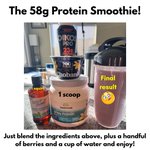




Need help getting your daily protein in? Here's my favorite smoothie, packed with 58 grams of protein!

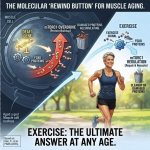
Muscle weakness after 50 isn’t just “getting older.” New Duke-NUS research shows a gene (DEAF1) locks your mTORC1 pathway into overdrive, blocking cellular cleanup. Exercise flips the switch back by activating FOXO proteins and restoring balance. Movement isn’t optional after 50. It’s the most precise form of biological maintenance we have. Full science + practical strategy:
xgym.com/the-molecular-rewin…

Traditional reps stall with a rest at top of every rep, so I do 3-min TUT squats. Low bottom, low top, never locked. Min 1 = tendons, Min 2 = endurance, Min 3 = strength. No muscle or joint damage from ballistic traditional reps - just fast strength & endurance results!
youtu.be/lOnIGSCz97s

Muscle is your secret weapon against the biological aging clock.
A 30-year study of nearly 150,000 adults shows modest weekly resistance training significantly reduces all-cause mortality. 🧵👇.

At X Gym, two 21-minute strength sessions cover the base (and our methodology is far more time-efficient than traditional training). Adding 1 Xardio classes takes it further, so your total gym time is about an 1 hour vs the 3 hours required for traditional training.
Strength training builds the reserve. Aerobic work improves the quality of that muscle.
Do both and you stack the benefits for longer lifespan and healthspan.
Full breakdown: xgym.com/muscle-your-secret-…
Looking to get more hydration and protein into your day? Here's my new fav sugar-free "mock" protein root beer float. Delish!

For decades, fitness culture has blamed lactic acid for the burn and the fatigue that ends your set.
That story is wrong.
Here’s what actually happens when your muscles start to burn 🧵👇
🤖 Made with AI

Lactate isn’t causing the pain or the failure. The reaction that produces it actually consumes some protons, which helps limit how fast the acidity rises.
Without it, the burn would hit sooner and harder.
So next time you feel the burn and your muscles start to fail, remember:
The burn and the heat are real, but lactate is on your side.
Full breakdown (with the science) here: xgym.com/the-truth-about-lac…
Time Under Tension (TUT) is our secret sauce to get safely to Complete Muscle Fatigue (CMF), without the dangerous ballistic reps and heavy weights of traditional training. Here is a short demo of the concept. More elaborate Xplanations to come!
youtube.com/shorts/99MgZcPop…

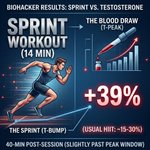
I get biohacker blood draws twice a year. This time, I wanted to test the effect of my 14-minute sprint workout on testosterone, so, although the instructions were no Xercise prior, I timed my sprint workout 30 min prior to the draw since that is the usual the peak effect. 🧵👇
🤖 Made with AI

My fasting glucose was 16% higher than normal, which was expected. Sprinting triggers a large catecholamine and cortisol response that stimulates liver glycogen breakdown, temporarily elevating levels despite being fasted. I actually expected a bigger bump, but considering the short workout time, that makes sense.