

Interdisciplinary artist. 365 days drawing.
Colombia
Joined February 2022
- Tweets6.5K
- Following55
- Followers314
- Likes3.3K


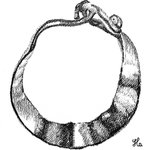


Gold and Amethyst Ring with the Name of Pharaoh Senusret III. My drawing 333/365
🟣 A nearly 3,800-year-old Egyptian ring combining gold with a tiny amethyst scarab. The stone symbolizes rebirth, while a hieroglyphic inscription preserves the throne name of Pharaoh Senusret III.

10
Gold and Amethyst Ring with the Name of Pharaoh Senusret III. My drawing 333/365
🟣 A nearly 3,800-year-old Egyptian ring combining gold with a tiny amethyst scarab. The stone symbolizes rebirth, while a hieroglyphic inscription preserves the throne name of Pharaoh Senusret III.

16
Gold Triple-Finger Ring from Roman Syria. My drawing 331/365 V4.0
Three gold bands joined into one extraordinary Roman Syrian jewel, created in the 3rd–4th centuries CE. Decorated with pearls and colored glass, it was designed to stretch across three fingers at once.

1
46
Gold Triple-Finger Ring from Roman Syria. My drawing 331/365 V4.0
Three gold bands joined into one extraordinary Roman Syrian jewel, created in the 3rd–4th centuries CE. Decorated with pearls and colored glass, it was designed to stretch across three fingers at once.

21
Gold Bead from a Babylonian Necklace. My drawing 330
A tiny 0.9 cm gold bead from the Late Old Babylonian period, more than 3,500 years old. It belonged to the so-called Dilbat Hoard, a group of jewels that may have been gathered together rather than worn as a single necklace.

15
Gold Bead from a Babylonian Necklace. My drawing 330
A tiny 0.9 cm gold bead from the Late Old Babylonian period, more than 3,500 years old. It belonged to the so-called Dilbat Hoard, a group of jewels that may have been gathered together rather than worn as a single necklace.

9
Gold Crescent-Shaped Earring from Jerusalem. My drawing 329/365 V4.0
A tiny Late Roman gold earring found in a cemetery at Beit Safafa, Jerusalem, and dated to the 3rd–4th centuries CE. Its crescent shape recalls Roman lunulae, ornaments sometimes associated with protection.

34
Gold Crescent-Shaped Earring from Jerusalem. My drawing 329/365 V4.0
A tiny Late Roman gold earring found in a cemetery at Beit Safafa, Jerusalem, and dated to the 3rd–4th centuries CE. Its crescent shape recalls Roman lunulae, ornaments sometimes associated with protection.

14
Roman-Period Gold Ring. My drawing 328
A tiny Roman-period gold ring, only 1.8 cm wide and weighing 1.9 grams. Its unusually small size raises an intriguing possibility: it may have belonged to a child or been worn high on the finger, a style seen in ancient Palmyran portraits.

133
Roman-Period Gold Ring. My drawing 328
A tiny Roman-period gold ring, only 1.8 cm wide and weighing 1.9 grams. Its unusually small size raises an intriguing possibility: it may have belonged to a child or been worn high on the finger, a style seen in ancient Palmyran portraits.

15
7th-Century BCE Phoenician Gold Earrings. My drawing 327
Two tiny Phoenician gold earrings, probably made in the 7th century BCE. Their crescent-shaped design traveled across the Mediterranean, showing how jewelry styles moved along ancient trade routes nearly 2,700 years ago.

28
7th-Century BCE Phoenician Gold Earrings. My drawing 327
Two tiny Phoenician gold earrings, probably made in the 7th century BCE. Their crescent-shaped design traveled across the Mediterranean, showing how jewelry styles moved along ancient trade routes nearly 2,700 years ago.

16
Maya Jade Pendant with the Face of a Deity. My drawing 326/365 V4.0
A Late Classic Maya jade pendant, created around 550–950 CE. Its mysterious face seems to blend traits of the Sun God K’inich Ajaw and the Howler Monkey God, patron of artists and scribes.

66
Maya Jade Pendant with the Face of a Deity. My drawing 326/365 V4.0
A Late Classic Maya jade pendant, created around 550–950 CE. Its mysterious face seems to blend traits of the Sun God K’inich Ajaw and the Howler Monkey God, patron of artists and scribes.

45
Igniting garnet sparkles between lines of ink: the Roman earrings from Syria, where each stroke seems to revive a spark of beauty that has been shining silently for centuries. 🟠✍
11
Calima-Yotoco Gold Tweezer.
A small gold tweezer from the Calima-Yotoco culture of southwestern Colombia, created between the 1st and 7th centuries CE. Its simple folded form may have been more than functional, with similar pieces serving as ornaments of prestige and authority.

1
43
Calima-Yotoco Gold Tweezer.
A small gold tweezer from the Calima-Yotoco culture of southwestern Colombia, created between the 1st and 7th centuries CE. Its simple folded form may have been more than functional, with similar pieces serving as ornaments of prestige and authority.

17
Gold Turtle of the Chiriquí Tradition. My drawing 324/365 V4.0
A gold turtle pendant-bell from the Chiriquí tradition, created between the 11th and 16th centuries CE. Hidden beneath its hollow shell, a tiny clapper made the jewel sound as its wearer moved.

126
