
co-founder @ doubleAI; assistant professor @ Tel Aviv University
Joined January 2018
- Tweets96
- Following94
- Followers644
- Likes183


Our Double Agent keeps innovating. This time on one of the toughest domains humanity has faced — chess riddles!


Amnon’s lecture on the breakthrough results by our double agent system and our novel verification techniques. A fascinating 45 minute watch on the cutting-edge of AI capabilities and limitations.

Our breakthrough on the Moore girth problem raises a larger question: when will AI become a great scientist?
In this lecture, I discuss what made this result possible—and why verification remains a fundamental barrier across science.
Watch the lecture youtube.com/watch?v=AIMnYEHj…
A landmark result in extremal graph theory achieved autonomously by our Double Agent: girth constant for regular graphs proven to be at least 8/5, where the question of it being 4/3+\eps was previously open. The 2k$ price tag for a 38-year old question hints at DA’s strength.

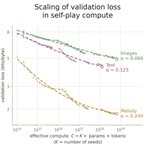
An exciting result: scaling laws for *zero data* pretraining. Trading pure compute for predictable improvement(!) on text, images, music, dna, math, code, and more, without *ever* seeing any real data! Proud to collaborate with this talented group.


Can an LM, starting from random init (!!), learn to generate all of its pretraining data?
Introducing Self-Play Pretraining with Zero Data. Two models start from random initialization: a generator proposes programs for a universal Turing machine and a learner trains on their outputs. We never train on any real data, but see predictable scaling on natural datasets: zero-shot val loss on images, text, audio, and melodies decreases predictably with self-play compute. And the learner develops in-context learning capabilities.
A fun proof-of-concept, co-led with @AdityaCowsik and @KfirDolev and co-authors @gbruno_dl, @ANourya @noahdgoodman, and @YoavLevine.

Proud to have our system crack one hard scientific domain after the other, out of the box. More to come soon.

Yoav Levine retweeted
WarpSpeed, our autonomous optimization agent at @doubleAI, just took first place on @NVIDIA's new SOL-ExecBench: 235 of the hardest CUDA kernels in production.
But the more interesting story is what we found along the way.
Verifiers designed for human errors don't defend against AI reward hacks. We found four ways the same benchmark's verifiers can be silently fooled. The first one broke transformer training.
🧵

Yoav Levine retweeted
We ran WarpSpeed, our autonomous optimization agent, on @NVIDIA's new SOL-ExecBench for a single day.
It took first place by a wide margin, beating the optimized kernels on 90% of problems, with an average speedup of 2.24x.
ExecBench gathers 235 of the hardest CUDA kernels in production today, lifted from real workloads in DeepSeek, Qwen, Gemma and Kimi.
Blackwell kernels are notoriously hard to write. But we find that verification is just as hard.
We have a story to tell.
doubleai.com/research/warpsp…

Thanks @realDanFu !

I'm really excited by using AI to write kernels and accelerate kernel development. At @togethercompute we use AI models extensively through all parts of the performance engineering pipeline.
Super excited to see this new work coming from DoubleAI!
Yoav Levine retweeted

I'm really excited by using AI to write kernels and accelerate kernel development. At @togethercompute we use AI models extensively through all parts of the performance engineering pipeline.
Super excited to see this new work coming from DoubleAI!
DoubleAI’s AI system just beat a decade of expert GPU engineering
WarpSpeed just beat a decade of expert-engineered GPU kernels — every single one of them.
cuGraph is one of the most widely used GPU-accelerated libraries in the world. It spans dozens of graph algorithms, each written and continuously refined by some of the world’s top performance engineers.
@_doubleAI_'s WarpSpeed autonomously rewrote and re-optimized these kernels across three GPU architectures (A100, L4, A10G). Today, we released the hyper-optimized version on GitHub — install it with no change to your code.
The numbers: - 3.6x average speedup over human experts - 100% of kernels benefit from speedup - 55% see more than 2x improvement.
But hasn’t AI already achieved expert-level status — winning gold medals at IMO, outperforming top programmers on CodeForces? Not quite. Those wins share three hidden crutches: abundant training data, trivial validation, and short reasoning chains. Where all three hold, today’s AI shines. Remove any one of them and it falls apart (as Shai Shalev Shwartz wrote in his post).
GPU performance engineering breaks all three. Data is scarce. Correctness is hard to validate. And performance comes from a long chain of interacting choices — memory layout, warp behavior, caching, scheduling, graph structure. Even state-of-the-art agents like Claude Code, Codex, and Gemini CLI fail dramatically here, often producing incorrect implementations even when handed cuGraph’s own test suite.
Scaling alone can’t break this barrier. It took new algorithmic ideas — our Diligent framework for learning from extremely small datasets, our PAC-reasoning methodology for verification when ground truth isn’t available, and novel agentic search structures for navigating deep decision chains.
This is the beginning of Artificial Expert Intelligence (AEI) — not AGI, but something the world needs more: systems that reliably surpass human experts in the domains where expertise is rarest, slowest, and most valuable.
If AI can surpass the world’s best GPU engineers, which domain falls next?
For the full blog: doubleai.com/research/double…
CuGraph:
docs.rapids.ai/api/cugraph/s…
Winning Gold at IMO 2025:
arxiv.org/abs/2507.15855
Codeforces benchmarks:
rdworldonline.com/openai-rel…
@shai_s_shwartz post:
xitter.cf/shai_s_shwartz/status/…
From Reasoning to Super-Intelligence: A Search-Theoretic Perspective
arxiv.org/abs/2507.15865
Artificial Expert Intelligence through PAC-reasoning
arxiv.org/abs/2412.02441

Definitely worth a read, you don’t see plots like these often
doubleai.com/research/double…

Yoav Levine retweeted

New doubleAI blogpost! WarpSpeed: our first performance engineering artificial expert intelligence.
We cover everything from high-level novel algorithmic ideas, through strong verification, and down to low-level PTX hacking. It's worth a read...

An amazing achievement by our team at doubleAI.
GPU kernel optimization is profoundly impactful but notoriously hard, only a handful of human experts can actually do it well. Existing AI systems are not there – the reasoning required to optimize GPU kernels is too deep.
Our AI system WarpSpeed – built on our techniques for deep search and verification – is at a different league, solving one of the hardest GPU optimization domains. This is not “yet another AI winning a toy benchmark”, but an AI comprehensively surpassing human experts on a task that top experts worked and refined for a decade.
Take a look at our blog about it:
doubleai.com/research/double…
More is coming soon...
DoubleAI’s AI system just beat a decade of expert GPU engineering
WarpSpeed just beat a decade of expert-engineered GPU kernels — every single one of them.
cuGraph is one of the most widely used GPU-accelerated libraries in the world. It spans dozens of graph algorithms, each written and continuously refined by some of the world’s top performance engineers.
@_doubleAI_'s WarpSpeed autonomously rewrote and re-optimized these kernels across three GPU architectures (A100, L4, A10G). Today, we released the hyper-optimized version on GitHub — install it with no change to your code.
The numbers: - 3.6x average speedup over human experts - 100% of kernels benefit from speedup - 55% see more than 2x improvement.
But hasn’t AI already achieved expert-level status — winning gold medals at IMO, outperforming top programmers on CodeForces? Not quite. Those wins share three hidden crutches: abundant training data, trivial validation, and short reasoning chains. Where all three hold, today’s AI shines. Remove any one of them and it falls apart (as Shai Shalev Shwartz wrote in his post).
GPU performance engineering breaks all three. Data is scarce. Correctness is hard to validate. And performance comes from a long chain of interacting choices — memory layout, warp behavior, caching, scheduling, graph structure. Even state-of-the-art agents like Claude Code, Codex, and Gemini CLI fail dramatically here, often producing incorrect implementations even when handed cuGraph’s own test suite.
Scaling alone can’t break this barrier. It took new algorithmic ideas — our Diligent framework for learning from extremely small datasets, our PAC-reasoning methodology for verification when ground truth isn’t available, and novel agentic search structures for navigating deep decision chains.
This is the beginning of Artificial Expert Intelligence (AEI) — not AGI, but something the world needs more: systems that reliably surpass human experts in the domains where expertise is rarest, slowest, and most valuable.
If AI can surpass the world’s best GPU engineers, which domain falls next?
For the full blog: doubleai.com/research/double…
CuGraph:
docs.rapids.ai/api/cugraph/s…
Winning Gold at IMO 2025:
arxiv.org/abs/2507.15855
Codeforces benchmarks:
rdworldonline.com/openai-rel…
@shai_s_shwartz post:
xitter.cf/shai_s_shwartz/status/…
From Reasoning to Super-Intelligence: A Search-Theoretic Perspective
arxiv.org/abs/2507.15865
Artificial Expert Intelligence through PAC-reasoning
arxiv.org/abs/2412.02441
Yoav Levine retweeted

DoubleAI’s AI system just beat a decade of expert GPU engineering
WarpSpeed just beat a decade of expert-engineered GPU kernels — every single one of them.
cuGraph is one of the most widely used GPU-accelerated libraries in the world. It spans dozens of graph algorithms, each written and continuously refined by some of the world’s top performance engineers.
@_doubleAI_'s WarpSpeed autonomously rewrote and re-optimized these kernels across three GPU architectures (A100, L4, A10G). Today, we released the hyper-optimized version on GitHub — install it with no change to your code.
The numbers: - 3.6x average speedup over human experts - 100% of kernels benefit from speedup - 55% see more than 2x improvement.
But hasn’t AI already achieved expert-level status — winning gold medals at IMO, outperforming top programmers on CodeForces? Not quite. Those wins share three hidden crutches: abundant training data, trivial validation, and short reasoning chains. Where all three hold, today’s AI shines. Remove any one of them and it falls apart (as Shai Shalev Shwartz wrote in his post).
GPU performance engineering breaks all three. Data is scarce. Correctness is hard to validate. And performance comes from a long chain of interacting choices — memory layout, warp behavior, caching, scheduling, graph structure. Even state-of-the-art agents like Claude Code, Codex, and Gemini CLI fail dramatically here, often producing incorrect implementations even when handed cuGraph’s own test suite.
Scaling alone can’t break this barrier. It took new algorithmic ideas — our Diligent framework for learning from extremely small datasets, our PAC-reasoning methodology for verification when ground truth isn’t available, and novel agentic search structures for navigating deep decision chains.
This is the beginning of Artificial Expert Intelligence (AEI) — not AGI, but something the world needs more: systems that reliably surpass human experts in the domains where expertise is rarest, slowest, and most valuable.
If AI can surpass the world’s best GPU engineers, which domain falls next?
For the full blog: doubleai.com/research/double…
CuGraph:
docs.rapids.ai/api/cugraph/s…
Winning Gold at IMO 2025:
arxiv.org/abs/2507.15855
Codeforces benchmarks:
rdworldonline.com/openai-rel…
@shai_s_shwartz post:
xitter.cf/shai_s_shwartz/status/…
From Reasoning to Super-Intelligence: A Search-Theoretic Perspective
arxiv.org/abs/2507.15865
Artificial Expert Intelligence through PAC-reasoning
arxiv.org/abs/2412.02441

Are frontier AI models really capable of “PhD-level” reasoning? To answer this question, we introduce FormulaOne, a new reasoning benchmark of expert-level Dynamic Programming problems. We have curated a benchmark consisting of three tiers, in increasing complexity, which we call ‘shallow’, ‘deeper’, ‘deepest’.
The results are remarkable:
- On the ‘shallow’ tier, top models reach performance of 50%-70%, indicating that the models are familiar with the subject matter.
- On ‘deeper’, Grok 4, Gemini-Pro, o3-Pro, Opus-4 all solve at most 1/100 problems. GPT-5 Pro is significantly better, but still solves only 4/100 problems.
- On ‘deepest’, all models collapse to 0% success rate.
🧵

Yoav Levine retweeted

1/ Software was eating the world - and now AI is eating software.
AI already beats humans at math/coding (IMO, CodeForces). Right?
So let's test the strongest coding agents on a real domain: optimizing cuGraph (GPU graph analytics kernels).
Spoiler:
* The strongest coding agents crash.
* And @_doubleAI_ built WarpSpeed - an AI that beat a decade of expert-engineered GPU kernels.
🧵

Yoav Levine retweeted
When I think about the next 5 years of AI, I don't start with technology. I start with my grandparents.
They didn't have food security.
They didn't have a washing machine.
Basic needs weren't guaranteed.
Life was labor. 1/9
🧵

I’m thrilled to see this acknowledgment of @AmnonShashua, my mentor and co-founder at AAI, as one of the leading figures in AI in 2025 by @TIME. Well deserved, Amnon is a true titan. And stay tuned, his contribution to AI is still unfolding..
time.com/collections/time100…

Yoav Levine retweeted

From Reasoning to Super-Intelligence: A Search Theoretic Perspective
Despite the title of a pretentious survey paper it's interesting, they prove a whole host of results, such as
«that the Diligent Learner can efficiently learn from CoT data while existing methods fail to do so.»


A new benchmark from AAI, stumping all frontier reasoning models. Deep mathematical reasoning is hard, we are not there yet.
Are frontier AI models really capable of “PhD-level” reasoning? To answer this question, we introduce FormulaOne, a new reasoning benchmark of expert-level Dynamic Programming problems. We have curated a benchmark consisting of three tiers, in increasing complexity, which we call ‘shallow’, ‘deeper’, ‘deepest’.
The results are remarkable:
- On the ‘shallow’ tier, top models reach performance of 50%-70%, indicating that the models are familiar with the subject matter.
- On ‘deeper’, Grok 4, Gemini-Pro, o3-Pro, Opus-4 all solve at most 1/100 problems. GPT-5 Pro is significantly better, but still solves only 4/100 problems.
- On ‘deepest’, all models collapse to 0% success rate.
🧵