









支持

1/ An investigation into the opaque private loans/OTC, unilateral vesting changes, market maker coordination, unknown float, and >95% supply control behind $LAB's recent pump to $6B FDV.
Here's why @LABtrade_ represents everything wrong with the current meta of retail extraction on major centralized exchanges.


248
This is a scam

Price manipulation now happens almost every week, with $LAB by @LABtrade_ becoming the latest pump-and-dump token while Bitget continues playing the usual CEX role.
The LAB team, @vsadkovv, appears to control a significant portion of the supply. Wallets linked to the team still hold large allocations:
0x7Cfd8d2d8626B287bEA569b5e65AB5CBb75E9265
0x78a79D0fa0Eaf58741f5Bde7E05b5CC8F33D24d3
0x36FC85Ec486C254c9564d66de8c4210a1A20C291
0xf79ff8a5052E969a6d13E18c4E439fE5202B02Fa
0xB4b74D63F30076870d54aB9E8E6a7D18293273c3
0xe03722dedBf090Ad7A1C8F82ceB86637053E21dd
On April 8, a wallet linked to the team (0xe037) deposited 40M LAB worth $13.6M to Bitget:
0x77156a0a621d2Ac7A075C0AC3172707C2e4aa191
The LAB price started pumping on May 1, but a week earlier wallets linked to the team deposited 96M LAB worth around $63M to Bitget:
0xDd77BFbDc11Cd37fD255AE35A4ac39Df1F9d570a
0x6593aa6c31C88397c37f71259625EC92Fe4EE0bF
This looks coordinated. Gas fees (0.14 BNB) were distributed a week earlier
0x50f2760fd5E6d546EE7dcEB617F33497A3C38593
0x0559694BbB47dbA8Bc3B7ac93004EF401F2da16d
The wallet below has also been aggressively buying $LAB on-chain and depositing to Gate and Bitget, including tokens like $SkyAI, which surged 1000% in the last 30 days:
0x11fc12b988933966688d33B70651B5f2f450963C
It has been weeks since @GracyBitget promised an investigation, yet there has been no public update. If platforms cannot conduct internal investigations, identify coordinated manipulation, or provide transparency on who is behind these activities, confidence in market integrity keeps declining.
ZachXBT still has a reward open for credible intel that lead to identifying the actors behind this operation.
Stay smart.

1
225

大千Dally retweeted

In Defense of Exponentials
I used to tell founders, the reaction you are going to get to your launch is not hate, it’s indifference. By default, nobody cares about your new chain.
I have to stop telling them that now. Monad just launched this week, and I’ve never seen so much hate about a blockchain that just launched. I’ve been investing into crypto professionally for 7+ years now. Before 2023, almost every chain I’ve ever seen that launched was mostly met with enthusiasm or indifference.
But now, new chains are born into a chorus of hate. The amount of haters I’ve seen for projects like Monad, Tempo, MegaETH—before they even hit mainnet—is a genuinely new phenomenon.
I’ve been trying to diagnose: why is this happening now, and what does it mean about the psychology of this market?
The Cure is Worse than the Disease
Forewarning: this is going to be the vaguest blockchain valuation post you ever read. I don’t have any fancy metrics or charts to sell you on. Instead, I’ll be arguing against the zeitgeist of Crypto Twitter, which for the last couple of years, I’ve been constantly on the opposite side of.
In 2024, I felt like what I was arguing against was financial nihilism. Financial nihilism is the belief that none of these assets matter, it’s all memes at the end of the day, and everything we’ve built is inherently worthless.
Thankfully, that’s no longer the vibe. We have broken out of that spell.
But the zeitgeist now is what I’d call financial cynicism: OK, maybe some of this stuff has value, maybe it’s not all memes, but it’s grossly overvalued and it’s only a matter of time before Wall Street finds that out. Not that all chains are worthless. But these things are all maybe worth 1/5th-1/10th of what they’re currently trading at (have you seen these PE ratios?), and so you’d better pray like hell Wall Street doesn’t call us on our bluff, because once they do it’s all getting wiped out.
You’ve got many bullish analysts now trying to conjure up optimistic L1 valuation models, inflating PE ratios, gross margins, DCFs, trying to fight against this mood.
Late last year, Solana very proudly embraced REV as a metric that could finally justify their valuation. They proudly announced: we—and only we—are no longer bluffing to Wall Street!
And, of course, almost immediately after REV was embraced, it fell off a cliff (though $SOL, tellingly, did better than REV did).
Not that there’s anything wrong with REV. REV is a very clever metric. But the point of this post is not metric selection.
Then came the launch of Hyperliquid. A DEX that had real revenue and buybacks and PE multiples. And the chorus said—look, look I told you! Finally, for the first time ever, a token that has some real profits and a proper PE multiple. (Nevermind BNB, we don’t talk about that.) Hyperliquid will eat everything because obviously Ethereum and Solana don’t make any real money, we can stop pretending to value them now.
Hyperliquid, Pump, Sky, these buyback-heavy tokens are all great. But the market always had the ability to invest into exchanges. You could always buy Coinbase, or BNB, or whatever. We own $HYPE, and I agree that it’s a fantastic product.
But that’s not why people were investing in ETH and SOL. The fact that L1s don't have exchange-like profit margins is not why people were buying them—if they wanted that, they could’ve bought Coinbase stock.
So if I’m not critiquing blockchain financial metrics, maybe you think this post is going to be chiding the sinfulness of the token-industrial complex.
Obviously, everyone has lost money on tokens in the last year, VCs included. Alts are down bad this year. And so the other half of the zeitgeist on CT is arguing about who's to blame. Who’s become greedy? Are the VCs greedy? Is Wintermute greedy? Is Binance greedy? Are the farmers greedy? Are the founders greedy?
The answer, of course, is the same as it’s ever been.
Everyone is greedy. Everyone. The VCs, Wintermute, the farmers, Binance, the KOLs, they're all greedy, and you are greedy too. But it doesn't matter. Because no functioning market has ever required anyone to act against their self-interest. If we're right about crypto, we can all be greedy and the investments will still work out. Trying to analyze a market that has gone down by figuring out “who’s greedy” is going to be about as fruitful as commissioning witch trials. I guarantee you, nobody just started being greedy in 2025.
So this, too, is not what I’m going to be writing about.
Many people want me to write a post about why $MON should be valued at X or $MEGA at Y. I’m not interested in writing this post, or advocating that you buy anything in particular. In fact, you probably shouldn’t buy any of them if you don’t already believe in them.
Will any new challenger chain win? Who knows. But if it has a material chance of winning, it's going to be priced on that basis. If Ethereum is worth $300B or Solana is worth $80B, a project that has a 1-5% chance of becoming the next Ethereum or Solana will be priced according to those probabilities.
Somehow CT is scandalized by this, but it’s no different than Biotech. A drug that has less than a 10% chance of curing Alzheimer's is priced by the market as worth billions of dollars, even if 90% chance it won’t pass stage 3 trials and will go to 0. That's how the math works—and turns out, markets are pretty good at doing math. Binary outcomes are priced on probabilities, not on run rates or moral turpitude. It’s the “shut up and calculate” school of valuation.
I really don’t think that’s an interesting question to write about. “5% chance to win? No way, that’s clearly a 10% chance!” Markets, not articles, are the best way to assess that for any individual token.
So here’s what I am going to write about: CT doesn't seem to believe anymore that chains are valuable.
I don’t think this is because they don’t believe new chains can win market share. We just saw Solana dominate market share after emerging from the ashes less than 2 years ago. It’s not easy, but of course it’s possible.
It’s more that people have come to believe that even if a new chain wins, there’s no prize worth winning. If $ETH is just a meme, if it’ll never generate real revenue, then even if you win, you won’t be worth $300B. The contest is not worth winning, because these valuations are all bunk and it’ll all come crashing down before you go to claim your prize.
Being optimistic about chain valuations has become passé. Not that nobody is optimistic—obviously there must be optimists out there. For every seller there’s a buyer, and as much as CT cool kids love to drag L1s, people are comfortable buying SOL at $140, ETH at $3000.
But there’s a perception now that all the smartest people are over buying smart contract chains. Smart people know the jig is up. If not now, then soon. The only people buying here are suckers—Uber drivers, Tom Lee, and KOLs who say stuff like “trillions.” And maybe the US Treasury. But not the smart money.
This is bullshit. I don’t believe it, and you shouldn’t either.
So I felt like I had to write a smart person’s manifesto on why general purpose chains are valuable. This post is not about Monad or MegaETH. It’s really in defense of ETH and SOL. Because if you believe ETH and SOL are valuable, the rest is straight downstream.
Defending ETH and SOL valuations is generally not my job as a VC, but fuck it, if nobody else is willing to do it, then I’ll write it.
Feeling the Exponential
My partner Bo experienced the Chinese Internet boom first-hand as a VC. I’ve heard how “crypto is like the Internet” so many times now that it doesn’t even register for me anymore. But when I hear his stories, it always reminds me how costly it is to be wrong about these things.
A story he often tells is about when all the early e-commerce VCs (it was a small group back then) got together for coffee in the early 2000s. They debated: how big is the market for e-commerce going to be?
Is it going to be mostly electronics (maybe only techies will use PCs)? Could it ever work for women (perhaps they’re too tactile)? What about food (maybe impossible to manage perishables)? These were deeply important questions for early VCs to decide what to invest in and what prices to pay.
The answer, of course, was that literally every single one of them was devastatingly wrong. E-commerce would sell everything, and the target audience was the whole fucking world. But nobody at the time actually believed it. And even if they did, it would be too absurd to say out loud.
You just had to wait long enough for the exponential to show you. Even among the believers, very few thought e-commerce would become as big as it became. And those few who did, almost all of them became billionaires from just not selling. Every other VC—as Bo tells me, since he was one of them—sold too early.
It has become passé in crypto to believe in the exponential.
I believe in the crypto exponential. Because I’ve lived it.
When I started in crypto, nobody used this stuff. It was tiny and broken and awful. TVL on-chain was in the millions. We invested into the first generation of DeFi, MakerDAO, Compound, 1inch, back when they were science projects. I remember playing around on EtherDelta back when DEXes traded single digit millions a day, and that was considered to be a huge success. It was complete dogshit. Now we routinely trade in the tens of billions on-chain every day. I remember believing it was crazy that Tether hit a billion dollars in issuance and was being written up in the NYT as a ponzi scheme on the brink of shutdown. Now stablecoins are over $300B and regulated by the Federal Reserve.
I believe in the exponential because I’ve lived it. I’ve seen it over and over again.
But you might respond—well, stablecoin growth might be exponential, maybe DeFi volumes are exponential, but they don’t accrue to ETH or SOL. The value doesn’t get captured by the chains.
To which I answer: you still don’t believe in the exponential.
Because the exponential’s answer is always the same: it doesn’t matter. This stuff is going to be so much bigger than it is today. And when it’s absolutely enormous, you’ll make it up on scale.
Study this chart.
This is Amazon’s P&L from 1995 to 2019. That’s 24 years. Red is revenue, gray is profit. You see that little blip on the end where the gray line goes up? That’s when, 22 years in, Amazon started actually making a profit.
Amazon was 22 years old when this little gray line of net income first peeled off of 0. Every single year before then, there were op eds and critics and short sellers claiming that Amazon was a ponzi scheme that would never make any money.
Ethereum just turned 10 years old. This is what the first 10 years of Amazon stock looked like:
10 years of chop. All along the way, Amazon was beset with doubters and non-believers. Is e-commerce a VC-subsidized charity? They’re selling underpriced cheap low-quality knick-knacks to bargain hunters, who cares? How are they ever going to make actual money, like Walmart or GE?
If you were arguing about Amazon’s P/E ratio, you were in the wrong regime. That’s the regime of linear growth. But e-commerce was not a linear trend, and so every single person for 22 years arguing about P/E ratios was devastatingly wrong. No matter what you paid, no matter when you bought, you were not bullish enough.
Because that’s what exponentials do. When it comes to truly exponential technologies, no matter how big you think it’s going to get, it just keeps getting even bigger.
This is the thing that Silicon Valley has always understood better than Wall Street. Silicon Valley was raised on exponentials, while Wall Street was raised on linearity. And over the last few years, crypto’s center of gravity has migrated from Silicon Valley to Wall Street. You can feel it.
Granted, crypto growth doesn’t look as smooth as e-commerce’s growth. It’s burstier, it goes in fits and starts. This is because crypto, being about money, is deeply tied to macro forces, and it also has more violent regulatory push and pull than e-commerce. Crypto strikes at the heart of the state—money—and so it’s more unnerving to governments than e-commerce ever was.
But the exponential is no less inevitable. It's a crude argument. But if crypto is exponential, then the crude argument is correct.
Zoom out.
Financial assets want to be free. They want to be open. They want to be interconnected. Crypto turns financial assets into file formats, makes it as easy to send a dollar or a stock as to send a PDF. Crypto makes it possible for everything to talk to everything. It makes it all 24/7, global, interconnected, and open.
That will win. Open always wins.
If there’s no other lesson I've learned from the Internet, it’s that. Incumbents will fight against it, governments will huff and puff, but eventually they will give up against the adoption, the generativeness, the sheer efficiency that this technology enables. It’s what the Internet did to every other industry. Blockchains are how that same trend will gobble up all of finance and money.
Yes—with enough time—all of it.
An old saying goes: people overestimate what can happen in two years, but they underestimate what can happen in ten.
If you believe in the exponential, if you zoom out enough, then it’s all still cheap. And it should humble you that every day, the holders outlast the sellers and naysayers. Big capital has a longer time horizon than CT swing traders might lead you to believe. Big capital has been trained through history not to fade big technologies. You know, the big gushy story that originally got you to buy $ETH or $SOL? Big capital believes that story and hasn't stopped.
So what exactly am I arguing?
I am arguing that applying P/E ratios to smart contract chains (the “revenue meta,” as it’s now called), is giving up on the exponential. It means you have consigned this industry to the regime of linear growth. It means you believe 30 million DAUs on-chain and <1% of M2 is it. Crypto is just one of the things in the world. A sideshow. It did not win. It was not inevitable.
More than anything, I’m arguing to be a believer. Not just a believer, but a long-term believer.
I’m arguing that this exponential will be bigger than anything else you’ve been a part of in your life. That this is your e-commerce. That you will look back when you’re old and tell your kids—I was there when it all happened. Not everyone believed it was possible, that whole societies could change, that all of money and finance would be transformed by programs running on decentralized computers that we collectively owned.
But it actually happened. It changed the world.
And you were a part of it.
Disclosure: These are my own views. Dragonfly is an investor in $MON, $MEGA, $ETH, $SOL, $HYPE, $SKY among many other tokens. Dragonfly believes in the exponential. This is not investment advice, but is advice of another kind.


这几把市场看不懂一点了,之前说的周线跌破ema50-60通道就全部清仓损掉了
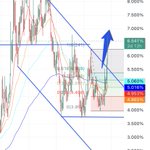
23年10月周线级别多头趋势已经终结,接下来怎么看,非常割裂,我属于看不懂,所以观望好了,还有一点就是usdt.d周线级别下降通道已经翻转,边走别看了!


自23.10月以来的大饼多头趋势好像是要终结,目前略微跌破ema50-60通道,
如果确认趋势延续,需要周线收回到97300以上,然后在60以上盘整震荡3-4周,趋势线继续向上走,牛市继续,现货继续拿,合约右侧逐步加仓,如果周线实体确认跌破,那短期就应该清仓观望了,我十月份讲的,抄底区间就是通道内,这里盈亏比极高,止损也清晰,不到三个点,耐心等周线闭盘在做决定
然后再看usdt.d,稳定币先行指标,看箭头所指,目前所处的位置也是下降通道上沿,上一次就是23.8-10月,大行情启动的前夕,我主观认为牛市没结束,这里或许会横盘大概3-5周,如若周线收到6.24-6.4以上,则以23年8月为使的下降通道彻底失效,还是那句话,买在恐慌买在无人问津,卖在人声鼎沸之时。


391


过去一个月极致去杠杆行情基本告一段落,全网合约持仓量较10月高点下杀100B,去掉了大约百分之43,这里面以大饼的泡沫最小,主要杀除了大饼以外的的所有主流加山寨,包括E/S等大市值主流,回头看,这是市场自发的一种降温措施,初始阶段空杀多,后续多杀多,相互踩踏,本质上是一种合理的筹码再分配,单看恐慌指数,也是相对底部的一个位置了,我十月份大饼在10.6万时就在讲下一个击球区ema50-60,对应的价格现已经给到,买不买在于自己了,还是应允事先设定好的交易逻辑,价格给到了就出手,回头复盘,yes or no!
再说宏观经济周期,市场前两天极速下杀是对12月降息持有保留意见,单纯靠降息吊着注定行情无法延续,但是还有一件事就是QT要截止,可能进入后QT时代,就是逐步降息,把利率打向中性空间,那就还有得玩,再说QE这种工具不到万不得已,联储不会轻易打出,但是假如后续失业率飙升,经济出现严重衰退,亦或者地缘冲突导致全球经济出现严重问题,那么到时候再来考虑QE,再看美股还是强势的多头行情,周线穿插着小幅度回调,也是合理的价格选择。
最后再回归人性角度,这轮以华尔街主导的ETF强势入场,将btc推向了高潮,这里诸多散户不经会产生一个问题,华尔街难道格局这么小,这个价格区间就到头了?我也不知道华尔街到底是什么水准,但是这个过程是真的曲折,散户基本上破产亏损的占比90%以上,如果这轮就这样结束了,那这个圈子不玩也罢,都退圈得了,我之前玩大A波段,三年也有两倍,睡得安心,心情愉悦,这几把市场这么折磨人,赚钱效应全凭流动性,一天行情过山车一样,心率跟账户同频,那还玩个几把,所以耐心等待泡沫来临吧,没见过这种牛市终结的样子,大家都异常冷静,逐步撤离,真会如你我所愿?况且永恒牛市,狂暴山寨季的口号都没喊出来,出来再说撤退,我这里选择继续持仓,看好的山寨出现好的买点继续买入,届时卖给傻逼!
自23.10月以来的大饼多头趋势好像是要终结,目前略微跌破ema50-60通道,
如果确认趋势延续,需要周线收回到97300以上,然后在60以上盘整震荡3-4周,趋势线继续向上走,牛市继续,现货继续拿,合约右侧逐步加仓,如果周线实体确认跌破,那短期就应该清仓观望了,我十月份讲的,抄底区间就是通道内,这里盈亏比极高,止损也清晰,不到三个点,耐心等周线闭盘在做决定
然后再看usdt.d,稳定币先行指标,看箭头所指,目前所处的位置也是下降通道上沿,上一次就是23.8-10月,大行情启动的前夕,我主观认为牛市没结束,这里或许会横盘大概3-5周,如若周线收到6.24-6.4以上,则以23年8月为使的下降通道彻底失效,还是那句话,买在恐慌买在无人问津,卖在人声鼎沸之时。
上篇帖子写完半个月过去了看推上面已经90%熊了,5%怀疑,5%还坚信后面继续走牛,这里只是中场加油站(我算是乐观派,属于最后这5%)这半个月0开单,现货也没抄底,因为没到击球区间啊!为了感受市场去做bes的模拟仓位,又翻了一倍!
但是之前讲的所谓击球区马上应该快要来了,这里的盈亏比极高,至于做合约还是买现货根据自己风险偏好来吧。
之前说的均线对比之前有所上移,目标位50-60通道内打满所有子弹,周线跌破止损,大概3个点的容错率,现货能接受,合约的话挂单接,至于具体怎么操作自己把握。
单看宏观,美股走的没啥问题,后面也没看到预期的大雷,说白了这里或许是新一段趋势的起点,所以我在这里去押注我能接受的结果。
然后再看恐惧指数,等个极度恐慌,喜欢左侧的可以直接干进去,喜欢右侧的后面在慢慢买也来得及。
再看usdt.d我觉得会在这个上沿进行几次来回抽插,插得多了出水了,市场自然就会好起来,区间就是5.5-5.7之间,对应大饼跟整个市场也差不多能到所说的击球区。
然后others今天很硬啊,比当年18岁的我还硬,山寨主流要买我还是等others.d到之前所说的下一个支撑位5.7左右,大概也是回测10.11号插针的一半,后续我在写一个关于山寨的击球区!


1
9
2,235


币圈最大的财富密码就是耐心等待
回看本轮周期每一波强势的单边上涨主升浪,第一波23年10月-24年3月,前面几个月的走势称之为“痛苦面具”,在场的人都有感受,这波上涨只能称之为小牛,理由是只有少数以大饼为首的极少标的突破历史新高。
第二波上涨是24年10月-24年12月,这里以美国为首的标的诸如xrp,ada,xlm,hbar极少数标的出现了5-10倍涨幅,以上标的市值一个吊打成百上千的山寨,他不涨很多人都不知道,大家会说车轻好拉盘,这是个伪命题,所谓的主流山寨拉盘一切都是合力而为,庄家,交易所,做市商,散户都会积极参与进来才会出现推土机式上涨。
第三波上涨发生在今年的4月-7月,以太坊跌到1400的时候很多人看前低看800,看1200,没想到三个月后破历史新高,市场没钱吗,只是聪明钱没有完全下场而已,然后就有人说大饼有ETF,有人托底,以太不是也有ETF了吗,难道华尔街就这样,只割你这一点,这点涨幅故事还怎么讲,泡泡还怎么吹。
包括我自己在内,很多散户还有一些KOL都是那种缺乏独立思考能力,亏钱了就怪市场,赚钱了觉得自己牛逼,没有严格的交易纪律,善于追涨杀跌,这是整个金融圈的通病,挨打就得反思,从管住手开始,做自己熟悉的领域,有人擅长打狗,有人擅长撸波段,有人已经退圈,很正常,金融市场本质上就是把别人的钱变成自己的钱,至于怎么变,那就还得靠自己,穷则思变,等你亏到没钱了,亏到要下桌了,可能到那一刻才会真正醒悟。
然后再说最近市场,很多人刻舟求剑四年周期已到尾声,链上国庆期间一个1B标的都没出来,有kol就说人声鼎沸了,大撤退大撤离,山寨跌了四年,others早已失真,很多新发的项目稀释了整体市值,这里我推荐others.d才能反映整个山寨市场的走势,目前来看还没到底,底部永远都是平缓的交易量极具萎缩,再看宏观,鲍鱼讲QT接下来几个月结束,降息也在持续进行,这里不说先不说QE,流动性是在缓慢传导的,市场没钱吗,美股节节高,XAU一个月拉了一个大饼市值,DXY也在高位运行,交易所借贷指数今年10%都没上去,市场火热吗哈哈哈,回看牛市进程加速趋势推土机上涨一直还没来,等到来了再考虑逃顶,周期是否结束的事 没有暴涨就没有暴跌,人性使然,山寨季会有的,大饼只是没运行到它该到的位置,BTC.D也还在顶部区间震荡,usdt/usde也在高位稳定币也在持续增发,所以耐心等待击球区,等趋势出现了暴击即可。
