

in case you missed it overnight: https://teapawt.net/t.co/7ntORn0mGV
Joined November 2009
- Tweets21.7K
- Following1.4K
- Followers6.6K
- Likes27.2K







ICYMI O/N — THURSDAY 5 NOVEMBER 2026
MACRO:
AI stocks saw selling pressure amid a continued rotation toward economically sensitive stocks. South Korea’s Kospi closed down 5.28%, with selling sidecars/trading halts activated during the session, Nikkei -1.79%, TAIEX -3.2%. (BBG, WSJ, Yonhap)
Hong Kong’s Hang Seng Tech Index climbed nearly 6%, while the Hang Seng gained as much as 4%, its biggest rise since April 2025. Alibaba and Tencent each rose more than 7% as investors rotated from hardware into cheaper Chinese internet platforms. Media also reported state-backed equity support (BBG, FT)
Gold rose as much as 2.1% toward $4,146 as yields and the dollar fell. Silver traded around $53.11, up 1.7%, after gaining almost 5% Wednesday. (BBG)
Democrats vowed to use their resounding midterm victory to rein in President Donald Trump, setting up two years of possible deadlock in Washington. (RTRS)
Democrats will turn their new investigative powers on the Trump family's business deals as they make what they call corruption a central part of a 2028 campaign for the White House. (RTRS)
The White House said attempts to impeach Trump or reverse his agenda over the next two years would fail. Its statement defended his record following the Republicans’ congressional defeat. (FT)
After Democrats seized control of the US Congress, investors are focused on the risk of standoffs over the government's borrowing limit, with the potential for political brinkmanship to unsettle markets. (RTRS)
Bernie Sanders renewed his call for a national AI data-centre moratorium, saying 43 of 44 communities had voted for local restrictions. (Sanders)
Meta President Dina Powell McCormick said starting new US data-centre projects will become harder after the midterms, while expanding existing sites should be easier. Every hyperscaler is considering whether to build more capacity outside the US, she told WSJ Tech. (WSJ)
One newly elected governor who campaigned against data centres has already asked Meta to meet after inauguration, saying they do not want to lose investment and jobs, Powell McCormick said. She did not identify the governor. (WSJ)
OpenAI’s senior leaders discussed whether election results require a reset of next year’s data-centre-capacity expectations, a person familiar told WSJ. (WSJ)
The oil industry is preparing for a possible Democratic push for a windfall tax, with incoming House Natural Resources chair Jared Huffman saying he will prioritize it. The White House called speculation about Trump supporting such a deal baseless; no agreement has been announced. (BBG)
Wall Street banks were bracing for heightened scrutiny after Democrats took control of the US Congress, with executives and analysts predicting lawmakers would investigate cost-of-living issues and summon bank chiefs to testify. (RTRS)
JPMorgan’s trading team remains tactically bullish on US equities, favoring a technology/cyclicals barbell weighted toward cyclicals. It sees October’s hedge-fund deleveraging as creating room for a rebound; Citadel Securities’ Scott Rubner also expects positioning to support a year-end rally. (BBG)
Aptus Capital’s John Luke Tyner thinks September’s 25bp Fed hike could prove the cycle’s last if lower energy prices and slower AI spending ease inflation pressure. He expects gridlock to weaken growth and leave room for yields to fall further. (WSJ)
Ed Yardeni said 10-year Treasuries look attractive around 5%, arguing productivity should bring inflation down over time. He sees the yield trading in a 4%–5% range and longer-term inflation around 2%–2.5%. (BBG)
Pentagon CTO Emil Michael said the government’s Super Intelligence Task Force will publish the laws and regulations applying to US AI labs “in the next week or two.” He gave no further detail on the framework at WSJ Tech. (Reuters)
China is six months to a year behind the US in AI development, according to Pentagon technology chief Emil Michael. He cited US advantages in data centres and advanced semiconductors. (WSJ)
California’s proposed one-off 5% billionaires’ wealth tax remained on course for defeat, with more than 55% voting against in returns counted through Wednesday evening. AP had not called the result, and mail ballots could narrow the margin. (FT)
Security workers at Los Angeles and Long Beach ports extended their contract-negotiation deadline to midnight Friday, employers said. A strike could affect terminals handling more than half the ports’ combined cargo, with other dockworkers expected to honor picket lines. (BBG)
Japan’s 10-year government bond auction Thursday saw slightly weaker demand than the 12-month average, reflecting softer investor appetite after a recent decline in yields. (BBG)
BoJ policymakers saw the need to keep raising interest rates with some signalling the chance of faster-paced increases, minutes of their September meeting showed, bolstering the case for another hike as soon as December. (RTRS)
Japan's service sector expanded modestly in October as activity and new orders both rose slightly faster, a business survey showed on Thursday. (RTRS)
Chinese refiners have sold only around 500,000 metric tons of diesel for loading in November so far, according to traders and Reuters calculations based on trade data, after a surge in exports since July sent domestic stockpiles to multi-year lows. (RTRS)
China is considering dollar and offshore-yuan sovereign bond sales as early as this month, according to Bloomberg sources. The finance ministry is working with banks, but timing and other details remain under discussion. (BBG)
Chinese Vice Premier Ding Xuexiang said export restrictions on high-tech products are preventing China from importing more. Speaking at Shanghai’s import expo, he defended Beijing’s trade practices and called for greater technology cooperation. (BBG)
South Korea’s central bank is preparing a large-scale acquisition of US Treasuries to fortify its foreign exchange reserves, offering Washington a financial lifeline while securing vital geopolitical and trade leverage ahead of potential shifts in US policy. (KED)
South Korea’s current-account surplus jumped to a record in September, fueled by booming semiconductor exports as global investment in artificial intelligence continues to stoke demand for the country’s technology products. (BBG)
All 15 senior economists surveyed by Bloomberg expect the RBA to move to the sidelines after this week’s increase to 4.85%. Markets put the highest probability of another hike at 31% for February, while pricing a 76% chance of a cut by November 2027. (BBG)
Some RBA board members criticized Andrew Hauser’s hawkish pre-meeting comments and felt public remarks by chief economist Sarah Hunter risked boxing them into a hike, the AFR reported. The RBA declined to comment. (BBG)
RBA Deputy Governor Hauser said confidence in the bank’s ability to achieve its objectives over the near term has fallen materially. Overall institutional trust remains stable, but he warned that accumulated goodwill would not indefinitely protect it from poor economic outcomes. (BBG)
Australia’s NSW data-centre inquiry found approvals inadequately assess cumulative power, water and infrastructure demands, but stopped short of recommending a moratorium. Committee members voted 6–1 to remove proposed state and national approval freezes. (Reuters)
Australia’s trade surplus is on track to slump to its lowest level in a decade this year, as chips and servers needed for data centers add to a surge in imports from China while energy costs spiral higher. (BBG)
The BoE is expected to raise Bank Rate 25bp to 4% at noon GMT, its first increase in more than three years. More than three-quarters of surveyed economists expect at least a 7–2 vote; markets price rates reaching 4.75% by next autumn. (BBG)
UK inflation will peak at an average 4.4%, mostly in Q1 2027, according to the FT’s new survey of 12 economists—above the OBR’s 3.8% forecast. Five respondents expected a peak between 4.5% and 5%. (FT)
The most commonly expected BoE rate peak among economists in the FT survey was 4.25%, implying two 25bp increases. Markets were pricing four quarter-point increases by the end of 2027. (FT)
Britain's construction sector shrank last month at its fastest pace since June as housebuilding suffered its worst month of the year, a survey showed on Thursday. (RTRS)
A new parliamentary report warns Britain remains “dangerously exposed” to China’s critical-minerals dominance. MPs called for a financing facility and an allied buyers’ club to help fund alternative mines, processing plants and recycling. (FT)
UK junior-job vacancies have fallen by a quarter since January 2025, while entry-level postings mentioning AI have almost tripled, according to new Adzuna figures. Indeed found AI mentioned in one in six entry-level vacancies across highly exposed occupations, twice the year-earlier share. (BBG)
ECB's Schnabel said rising public debt and the rapid expansion of non-bank finance could curb the European Central Bank's ability to set the appropriate monetary policy. (RTRS)
Airlines across Europe received a series of bomb threats on Thursday morning for the second time this week, forcing many to make unplanned or escorted landings, although none of the threats immediately proved to be genuine. (RTRS)
France’s National Assembly rejected the revenue section of the 2027 budget by 458 votes to zero, with two abstentions. The rejection sends the government’s original text to the Senate, with debate scheduled from November 20. (AFP via TV5Monde)
France faces nationwide strikes and demonstrations as budget negotiations remain deadlocked. SNCF expects rail disruption, dockworkers have called a strike, and authorities closed at least 25 Paris metro stations. (BBG)
France’s long-dated bond sales could test the tightening in long-end OAT spreads, Commerzbank said ahead of Thursday’s supply. Spain also has nominal and inflation-linked auctions, while Italy is conducting a buyback. (WSJ)
France’s SME minister Serge Papin urged the EU to follow France’s approach to taxing ultrafast fashion, in an FT interview. This is a call for wider European action; France’s own levy was introduced in September. (FT)
German factory orders partially rebounded, a sign of resilience in Europe’s biggest economy against a volatile global backdrop. (BBG)
The German Chamber of Commerce and Industry on Thursday raised its 2026 growth outlook for Europe's largest economy to 1% from 0.3% but said debt-financed public spending was largely driving the expansion. (RTRS)
Spain proposed a 5.3% minimum-wage increase for 2027, affecting approximately 2.5m workers. The proposal would set annual pay at €18,004, or €1,286 across 14 payments, and still requires cabinet approval. (BBG)
Norway's central bank kept its policy interest rate on hold at 4.50% on Thursday, as unanimously predicted by economists in a Reuters poll, and reiterated that it may still tighten policy to contain inflation. (RTRS)
Sweden’s core inflation rate unexpectedly slowed to its weakest pace in six months, denting arguments for further interest-rate hikes in the short term while most analysts saw the price development as largely temporary. (BBG)
Brazil unanimously held the Selic rate at 13.75%, interrupting five consecutive cuts; 26 of 31 economists expected a hold. The central bank raised its 2027 inflation forecast to 4.7% from 3.9% and highlighted weaker activity alongside deteriorating inflation expectations. (BBG)
India will soon require state utilities to add energy storage capacity, a move aimed at helping the country save surplus clean power for use during evening peak demand as it rapidly expands clean energy generation. (RTRS)
Malaysia held its policy rate at 2.75%, as expected by 17 of 23 economists; six anticipated a hike. Bank Negara warned that commodity prices, geopolitics and weather would put upward pressure on inflation in 2027 and said it would remain vigilant. (BBG)
Indonesia’s economy unexpectedly accelerated in the third quarter as government stimulus helped household consumption and investment withstand challenging global conditions. (BBG)
Philippine inflation accelerated to the fastest pace in almost four years in October as the prolonged Middle East conflict drove up energy costs, raising the odds of another large interest rate increase by the central bank. (BBG)
South Africa revised its debt/GDP peak to 74.6% from 78.4% after GDP rebasing showed a larger economy. Treasury stressed this was a mechanical change: its revenue, spending and debt amounts have not changed. (BBG)
Heavy Australian rainfall is degrading wheat quality and delaying harvesting, Bendigo Bank said, threatening high-protein supplies despite a crop of at least 30m tonnes. Feed-wheat volumes are increasing in Queensland and New South Wales at the expense of higher grades. (BBG)
Thai 5% broken white rice reached $499/tonne on Wednesday, its highest since December 2024, as El Niño pressured Asian production. Philippine rice prices rose 21% YoY in October, according to Thursday’s inflation release. (BBG)
IRAN:
The US military is finishing preparations for a possible return to major combat operations against Iran and sending more assets to the region, American officials told Axios. Trump has made no final decision. (Axios)
Trump officials are split between fresh Iran strikes followed by a peace push during the lame duck and cutting losses by winding down operations, people familiar told WSJ. (WSJ)
The White House decided before the election to keep ongoing limited strikes on Iran quiet after senior officials warned that publicising them would hurt Republicans in vulnerable states, according to the WSJ. (WSJ)
Hegseth has repeatedly advocated continuing the Iran war inside Trump’s cabinet, often against Vance and Rubio’s push for talks, people familiar with the discussions told the WSJ. (WSJ)
Thomas Massie plans to trigger a Hegseth impeachment vote when Congress returns next week, CNN reported, with multiple Republican sources expecting passage. Massie subsequently said he would not reintroduce the articles if Hegseth resigns. (CNN, Massie)
Some of Hegseth’s upcoming travel was put on hold, NBC reported as Trump discussed possible replacements with allies. Sources cited either potential renewed Iran operations or post-election politics without establishing which caused the travel change. (NBC)
The Pentagon said Hegseth is “100% committed” to serving through Trump’s term and would fight investigations and impeachment efforts. (Fox News, CNN)
Republican lawmakers and allies are increasingly blaming Hegseth for the Iran war, accusing him of pressing for it without an exit strategy, CNN reported Wednesday evening. (CNN)
Axios reported that Vance has privately accused Netanyahu of being “wrong on everything” regarding Iran while urging Trump to reach a deal. (Axios)
Qatari mediators are seeking US and Iranian backing for a draft agreement to avert renewed fighting and potentially restart direct talks in the coming days, regional sources told Axios. (Axios)
Diplomats and Trump advisers fear Iranian gloating could trigger renewed strikes. (Axios)
Russia agreed to supply Iran with 90 helicopter-mounted missile launchers, previously unreported production documents seen by the FT reveal. The order appears in a 2024–25 schedule; the documents do not establish whether delivery occurred. (FT)
Senator Peter Welch told the FT that Democrats now share a consensus of opposition and distrust towards Netanyahu’s government. He said the incoming majority could push to end unrestricted aid to Israel; no new aid restriction has been enacted. (FT)
Israel has ordered billions of dollars worth of American military hardware beyond what the U.S. has committed to paying for, illustrating how hard it would be to phase out Washington’s funding for the country. (WSJ)
The Houthis demanded $51bn in compensation and Saudi recognition as Yemen’s rulers during negotiations to halt hostilities, people briefed told WSJ. Other amounts have subsequently been discussed; no settlement was reported. (WSJ)
Saudi Arabia’s options for an offensive against the Houthis remain constrained: Pakistan has refused strikes inside Yemen, Turkey’s parliament has yet to approve their defence pact, and Egypt’s support is defensive only, WSJ reports. (WSJ)
South Korea plans to extend its Cheonghae naval mission to waters south of Oman, adding a P-8A patrol aircraft, mine-clearing equipment and 75 personnel. The mission would remain non-combat, roughly 650km from Hormuz, and requires parliamentary approval. (Yonhap, BBG)
GEOPOLITICAL:
The US was unprepared for modern drone warfare and is racing to catch up, Pentagon technology chief Emil Michael told WSJ Tech. He said the US now has a stockpile of about 500,000 drones. (WSJ)
North Korea said it tested a newly designed air-defence missile system, claiming improved materials, guidance and target-tracking performance. KCNA disclosed the details Thursday following Wednesday’s launches. (RTRS)
EQUITIES:
Qualcomm (-10%) tumbled in late trading after giving a lackluster profit forecast, a sign the largest maker of smartphone processors is still grappling with higher component prices. Said additional data centre unit upside is constrained by supply. (BBG, call excerpts)
Arm’s (-4%) gave a revenue forecast for the current period that left investors underwhelmed, a sign the chip designer hasn’t yet met the lofty hopes for its push into the AI data center market. (BBG)
Coherent (+2.6%) bear estimates for the quarter and also gave a Q2 forecast above estimates, whilst giving line of sight to sales growth topping 60% in fiscal 2027 and quarterly revenue of $4 billion in 2028. Disclosed another ~$20bn, five-year PhotonLink agreement with an unnamed major AI company, additional to its Nvidia agreement. (Coherent)
Applovin (+16%) shares are soaring after the mobile-app marketing company’s third-quarter results beat expectations and it gave an outlook that is above the analyst consensus estimate. (BBG)
HubSpot (-9.5%) shares are down after the software company’s outlook added to concerns about its growth prospects. (BBG)
Figma (-3.5%) shares dropped after the company reported third-quarter results, with analyst noting sequential decline in adjusted gross margin. (BBG)
Snap (-9.5%) fell after the company reported third-quarter ad revenue and user growth that missed estimates, with Chief Executive Officer Evan Spiegel acknowledging that “advertising revenue growth remains below our ambitions.” (BBG)
MercadoLibre (-5.6%) shares slid after the company posted third quarter earnings that missed profit estimates as investors weigh whether the company’s heavy investments translate into stronger profitability over the long run. (BBG)
Expedia (-5%) shares are down even after the online travel agency raised its gross bookings forecast for the full year. Still, the midpoint of its fourth-quarter bookings projection trailed the average analyst estimate. (BBG)
Wolfspeed (-3.6%) reported a larger loss per share than expected but gave revenue gudiance above estimates whilst forecasting an inflection to breakeven on adusted gross margins going ahead, noting an accelerating AI order book. (Wolfspeed)
Zillow (-17%) shares plunged after the digital real estate company reported adjusted earnings per share and revenue for the third-quarter that missed the average analyste estimate. The firm also said that adjusted earnings in the next quarter could be the weakest in three years. (BBG)
OpenAI’s enterprise sales overtook consumer revenue in Q3, driven by coding tools, GPT-5.6 Sol and ChatGPT Work, Greg Brockman told WSJ Tech. He described Q1–Q2 as rough before the third-quarter inflection. (WSJ)
Brockman said he thinks OpenAI can be ready to go public in 2027, while stressing it will list when the timing is right. No listing date was announced. (WSJ, Reuters)
Microsoft declined an option to more than double its existing Nscale compute contract in Texas, potentially worth tens of billions, new FT/Reuters reporting revealed. Reuters’ source says the decision predates September’s IPO filing; the existing contract and Nscale’s $103bn backlog are unaffected. (FT, Reuters)
Nscale is separately discussing an expanded Anthropic agreement covering a second 460MW data centre at its West Virginia site, a person familiar with the matter told the FT. No expansion agreement is confirmed. (FT)
Meta said it must work with local officials to determine the future of its $1bn Piqua, Ohio, data-centre investment. Voters restricted new construction and recalled three commissioners involved in approving the project. (FT)
Bloomberg reported that nearly all of at least 45 local US measures restricting data-center development had passed or were heading for approval. Harwood, North Dakota, was the notable exception, rejecting restrictions affecting Applied Digital’s Oracle-linked project. (BBG)
Goldman and Apollo are in talks with Wall Street investors to start selling portions of a roughly $40 billion chip financing deal for SpaceX. The package funds ~$47.3bn of Rubin equipment due H1 2027; lease documents leave SpaceX liable for rent even under force majeure. (BBG)
Alphabet Inc.’s Isomorphic Labs is in talks to raise roughly $5 billion in new funds to support its efforts to use AI for drug discovery, according to Bloomberg soruces. The round would value Isomorphic, which spun out of Alphabet’s Google DeepMind, at about $50 billion. (BBG)
Pan Alto is in talks to acquire Clutch Security for ~$500m, The Information reports. Clutch tracks passwords and authentication credentials used by AI agents, extending Palo Alto’s push into non-human identity security. (The Information, Globes)
AI-chip startup Tenspresso is negotiating at least $50m of funding at a $500m valuation, people familiar said. Founded by former Google TPU engineers, it aims to complete its first chip design in late 2027 or early 2028. (BBG)
DayOne secured a five-year HK$1.86bn ($237m) loan for a Hong Kong data center and refinancing, people familiar said. Pricing is 152bp over Hibor, with a potential reduction for meeting sustainability targets. (BBG)
Counterpoint puts Q3 global DRAM revenue near $200bn, up 369% YoY, while quarterly bit shipments rose only ~4%. Samsung retained 38% share; Hynix revenue grew over 40% QoQ, with pricing doing most of the industry’s growth work. (Counterpoint)
SK Hynix’s HBM4 yield has reportedly reached the mid-60% range, DIGITIMES reports, describing it as the industry’s highest. This is a reported manufacturing-yield estimate. (DIGITIMES)
TrendForce analyst Chia-Yuan Hsu estimates current server-RDIMM contract prices imply roughly $80,000 of revenue per DRAM wafer. He sees supply constraints continuing through 2027, with new fabs not arriving before 2028. (China Times)
Foxconn's October revenue jumped 46% to NT$1.31tn ($39.7bn) on AI-server demand. Bloomberg said analysts expect roughly 30% growth across the December quarter. (BBG)
ABB confirmed China blocked SoftBank’s acquisition of its robotics business in China, complicating the wider $5.375bn deal; constructive discussions continue. The FT reported concerns that robotics data could be transferred overseas to train AI models. (FT, WSJ, BBG)
Sony Group Corp. raised its profit outlook after a string of entertainment hits propelled better-than-expected results in the September quarter. (BBG)
Nintendo Co. reported a surprise quarterly profit decline, hurt by a dearth of major new game releases and rising Switch 2 component costs. (BBG)
Toyota Motor Corp. shares climbed the most in nearly four decades after the automaker, emboldened by strong demand for its hybrid vehicles, raised annual profit forecast and stepped up shareholder returns. (BBG)
Toyota established a dedicated robotics division under production chief Takefumi Shiga to accelerate commercialization and deployment, consolidating its existing robotics work into one organization. (BBG, FT)
Chinese renewable-energy stocks extended their rally: Suzhou Maxwell rose as much as 20%, CSI Solar nearly 18% and Sungrow 12.5%. Investors priced lower US regulatory risks, although Citi and Bloomberg Intelligence cautioned that Chinese overcapacity and trade barriers remain. (BBG)
Air France-KLM is deepening an overhaul of its Dutch subsidiary as the airline group grapples with higher fuel expenses and a cost-of-living crisis that’s starting to deter some passengers. (BBG)
Siemens Healthineers will drop “Siemens” from its name and rename its diagnostics operation Olyrian Diagnostics as it prepares that business for a standalone carve-out. The parent-company separation still requires shareholder approvals in February. (WSJ)
Healthineers forecast FY2027 comparable revenue growth of 4–5% and adjusted EPS of €2.20–2.40, versus €2.42 in FY2026. Quarterly net profit of €589m missed €651m expected. (WSJ)
Commerzbank cut annual net-interest-income guidance to €8.5bn from €8.6bn after German retail deposits fell around €3bn. Quarterly net profit of €860m beat €850m expected; its target of at least €3.4bn annual profit was maintained. (BBG, WSJ)
Deutsche Telekom’s quarterly adjusted EBITDA after leases of €12.2bn beat €12.05bn expected. It raised annual guidance to €47.6bn from €47.5bn and free cash flow after leases to €20.1bn from €20bn. (BBG, WSJ)
Deutsche Telekom announced up to €2bn of buybacks for 2027 and proposed a €1.10 dividend for 2026, up 10%. (BBG, WSJ)
Rheinmetall cut annual sales guidance to €13.2bn from €13.7bn–€14.2bn as the German Boxer armoured-vehicle megadeal slipped into next year. Nine-month operating profit reached a record €1.3bn, with sales up 38% to €8.4bn. (FT)
Next maintained annual profit guidance as UK full-price sales growth slowed to 2% and store sales fell 1.7%. Overall full-price sales rose 8.1%, above expectations, supported by 32% growth in overseas online sales. (BBG)
Diageo’s Q1 organic sales rose 1.4% versus a 0.4% decline expected, although US sales fell 3.7%. It retained guidance for broadly flat annual organic sales and single-digit operating-profit growth; shares rose as much as 5.2%. (WSJ, BBG)
BT’s quarterly adjusted EBITDA rose to £2.08bn versus £2.04bn expected. Cost reductions delivered £312m of annualized first-half savings, while Openreach added more than 1.1m full-fiber customers over the half. (BBG)
Prudential reported quarterly annual-premium-equivalent sales of $1.6bn, down 7%, citing slower conversion of mainland Chinese demand in Hong Kong. New-business profit rose just 1%, with offshore-tax enforcement weighing on customer signups. (BBG)
BP sold a 5% stake in Aker BP for $1.06bn, retaining nearly 11%. It raised expected full-year disposal proceeds to around $9bn from $8bn, with the proceeds earmarked for strengthening its balance sheet. (WSJ)
National Grid raised expected EPS growth to 15%–16% from 13%–15% and lifted annual investment by £500m to £13.5bn. First-half capital spending reached a record £6.7bn. (BBG)
UBS has separately begun another investment-bank job-cut round in recent weeks, sources told the FT. One person described it as consistent with normal year-end management of resources and performance; the report gives no headcount target. (FT)
Swiss Re reported nine-month net income of $4.2bn, ahead of estimates, and said its $4.5bn annual target remains on track. Lower catastrophe losses helped, but weaker pricing and new-business value raised concerns about next year’s earnings. (BBG)
Leonardo lifted annual order guidance to €29.5bn from €28.2bn, with backlog reaching €60.4bn. Quarterly orders of €7.01bn beat €6.22bn expected; operating profit rose 43% to €521m and revenue 18% to €5.34bn. (BBG, WSJ)
ArcelorMittal’s quarterly EBITDA rose 34% to $2.02bn versus $1.89bn expected, but it posted a $391m net loss after more than $1bn in Kryvyi Rih-related charges. Management said stronger EU steel pricing and import curbs should support utilisation. (BBG, WSJ)
Orsted completed Revolution Wind, making the US offshore project fully operational after earlier Trump-administration efforts to halt construction. The development can supply approximately 350,000 homes in Rhode Island and Connecticut. (BBG)
AP Moller-Maersk A/S shares slumped after a guidance upgrade and third-quarter earnings from the world’s second-largest shipping line disappointed investors looking for more. (BBG)
EQT-owned Zelestra unveiled a €10.5bn investment plan through 2030, increasingly focused on supplying US AI projects. It plans around €1bn of equity investment and more than €9bn of debt, targeting an 18GW contracted portfolio. (BBG)
A Goodman–Digital Realty venture offered to buy up to 9.9% of Nextdc at A$9.50, a 45% premium to Wednesday’s close. Nextdc said it had received no takeover proposal and did not know the purchase outcome; shares surged as much as 49%. (BBG)
Woodside plans to cut more than 500 jobs, around 11% of its workforce, as part of a program targeting $400m of annual savings from 2028. Shares fell as much as 6.8% alongside the oil selloff. (BBG)
Woodside changed its shareholder-distribution policy to 20% of adjusted operating cash flow, with up to another 20% available for dividends or buybacks. Its previous policy allowed distributions of up to 80% of net profit. (BBG)
DATA RECAP (Newsquawk):
Australian Trade Balance (Sep) 2.826B vs. Exp. 0.8B (Prev. 0.495B)
EU PPI M/M (Sep) 2.5% vs. Exp. 2.5% (Prev. 2.0%)
EU PPI Y/Y (Sep) 11.1% vs. Exp. 10.9% (Prev. 8.3%)
EU S&P Global Construction PMI (Oct) 42.5 (Prev. 43.4)
French Industrial Production M/M (Sep) -0.5% vs. Exp. 0.3% (Prev. -0.4%)
French S&P Global Construction PMI (Oct) 38.8 (Prev. 39.8)
German S&P Global Construction PMI (Oct) 41.6 (Prev. 43.5)
Indonesian GDP Growth Rate Q/Q (Q3) 1.59% vs. Exp. 1.3% (Prev. 3.73%)
Indonesian GDP Growth Rate Y/Y (Q3) 5.47% vs. Exp. 5.2% (Prev. 5.29%)
Italian Retail Sales M/M (Sep) 0.1% vs. Exp. 0.2% (Prev. 0.3%)
Italian Retail Sales Y/Y (Sep) 1.6% (Prev. 0.5%)
Italian S&P Global Construction PMI (Oct) 47.3 (Prev. 46.5)
Japanese S&P Global Composite PMI Final (Oct) 52.1 vs. Exp. 52.3 (Prev. 52.3)
Japanese S&P Global Services PMI Final (Oct) 51.7 vs. Exp. 52.0 (Prev. 51.3)
Norwegian Norges Bank Key Policy Rate (Nov) 4.50% vs. Exp. 4.50% (Prev. 4.50%)
Philippine Core CPI Y/Y (Oct) 5.4% vs. Exp. 4.8% (Prev. 4.7%)
Philippine CPI Y/Y (Oct) 7.8% vs. Exp. 7.6% (Prev. 7.2%)
Russian S&P Global Composite PMI (Oct) 50.0 (Prev. 50.8)
Russian S&P Global Services PMI (Oct) 50.1 (Prev. 51.3)
Singapore Retail Sales M/M (Sep) -1.0% (Prev. -0.9%)
Singapore Retail Sales Y/Y (Sep) 1.7% (Prev. 0.8%)
South African S&P Global PMI (Oct) 49.0 (Prev. 49.0)
South Korean Current Account (Sep) 61.46B (Prev. 46.11B)
Swedish CPI M/M Prelim. (Oct) 0.0% vs. Exp. 0.3% (Prev. 0.9%)
Swedish CPI Y/Y Prelim. (Oct) 1.1% vs. Exp. 1.2% (Prev. 1.1%)
Swiss Unemployment Rate (Oct) 3.0% (Prev. 3.0%)
Taiwanese CPI M/M (Oct) 0.20% (Prev. 0.17%)
Taiwanese CPI Y/Y (Oct) 2.33% (Prev. 2.73%)
UK S&P Global Construction PMI (Oct) 43.6 vs. Exp. 46.1 (Prev. 46.1%)
Do think the source is somewhat trustworthy.
It was Al Jadeed in October who reported on some specific details re a proposal regarding releasing funds with interest and potential nulcear inspections. Those were confirmed by the WSJ a few days later.

US–IRAN: NEW REPORTS DETAIL POTENTIAL NUCLEAR CONCESSIONS AND FROZEN FUNDS DEAL
Iran may announce concessions on its nuclear program in exchange for Washington releasing part of Tehran's frozen funds, according to Al-Araby Al-Jadeed, citing sources close to the negotiating team.
Sources suggest a new memorandum of understanding could be announced using a format similar to last June's agreement.
The proposed announcement reportedly aims to allow both Washington and Tehran to claim victory in the conflict.
The reports remain unconfirmed, with no official agreement announced.

ICYMI O/N — TUESDAY 3 NOVEMBER 2026
MACRO:
Republican advisers privately expressed frustration that Trump’s election-eve speech concentrated on Washington renovation projects rather than voters’ economic concerns, WSJ reports. The paper describes a darkening White House mood as GOP operatives fear losses across Congress. (WSJ)
Prospective Anthropic IPO investors are coalescing around a $1.5–1.6tn valuation following the tech selloff, WSJ reports, versus figures nearer $2tn previously discussed. No valuation or share count is final; the roadshow could launch next week ahead of a debut the week before Thanksgiving. (WSJ)
Nvidia is ordering its data centre partners to reduce exposure to Chinese customers in a move that further restrains China’s ability to keep up with US rivals as the race between the world’s two AI superpowers intensifies. The previously undisclosed verbal instructions were introduced in recent months and apply globally to future contracts, with existing leases unaffected. (FT)
AI companies have delayed high-yield debt sales while bankers await clarity from the midterms on data-centre regulation, WSJ reports. A senior banker expects issuance to resume before year-end unless voters deliver a broad rejection of data centres. (WSJ)
WSJ’s election-risk report flags 13.3GW of announced Texas data-centre projects potentially at risk under a Hinojosa victory, according to Jefferies. Citi says options imply roughly a 1% S&P 500 move on November 4, the largest single-day move priced for the month. (WSJ)
Bloomberg’s alternative Price Project put September headline inflation at 4.4%, versus official CPI of 3.7%. Its more granular trimmed-mean measure was 2.2% through October, suggesting underlying pressure is narrower than the headline implies. (BBG)
SocGen research head Kokou Agbo-Bloua warned in a new FT column that stock dispersion is masking index volatility risk. Negative correlations affect 40% of S&P 500 stock pairs and 30% in the Euro Stoxx 50; a reversal could sharply lift index volatility. (FT)
Retail flipped to net selling on Monday: MS QDS estimates $1.4bn of US equity sales, only the second net-selling day this year and the first since April, following more than $1tn of YTD purchases. (Morgan Stanley Derivatives)
Hedge funds are underweight AI relative to its market-cap weight for the first time since early 2023, according to MS prime-broker data: 34% of net exposure versus a 35.4% index weight. (MS)
Elliott warned that debt-financed AI spending, circular investments and speculative trading could trigger a severe, self-reinforcing market unwind, according to an October investor letter obtained by WSJ. The $80bn firm is prioritising capital preservation; returns were flat in Q3 and below 2% through September. (WSJ)
AI-related financing could grow to about $10 trillion over the next five years, or $2tln annually vs a US bond market of $12 trillion, eventually reaching excessive levels, said Emmanuel Roman, CEO of PIMCO. The amount is eventually “going to be too much,” Roman said, adding, “At some point in time, there’s going to be a downturn, and then things are going to break”. (BBG)
Morgan Stanley’s Ted Pick said cumulative AI infrastructure spending could reach $10tn–$15tn, with hyperscalers deploying $800bn–$1tn annually over seven to 12 years. He estimated resulting productivity gains could add 50–70bp to annual US real GDP growth. (BBG)
Goldman’s David Solomon said capital markets remain receptive to AI financing, with the cost of capital the main constraint rather than availability. He expects robust financing to meet demand, despite bumps in the technology cycle. (BBG)
Pershing Square argues hyperscaler AI capex can deliver revenue materially above consensus, estimating potential 2029 revenue upside of 15–35% under its investment-return assumptions. (Shareholder letter)
Trump reiterated to Fox that pharmaceutical tariffs could eventually reach 200%, presenting the threat as a way to force manufacturing back to the US. (Fox News interview)
Central banks bought a net 321 tonnes of gold in Q3, the fastest pace since late 2024, the WGC said. Estimated buying reached 675 tonnes year to date; China and Poland were the largest disclosed buyers. (BBG)
India’s unofficial gold imports jumped to 50 tonnes in Q3 from 3 tonnes a year earlier, the highest since 2023, according to WGC/Metals Focus estimates. Higher import duties increased incentives to use unofficial channels. (BBG)
The RBA raised rates 25bp to 4.85%, its highest since 2008, on a 6–3 vote. It dropped its explicit willingness to hike further, while Bullock said it was preserving its options; December hike pricing weakened towards zero. (RBA, BBG, WSJ)
The RBA now expects inflation to return to the top of its 2–3% target band only in late 2027, roughly three quarters later than previously forecast. It also projects slower growth and higher unemployment in 2027. (RBA, BBG)
New Zealand’s National Party led Labour by just 30% to 29% in Tuesday’s 1News Verian poll. The existing governing coalition would lack a parliamentary majority on those numbers ahead of Saturday’s election. (BBG)
China raised banks’ FX reserve requirement by 2 percentage points to 6%, effective November 15, to restrain rapid yuan appreciation. The onshore yuan fell as much as 0.4%, ending 13 consecutive daily gains. (BBG)
The PBOC set Tuesday’s yuan fixing more than 600 pips weaker than estimates, its largest weak-side bias since early September, reinforcing resistance to rapid appreciation. (BBG)
China’s securities regulator has privately instructed investment banks to pause IPOs and large shareholder sales until markets recover, according to three people cited by the FT. The instructions were delivered over the past few days. (FT)
China’s He Lifeng pledged to boost offshore yuan liquidity, expand yuan bond issuance and support Hong Kong listings. Regulators also signalled plans to add yuan-denominated stock trading to the mainland–Hong Kong trading link. (BBG)
Consensus 2027 earnings estimates for the 2,600 Chinese companies tracked by BNP Paribas fell 0.9% over four weeks, the largest cut since April. BNP nevertheless argues the equity correction has exceeded the deterioration in fundamentals and presents an opportunity. (WSJ)
China’s NDRC says it is accelerating AI legislation covering data, compute, algorithms and model development through deployment. Plans include incident disclosure, sector-specific regulatory sandboxes and a transition period to ease compliance. (BBG)
Hong Kong's economy expanded by 5.2% in the third quarter from a year earlier, official advance estimates showed on Tuesday, the 15th consecutive quarter of growth underpinned by accelerating exports and solid domestic demand. (RTRS)
South Korean October CPI rose 2.8% YoY versus 2.8% expected and 2.9% previously; monthly inflation of 0.2% matched consensus. Core CPI rose 2.8% YoY versus 2.7% expected and 2.8% previously. (WSJ, BBG)
Bloomberg’s BoE preview highlights a wide gap beyond Thursday’s expected hike: markets price rates reaching at least 4.75%, while economists expect 4% this week and only roughly even odds of another increase in early 2027. (BBG)
New Resolution Foundation analysis found the share of British workers willing to put in extra effort fell to 55% in 2025 from 69% in 2015. The think-tank said disengagement could be contributing to weak productivity. (FT)
Europe's bond markets face a fresh headwind as US technology companies increasingly tap European investors to finance AI spending, boosting corporate debt supply and potentially lifting borrowing costs for other firms and governments. (RTRS)
Euro-area governments have been asked to nominate candidates to succeed Lagarde by November 6, with finance ministers reviewing submissions on November 9. De Cos and Knot are among the candidates. (BBG)
Swiss October CPI rose to 1.5% YoY from 1.0%, above every Bloomberg survey forecast. Core held at 0.5%; the franc reached a five-month high against the euro. Imported-product inflation accelerated to 3.7% from 2.1%, while energy and fuel prices were 16% higher YoY. (BBG, WSJ)
An unexpected pickup in Turkish inflation in October is unlikely to deter the central bank from another interest-rate cut before the end of the year, according to economists. (BBG)
Argentina’s EU ambassador told the FT the country wants a closer partnership supplying Europe with food, gas and critical minerals, while attracting investment and integrating into global supply chains. (FT)
IRAN:
The United States and Iran are committed to mediation efforts and are reviewing proposals aimed at bridging their differences, Qatar said on Tuesday. It said there had been developments in talks with both sides, and that efforts to narrow gaps were continuing. (RTRS)
The US and Iran remain far from a deal, a senior Iranian official told Reuters, saying Tehran would reject Washington’s “excessive demands.” The official said Tehran’s conditions must be met before Hormuz reopens, with nuclear talks possible only afterward. (RTRS)
Middle East oil market metrics are indicating near-term supply is outpacing demand for the first time since July. Dubai crude’s nearest timespread moved into roughly $2/bbl contango, signalling easier prompt supply. Bloomberg shipping data show combined Saudi, UAE, Iraqi and Kuwaiti exports rose 10% in October to just over 15mb/d, around prewar levels. (BBG)
Aramco is working to expand the East West crude pipeline that circumvents the Strait of Hormuz as the world continues to experience the biggest energy supply shock in history, CEO Amin Nasser said on Tuesday. (RTRS)
US forces have quietly carried out limited strikes against Iranian targets for weeks, officials told the WSJ, without announcing them as a renewed large-scale campaign. (WSJ)
A US fighter destroyed an Iranian air-defence launcher on Qeshm Island after it fired at the American aircraft, US officials said. They described the strikes as defensive. (WSJ, Reuters)
In a separate incident Monday, US forces intercepted an IRGC missile launched from Qeshm toward commercial shipping, according to a US official. (WSJ)
Trump said there was a “very good chance” of an Iran deal, adding that Tehran wanted an agreement badly. (Interview clip)
Trump said the US “might have to go after” Iran’s Pickaxe Mountain nuclear site if there is no deal, adding that it could do so “in one hour.” (Fox News)
Iranian parliamentary security committee spokesman Hassan Ghashghavi warned that another war could spread on a “World War III” scale, involving countries beyond those affected by the previous fighting. (Iran International)
Iranian commander Major General Abdollahi said enemy assets were within reach and Iran would respond to threats without geographical restrictions, according to NAYA’s report of his remarks. (NAYA)
The IEA forecasts global LNG supply will fall 3% this year—nearly 20bn cubic metres—its steepest annual decline on record, assuming Hormuz remains largely disrupted through year-end. EU winter inventories are the lowest since 2013, increasing competition for cargoes. (WSJ)
The IEA warned gas-market tightness could extend through 2027 as Europe faces record-low end-winter inventories. Its worst-case scenario puts EU storage below 10% by end-March if Hormuz LNG disruption persists and weather is cold. (BBG)
GEOPOLITICAL:
US-mediated Russia–Ukraine talks will resume in Abu Dhabi on November 10–11, Witkoff announced. He and Kushner will lead the US delegation; security arrangements, de-escalation and humanitarian issues are on the agenda, with the parties still far apart. (Witkoff, Axios)
US officials will also meet France, Germany, Britain, the EU and Nato in Brussels this week to discuss Ukraine’s security guarantees and reconstruction, Witkoff said. (Witkoff)
Merz announced that Zelensky would visit Berlin on Tuesday lunchtime, ahead of the planned Russia–Ukraine negotiations. (ZDF)
Britain announced a multinational exercise in Poland on 9–22 November involving around 2,800 personnel, including 300 British troops. It will rehearse deploying a force to support Ukraine following a cessation of hostilities. (UK government)
Washington and Moscow are pressing Beijing to host a Trump–Xi–Putin meeting during this month’s Apec summit in Shenzhen, people familiar with the discussions told the FT. China has not decided whether to proceed; no trilateral meeting is confirmed. (FT)
The US is planning to ask NATO allies to contribute more money to a key weapons-delivery program for Ukraine, according to Bloomberg sources, a sign that US defense support for Kyiv continues despite lingering tension between US President Donald Trump and Ukrainian President Volodymyr Zelenskyy. (BBG)
Russia said it conducted a massive overnight attack on electricity facilities in Ukraine’s Vinnytsia, Dnipropetrovsk and Kharkiv regions. Moscow claimed the facilities supplied military factories and the Ukrainian armed forces. (Reutersr)
Internet connectivity in Ukraine’s Zhytomyr region fell to 48% of normal levels amid Russian drone attacks on energy infrastructure, NetBlocks reported. (NetBlocks)
Russia’s 300kb/d Yanos refinery was damaged in an overnight drone attack, regional governor Mikhail Yevrayev said. He reported 124 drones, a fire and two injured employees; Ukraine had not commented. (BBG)
Taiwan reported 49 PLA aircraft sorties, six naval vessels and six official ships around the island over the preceding reporting period. Thirty-one aircraft crossed the median line or entered Taiwan’s monitored air-defence zones. (Taiwan defence ministry)
North Korea said it tested a cluster warhead for a strategic cruise missile and its vertical-strike capabilities on Monday. State media claimed the warhead could devastate an area of five to six hectares. (KBS)
Britain’s NCSC warned in its new annual review that China, Russia and other states are highly likely to routinely use AI for cyber operations by 2028. It also expects AI-powered ransomware attacks against UK infrastructure within two years. (FT)
Chinese wind turbines could expose European electricity grids to interference and economic coercion, according to a new CeSI report being presented to the European parliament today. It argues local assembly and monitoring would leave manufacturers with effective control. (FT)
EQUITIES:
Apple (-4%) reported fiscal Q4 revenue of $114.5bn, +12%, versus $113.4bn expected and EPS of $2.10, +14%, versus $1.99. iPhone revenue beat, while Greater China’s $17.54bn missed the $18.58bn estimate. Apple guided December revenue growth of 7–10%, above roughly 6.1% expected, but gross margin of 45–46% missed the 47% consensus. Shares fell as much as 4% after hours, with analysts highlighting the poor December margin and services revenue guidance. (Apple, MacRumors, FT, WSJ)
Apple expects memory prices to keep rising beyond December as benefits from previously purchased inventory diminish. Manufacturing purchase obligations increased approximately $33bn quarter on quarter. (Earnings call)
Palantir (-8%) raised its annual revenue forecast to $8.53 billion, solidly surpassing the $8.2 billion average of analysts' estimates, but the potential for a slowdown in overall sales overshadowed the otherwise positive annual outlook. (BBG)
Oracle raised $9.9bn selling 86.2m shares at $116. The reported 11% discount is to Friday’s $130.67 close; Monday’s stock close was $119.22. Oracle also completed a $10bn bond sale in five tranches spanning three to 20 years, confirming the debt leg of its approximately $20bn financing package for AI investment. (BBG)
OpenAI has hired former US Army secretary Dan Driscoll as senior counsellor for national security modernisation, the company told the FT. He will work with US allies and public- and private-sector partners on national security uses of AI. (FT)
Jensen Huang backed the Marvell–Lumentum combination before its announcement, sources said. The CEOs consulted Nvidia’s chief as optical connectivity becomes a bottleneck in AI infrastructure; the takeover itself was announced before Monday’s close. (BBG)
CrowdStrike agreed to buy Fiddler AI for approximately $400m, adding technology that monitors and explains AI-agent behaviour. Most consideration will be cash, with some stock subject to vesting. (WSJ)
CrowdStrike is separately buying Dreadnode for approximately $95m, adding automated security testing that probes AI models for vulnerabilities before deployment. (WSJ)
SalesForce agreed to acquire voice AI contact-centre company Cresta for $2.7bn, per The Information. Salesforce expects closing in fiscal Q1 2028, subject to approvals. (The Information, Salesforce)
Fox's $22bn Roku acquisition is poised to clear DOJ scrutiny under a consent decree, per Semafor. Conditions remain unclear and DOJ could still change course; approval has not been announced. (Semafor)
Disney is moving toward thousands of job cuts, with some managers asked to target 20% annual cost savings. Savings can include headcount and other expenses, with some proceeds earmarked for reinvestment in content, technology, parks and cruises. (BBG)
Fabrinet +10% after its earnings report. (Fabrinet)
Lattice Semiconductor +9% after its earnings report. (Lattice, Guidance filing)
ON Semi +2.7% after its earnings report. ON is prioritising AI supply while holding back automotive inventory replenishment until additional supply arrives in Q1. (onsemi)
Aehr Test Systems +14% after it lifted FY27 revenue guidance to $150m from $130–150m after record Q1 revenue of $33m. AEHR said a leading hyperscaler has qualified a second AI processor on Sonoma, with its 2027 production forecast higher than the first processor’s. (Aehr)
CVR Energy is nearing a deal worth more than $4bn to buy refineries from Marathon Petroleum, WSJ reports. An announcement could come Tuesday morning, provided talks do not fall apart; the report did not identify the plants. (WSJ)
Diamondback Energy Inc. said the Permian Basin, home to the nation’s most productive oil field, will also become the biggest natural gas play in the US sometime in the 2030s. (BBG)
Reddit's challenge to Australia’s under-16 social-media ban reached its first High Court hearing. Counsel called the law “inept” and argued it restricts political communication; the ban is already in force. (RTRS)
HBM smugglers are shipping Korean memory alongside cheap processors, then separating it in China to evade export controls, The Information reports. (The Information)
Winbond expects memory supply to remain tight through 2027–28, despite softer PC and non-AI consumer demand. Existing Module A capacity reaches 24,000 wafers per month at year-end and is then expected to remain flat through 2028. (China Times)
A Japanese electronics distributor has stopped accepting new customers because it cannot fully supply existing accounts, according to DIGITIMES citing Nikkei. The report flags doubled DDR5 prices as AI demand squeezes conventional DRAM supply. (DIGITIMES)
Sherman, Texas has emerged as a possible site for TSMC’s next US fab, DIGITIMES reports. Development documents describe a proposed $45bn investment in two fabs by an unidentified manufacturer; TSMC’s involvement remains unconfirmed. (DIGITIMES)
DIGITIMES reports India’s PCB shortage is extending into 2027, with AI demand and resin-supply disruption compounding the global capacity squeeze. (DIGITIMES)
LG Energy plans to increase North American pouch-based energy-storage capacity from over 50GWh this year to more than 70GWh in 2027, targeting AI data-centre demand. Its ESS order backlog reached 160GWh in Q3. (BBG)
Baidu's Kunlunxin $2bn Hong Kong IPO is now more likely in 2027 as it awaits Chinese regulatory approval, Bloomberg reports. Baidu rejected “market rumors” and said it would announce progress in due course. (Bloomberg)
Bayer raised annual EBITDA guidance to €9.8–10.3bn from €9.6–10.1bn, excluding currency effects, on stronger pharmaceutical profitability. Q3 adjusted earnings reached €1.62bn, while sales of €10.05bn beat €9.93bn expected, with Nubeqa and Kerendia supporting growth. (WSJ)
Philips’ Q3 adjusted EBITA of €569m beat €522m expected, with its 13% margin above the 11.9% consensus. Sales of €4.39bn slightly missed €4.41bn; comparable growth was 2.7%, and full-year guidance was maintained. (WSJ, BBG)
Philips reached an agreement in principle with the US Justice Department over its sleep-apnoea device recall, taking a €288m provision expected to be paid in early 2027. (BBG)
Lufthansa’s Q3 adjusted EBIT of €1.41bn beat €1.37bn expected, while record revenue of €12.24bn exceeded €12.08bn forecast. Strong demand and savings offset €543mn of additional fuel costs; net profit rose to €1.26bn from €966mn. (WSJ)
Lufthansa cut its adjusted EBIT outlook to €1.7bn–€2bn from a previous ceiling of €2.2bn. Its expected fuel bill rose to €9.3bn, although Q3 adjusted earnings of €1.4bn slightly exceeded the €1.38bn consensus. (BBG)
Hugo Boss cut its EBIT forecast to €250m–€300m from a previous ceiling of €350m, citing weaker demand and higher technology costs. Currency-adjusted sales are now expected to decline by a high-single-digit percentage. (BBG)
Schaeffler announced 3,460 European job cuts, including 2,660 in Germany, and will close five sites, as weak combustion-engine demand and a delayed EV transition worsen overcapacity. The programme targets €300mn of annual savings by 2030 against approximately €480mn of one-off costs. (WSJ)
Evonik now expects adjusted EBITDA in the upper half of its €2bn–€2.2bn guidance range. Q3 sales rose 13%, with higher prices and volumes helped by Middle East disruptions affecting competitors. (BBG)
Aramco’s reported Q3 net profit rose about 35% to $36.25bn; adjusted net income rose 9% to $31.2bn from $28.6bn. Refining earnings more than tripled above $10bn, and the base quarterly dividend was $21.9bn. (Aramco, BBG)
Aramco said its East-West Pipeline continued to give it export flexibility and that it was exploring additional overseas storage and alternative export routes. (Aramco)
Shell agreed to sell its 16.67% North West Shelf LNG stake to Adnoc’s XRG for $1.45bn plus an unspecified milestone-linked payment. The Australian plant has 14.3mtpa liquefaction capacity; Shell said the disposal supports its shift from mature assets. (FT, BBG)
Virgin Media O2 confirmed £300mn of staff-cost cuts by 2029—about 30% of the total—as part of an £800mn cost-cutting programme. Its new quarterly results showed another 23,000 broadband customer losses, taking this year’s total above 55,000. (FT)
Barclays CEO CS Venkatakrishnan called cybersecurity the overriding risk for large institutions, warning banks increasingly face trade-offs between keeping systems stable and rapidly deploying security patches. (BBG)
UBS CEO Sergio Ermotti said cyber defence has become as important as, or more important than, traditional credit and market risk management. Threats are growing exponentially, he told the HKMA summit. (BBG)
DATA RECAP (Newsquawk):
Australian RBA Cash Rate Target (Nov) 4.85% vs. Exp. 4.85% (Prev. 4.60%); 25bps hike in 6-3 vote
Hong Kong GDP Growth Rate Q/Q Adv. (Q3) 1.9% vs. Exp. 0.8% (Prev. -0.6%)
Hong Kong GDP Growth Rate Y/Y Adv. (Q3) 5.2% vs. Exp. 3.7% (Prev. 4.3%)
Philippine S&P Global Manufacturing PMI (Oct) 49.1 (Prev. 49.6)
South Korean CPI M/M (Oct) 0.2% vs. Exp. 0.3% (Prev. 0.3%)
South Korean CPI Y/Y (Oct) 2.8% vs. Exp. 2.9% (Prev. 2.9%)
Swiss Core CPI Y/Y (Oct) 0.5% vs. Exp. 0.5% (Prev. 0.5%)
Swiss CPI M/M (Oct) 0.2% vs. Exp. 0.0% (Prev. 0.0%)
Swiss CPI Y/Y (Oct) 1.5% vs. Exp. 1.3% (Prev. 1.0%)
Turkish CPI M/M (Oct) 2.58% vs. Exp. 2.4% (Prev. 1.84%)
Turkish CPI Y/Y (Oct) 29.77% vs. Exp. 29.56% (Prev. 29.73%)
Turkish PPI M/M (Oct) 1.65% (Prev. 2.07%)
Turkish PPI Y/Y (Oct) 27.41% (Prev. 27.38%)
Turkish Trade Balance Prelim. (Oct) -6.70B (Prev. -5.16B)
Vietnamese CPI Y/Y (Oct) 5.1% vs. Exp. 5.3% (Prev. 5.08%)
Vietnamese Industrial Production Y/Y (Oct) 15.0% (Prev. 16.7%)
Vietnamese Retail Sales Y/Y (Oct) 14.7% (Prev. 14.1%)
ICYMI O/N & WEEKEND — MONDAY 2 NOVEMBER
MACRO:
Oil declined following a report that US President Donald Trump wants to give diplomacy with Iran more time before any move to resume strikes. (BBG)
Trump said he may become “Mr. Veto” if Democrats win Congress, before eventually negotiating deals. His comments came in a New York Post interview preview aired Sunday on Fox News. (BBG)
Kalshi and Polymarket priced Democrats above 60% to win the Senate and above 90% for the House in WSJ’s Saturday report. The paper cautioned that thinner election trading and uncertain polling inputs could undermine those signals. (WSJ)
US early voting exceeded 48.5mn, a midterm record, with registered Democrats accounting for 44% versus Republicans’ 32% in reporting states. The figures reflect voter registration, not vote choice, and changing voting habits limit their predictive value. (BBG)
Democrats sought on Monday to contain a rift in Michigan's US Senate race after one of their own crossed party lines to endorse the Republican candidate, as both parties made final pitches before midterm elections that will decide control of Congress. (RTRS)
Trump’s Justice Department has shown a willingness to intervene directly in Tuesday's midterm elections, breaking with decades of practice meant to avoid the appearance that its law enforcement powers are being used to benefit a political party or candidate. (RTRS)
OpenAI has raised about $11 billion in its latest funding round, falling short of its initial $30 billion target. The funding round values OpenAI at $1.25 trillion, which is below the $1.4 trillion valuation the company had hoped to achieve. (FT, WSJ)
CoreWeave, Nebius and Nscale have effectively been shut out of new high-yield bond issuance in recent weeks, WSJ reports. (WSJ)
AI investors and tech executives are seeking downside protection through options and credit-default swaps amid concerns of a sector-wide slowdown. Trading firms Jump and Susquehanna are developing derivatives and hedging structures tied to computing power to help clients manage risk. (WSJ)
SemiAnalysis sees the datacentre election risk concentrated in 2028: roughly 75% of its 33.8GW 2027 pipeline is already under construction, while most of the projected 62.2GW of 2028 US additions has yet to start. Texas, representing almost 30% of 2028 capacity, is its biggest permitting risk. (SemiAnalysis)
Citi expects the US Treasury to announce cuts in 20- and 30-year auction sizes starting this month at Wednesday’s refunding. That is an outlier forecast, with other dealers expecting guidance changes ahead of reductions in 2027. (BBG)
JPMorgan expects Treasury to retain its current guidance and leave coupon auction sizes unchanged through next August. UBS also favours guidance over immediate action and sees no issuance change until May. (BBG)
PGIM economist Robert Sockin told the FT US recession risk might now be 25%, versus 20% a month ago and 10% earlier this year. He warned that AI-led overheating creates larger risks at both ends of the growth outlook. (FT)
PGIM and Morgan Stanley Investment Management told the FT they were pausing bond-market positioning ahead of the midterms and forthcoming US data. MSIM’s Vishal Khanduja sees divided Congress as broadly supportive for bonds through greater fiscal restraint. (FT)
Morgan Stanley’s Mike Wilson sees possible downside toward 7,100 on the S&P around the midterms, AI spending concerns and liquidity constraints. He told Bloomberg such weakness would be a buying opportunity ahead of an eventual move toward 8,000. (BBG)
DB’s Binky Chadha upgraded Tech to Overweight from Neutral following its sharp relative selloff. The argument: positioning has reset and now discounts a substantial earnings slowdown. (DB)
BTIG remains bearish on semis, saying the sector has broken below its 200-day moving average for a second time, while SOXX is breaking support. Said this is not what a bottom looks like. (BTIG)
A prolonged sell-off in riskiest global junk debt has caused steep losses for credit investors, with yields on CCC-rated borrowers topping 21% in Europe and 18% in the US, up from roughly 16% and 15% early in the year. (FT)
Arini Capital Management has sold about $800 million in debt holdings in recent weeks, partly due to margin calls from banks. The firm’s flagship fund lost over 20% this year as of mid-October, dragged down by wagers in distressed credits like Altice International. (WSJ)
Carlyle Group, KKR and Oaktree are among the money managers hoping to pounce on US leveraged loans increasingly selling at bargain prices. Many other fund managers are looking at doing the same, according to strategists at Barclays. (BBG)
'Bitcoin’s Resilience After Binance Hack Masks Market Jitters' Bloomberg article notes the resilience in price of Bitcoin since the theft is being attributed to Binance’s reimbursement commitment and purchases to replace customer assets. (BBG)
Binance users withdrew a net $3.64bn in the nine-and-a-half hours after withdrawal services restarted on Sunday. The exchange processed $4.65bn of withdrawals against $1.01bn of deposits, with access being restored progressively across tokens and networks. (FT)
Binance said it had assembled assets covering 95% of the stolen funds using its revenues and emergency fund. It was buying the remaining 5% in the market, saying those tokens were less liquid and harder to source at scale. (FT)
The FBI on Saturday attributed the Binance theft to North Korea-linked TraderTraitor, moving beyond the earlier private-sector assessments. It said stolen assets were being converted primarily into ether and warned further laundering through decentralised-finance and instant-swap services was expected. (FT)
Trump said a US–Canada trade deal is very close after talks with Carney. Carney’s statement was more measured: teams will work over coming weeks toward a mutually beneficial agreement respecting Canadian sovereignty. (BBG)
Factory activity across Asia continued to expand in October but growth slowed in major chip exporters, private surveys showed on Monday, suggesting the AI boom may be losing momentum as markets start to question the sector's profitability. (RTRS)
Japan has made gradual progress towards anchoring inflation around the central bank's 2% target, the Bank of Japan said in a report on Monday, bolstering the case for raising interest rates. (BBG)
Japanese authorities are prepared to respond if currency market movements become disorderly, acting in accordance with a standing pact with her US counterpart, Finance Minister Satsuki Katayama said, one day before the US holds its midterm elections. (BBG)
BoJ’s full quarterly report warned shrinking population makes robust aggregate consumption growth increasingly difficult. Weak headline spending alone may therefore overstate deterioration in household demand as officials assess further tightening. (BBG)
Tokyo and Chubu next-day power prices reached their highest since September 2022 on Sunday, at ¥36.11 and ¥36.29/kWh respectively. Elevated LNG costs are feeding into electricity prices despite a fall in the nationwide average. (BBG)
Chinese stocks advanced on expectations of renewed liquidity support after reports that regulators met with banks and brokerages to discuss market measures. (BBG)
China’s economic activity slowed sharply in October, with gauges of manufacturing, services and construction all pointing to a loss of momentum. The official manufacturing purchasing managers index fell to 49.3 in October, down from 50.1 in September, said the National Bureau of Statistics on Saturday. (WSJ)
Chinese buying of US farm goods other than soybeans is on track for a seven-year low this year despite an agreement to purchase billions of dollars in imports, a Reuters analysis of customs data showed, underscoring long-running uncertainties about the deal. (RTRS)
China’s central bank launched daily overnight reverse repurchase operations on Monday, kicking off a revamped liquidity framework that establishes the short-term tool as its primary policy anchor. (BBG)
Primavera’s Fred Hu urged China to take much bolder action to revive domestic consumption and investor confidence. He told Bloomberg TV the absence of inflation pressure gives the central bank considerable room to act. (BBG)
A Rhodium report published Monday finds China nearly doubled production of some key chemicals between 2020 and 2025 and is displacing foreign suppliers in domestic and overseas markets. It also finds substantial losses and rising inventories despite the expansion. (FT)
China published a Communist Party decision calling for tougher action against corruption using crypto, blockchain and cross-border funds. The document also targets concealed interests, proxy holdings and illicit local-government debt. (BBG)
Macau October gaming revenue fell 10% y/y to MOP21.68bn, matching expectations and marking a fifth monthly decline. Golden Week visitor growth failed to offset weaker high-end spending. (BBG)
Most economists expect the RBA to hike 25bp to 4.85% Tuesday, its fifth increase this year; markets priced roughly 80% probability. Updated forecasts and Bullock’s press conference will accompany the decision. (BBG)
Australian home prices fell 1.2% m/m in October, with capital-city prices down 1.4%, according to Cotality. It was the seventh consecutive monthly decline; AMP now expects a 15% peak-to-trough fall. (WSJ)
UK manufacturers started the final quarter of 2026 with the strongest output growth in more than two years, a survey showed on Monday, although fast-rising costs may worry the Bank of England, which looks set to raise interest rates this week. (RTRS)
The BOE is expected to raise rates 25bp to 4% on Thursday, but could push back against markets pricing an eventual 5% rate. Its updated forecasts are likely to show inflation exceeding 4% early next year. (WSJ)
UK PM Burnham’s draft ten-year plan is due in mid-December, The Sunday Times reported. It covers utility control, AI, pensions and care, and will identify spending priorities; the document remains subject to change. (Sunday Times)
UK Chancellor Healey told the BBC welfare spending will be brought down but declined to set a savings timetable. The government will await two reviews before legislating reforms next year. (BBG)
The BoE is considering raising the threshold defining higher-risk mortgages from 4.5 to five times household income, sources told the FT. UK Finance estimates this could release lending capacity equivalent to 7% of new residential mortgages; no change has been approved. (FT)
Fitch unexpectedly cut France’s rating outlook to negative, affirming A+, citing weaker growth, higher borrowing costs and a wider deficit. Political fragmentation and protests make sustained fiscal consolidation harder, the agency said late Friday. (BBG)
ECB's Kazimir said the ECB will have to raise interest rates again to prevent high inflation from getting entrenched and markets may be underestimating what is needed to quell price pressures. (RTRS)
Euro zone manufacturing activity growth held up well in October, albeit easing as new order growth slowed and rising costs from energy and supply-chain disruptions squeezed margins, a survey showed on Monday. (RTRS)
Germany's manufacturing sector expanded solidly in October as rising export sales and government-linked demand supported output and orders, a business survey showed on Monday. (RTRS)
Germany’s AfD is reconsidering its push to leave the euro and EU, Reuters reported. A strategy paper prioritises treaty reform and leaves open retaining the common currency; no formal abandonment of its exit policy was confirmed. (RTRS)
Germany must review and improve the mechanism for filling its gas caverns, gas storage industry association INES said on Sunday, as storage levels in Europe's top economy remained at record lows ahead of the winter season. (RTRS)
Belgian PM Bart De Wever was expected to offer his government’s resignation after overnight budget talks failed. The reporting reviewed had not established that King Philippe accepted a resignation by the cutoff. (Le Soir)
Taiwan’s central bank told some banks exporters’ dollar sales would no longer face daily limits, FX traders said. The Taiwan dollar rebounded after the move, with one-month NDFs strengthening as much as 0.4% to 32.535/$. (BBG)
Foreign investors sold a record $31.78bn of Taiwanese shares in October, exceeding March’s previous high. The outflows helped drive a roughly 2% monthly decline in the Taiwan dollar. (BBG)
India's markets regulator has recommended the government remove the long-term capital gains (LTCG) tax imposed on foreign investors, two people with direct knowledge of the matter said, as India looks to galvanise its underachieving equity markets. (RTRS)
Brandywine’s Carol Lye said Philippine bonds could become an Asian outperformer once inflation stabilises and Iran risks ease. The firm already owns the debt but is holding off adding because of poor liquidity and further yield risk. (BBG)
Colombia’s Vice President Restrepo warned in Semana that the country risks default next year unless Congress passes its fiscal rescue bill by year-end. The government estimates the deficit could exceed 9% of GDP without adjustment. (BBG)
IRAN:
UAE presidential adviser Anwar Gargash said Sunday that US and Iranian positions remained far apart and the region was braced for the worst. Regional officials fear renewed strikes could target Iranian nuclear, missile and power infrastructure after Tuesday’s vote. (FT)
Iranian negotiators left Doha talks on Sunday, but not due to difficulties in negotiations, an official briefed on talks told Reuters on Monday. A draft proposal wad being circulated for feedback and a follow-up meeting is possible, the official added. (RTRS)
Netanyahu pressed Trump in a Saturday call for strikes on Iran immediately after the US midterms, while Trump remained focused on talks, according to US and Israeli sources cited by Axios. (Axios)
US commentator Tucker Carlson claimed late Sunday that the Trump administration could be days away from launching a nuclear strike on Iran's Pickaxe Mountain, alleging that Israeli Prime Minister Benjamin Netanyahu is pressuring Trump to authorize an attack. (AA)
US Secretary of State Rubio said Trump had made no decision on fresh strikes against Iran and had set no deadline for the Qatar talks. (Rubio transcript)
MS NOW reported that US officials had warned Gulf allies to prepare for a short, intense round of strikes on Iran as soon as 4 November. The White House said no attack decision had been made. (MS NOW)
Trump said at a Sunday rally that he was holding back to save lives, but that the US might eventually have to give Iran “the hammer.” (Trump transcript)
Iran Supreme Leader Khamenei ordered commanders to expand potential US and Israeli targets and prepare immediate retaliation without geographic limits. The statement marks his first known gathering of top commanders as supreme leader; its location and date were unspecified. (Official statement)
Iranian military chief Ali Abdollahi signalled the possibility of pre-emptive strikes, saying the armed forces would not wait for an enemy attack once indications of hostile action were confirmed. (FT)
Iran’s foreign ministry said its deputy foreign minister went to Doha to help relay indirect messages with the US. It said Qalibaf remains Iran’s lead negotiator. (IRNA)
Iran’s foreign ministry said transferring its 60%-enriched uranium to a third country had not been raised in Doha and would be rejected by Tehran. (Iran International)
Iran said it has not reached the stage of considering renewed IAEA inspections. (IRNA)
Iranian security chief Mohsen Rezaei said he had read Vance’s letter but had not replied, describing a complete change in Washington’s tone as a positive sign. He declined to disclose the letter’s contents. (AFP)
Pakistan negotiated with Iran to secure safe passage for liquefied natural gas carrier Al Mayeda before the ship was attacked near the Strait of Hormuz on Friday, according to Bloomberg sources. (BBG)
OPEC+’s seven-country subgroup left December output quotas unchanged. Members will meet again November 29, while Gulf producers remain constrained in their ability to use existing targets. (OPEC)
Goldman raised December Brent to $105 from $90 and its 2027 average to $88, up 10%. Its base case now allows for 1mn b/d of global supply disruption next year; a severe Gulf shortfall could produce $130 average Brent. (BBG)
Trump has been asking allies about Hegseth’s and Caine’s performances as he considers renewed Iran strikes, The Atlantic reported. The White House said both retain his confidence. (The Atlantic)
GEOPOLITICAL:
The US is pushing to restart Russian pipeline-gas sales to Europe through Ukraine as an incentive for an energy ceasefire, WSJ reveals. The proposal envisages a US intermediary and escrow arrangements, but faces European resistance ahead of planned mid-November talks in Abu Dhabi. (WSJ)
Ukraine struck the Bashneft refinery complex in Ufa Saturday, a source said, resuming pressure on Russian processing capacity. The three refineries have combined capacity exceeding 470,000 b/d; Russian officials had not confirmed damage. (BBG)
NASA imagery showed a fresh heat anomaly at Russia’s Samara crude-pumping and storage hub Monday, potentially indicating fire. The major facility handles western Siberian and Kazakh crude; Ukraine had not confirmed a strike there. (BBG)
Russian overnight strikes left 200,000 households without power in Dnipro and another 80,000 in Kyiv, Zelenskyy said Saturday. Ukraine imposed prolonged outages, with some residents facing more than 15 hours without electricity. (FT)
Romania scrambled four F-16s and a helicopter after two drones entered its northeastern airspace Saturday. One left, the second was last tracked between Vaslui and Bacau; no crashes were reported. (Romanian defence ministry)
The newly approved 500 Patriot interceptors for Ukraine are expected only after 2030, sources told RFE/RL. Zelensky urged immediate transfers from allied stockpiles to cover this winter instead. (Polish Radio/PAP)
Russian shadow-fleet oil tankers are using makeshift netting, cages and rubber tires to protect against Ukrainian drone strikes. At least 60 ships with countermeasures have been documented transiting the Bosporus since August. (WSJ)
US Secretary of State Rubio defended Russia’s inclusion in G20 meetings, saying negotiations are necessary to end the Ukraine war. Several allies refused the traditional group photograph with Lavrov at the Atlanta gathering. (BBG)
Bulgaria’s Russia-friendly interim president Iliana Yotova won Sunday’s election with more than 57%, defeating pro-western Andrey Gyurov on just under 40%. Turnout was 29%, according to final results reported by the FT. (FT)
WSJ’s new ship-tracking investigation found Chinese research vessels mapping waters east and south of Taiwan that could be important to submarine operations and US intervention. Taiwan’s coast guard described the activity as preparation of the battlespace. (WSJ)
China’s navy now exceeds 400 ships and submarines, roughly 35% larger than the US fleet by hull count, according to new US official figures seen by WSJ. The US remains ahead by tonnage, while China’s shipbuilding capacity supports continued expansion. (WSJ)
NATO diplomats fear a Republican midterm defeat could prompt Trump to withdraw US troops from Europe or cut alliance funding, Politico reported. These are allied concerns, with no such decision announced. (Politico)
North Korea said it tested a cluster warhead for tactical ballistic missiles Saturday and plans to let units select among four types by year-end. Its claimed 12–13-hectare destruction footprint was not independently verified. (RTRS)
EQUITIES:
Alphabet Inc. kicked off its second sale of euro bonds this year, testing investor demand less than a week after its disappointing third-quarter earnings sent the stock to a record drop and pushed spreads wider across the technology sector. (BBG)
Meta’s S&P outlook moved to Negative from Stable; its AA- rating was affirmed. S&P forecasts free operating cash-flow deficits of $39bn in 2026 and $71bn in 2027, with leverage potentially exceeding the rating’s 1x threshold next year. (RTRS)
Elon Musk is reportedly taking a more pragmatic approach to Terafab and revisiting collaboration with TSMC, according to DIGITIMES supply-chain reporting. This is discussion of a possible manufacturing arrangement, rather than a signed agreement. (DIGITIMES)
Musk said serving Grok Bot had become unsustainably expensive relative to its revenue, responding to complaints about sharply increased usage consumption. (Elon Musk)
A federal judge rejected xAI’s bid to dismiss the NAACP’s Clean Air Act lawsuit over unpermitted turbines powering its Colossus data centre. (TechCrunch)
Meta built a humanoid prototype with Chinese robotics company Fourier and is working on a second version, The Information reported. Reuters could not independently verify the report. (The Information, Reuters)
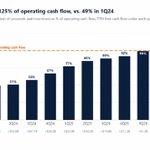
Zion Research Group tells the FT that all of Microsoft's free cash flow comes from financial engineering across four main forms totalling $75.3B last year. Zion says the practice is transparent but represents lower-quality cash flow, raising questions about whether Microsoft's premium valuation at 25 times forward earnings is justified.. (FT)
OpenAI's Altman met roughly 50 Samsung executives Saturday to deepen cooperation across memory supply and AI infrastructure. The meeting builds on the existing Stargate partnership amid intensifying global memory shortages. (BBG)
Anthropic’s Japanese IPO filing outlined up to ¥552.9bn/$3.5bn of new shares for Japanese investors, with proceeds for working capital, operating costs and capex. The filing did not disclose the overall IPO size or valuation. (RTRS)
Nebius decided against pursuing a debut high-yield bond offering as financing costs climbed. Its COO said asset-backed financing remained available, pushing back on a broader suggestion that those funding markets had closed. (WSJ)
Nscale is leaning towards a December IPO after targeting November, WSJ reports. Tougher terms demanded by potential backers of its $45bn Anthropic data centre have delayed its revised prospectus; bankers doubt demand will support the targeted $30–35bn valuation. (WSJ)
Lambda cut its target fundraising valuation to $13bn from $14.5bn after investors including Coatue declined to participate, WSJ reports. The neocloud is seeking $4bn in its final private round before an IPO. (WSJ)
AI startup Baseten is preparing a roughly $2bn funding round with tranches valuing it at $26bn and $30bn, sources said. Sands Capital is set to lead; the AI inference platform was valued at $13bn in June. (BBG)
Brookfield has selected KB Kookmin Bank to be lead arranger for South Korea’s largest-ever syndicated loan (KRW10.7tn/$8bn) that will help finance the purchase of AI chips for use by domestic tech giant Naver Corp. (BBG)
Singapore-based data center operator STT GDC Pte. is in talks with banks for a S$3.1 billion ($2.4 billion) syndicated loan, according to Bloomberg sources, as the AI boom continues to fuel demand for debt among companies building the infrastructure. (BBG)
Apple confirmed Apple Intelligence’s mainland China developer beta starts 4 November, with public availability in December through iOS 27.3 and Qwen integration. The initial rollout excludes Siri AI and the next-generation features shown at WWDC26. (Apple)
Apple is offering replacements for iPhone Duo units with cracked inner displays, Reuters reported. Demand still appears supply constrained: BofA put average delivery waits at 79 days, pushing shipments into January. (RTRS)
Google is in early talks to support data security for Golden Dome, sources said, potentially using its storage, networking and cybersecurity capabilities. The Pentagon said no final decision on a new consortium or participants has been made. (BBG)
Samsung notified customers it will end all 8-inch foundry production by the end of 2030, according to The Elec. This provides a specific shutdown deadline as the company shifts resources towards advanced 12-inch processes. (The Elec)
SK Hynix’s SOCAMM2 orders are increasing sequentially as it expands production for Vera Rubin, DIGITIMES reports. PCB makers are accelerating capacity additions, but tight copper-clad laminate availability is pushing up substrate prices. (DIGITIMES)
OpenAI’s first custom ASIC is expected to use TSMC 3nm, while a second generation is reportedly targeting A16, according to Commercial Times supply-chain sources. (Commercial Times)
Kioxia fell as much as 17% on Monday as investors reacted to Friday’s near-flat December-quarter operating-profit outlook. Management attributed the profile to shipments pulled into September and enterprise-SSD deliveries shifting into March. (BBG)
A Blackstone-led group agreed a $3.1bn purchase of 49.9% of Mitsubishi’s LNG Canada liquefaction business. Mitsubishi retains control and its full LNG offtake; the deal does not represent 49.9% of the entire LNG Canada project. (BBG)
DeepSeek released an open-source prototype called Super-Agent that can monitor developer group chats and proactively suggest coding solutions. The launch targets more autonomous coding assistance in competition with Claude Code. (BBG)
China's Envision said it commercially deployed an integrated 800V DC power system at its Inner Mongolia AI campus. The company claims the first commercial use of the technology, combining transformers, batteries and control systems to reduce infrastructure and power-conversion costs. (BBG)
Sungrow gained as much as 9.5% Monday after forecasting potentially near-double energy-storage shipments in 2027. It sees over 60GWh this year and plans to open its Polish inverter and storage factory next year. (BBG)
Alstom plunged as much as 27% after cutting annual adjusted EBIT-margin guidance to about 1% from 6.5% and forecasting €1.5bn cash burn. German project delays triggered penalties; it plans another €2bn debt-reduction programme including disposals. (BBG)
Ryanair launched a cost review to offset an expected €2bn fuel-cost increase next year after first-half profit fell 15% to €2.15bn. O’Leary said an April pay freeze is under discussion and warned higher fares would follow. (BBG)
Ryanair announced another €800mn buyback starting in February and a €0.273/share dividend. It expects more than 220mn passengers in fiscal 2028, while saying visibility for the current fourth quarter is effectively absent. (BBG)
BP completed the sale of 65% of Castrol to Stonepeak, receiving $6bn to reduce financial obligations. The transaction closes a previously announced disposal; BP retains a minority interest. (BBG)
Westpac’s annual profit slipped about 1% to A$6.8bn versus A$6.9bn expected. Slower home-loan growth was partly offset by stronger business and institutional banking, while management flagged economic uncertainty. (BBG)
Sunrise Energy Metals approved its Syerston scandium mine and refinery, targeting production in 2028. The US-backed Australian project initially aims for 60 tonnes annually, potentially tripling later. (BBG)
DATA RECAP (Newsquawk):
Australian Building Permits M/M Prelim. (Sep) 5.1% vs. Exp. 2.1% (Prev. -6.1%)
Australian Building Permits Y/Y Prelim. (Sep) -0.8% (Prev. 10.3%)
Australian S&P Global Manufacturing PMI Final (Oct) 49.6 vs. Exp. 49.7 (Prev. 49.6)
Australian TD-MI Inflation Gauge M/M (Oct) 0.5% (Prev. 0.3%)
Austrian Unemployment Rate (Oct) 7.3% (Prev. 7.1%)
Chinese NBS General PMI (Oct) 49.7 (Prev. 50.7)
Chinese NBS Manufacturing PMI (Oct) 49.3 vs. Exp. 50.0 (Prev. 50.1)
Chinese NBS Non-Manufacturing PMI (Oct) 49.7 vs. Exp. 50.5 (Prev. 50.2)
Chinese RatingDog Manufacturing PMI (Oct) 52.0 vs. Exp. 51.6 (Prev. 52.1)
Dutch NEVI Manufacturing PMI (Oct) 55.0 (Prev. 55.6)
Dutch Retail Sales Y/Y (Sep) 2.7% (Prev. 3.8%)
EU S&P Global Manufacturing PMI Final (Oct) 52.7 vs. Exp. 52.4 (Prev. 52.9)
French S&P Global Manufacturing PMI Final (Oct) 49.5 vs. Exp. 49.3 (Prev. 50.6)
German Retail Sales M/M (Sep) -2.0% vs. Exp. 0.4% (Prev. 1.3%)
German Retail Sales Y/Y (Sep) -2.3% (Prev. -0.4%)
German S&P Global Manufacturing PMI Final (Oct) 54.2 vs. Exp. 54.2 (Prev. 53.9)
Greek S&P Global Manufacturing PMI (Oct) 53.3 (Prev. 54.0)
Indian HSBC Manufacturing PMI Final (Oct) 54.7 vs. Exp. 54.8 (Prev. 55.1)
Indonesian CPI M/M (Oct) 0.22% vs. Exp. 0.25% (Prev. 0.30%)
Indonesian CPI Y/Y (Oct) 3.23% vs. Exp. 3.29% (Prev. 3.28%)
Indonesian S&P Global Manufacturing PMI (Oct) 54.0 (Prev. 52.4)
Irish AIB Manufacturing PMI (Oct) 55.2 (Prev. 55.5)
Italian S&P Global Manufacturing PMI (Oct) 49.4 vs. Exp. 50.2 (Prev. 50.4)
Japanese S&P Global Manufacturing PMI Final (Oct) 53.3 vs. Exp. 53.3 (Prev. 53.3)
Malaysian S&P Global Manufacturing PMI (Oct) 51.0 (Prev. 49.9)
Polish S&P Global Manufacturing PMI (Oct) 50.0 vs. Exp. 49.4 (Prev. 49.0)
Russian S&P Global Manufacturing PMI (Oct) 49.9 (Prev. 49.8)
South African ABSA Manufacturing PMI (Oct) 49.6 (Prev. 48.7)
South Korean S&P Global Manufacturing PMI (Oct) 51.3 (Prev. 53.9)
South Korean Trade Balance (Oct) 42.50B vs. Exp. 37.24B (Prev. 49.97B)
Spanish S&P Global Manufacturing PMI (Oct) 52.2 vs. Exp. 50.8 (Prev. 51.0)
Swedish Swedbank Manufacturing PMI (Oct) 60.5 (Prev. 58.5)
Swiss procure.ch Manufacturing PMI (Oct) 56.7 vs. Exp. 55.3 (Prev. 55.3)
Swiss Retail Sales M/M (Sep) -0.7% (Prev. 0.6%)
Swiss Retail Sales Y/Y (Sep) 1.6% vs. Exp. 3.0% (Prev. 3.2%)
Taiwanese S&P Global Manufacturing PMI (Oct) 54.9 (Prev. 56.7)
Thai S&P Global Manufacturing PMI (Oct) 54.8 (Prev. 54.3)
Turkish Istanbul Chamber of Industry Manufacturing PMI (Oct) 47.3 (Prev. 47.9)
UK S&P Global Manufacturing PMI Final (Oct) 52.8 vs. Exp. 52.8 (Prev. 51.9)
Vietnamese S&P Global Manufacturing PMI (Oct) 52.3 (Prev. 51.9)

ICYMI O/N — THURSDAY 29 OCTOBER
MACRO:
Nasdaq 100 futures fell 1.1% and S&P futures 0.3% following Microsoft, Alphabet and Samsung results. The Kospi was down 1.2% after Wednesday’s sharp rally. (BBG)
Wall Street rewarded Microsoft and Oracle on Wednesday for showing that they could fund their enormous AI ambitions without endlessly tapping investors. Alphabet, by contrast, was punished for burning through cash, while Google Search's slower growth fanned fears that competition was hurting the business that bankrolls its AI expansion. (RTRS)
Bessent said another Fed hike would not necessarily be a mistake given strong growth, while urging an open mind about the energy shock proving temporary. He reiterated his and Trump’s confidence in Warsh. (BBG)
Bessent played down AI-credit fears, saying neoclouds are a small part of the ecosystem and financing is still occurring. He pointed to Meta’s equity funding and said Treasury is monitoring developments. (BBG)
Timiraos argues Warsh’s view that rates are reaching the AI boom could imply fewer hikes, while broader economic strength points the other way. TD and BofA criticised his explanation for waiting until December as insufficiently clear. (WSJ)
Global bond issuance has reached an annual record $6.61tn, up 15%. Cloud and data-centre borrowers raised almost $368bn—over six times the prior-year amount—and accounted for about one-third of the increase. (BBG)
'Bitcoin Traders Expect Swings on $11 Billion Options Expiry' Bloomberg article notes around $11bn of Bitcoin options expire October 30, approximately one-third of Deribit open contracts. Tesseract estimates 70% of expiring gamma lies between $75,000 and $82,000; dealer-positioning direction remains uncertain. (BBG)
WSJ counts 43 announced US government equity and warrant deals involving around $30bn since Trump returned, spanning chips, minerals and quantum computing. Many also include loans or supply commitments. (WSJ)
Trump deferred immediate robotics and industrial-machinery tariffs despite finding national-security risks. Commerce and USTR will negotiate with trading partners and report within 180 days. (RTRS)
Japan’s two-year government bond auction drew firm demand, as elevated yields attracted investors ahead of a Bank of Japan policy decision on Friday, where rates are widely expected to remain unchanged. (BBG)
T. Rowe Price favours longer JGBs, AllianzGI is adding intermediate and long maturities, and BNP Paribas AM has increased super-long exposure, citing valuations, returning domestic demand and greater policy confidence. (BBG)
Five-year CDS widened across all 40 major Japanese companies tracked by Bloomberg in October, with a median 12bp increase—the largest deterioration since September 2022. October corporate issuance reached a record roughly ¥2.5tn. (BBG)
China’s STAR 50 fell as much as 4.6% despite strong chip results. Moore Threads dropped 13% on nearly 1,800% revenue growth, while Biwin lost 14% despite over 500% profit growth. (BBG)
China's Huafa repaid some investors in an overdue trust product, a Bloomberg source said. Its 2027 offshore yuan bonds traded near 60 cents after losing around 38% this week; its property arm delayed results to October 31. (BBG)
Chinese copper buyers are rushing to secure supply in a tightening market, sending the Yangshan premium to a record high of more than $200 a ton. (BBG)
Macquarie expects copper surpluses over the next few years and says prices have outrun fundamentals. Trafigura estimates data centres add 350,000 tonnes of demand this year, while high prices squeeze other consumption. (FT)
Around 90% of LME/Comex copper warehouse stocks are now in the US versus 20% two years ago. Macquarie warns removing the tariff threat could prompt rapid liquidation. (FT)
UBS estimates 150–170m tonnes of iron-ore supply is cash-negative below $90/t, although closure costs delay cuts. Producers representing 15–20m tonnes have already reduced or signalled lower output. (BBG)
Narrowing the Hong Kong dollar’s trading band against the US greenback may enhance stability and reassure the public if such a move were ever implemented, according to John Greenwood, the economist dubbed the father of the city’s currency peg. (BBG)
CICC’s chief economist urged greater yuan flexibility and more direct currency-pair trading. He argues sustainable RMB funding demand depends on China’s manufacturing and supply chains rather than cheap carry alone. (BBG)
A voting member on the Bank of Korea's board warned that the recent pace of the won's moves warranted close monitoring, signalling caution over the currency even as the export-reliant economy benefits from booming demand for AI chips. (RTRS)
Markets have virtually fully priced another RBA hike next week. AMP sees December tightening as a high risk rather than its baseline; HSBC identifies February as another window, depending on the growth slowdown. (WSJ)
RBNZ Governor Breman said the probability of a December increase was high. Markets priced an 85% chance of a 25bp hike on December 9 after Wednesday’s unexpected hold at 2.75%. (BBG)
BoC Governor Macklem warned in a Bloomberg interview that US fiscal policy was unsustainable and raising borrowing costs internationally. Heavy government borrowing and AI-related debt issuance could lift Canada’s neutral rate, although the BoC has not changed its estimate. (BBG)
Macklem expects energy costs to pass increasingly into non-energy inflation next year. He defended the BoC’s new forecasting framework and denied the model change itself caused Wednesday’s hike. (BBG)
UK Chancellor Healey played down rejoining the EU, saying the priority was a better deal at next month’s summit. He acknowledged Brexit had damaged growth but said Britain must make the best of being outside. (FT)
The IFS estimates £35bn of tax rises or welfare cuts in the UK would be needed by 2030–31 to avoid real cuts to some services while sustaining health spending and defence goals. (FT)
Spain's Vox is preparing to demand reversed immigration policy as its price for supporting a conservative Spanish government after November 29. Polling at 18–19%, it could hold the balance if the PP misses a majority. (FT)
The South African Reserve Bank and financial institutions are preparing a backup plan in case legislation needed for the switch to a new rand benchmark interest rate isn’t passed by the end of the year. (BBG)
Dedicated LatAm equity funds have fallen to 226 from over 660 in 2015. Only two IPOs above $500m have listed across Brazil and Mexico combined in five years, Bloomberg’s analysis found. (BBG)
Venezuelan oil executives warned shortages of engineers and skilled tradespeople threaten production growth from roughly 1m b/d. PDVSA engineers’ base pay of around $200 monthly makes returning from abroad unattractive. (FT)
Vietnam will retain full ownership of EVN and PetroVietnam through 2030 while reducing Vietcombank and BIDV holdings to at least 65%, preserving stakes in other strategic enterprises. (BBG)
IRAN:
The US remains engaged in negotiations over a temporary peace deal, Semafor reports, without providing further details. (Semafor)
Vance sent security chief Mohsen Rezaei a letter exploring renewed peace talks, WSJ reports. Subsequent discussions concerned a negotiating framework rather than a detailed peace proposal. (WSJ)
A US official said Vance’s letter stressed that talks to avert further strikes must address Iran’s nuclear programme. The delivery date was not disclosed. (Axios)
Trump acknowledged approving Vance’s contact but denied directing renewed peace negotiations, saying it concerned medical supplies. His public account differed from the purpose described by WSJ’s sources. (BBG)
The US is positioned to resume Iran operations after the midterms, but Trump has made no final decision, a defence official told NewsNation. (NewsNation)
Trump said electricity shortages were hampering Iranian drone production. (Trump remarks)
Israeli security experts told FT the inconclusive election leaves Netanyahu able to order Iran strikes as caretaker PM, with few institutional constraints, although US support would likely be needed. (FT)
Persian Gulf oil exports fell to at least 15.7m b/d in the week through October 26 from over 24m b/d through October 18, Kpler data show. The recovery above prewar flows has proved difficult to sustain. (WSJ)
Goldman estimates disruption fears have added roughly $27/bbl to Brent, while JPMorgan’s model puts fair value at $94. Depleted inventories and costly, vulnerable shipping continue supporting prices. (WSJ)
GEOPOLITICAL:
Rosatom said Russia was discussing US cooperation on small nuclear plants for AI data centres. No agreement, project location or financing was announced. (RIA/Sputnik via NAMPA)
Ushakov said Russia and the US were discussing possible sanctions relief for the Russian Direct Investment Fund, but he did not know the outcome. (Interfax)
The Pentagon watchdog declined senators’ request to investigate Ukraine’s Starlink/Starshield disruptions, treating the questions as contractual and referring them elsewhere in the Pentagon. It could reconsider if new information emerges. (AP)
North Korea fired approximately ten short-range ballistic missiles from Wonsan towards the East Sea, South Korea’s military said. Some social reports had put the number at twelve. (Yonhap)
North Korea conducted test loudspeaker broadcasts towards the South Thursday morning, with border residents reporting hearing them. (Yonhap)
China and Japan are considering a Xi–Takaichi handshake at next month’s APEC, FT reports. No meeting is confirmed, but it could offer an opening after the Taiwan dispute. (FT)
EQUITIES:
Marvell is in advanced Lumentum acquisition talks, with an announcement possible next week. No agreement is final; Lumentum’s roughly $83bn market value is not an agreed purchase price, and payment terms are undisclosed. (BBG)
Microsoft Corp. posted increasing growth in its cloud business and kept its capital expenditures in check, satisfying investors amid a drumbeat of concern that spending on artificial intelligence won’t pay off. (BBG)
Azure revenue grew 48% to $33.17bn. Q2 Azure growth guidance of 49–50% beat 47.6% consensus, while total revenue guidance of $96–97.1bn topped $95.6bn expected. (RTRS)
Microsoft’s Q1 capex was $45.2bn versus roughly $50bn planned because third-party capacity slipped. Calendar-2026 capex is now around $170bn (prev. 175bn, citing third-party delays again), with spending above $50bn in Q2 and acceleration in fiscal H2. Microsoft expects positive FY27 free cash flow and will access funding markets when attractive. (RTRS, Call excerpts)
Alphabet’s shares fell about 10% in early trading, setting the stock up for its biggest-ever market value wipeout, after the company disclosed that its artificial intelligence search product was eating into its core advertising business, missing on revenue estimates. Te (BBG)
Alphabet retained $195–205bn calendar-2026 capex guidance and expects another significant increase in 2027. (RTRS)
Samsung Electronics 005930.KS posted a 15-fold jump in quarterly chip profit on Thursday, powered by the AI boom, but its shares tumbled as investors balked at a lack of fresh shareholder-return plans and an outlook that lagged rival SK Hynix's.
Samsung plans to hike spending more than 60% this year after selling out of high-end chips for 2027, yet its stock fell after the company failed to outline plans to share ballooning profits. (BBG)
Samsung says 2027 HBM capacity is sold out with pricing negotiated, and expects the broader memory shortage to persist through 2028. (Chosun Biz)
Samsung says ₩55–75tn remains within estimated 2026 shareholder returns, including buybacks and cancellations. Final amounts and execution await January; the lack of detailed plans disappointed investors. (Samsung, FT)
Banks shelved a planned $5–7bn refinancing for the Anthropic-linked Hubbard, Texas data centre amid the grid review. Underlying loans are already funded; lenders retain exposure longer, with bond issuance potentially staggered into next year. (BBG)
Nscale is pursuing a roughly $30bn IPO valuation despite pushback. Bloomberg highlights $103bn of contracts against just 55MW delivered as of August and potential development capacity of 10GW. (BBG)
UniSuper’s CIO said a $2tn Anthropic valuation could be a stretch. Other Australian CIOs also expressed concern about valuations and the volume of incoming AI equity issuance. (BBG)
DeepSeek and Moonshot allegedly relied heavily on GPT-6 Astra outputs to train recent models, The Information reports. The companies did not comment. (RTRS — The Information)
Tencent is prioritising enterprise agents to improve monetisation, its cloud chief said. WorkBuddy reached 32m monthly users by autumn after an internal shift towards business customers. (BBG)
ServiceNow Inc. shares plunged after the company gave an outlook for quarterly subscription sales that met analysts’ estimates, but failed to quell Wall Street’s anxieties that artificial intelligence will disrupt the software maker. (BBG)
Fortinet beat expectations for the quarter and also gave guidance above analyst expectations for Q4. (Investing)
Equinix, one of the world’s biggest data-center companies, said mounting barriers to bringing new projects online will make existing capacity more valuable and potentially strengthen its grip on the market — including pricing. (BBG)
KLA Corp forecast quarterly revenue above estimates on Thursday, banking on strong demand for its chipmaking tools as semiconductor manufacturers ramp up production of high-end processors for AI. However, shares fell nearly 9% in extended trading, with some analysts saying the market had expected a higher guidance. (RTRS)
Apple’s 2026 NAND bill could reach $25bn versus $6bn last year for approximately the same volume, TechInsights estimates. Hyperscalers now buy around twice Apple’s share, reversing two years ago’s relationship. (WSJ)
Operators report strong initial iPhone Duo sales and sold-out allocations despite typhoon disruption. DIGITIMES cautions initial shipments were limited. (DIGITIMES)
Ford lifted annual EBIT’s lower bound $500m to $10.5–11bn after 49¢ adjusted EPS beat 41¢ expected. Commodity headwinds approach $2.5bn and Model e revenue fell 31%. Ford expects 2027 EBIT roughly flat with this year’s up-to-$11bn forecast, facing around $2bn of inflation headwinds. (BBG/WSJ)
Carvana Co. reported better-than-expected results on a key profit measure even as high fuel prices and interest rates pressure the business. (BBG)
FedEx raised adjusted EPS guidance to $18–18.60 from $16.90–18.10 and revenue growth to around 12% from 11%. Quarterly EPS of $3.74 beat $3.34 expected, though cost forecasts also increased. (WSJ, BBG)
T-Mobile US Inc. added more total customer accounts in the third quarter than analysts had expected, showing its slate of offers and loyalty incentives are resonating with customers. (BBG)
Deutsche Telekom AG’s plans to combine with its American arm T-Mobile US Inc. have hit a snag, people familiar with the matter said, casting doubt on what would be the largest-ever public merger. (BBG)
EBay recorded higher quarterly sales as customers flock to the e-commerce platform to buy items like trading cards, sports memorabilia and coins, according to its chief executive officer. (WSJ)
Honeywell Aerospace reported higher profit and sales in its first quarter as a standalone company, driven by continued demand across the commercial air travel and defense industries. (WSJ)
Chipotle Mexican Grill Inc. sales rose faster than expected in the third quarter, as more frequent menu launches and revamped loyalty offers help sustain a recovery that had been threatened by a food-illness scare. (BBG)
Korea Zinc is discussing semiconductor-grade sulphuric-acid supply with Micron, Intel and GlobalFoundries from its proposed US smelter. Testing and pricing talks continue; no supply contracts are signed. (ZDNet Korea)
Hyundai cut annual sales guidance to 4m from 4.16m and margin to 5.5–6.5% from 6.3–7.3%. Net profit missed, although operating profit beat; planned investment falls 10% to ₩16tn. (WSJ, BBG)
Toyota September sales fell 2.9% to 921,847 and production 4.5%. China fell 20%, its eighth monthly decline, while North America grew 8.6%. (BBG)
Geely reported RMB4.84bn Q3 net income, but shares reversed gains as investors focused on European hybrid-import restrictions. Exports were about 40% of quarterly sales. (BBG)
BYD short interest fell to a seven-month low of 6.3% of Hong Kong free float. Analysts expect around 55% Q3 profit growth off a weak base but continue cutting 2027 estimates. (BBG)
STMicroelectronics NV forecast fourth-quarter revenue growth as a recovery in chip demand continues after a prolonged slump. (BBG)
Shell raised its quarterly buyback to $5bn from $3bn after $10.8bn adjusted earnings beat expectations. Refining margins hit a record $42/bbl, while annual capex guidance fell to $23–25bn from $24–26bn. (FT, BBG)
Lloyds pretax profit of £2.33bn beat £2.29bn expected, with NII up 10% to £3.8bn. Guidance held, but impairments increased 78% to £313m on a weaker outlook and higher rates. (BBG)
SocGen profit of €1.89bn beat €1.62bn expected and revenue reached €7.17bn versus €6.82bn. Equities trading surged 46% to a record €1.2bn, while fixed-income trading fell 21%. (WSJ, BBG)
SocGen disclosed €7.2bn OAT holdings, 95% at amortised cost, and €22bn total French sovereign exposure including public-sector loans. Data-centre/IT/software exposure was around €12bn, 60% data centres. (BBG)
ING announced a €1.65bn buyback versus €1.25bn expected, plus €250m January cash distributions. Profit missed at €1.85bn; a wholesale reorganisation brings around 400 redundancies from March. (WSJ)
BBVA profit rose 19% to around €3bn, with NII up 22% on Mexico and Spain lending. CET1 fell to 12.2% versus 12.5% expected, largely reflecting buybacks; medium-term targets remain intact. (WSJ, BBG)
Danske raised annual profit guidance to DKK24–25bn from DKK23–25bn. Fee income rose 16% and NII 5.9% on volumes and deposit margins. (BBG)
Amundi adjusted profit rose 20% to €409m and AUM reached €2.6tn. Its CEO says French turmoil has not affected business; French sovereign assets are under 3.5% of AUM. (BBG)
VW posted a €5.9bn operating loss versus €2.6bn expected, following roughly €10bn of announced charges. Revenue fell 6.3% to €75.3bn and China sales 40%; reduced annual guidance held. (FT, BBG)
Renault held approximately 5.5% margin and €1bn automotive FCF guidance. Revenue of €11.6bn beat €11.3bn expected despite 6% lower vehicle sales; inflation limits normal H2 margin improvement. (WSJ)
Air Liquide revenue of €7.3bn beat €7.1bn expected, with comparable electronics sales up 12%. It held guidance and launched the first €1bn tranche of its announced buyback. (BBG)
Anheuser-Busch InBev posted sluggish growth in volumes last quarter as weak beer sales in China and the US offset growth elsewhere at the world’s biggest brewer. (BBG)
Lynas expects a month-long Malaysian refinery maintenance outage and two-week Australian mine shutdown this quarter. Stockpiles should allow continued customer deliveries. (BBG)
Adidas AG’s hot-selling apparel and sports products propelled growth last quarter as the German brand looks to extend the momentum built with retro sneakers like the Samba. (BBG)
DATA RECAP (Newsquawk):
Belgian GDP Growth Rate Q/Q Adv. (Q3) 0.3% vs. Exp. 0.2% (Prev. 0.0%)
Belgian GDP Growth Rate Y/Y Adv. (Q3) 0.7% (Prev. 0.5%)
EU Consumer Confidence Final (Oct) -17.9 vs. Exp. -17.9 (Prev. -16.5)
EU Consumer Inflation Expectations (Oct) 33.9 (Prev. 34.7)
Italian Unemployment Rate (Sep) 6.3% vs. Exp. 6.2% (Prev. 6.2%)
Japanese Consumer Confidence (Oct) 35.0 vs. Exp. 35.1 (Prev. 35.4)
South African PPI M/M (Sep) 1.0% (Prev. -0.4%)
South African PPI Y/Y (Sep) 6.2% vs. Exp. 5.7% (Prev. 5.0%)
Spanish Retail Sales M/M (Sep) -0.4% (Prev. 0.3%)
Spanish Retail Sales Y/Y (Sep) -1.4% (Prev. -0.4%)
Swedish Consumer Confidence (Oct) 94.3 (Prev. 102.3)
Swedish Consumer Inflation Expectations (Oct) 7.7% (Prev. 6.3%)
Swedish GDP M/M (Sep) -0.7% (Prev. 1.2%)
Swedish GDP Growth Rate Q/Q Flash (Q3) 0.4% vs. Exp. 0.3% (Prev. 1.6%)
Swedish GDP Growth Rate Y/Y Flash (Q3) 2.8% vs. Exp. 2.9% (Prev. 3.3%)
Swedish Retail Sales M/M (Sep) -0.4% (Prev. 0.9%)
Swedish Retail Sales Y/Y (Sep) 5.5% (Prev. 7.2%)


Lest we forget the north star. Some reads the labs ARR could be inflecting to a higher growth path again, shifting distribution back to compute shortage in out years.
teapawt.net/PeterJ_Walker/status/2…


ICYMI O/N — TUESDAY 27 OCTOBER
MACRO:
Asian chip stocks rebounded as Anthropic’s filing eased funding concerns: the Kospi rose as much as 4.9%, Samsung and SK Hynix over 4%, and Advantest over 9%. (BBG)
DXY reached a 12-day high. Jefferies linked the move to oil strength and concern about further US strikes against Iran. (WSJ)
US investment-grade issuance reached a record $1.76tn after Monday’s deals, exceeding 2020’s $1.75tn. Global AI-related high-grade funding has surpassed $300bn this year, approaching three times 2025’s total. (BBG)
WSJ reports private-equity-backed companies face a $300bn refinancing wall in 2028–29, around one-third in software. Roughly a quarter of outstanding loans are rated CCC+ or below, complicating extensions as borrowing costs rise. (WSJ)
JPMorgan AM’s Bob Michele sees US bonds returning 7–8% over the next year and favours the long end. He argues a hawkish December Fed message would reassure investors about inflation discipline. (BBG)
BlackRock’s Rieder favours secured AI-related debt from established companies over long-dated Treasuries. He says short-dated single-A portfolios can yield around 7% and participated substantially in weekend transactions. (BBG)
Jefferies favours five-year bonds, forecasting one December hike from both the Fed and ECB followed by no further tightening as oil prices start falling by March. (WSJ)
Trump’s approval edged up to 32% from 31%, while Democrats led the generic ballot 47–36, or 50–41 including undecided voters’ leanings, in Reuters/Ipsos polling. (RTRS)
Trump campaigned in Mississippi for Cindy Hyde-Smith, underscoring pressure in traditionally safe Republican states after Cook shifted the Senate race from solid to likely Republican. (BBG)
A judge ordered Abbott to let Democratic challenger Gina Hinojosa review over 1,000 pages of unredacted communications with Musk. (Bloomberg Law)
Georgia Democratic gubernatorial candidate Bottoms called for a pause in new data centres, potentially lasting one to six months or longer, to assess power, water and community impacts. (BBG interview)
Canadian PM Carney said US–Canada talks had intensified slightly because Washington was moving closer to Ottawa’s position. Canada’s red lines remain intact, and it would still reject August’s proposed terms. (BBG)
Japan’s UA Zensen proposed 6% wage growth for regular workers in 2027, sustaining wage pressures, including 4% base-pay growth, and 7% for part-timers. This year’s 6% regular-worker demand delivered 4.72%. (BBG)
Japanese life insurers are replacing low-coupon bonds with higher-yielding debt, with some shifting from FX-hedged foreign bonds into domestic debt. Nippon Life described current Japanese yields as attractive enough to warrant investment. (BBG)
The BOJ’s consumer-inflation measure excluding fresh food and special factors accelerated to 3.2% in September from 2.6%, its highest in three years. (BBG)
Japanese corporate service prices rose 3.7% y/y versus a revised 3.5%. Ocean freight surged 97.7%, the largest increase in data back to 1986. (BBG)
The Bank of Japan will likely consider raising interest rates at each upcoming meeting, according to a new book by former bank chief Haruhiko Kuroda, who supported his successor's current push to unwind a decade of extremely loose monetary policy. (RTRS)
Chinese households' appetite for gold has grown over the past two months as prices soften and onshore equities lose their shine. Volumes are strong on Shanghai Gold Exchange and purchases totals have for the year have already surpassed last year. (BBG)
Zhuhai Huafa Group, one of China’s biggest local-government owned conglomerates, missed payments on two trust products and is asking to extend loans from at least three banks due to debt struggles. (BBG)
The PBOC injected a record net RMB1.01tn through reverse repos. China’s five-year government yield briefly touched 1.34%, approaching its lowest closing level. (BBG)
China’s September industrial profits rose 14.4% y/y from August’s 4.2%. January–September profits increased 15.5%, with gains concentrated in energy, raw materials and electronics. (BBG)
South Korean Q3 GDP grew 1.0% q/q from 0.6%, beating Bloomberg’s 0.8% survey and Reuters’ 0.7% survey. Annual growth was 3.4%; private consumption fell 0.2% despite stronger exports and investment. (BBG, RTRS)
South Korea could use its Future Response Fund to reduce bond issuance further if yields surge. The current plan cuts next year’s issuance by ₩12.5tn, with the fund expected to receive ₩162.3tn from the tax windfall. (BBG)
Taiwan's central bank said on Tuesday that strong technology demand would drive exports into next year, though economic growth in 2027 will likely moderate after this year's high base. (RTRS)
French Finance Minister Lescure’s latest assessment is that France will probably need Article 49.3 or executive orders to pass its 2027 Budget. Opposition parties threaten to bring down the government if it forces the Budget through without consultation. (FT)
French Finance Minister Lescure told FT any further concessions to French protesters must be offset by savings, ruling out another €17bn Yellow Vests-style package. (FT)
BNP, SocGen and Crédit Agricole hold roughly €54bn of French sovereign debt, or €104bn including insurers, Bloomberg Intelligence estimates ahead of their earnings reports this week. It sees direct bond-exposure fears as excessive, while warning about domestic economic spillovers. (BBG)
French October consumer confidence fell to 80 from 85 versus 85 expected, its lowest since 2013. Most responses were collected before the worst unrest; households’ financial assessments weakened and saving intentions rose. (BBG, WSJ)
Europe and East Asia face overlapping cold spells next week, increasing LNG competition. Forecasts put Europe 2–3°C below normal and northern China/Japan more than 5°C below, alongside weaker northwest European wind generation. (BBG)
UK shop-price inflation reached its highest in two-and-a-half years. Food inflation accelerated to 2.9% from 2.5%, with retailers warning accumulated costs are increasingly being passed through. (BBG)
UK ministers have privately abandoned the 1.5m homes target for March 2029, government figures told FT. Savills forecasts 856,000 completions—57% of the target—but the pledge has not formally been withdrawn. (FT)
Britain is discussing a potential return to free movement with EU officials ahead of Burnham’s November Brussels meeting, The Times reports. The discussions concern options for closer alignment, rather than an agreed policy change. (The Times)
The UK will remove import tariffs on over 100 products, including food, fertiliser and kerosene heating oil. Treasury estimates annual household food savings of up to £21 when combined with existing suspensions. (HM Treasury)
Citi sees tactical FTSE 100 outperformance as a geopolitical hedge but remains underweight the UK medium term. It flags utility risks from affordability reforms and sees a higher bank surcharge as largely priced in. (BBG)
UBS Investment Bank’s head of HOLT argues UK equities offer the G10’s cheapest free-cash-flow valuations. UK financials trade at their largest discount to European peers in 30 years on that measure. (FT — opinion)
Monday’s Brazil close saw the real fall 8% to R$5.41/$, its largest decline since 1999, and the Bovespa lose 13.9%, its worst session since 2020. (FT)
Brazil’s selloff has not broken the broader yen-funded LatAm carry trade, Standard Chartered says, pointing to Mexican, Chilean and Colombian peso gains against the yen and limited Japanese positioning in the real. (BBG)
Bolsonaro dropped his bid to annul Brazil’s election while his Liberal Party recognised Lula’s victory. He instead proposed seeking disqualification of Lula’s ticket over alleged misinformation and misuse of public funds. (BBG)
Bolsonaro said federal police ordered him to surrender his passports and barred him from leaving Brazil. He said he would comply and denied plans to flee. (RTRS)
Indonesia’s 10-year yield reached 7.52%, its highest since November 2022, while the rupiah traded within 0.2% of its record low. MSCI downgrade risk and expensive oil continue weighing on assets. (BBG)
The Philippine peso touched a record 63.970 per dollar. DBS says last week’s surprise 50bp hike failed to restore confidence as higher oil prices deepen the inflation–growth trade-off. (WSJ)
IRAN:
Trump called the Iran ceasefire a waste of time at his Mississippi rally, saying Iran starts rebuilding whenever strikes stop. (Rally remarks, Rebuilding remarks)
A senior US official told Al Jazeera Trump would complete the mission unless Tehran changed its behaviour soon, saying Iran was being dismantled militarily and financially. (Al Jazeera via Iran International)
Saudi Arabia's Ras Tanura refinery (550k BPD) was reportedly targeted by missiles, triggering powerful explosions and large plumes of smoke, Iranian state media IRIB reports, citing Arab media. Reprots later suggested Saudi Arabia contained the fire near the Ras Tanura oil hub following an attack. (IRIB)
Israel opened voting in a tight parliamentary election, with neither Netanyahu’s bloc nor Eisenkot’s opposition assured a majority. Voting closes at 10pm local / 8pm GMT. (RTRS)
Netanyahu pushed for a pre-election Iran strike but faced resistance from military chief Zamir, NYT reports. Its new account says Zamir also feared a proposed action short of an overt strike could provoke Tehran. (NYT)
Netanyahu denied plans to dismiss Zamir, saying they would continue working together. He reiterated his intention to remove Iran’s nuclear threat alongside Trump and sign further peace agreements. (Netanyahu)
An IRGC spokesman claimed Iran possesses previously unrevealed missiles capable of hitting Israel and US bases. (Nitzan Shapira)
Iran circulated a list of 24 phone models, including Apple and Samsung devices, barred from traveller and commercial registration, tightening high-end handset import and activation restrictions. (Tasnim)
OPEC+ oil-producing countries are likely to keep their December oil output targets steady on Sunday, three people with knowledge of the matter told Reuters, in line with expectations that further output policy adjustments are unlikely until next year. (RTRS)
GEOPOLITICAL:
Russia and Ukraine began a local Oleshky ceasefire at 3am Kyiv time Tuesday to permit aid and prepare evacuations. Both sides’ human-rights commissioners said the Melania Trump-backed truce was being observed. (BBG)
Ukrainian sources said Pentagon approval for Patriot and NASAMS missiles remained stalled. Zelensky had said Kyiv was waiting nearly a month for Hegseth’s sign-off. (Alex Raufoglu)
FT reported Trump Jr spent two August days hunting in Mongolia with Kremlin-linked businessman Umar Kremlev. His spokesperson described a personal friendship rather than a business relationship. (FT)
EQUITIES:
Nvidia will invest $3bn in Meta’s equity offering as the companies expand their Muse AI-agent partnership, including wider deployment of Nvidia infrastructure and efforts to improve performance and costs. (RTRS)
Meta increased its equity financing plan to $97.5bn from $95bn: $25bn common stock priced at $625, $12.5bn mandatory-convertible preferred and up to $60bn of future at-the-market sales. (RTRS, BBG)
Broadcom, BofA, Blackstone, Citi and Morgan Stanley announced $63bn of financing for Broadcom AI equipment to be leased to Anthropic, with deliveries starting in 2027 and residual-value support against senior financing. (Broadcom)
Broadcom CEO Hock Tan intervened in last-minute weekend negotiations and agreed higher interest rates to secure Anthropic financing commitments, WSJ reports. Banks plan to distribute around $22bn through investment-grade bonds next year; $18bn of riskier debt lacks Broadcom guarantees. (WSJ)
Morgan Stanley has struggled to place roughly $300m of Lambda Kansas City data-centre bonds, finding few buyers even after approximately doubling the offered yield. (WSJ)
Pimco bought $4bn of SpaceX’s $40bn equipment-financing package, in the A2 tranche between senior and junior portions. The allocation takes the form of privately placed 144A bonds. (BBG)
AirTrunk secured a A$4.25 billion ($3 billion) green loan to finance the development of a Sydney data center campus, a signal of confidence in a sector that’s taken a slew of hits in recent weeks. (BBG)
QTS, a data-center operator backed by Blackstone, is looking to raise around $800 million through a private placement of debt, as Wall Street looks to every corner of global credit to finance artificial intelligence infrastructure. (BBG)
Anthropic filed to make its IPO directly available to Australian retail investors. Macquarie is reported to lead locally and CommSec to handle retail marketing; the allocation remains undisclosed. (BBG)
Cadence Design Systems shares are up in premarket trading after the maker of electronic design automation software raised its full-year forecast and reported third-quarter results that beat expectations. Analysts highlight positive trends at the company’s high-performance computing design business. (BBG)
Amkor's 3% compute end-market-led revenue miss in 3Q and 4Q sales guidance that's 5% below consensus suggest estimates for the near-term packaging ramp-up in Nvidia central processing unit-related businesses were modestly optimistic, while PC demand may be softening more than expected. (BBG)
Infineon Technologies AG will spend €1.1 billion ($1.2 billion) over eight years to expand its key power chip factory in Austria, a bet on growing demand for energy-efficient semiconductors for AI data centers, electric vehicles and robotics. (BBG)
Applied Materials will raise its Besi stake to approximately 20% from 9%, subject to US antitrust review. It has no current plan to exceed 20% or seek board representation. (RTRS)
Intel agreed to buy Classiq, an Israeli quantum computing startup, with H1 2027 completion expected. CTech reports $2.3bn in cash and stock plus over $100m of retention grants; Intel’s reported announcement did not disclose terms. (CTech, BBG)
BNY is tracking AI token costs and directing simpler tasks to cheaper models, its CFO says. It remains provider-agnostic, with around 400 agents deployed and AI within its $4bn technology budget. (BBG)
Whirlpool cut guidance for the third time, forecasting a $1.30/share full-year loss. Q3 revenue of $3.7bn missed $3.9bn expected, and an adjusted 21¢ loss compared with a 73¢ profit forecast. (WSJ)
Nucor Q3 profit more than doubled to $1.32bn/$5.80 a share. Revenue reached $11.25bn versus $10.84bn expected; Q4 earnings are seen roughly flat to modestly higher sequentially. (WSJ)
JetBlue widened its 2026 operating-loss-margin forecast to 4.5–6.5% from 2–5%, but shares rebounded after hours as it reaffirmed 2027 operating profitability and at least $1 EPS with positive FCF in 2028. (BBG)
Over 70% of Samsung and SK Hynix’s planned 2027 memory production is covered by five-year agreements with major tech companies, KB Securities’ Jeff Kim says, leaving under 30% for other customers. (BBG)
Naver signed an up-to-$9bn AI infrastructure agreement with Brookfield, satisfying a prerequisite for Nvidia’s planned investment. Targets are 55MW in H1 2027 and 200MW in 2028, with payment guarantees up to eight years. (Chosun Biz)
Industry estimates point to an indium-phosphide supply shortfall above 30%, potentially lasting into 2028. LandMark and VPEC are securing substrates through customer-supplied material and supplier agreements. (Commercial Times)
DIGITIMES Research forecasts 2027 server CPU shipments of 52.6m, up 45.7%. It sees AMD server CPU revenue at $31.2bn versus Intel’s $28.7bn, despite Intel retaining larger unit share at 39% versus 30.4%. (DIGITIMES Research)
AI data-centre demand is squeezing automotive memory supply and pushing automakers towards greater control of procurement, DIGITIMES reports. (DIGITIMES)
Alibaba won an injunction against a Pentagon-related lobbying restriction. The judge did not rule on its separate military-company-blacklist challenge, so the decision does not remove it from that list. (BBG)
USTR Greer warned the EIB’s $3.4bn Airbus loan could breach the US–EU aircraft-subsidy truce, saying requested financing details remained outstanding. Airbus calls it standard corporate financing; no new tariffs were announced. (USTR, FT)
Universal Music held preliminary take-private talks earlier this year with Apollo, TPG and Blackstone, Bloomberg revealed. Talks have not progressed and no formal sale process has begun. (BBG)
Orange raised annual EBITDA-after-leases growth guidance above 4.5% from above 4%, its third upgrade this year. Q3 earnings of €4.14bn beat €4.09bn expected, led by Africa and the Middle East. (BBG)
Porsche maintained guidance after a 6.9% nine-month operating margin and €1.74bn operating profit despite deliveries falling 16%. Pricing and 911 mix cushioned volumes; Q3 stake disposals generated a €593m gain. (BBG, WSJ)
Novartis raised annual core operating-profit guidance to low-single-digit growth at constant currencies from a decline. Q3 core profit of $6.04bn beat $5.61bn expected, while a $1.9bn drug write-down hit reported earnings. (WSJ)
GSK expects its roughly 15 clinical-stage cancer assets to almost double in 2027, potentially supporting 19–20 late-stage studies as acquisitions and Chinese licensing deals expand the pipeline. (WSJ)
Sanofi held preliminary talks with at least three rare-disease biotechs in recent months, an investor told FT. Sanofi declined transaction comment and plans more strategy details by year-end. (FT)
Novo failed to secure a preliminary injunction against Lilly’s comparative obesity and diabetes advertising. The judge found insufficient demonstrated irreparable harm; the underlying false-advertising case continues. (BBG)
Goldman estimates each additional percentage point of UK bank surcharge would cut 2028 earnings by around 0.5% at Barclays and just over 1% at Lloyds and NatWest. (BBG)
HSBC Q3 pretax profit rose 32% to $9.6bn but missed $9.7bn expected; net profit was $7.09bn versus $7.24bn expected. It announced a $1bn buyback and $0.10 dividend while retaining guidance. (FT, WSJ)
The PRA ordered an independent Section 166 review of Revolut’s product-approval controls around its March UK banking licence, FT reveals. It examines risk management when launching products. (FT)
Reckitt cut core like-for-like growth guidance to 3.5–4.5% from 4–5%. Q3 growth of 3.3% missed 4.1% expected as Lysol constraints and weaker Chinese vitamin sales weighed. (BBG)
DATA RECAP (Newsquawk):
Finnish Consumer Confidence (Oct) -9.7 (Prev. -4.9)
French Consumer Confidence (Oct) 80 vs. Exp. 85 (Prev. 85)
Japanese BoJ Core CPI Y/Y (Sep) 3.2% (Prev. 2.6%)
South Korean Consumer Confidence (Oct) 105.4 (Prev. 106.6)
South Korean GDP Growth Rate Q/Q Adv. (Q3) 1.0% vs. Exp. 0.7% (Prev. 0.6%)
South Korean GDP Growth Rate Y/Y Adv. (Q3) 3.4% vs. Exp. 3.0% (Prev. 3.7%)
Spanish Unemployment Rate (Q3) 10.18% vs. Exp. 9.9% (Prev. 9.87%)
Swedish Trade Balance (Sep) 4.10B (Prev. -11.90B)
Turkish Unemployment Rate (Sep) 8.4% (Prev. 7.8%)
UK BRC Shop Price Inflation (Oct) 2.1% vs. Exp. 1.6% (Prev. 1.4%)
ICYMI O/N & WEEKEND
MACRO:
Lula won Brazil’s presidential runoff with 51.76% against Flávio Bolsonaro’s 48.24%, securing a fourth term. Flávio Bolsonaro refused to concede and said he would seek annulment of the election, challenging the extension of voting hours. Brazil equity market ETFs fell sharply. (RTRS/FT)
Markets price roughly a 90% chance of a Fed hold this week. Monex says the dollar could weaken if Warsh argues higher bond yields have already delivered some tightening, prompting an unwind of December hike bets. (WSJ)
Goldman’s multi-asset CIO Alexandra Wilson-Elizondo says markets price an overly aggressive Fed hiking cycle and favours the front end. Another 50–100bp of tightening would put the economy under substantial pressure, she told FT. (FT)
Democrats are tempering expectations for a large House majority as polling shows Republicans gaining in competitive districts. They still expect control, but the path to around 235 seats looks less certain. (Politico)
Cybersecurity firms say AI-powered attacks are accelerating and straining response capacity. Volexity expects substantial breach disclosures in coming weeks and months as attackers exploit newly discovered vulnerabilities. (WSJ)
Apollo’s Slok says there is still no visible AI payoff outside technology, pointing to flat revenue per employee and margins across the S&P 493. (Apollo)
UBS says 0DTE traders increasingly buy dips and sell rallies, suppressing S&P 500 swings. The growth of the 0DTE counter-trend trading flow is now so great that the net effect outweighs the impact from the option dealer re-hedging, according to UBS, but the pattern could change if the market has an extended selloff.(BBG)
S&P Dow Jones Indices will change growth/value classifications before the December 21 open, adding intangibles and forward earnings to valuation measures and removing price momentum from growth scoring. At least $375bn tracks the affected indices. (BBG)
NEC Director Hassett said US–Canada trade talks were “very close” to a deal. Trump suggested an agreement could arrive before the election or take another couple of months; a US official cautioned Canada was still not offering enough. (BBG)
Trump’s revised Canadian tariff schedule removes 50% duties from selected agricultural and forestry inputs while imposing duties on other products, including canoes, coffins, carpets and certain appliances, from October 30. (FT, BBG)
British Columbia’s Conservatives won 64 seats against the NDP’s 27, prompting Eby’s resignation. Incoming premier Doerkson backs the Alberta–Pacific pipeline and pledges to double LNG exports by 2032 and triple them by 2035. (FT)
Goldman sees the yen becoming a better hedge against an AI-led growth shock, favouring short EUR/JPY near term and short USD/JPY for broader growth protection. (BBG)
China rejected proposed tighter US outbound-investment restrictions, including biotechnology, and reserved the right to respond, saying the measures contradict the presidents’ consensus. (BBG)
China’s four-day fifth plenum began Monday, with Xi presenting a draft on stronger party self-governance. Discipline, anti-corruption and leadership changes are expected to dominate. (BBG)
ETFs favoured by China’s national team received RMB128.7bn last week, the largest inflow since April 2025’s trade-war rout, indicating increased state support for equities. (BBG)
Morgan Stanley sees another 10–15% downside for offshore Chinese stocks before historical valuation troughs. It prefers mainland shares, where state buying could produce clearer stabilisation within one to two months. (BBG)
HKEX is discussing longer trading hours, including potentially removing the noon-to-1pm lunch break. Talks are preliminary and no formal consultation has begun. (FT)
Goldman cut its 12-month Kospi target to 9,000 from 12,000 but still sees over 60% upside. It says semiconductor valuations imply an excessively pessimistic 65% fall in 2027 earnings. (BBG)
RBA’s Hunter said the bank is not yet finished fighting inflation, warning higher oil costs are becoming embedded in supply chains with further pass-through still to come. (BBG)
Moody’s maintained France at Aa3/negative, assuming a deficit-reducing 2027 Budget passes. It forecasts a 5.2% deficit next year versus the government’s 5% target, with debt exceeding 120% of GDP. (FT, WSJ)
Scope affirmed Italy at BBB+/positive, keeping an upgrade in play while identifying fiscal discipline through the 2027 election as the key test. (BBG)
JPMorgan favours intermediate-maturity Bunds and Treasuries while remaining cautious on eurozone sovereign spreads amid French fiscal stress, oil risks and rate volatility. (WSJ)
Australian Retirement Trust has increased French 10-year bond purchases during October’s selloff, arguing markets overprice fiscal deterioration and the eventual ECB hiking cycle. (BBG)
France counted 410,000 demonstrators Saturday against unions’ estimate of nearly 800,000. Arrests reached 1,314 by Sunday morning after 70,000 security personnel were deployed, with less widespread disorder than the prior weekend. (FT, BBG)
Le Pen launched her presidential campaign promising higher wages, stronger welfare and business-tax cuts, proposing Bardella as PM in a national-unity government. She leads first-round polls at 32–34%. (WSJ, FT)
French Finance Minister Lescure floated bringing forward the inflation-linked minimum-wage increase by a couple of months. Unions have called another major strike day for November 5. (BBG)
Around 250,000 people rallied in Madrid demanding state-pension guarantees and action on living costs. (AFP / France 24)
January is increasingly the working assumption for Lagarde’s early departure, Bloomberg reports. France’s bond turmoil has put crisis-management experience at the centre of the succession contest between Knot and De Cos. (BBG)
The ECB is expected to hold Thursday. Oxford Economics sees scope for a higher hurdle to further hikes as French bond stress tightens financial conditions; Rabobank says current spreads remain insufficient to trigger intervention. (WSJ)
BoE communications are their most hawkish since early 2023, Bloomberg Economics’ model shows. Markets price near-certainty of a November 5 hike to 4%, followed by at least three more increases by July. (BBG)
Bloomberg’s Budget reporting points to fiscal restraint, temporary targeted energy relief and higher bank taxes, with major defence and welfare decisions deferred. Its dealer survey indicates fiscal headroom of at least £15bn. (BBG)
UK primary dealers expect £11bn of net Treasury-bill issuance this fiscal year against the DMO’s £5bn forecast, with further expansion next year to reduce funding costs and pressure on gilt issuance. (BBG)
UK Chancellor Healey will give the National Wealth Fund another £15.4bn and the British Business Bank £5bn in Wednesday’s Budget, financed by borrowing over several years. The Treasury says the resulting assets make the package neutral under its net-financial-liabilities rule. (FT)
The Treasury plans CGT rollover relief for entrepreneurs reinvesting business-sale proceeds in Britain within a specified period. Changes to Business Asset Disposal Relief are expected to fund it. (FT)
UK PM Burnham opened the door to reconsidering EU free movement ahead of the November 20 summit, while ruling out the euro and Schengen. Rayner said any change would require a future election mandate. (FT)
Reuters detailed a Trump administration campaign to return the Bolsonaro family to power, including sanctions pressure on Brazilian officials. (RTRS)
Goldman remains bullish on the Taiwan dollar despite approximately $26bn of October foreign equity outflows, citing the current-account surplus and central-bank stance. (WSJ)
Vietnam proposed a talent visa and five-year personal income-tax exemption for foreign experts. (Tuoi Tre News)
IRAN:
Trump said Sunday that a decision was approaching between an agreement with Iran and further military action. He subsequently told reporters there would be no strike that day. (BBG)
US forces could launch major operations within 96 hours of a Trump order, CNN reports. Plans cover energy, nuclear and military targets; Trump is leaning towards action but has not decided, with operations considered more likely after the midterms. (CNN)
US intelligence assesses Iran and the Houthis are unlikely to attack pre-emptively now but would retaliate immediately if Iran were struck, CNN reports. (CNN)
US intelligence suggests Iranian preparations to attack Americans throughout the Middle East have reached “advanced stages,” prompting a sudden exodus of personnel from embassies and military bases throughout the region, officials said to WSJ. Pentagon options also include assaults on Iranian-held islands. (WSJ)
WSJ observed deliveries of standoff land-attack missiles and bunker-buster bombs to the USS George Washington in the Arabian Sea ahead of possible renewed operations. (WSJ)
Netanyahu pushed for a joint strike before Israel’s election, but Trump declined, CNN reports. Washington asked Israel to wait until joint operations were ready; depleted Israeli missile-defence stocks increase reliance on US support. (CNN)
Netanyahu pressed Trump for more election support, Axios reported; Likud denied the request. Trump renewed his endorsement Sunday. (Axios)
Iran is preparing retaliation against Israel and the UAE if US bombing resumes around the midterms, Bloomberg sources say. Gulf officials fear renewed hostilities could be worse than before the pause. (BBG)
Two Iranian officials told the NYT that US diplomats and military personnel could be targeted in retaliation for killings of Iranian leaders and relatives. (NYT)
Washington expects further embassy withdrawals in coming days, with some posts potentially facing staffing caps. Saudi Arabia remains the only embassy under a formal ordered departure, CNN reports. (CNN)
Trump told FOX 2 Detroit the war would not end until he was certain Iran could not obtain nuclear capabilities, saying he was prepared to take time over an agreement. (Iran International)
Netanyahu told Channel 14 he had instructed the IDF and Mossad to work towards overthrowing Iran’s government and said Israel would strike Iran again. (Iran International — Channel 14)
Channel 12 reported that IDF chief Zamir resisted an unspecified pre-election Iran operation and sought written legal authorisation. Netanyahu’s office denied a clash; Katz denied Israel intended to initiate a pre-election attack. (Channel 12, Katz denial)
The IDF announced a pre-planned multi-front exercise for Sunday and Monday across northern and central Israel, including air and ground responses to surprise infiltration. (Iran International)
Saudi Defence Minister Khalid bin Salman, Pakistan’s Asim Munir and Turkish intelligence chief Ibrahim Kalin were due in Tehran Monday for de-escalation talks with Iranian leaders. (RTRS)
Qatari mediators visited Tehran Sunday ahead of the wider regional delegation, seeking to revive US–Iran diplomacy. (RTRS)
Iranian President Pezeshkian blamed Washington for derailing an interim agreement but called for another attempt to conclude it in remarks broadcast Saturday. (RTRS)
Iran’s Baghaei told ARD diplomacy remained open and mediators were passing messages, but Tehran would reject demands amounting to complete surrender. (Iran International)
Tasnim denied Al Arabiya’s report that Iran had offered to reopen Hormuz in exchange for lifting the US blockade. Its source said no new proposal had been submitted and Tehran retained its existing conditions. (Al Arabiya, Tasnim)
Iran's Ghalibaf cancelled his planned New Delhi visit for the October 26–27 BRICS parliamentary meeting, citing unforeseen circumstances; an Iranian delegation would still attend. (Iran International)
Iran warned German military facilities in the region would become targets if Berlin joined military action against Iran, Fars reported. (Fars)
Iran’s navy warned US ships entering Iranian territorial waters would face combined missile, drone and coastal-defence attacks. (Iran International)
Iranian cyberspace official Reza Taghipour renewed threats involving internet infrastructure through Hormuz and Bab al-Mandeb, warning the next crisis could involve connectivity. (Iran International)
Iran’s acting oil minister said a gas-exchange agreement with Russia was nearing completion and technical implementation work was underway. (Iran International)
Iran is discussing a $130/bbl oil assumption for its next fiscal-year Budget, Fars reported; the figure has not been adopted. (Iran International)
Ghalibaf called for a 10% reduction in Iranian gas consumption ahead of winter, highlighting domestic supply pressure. (Iran International)
The Houthis claimed Saturday attacks on Aramco Yanbu, Rabigh refinery and East–West Pipeline pumping stations. Saudi authorities reported intercepted-missile debris; Reuters could not establish whether the oil targets were hit. (RTRS)
The Houthis claimed fresh Monday attacks on East–West Pipeline pumping stations and Riyadh airport. Saudi Arabia had not confirmed hits or damage to the claimed targets. (RTRS)
An oil spill from a damaged tanker off the coast of the United Arab Emirates has widened, satellite images showed, triggering more beach closures and raising environmental concerns. (RTRS)
Iraq’s oil ministry said exports had recovered to pre-Hormuz-crisis rates and called for higher production and strategic stocks. (Ministry statement via NAYA)
GEOPOLITICAL:
Zelensky confirmed Starlink and Starshield service had returned to pre-restriction speeds. Ukraine’s defence minister said connections were stable above 400km/h after earlier restrictions around 160km/h. (Zelensky, RTRS)
Reuters newly reported that both the Biden and Trump administrations had asked Musk to alter Starlink access in conflict zones over several years, including Ukraine, Iran and Middle Eastern militant groups. (RTRS)
Zelensky said Ukraine had received only 24 Patriot missiles from the US in the previous 90 days. (ABC interview)
Zelensky said technical talks between Ukrainian, Russian and US teams must precede a leaders’ meeting. (Kyiv Independent)
Brussels has set a December deadline to address Ukraine’s funding problem, with Kyiv facing a €70bn Budget shortfall next year, Politico reports. (Politico)
Germany is preparing to buy Ukrainian Bars cruise missiles, with a deal expected within weeks and initial test deliveries in early 2027. Purchases could reach hundreds of the 1,000km-range weapons. (FT)
The Trump administration has encouraged Orbán to seek the UN secretary-general role, including discussion of joint US–Russia–China backing, according to reporting by WSJ opinion editor Elliot Kaufman. (WSJ)
Italy's Salvini won another term as League leader after pledging to push Italy to stop military and financial aid to Ukraine, putting him at odds with Meloni. (BBG)
The UK and Canada abandoned plans to combine their defence-financing institutions and will develop separate organisations with a cooperation framework. Disagreements included headquarters, governance and procurement. (HM Treasury / Canada, FT)
Britain must be ready for war within 1,000 days, the defence secretary warned. (LBC)
Turkey’s military targets production of 5m kamikaze drones in five years and 10m within a decade, its chief of general staff said. (Clash Report — military remarks)
Japan’s defence minister plans talks with Finland on allowing nuclear weapons into the country as Japan considers a similar policy shift. (Japan Times)
Kim Jong Un visited China’s Dandong Saturday, crossing the new Yalu River bridge and meeting Wang Huning and Wang Yi ahead of Trump’s planned China visit next month. (FT)
Algeria’s parliament approved sending troops to protect oil facilities in Niger, where Sonatrach is drilling—an almost unprecedented overseas deployment. (BBG)
Venezuela's María Corina Machado returned to Caracas Sunday. Rubio said US-backed reconciliation talks enabled her safe return; her arrival renews pressure for elections under the interim government. (Machado, Rubio, WSJ)
EQUITIES:
Musk said SpaceX closed $40bn of GPU debt financing, but Bloomberg sources said pricing negotiations were still continuing late Sunday. The funding status remains disputed. (Musk, BBG)
Musk predicted widespread failures and consolidation among more than 200 neocloud operators, saying debt markets were effectively closed to pure plays. He ruled out SpaceX buying them. (RTRS)
S&P warned data-centre delays and cancellations could pressure ratings through lost rent, penalties and termination rights. It identified 146 delayed or cancelled US projects, roughly three-quarters linked to local opposition. (BBG)
Anthropic’s S-1 could become public Monday ahead of a possible November IPO, The Information reports. (The Information)
OpenAI’s coding share at Rippling rose from 16% to 52% as cheaper pricing displaced Anthropic, whose share fell from 57% to 18%. (The Information)
OpenRouter’s Peter Walker said seven-day average token volume for Anthropic models rose 3.6x following Opus 5.5’s launch. The figures include substantial cache reads and are not equivalent to revenue or fresh-compute growth. (Peter Walker)
Moonshot removed some cybersecurity training data from Kimi K3.1 Pro to curb hacking capabilities, with weights due November 4. It says internal testing showed reduced exploit performance. (RTRS)
Funda’s Microsoft channel checks point to improving Copilot usage as it becomes more useful for everyday Office tasks, with some enterprise contacts identifying improvement around July–August. (Funda)
Apple is preparing to unveil touch-screen OLED MacBook Pros Wednesday. Bloomberg expects redesigned 14- and 16-inch models to carry a significant premium over today’s $2,499 starting configuration. (BBG)
Barclays upgraded Tesla to Overweight from Equal Weight and raised its target to $450 from $370, citing 2027 auto/FSD growth and an Energy business it sees as nearly sold out for next year. (Barclays)
Google is set to play a central role in a joint cloud for Germany’s foreign, domestic and military intelligence services, according to NDR/WDR reporting. (Tagesschau)
Elvis Presley music rightsholders sued Anthropic, alleging songs were used without permission to train AI models. (Billboard)
Netflix’s internal metrics show customers opening the app on fewer days and watching less per account. Total first-half viewing still rose modestly because the subscriber base expanded. (BBG)
Uber walked away from Instacart acquisition discussions, Bloomberg reports. The Information separately reported preliminary DoorDash talks as Instacart explores a sale; no deal is assured. (BBG)
SpaceX has been granted access to sensitive US space-tracking information, the Guardian reports. (Guardian)
JetBlue senior creditors hired PJT and Akin amid cash burn and high fuel costs. The organising group holds $2bn of 2031 bonds and a $742m first-lien loan; total debt and finance leases were $8.5bn at end-June. (WSJ, BBG)
Pfizer presented a later analysis showing a more-than-two-month survival benefit in a subgroup from its failed sigvotatug vedotin trial. It says this supports earlier-line testing alongside Keytruda. (BBG)
Saturday’s full Moderna/Merck melanoma presentation showed immature, statistically insignificant overall-survival results: HR 0.77, 95% CI 0.45–1.31. The recurrence-free-survival benefit was disclosed before the weekend. (CancerNetwork)
Masayoshi Son of SoftBank Group Corp. chose locations in Malaysia for $50 billion in technology investments, the country’s prime minister said, an outlay that would accelerate the billionaire’s global bet on AI infrastructure. (BBG)
SoftBank-backed OPay filed to raise up to $336m in a US IPO, offering 16m ADRs at $19–21. Investors including Redwheel, Coronation and Sundt agreed to buy up to $270m. (BBG)
Samsung reportedly cut Q4 Galaxy A production plans about 20%, removing roughly 10m units from its annual plan as component costs squeeze lower-priced phones. (ETNews)
SK Hynix said it was reviewing shareholder-return measures ahead of Wednesday’s announcement. Reports of a ₩16tn special dividend linked to Kioxia gains remain unconfirmed. (RTRS)
Samsung and SK Hynix reportedly target Q2 2027 shipments of eight-layer HBM4. Nvidia is considering an eight-layer HBM4/HBM4E mix for Rubin Ultra amid heat, yield and supply constraints. (ZDNet Korea)
Meaningful memory-supply expansion may not arrive until 2028 despite approximately ₩110tn of Samsung/SK Hynix investment, Chosun reports, citing cleanroom constraints and HBM’s wafer-capacity demands. (Chosun)
Tradr will liquidate its US-listed 2x long and inverse SK Hynix ETFs around November 12. Combined assets have fallen over 60% from their peak to roughly $1.3m. (BBG)
CXMT reportedly quoted Apple memory prices comparable with the three major suppliers and declined a Taiwanese server maker’s DDR5 request, challenging expectations of aggressive Chinese discounting. (TechNews Taiwan)
SoftBank-backed agricultural-drone maker XAG is preparing a Hong Kong listing. Its senior vice-president estimates China needs 3m agricultural drones over three years as the farm workforce shrinks. (FT)
Chinese car brands outsold Japanese rivals in Europe over a full quarter for the first time. Q3 share roughly doubled to 12.7% against Japanese brands’ 11.9%, Dataforce figures show. (BBG)
Toyota is pitching a strategy to deploy 400,000 robots under a $6.4bn annual factory-automation investment plan, with about 250,000 earmarked for group companies and suppliers. (FT)
Vietnam’s first chip fab is unlikely to meet its 2027 trial-production target, Reuters reports, citing construction delays and no ASML equipment agreement. Viettel maintains the project is on schedule. (RTRS)
Audi announced an approximately $4bn Georgia factory targeting 200,000 vehicles annually and 4,500 jobs. Construction starts next year, with production expected in the early 2030s. (FT, BBG)
Kone is requesting offers for TK Elevator’s European assets with and without Spain and Portugal as it seeks to retain Iberia. The €4–5bn disposal process supports clearance for its €29bn acquisition. (FT)
Trafigura’s metals business generated a record profit of around $2bn in the year to September, Bloomberg sources say. Results remain subject to audit and valuation adjustments. (BBG)
Roche’s divarasib reduced the risk of death by 44% and extended survival by almost six months against Amgen and Bristol rivals in a late-stage lung-cancer trial presented Sunday. (WSJ, BBG)
AstraZeneca’s gastric-cancer drug sone-ve reduced the risk of death by 42%, roughly doubling survival and adding five months versus control treatments. Astra is preparing a filing and sees $3–5bn peak annual sales. (WSJ, BBG)
Novo-backed Windward Bio filed for a Nasdaq IPO to fund respiratory and inflammatory-disease trials. It has raised $365m privately and reported a $42.6m first-half loss with no revenue. (BBG)
Heimstaden will allocate no further capital to Germany while Berlin’s apartment-expropriation proposal remains. Its co-CEO estimates a potential €1bn loss under 40%-below-market compensation, while judging implementation unlikely. (BBG)
DATA RECAP (Newsquawk):
Finnish PPI Y/Y (Sep) 9.8% (Prev. 7.3%)
Singapore Industrial Production M/M (Sep) -3.9% (Prev. -1.0%)
Singapore Industrial Production Y/Y (Sep) 3.4% (Prev. 15.4%)
Spanish PPI Y/Y (Sep) 18.3% (Prev. 13.2%)
Swedish PPI M/M (Sep) 3.4% (Prev. 0.9%)
Swedish PPI Y/Y (Sep) 11.2% (Prev. 6.8%)
Thai Trade Balance (Sep) -5.860B vs. Exp. -1.8B (Prev. -2.480B)
Anthropic need to come out and defend themselves against the rumours from 3X Long Labubu. The silence is deafening
ICYMI O/N — THURSDAY 22 OCTOBER
IRAN:
Iran's state television reported that seven oil tankers were either struck by attacks or hit naval mines in the Strait of Hormuz overnight Thursday, possibly making this the largest single-day number of vessels damaged in the waterway since the Iran war started on Feb. 28. (AP)
The IRGC warned continued US encouragement of ships to use the disputed passage could extend its response to American bases across the region. (IRGC via IRIB)
US and Israeli militaries have drawn up plans for a short, intensive campaign against Iran after the midterms, potentially targeting nuclear facilities, missiles, drones and energy infrastructure. Trump has not approved the strikes, NYT reported. (NYT)
The US is preparing strike options and moving a third carrier group towards the region, alongside another amphibious assault ship carrying Marines. The White House reiterated there would be no US attack before November 3. (WSJ)
Israel presented Hegseth with targets based on new intelligence during Monday’s meeting, a person briefed told WSJ. Israel is updating its target list as Iran rebuilds military capabilities. (WSJ)
Mediators had floated releasing frozen Iranian funds with interest in exchange for nuclear concessions and inspectors’ return, alongside transferring enriched uranium to Russia. Iranian hard-liners blocked diplomats’ initial openness to inspections, mediators said. (WSJ)
The US has quietly reduced troop numbers at Middle Eastern bases in recent days, while the State Department is ordering further staff reductions at diplomatic posts, officials and people familiar told NBC. (NBC)
A senior Iranian security official told Fars that a renewed major war involving assassinations or civilian killings would prompt retaliation against US political targets and participating countries’ infrastructure. (Fars)
Trump told reporters that the US was negotiating with Iran "a little bit", then said immediately after that the US was not negotiating and that an Iran outcome could come “fairly soon”. He said most people expected something after the election but "we are going to see what happens." (NewsNation)
Iran’s foreign ministry spokesman rejected demands for unilateral concessions, saying a lasting agreement must involve reciprocity and recognise Iran’s legitimate interests. (Baghaei)
Iran’s floating oil stocks outside the blockade were fully depleted by mid-October, Kpler told WSJ, removing the reserve sustaining sales to China. Payments for earlier deliveries could still provide revenue in coming weeks. (WSJ)
India's imports of Middle Eastern crude oil surged in September, returning to pre-war levels, while its refiners cut back purchases of Russian oil amid stiff competition with China, ship tracking data showed. (RTRS)
The US plans to waive red-diesel reporting and recordkeeping requirements to encourage uptake of fuel-tax relief. The IRS would not challenge covered failures between October 1 and January 1, 2027, or impose associated penalties and additional taxes. (BBG)
Goldman sees US natural gas averaging $2.95/MMBtu this winter as record production, ample inventories and mild-weather expectations weigh. EBW warned curtailed output could return as prices rise, adding pressure. (WSJ)
Asia's imports of liquefied natural gas are likely to rise to a three-month high in October despite the surge in spot prices to the most in almost four years. (RTRS)
MACRO:
Asian equities and US futures fell as earnings failed to settle AI sector concerns: Nasdaq futures −1.6%, S&P futures around −0.9% and Kospi around −4%. China’s CSI 300 fell 2%, taking its decline since June to 20%, while Hang Seng Tech dropped over 5%. Japan’s Nikkei closed −2.65% at its lowest since July 30. (BBG, FT, WSJ)
Treasuries rallied despite higher oil, with yields falling at least 3bp across the curve and the 30-year touching a one-month low of 5.38%. The yen and Swiss franc also gained as risk off flows drove demand for havens. (BBG)
Barclays expects Treasury to leave auction sizes unchanged at the quarterly refunding but soften forward guidance, allowing greater flexibility over issuance timing and composition as borrowing needs rise. (WSJ)
Bernstein Research analyzed thousands of planned US data centers and concluded that only about 35% of the announced capacity is likely to get built. That's roughly 170 gigawatts of data center capacity out of a total of almost 500 gigawatts. (Business Insider)
UniSuper ($127bln AUM) CIO John Pearce said he avoids direct data-centre investments and expects AI users to be the eventual winners. He remains bullish on memory chips and would buy pullbacks, while questioning Anthropic’s $1.52tn valuation. (BBG)
Republican political committees held $683m in cash versus Democrats’ $484m heading into the midterms. Including Trump- and Musk-linked super PACs takes the Republican total to almost $900m, FT analysis found. (FT)
Companies and governments around the world raced on Thursday to patch vulnerabilities in the widely used PHP programming language, as experts reported a surge in hacking attempts following their disclosure. (RTRS)
83% of economists in Bloomberg’s BoJ survey expect the next hike in December, versus 35% previously; none expect October. Some 67% expect quarterly hikes, up from 46%, while the median terminal-rate forecast remains 1.75%. (BBG)
Major Japanese banks are seeing increased demand for funds among corporate borrowers compared with three months ago, a central bank survey showed on Thursday, indicating that recent interest rate hikes have yet to hamper lending. (RTRS)
Japan's largest labour union group Rengo unveiled a more ambitious wage bargaining policy for next year's annual labour negotiations on Thursday, setting a target centred at a pay hike of 6% while maintaining a minimum benchmark of 5% or more. (RTRS)
BNP Paribas AM increased long-dated JGB exposure, favouring 20s and 30s, with some strategies funded by shorting 2s and 5s. It cited the steep curve, returning domestic demand and dollar-hedged yields near 6–6.5%. (BBG)
Chinese President Xi Jinping urged effective qualitative improvement and reasonable quantitative growth in the economy in a speech on Thursday, Xinhua reported. (RTRS)
Bloomberg Intelligence estimates Central Huijin has $188bn available for Chinese stock purchases, enough for 75 sessions at the recent pace. Support may need to be larger and more persistent than past rescues; willingness to deploy is the constraint. (BBG)
The Bank of Korea unanimously held at 3% but signalled further tightening. Governor Shin said growth should significantly exceed August’s 3.3% forecast, while underlying inflation next year could be slightly higher than previously expected. (WSJ, BBG)
The Singapore dollar is gaining appeal as a carry-funding currency relative to the yen, RBC and State Street strategists said. Cheap funding and subdued volatility contrast with further BoJ-hike and yen-appreciation risks. (BBG)
Westpac now expects an RBNZ hike next Wednesday after New Zealand’s core inflation strengthened despite softer headline CPI on Thursday. Swaps put the probability of a 25bp hike at 83% following the release. (BBG)
Canada's Prime Minister Mark Carney will meet President Tayyip Erdogan in Turkey on Thursday, in the first bilateral visit by a Canadian leader, as he seeks to expand trade ties and reduce reliance on the United States. (RTRS)
The Swiss National Bank on Thursday signalled it saw less need to intervene in foreign exchange markets to curb the rise of the Swiss franc, according to the minutes of the central bank's September rate setting meeting. (RTRS)
Taiwan had cancelled at least 125 flights by Thursday morning as Typhoon Champi approached with Category 4-equivalent winds. Taipei office and school closures—and any stock-market shutdown—remained undecided. (BBG)
Flávio Bolsonaro’s energy adviser ruled out privatising Petrobras if he wins Sunday’s runoff but supported greater portfolio freedom. Scrapping Brazil’s 12% oil-export tax is a concrete campaign proposal; fuel-pricing changes remain undiscussed. (BBG)
India has spent roughly $90bn of the more than $140bn raised from its diaspora since June defending the rupee, two FX bankers told the FT. The intervention has supported the currency but raised concerns over its sustainability. (FT)
The Philippines surprised with a 50bp hike to 5.50%, versus 25bp expected by 24 of 25 economists in Bloomberg’s survey. The BSP warned inflation would remain high in 2027 and only approach its 3% target in 2028. (BBG)
Indonesia’s Jakarta Composite reversed a 2.7% decline to rise as much as 1.8% after Danantara said it had been buying attractive local shares since Wednesday. The fund disclosed neither companies nor amounts. (BBG)
Indonesia’s exchange will change Jakarta Composite eligibility from November 2 to exclude companies including those with highly concentrated ownership, as authorities seek to avert an MSCI downgrade. (BBG)
Colombia’s President de la Espriella replaced interior minister Rodrigo Lara with Alejandro Ordóñez after Congress failed to reconcile competing budgets. The government is preparing legislation intended to reduce the deficit by over 2% of GDP. (BBG)
GEOPOLITICAL:
Russia bombarded Kyiv with more than 20 ballistic missiles after Witkoff’s talks with Putin. Ukraine’s emergency service reported at least one death and 22 injuries, with damage across six districts, including metro infrastructure and an ambulance station. (FT, Klitschko)
Ukraine will be able to buy weapons, ammunition and equipment through NATO’s procurement agency under a new partnership intended to accelerate deliveries and lower costs through pooled purchasing. (FT)
Pentagon officials are planning undercover economic espionage targeting China and other rivals, WaPo reports. The Pentagon denies the initiative. (WaPo)
China began a sizeable maritime-militia rotation, with 24 vessels leaving Hainan towards the Spratlys and Scarborough Shoal, according to SeaLight tracking. (SeaLight)
EQUITIES:
Meta (-0.8%) Q3 revenue rose 26% to $64.60bn (exp. $63.4bn; buyside exp. $64bn); Q4 guidance was $73–76bn (Exp. $73.6bn; buyside $75bn). Gave no FY27 Revenue guide. Q3 GAAP EPS of $3.83 includes a $9.89bn litigation charge; excluding it, EPS was $7.40. Meta raised the floor of 2026 capex to $135–145bn from $130–145bn. It provided no numerical 2027 capex guide, but said it would continue to invest "aggresively". (Meta, RTRS)
Meta said Muse reached 10m setups in six weeks, with roughly 25% using it daily. It plans earlier monetisation given compute costs, starting with subscriptions, and targets a tenfold cost-efficiency improvement next year. (earnings call)
Meta confirmed non-voting Class C shares effective January 19, with one distributed for each existing A/B share. Its filing says all three scenarios considered in May required "hundreds of billions of dollars" of capital over several years, beginning as early as this autumn. (Meta filing)
Zuckerberg agreed to remain in the same state as Meta’s headquarters for eight years after considering leaving California over its proposed wealth tax. The share agreement lets him immediately sell 20% of his new Class C stock while preserving voting control. (WSJ)
Meta faces an Australian class action alleging Facebook and Instagram harmed children through addictive features and algorithms. Eight plaintiffs are bringing the case; Meta says it will vigorously defend itself. (RTRS)
Lam Research (-9%) provided weaker-than-expected guidance, weighing on peers. (BBG)
Tesla (-5%) pulled back its spending plans after investment last quarter trailed expectations, clouding Elon Musk’s effort to transform the electric vehicle maker into an AI and robotics company. (BBG)
Tesla said Optimus production began on its Fremont high-volume lines, producing its first units suitable for a commercial product. Musk expects external deliveries from late 2027, with substantial supply-chain, design and training work still required. (Tesla, FT)
Tesla expects Cybercab to launch in Dallas next month, with a small number potentially sold to customers by year-end. Most vehicles would remain company-owned for its transport service. (BBG)
Musk’s advisers are pushing to announce a Tesla–SpaceX merger in H1 2027 so it can close during Trump’s administration, Bloomberg sources said. Terms remain unsettled and timing depends on Tesla’s board becoming comfortable. (BBG)
Tesla–SpaceX talks are considering a SpaceX acquisition or a merger under a new holding company, potentially using stock. Talks remain early; one source said Musk’s public endorsement could delay the process by several weeks. (RTRS)
Texas Instruments (-0.6%) Q3 revenue rose 28% to $6.06bn versus $5.92bn expected. Q4 revenue guidance of $5.8–6.3bn exceeded $5.73bn consensus, with EPS guided to $2.45–2.79 versus $2.26 expected. (RTRS, BBG)
IBM (-5.5%) reported sales that topped analysts’ estimates, saying it had recovered most of the infrastructure deals that were delayed earlier this year. (BBG)
IBM’s CEO said open-weight models can deliver roughly 90% of frontier-model effectiveness at 10–25% of token costs, with an average enterprise deployment requiring two to three racks. These are management’s comparisons. (earnings call)
Apple reportedly raised its first-12-month iPhone Duo shipment target to 14m from 9.7m, roughly 44%, following stronger-than-expected preorders. (DIGITIMES)
Intel is advancing equipment installation at Arizona’s Fab 62 and work on its Ohio manufacturing project as demand strengthens, DIGITIMES reports. (DIGITIMES)
Nvidia’s market-share lead over Huawei in China’s AI-chip market has narrowed by approximately 80%, DIGITIMES reports. (DIGITIMES)
Micron workers at Taoyuan began a 24-hour strike at 9am Taiwan time, demanding quarterly bonuses linked to 15% of global operating profit. Taichung reached a separate agreement; production losses were not quantified. (Dong-A)
EQT agreed to buy Qiagen for €10.8bn including debt, offering €46.50 cash per share with ADIA and CPP Investments backing. Qiagen’s boards unanimously support the deal, carrying a 40% premium to its unaffected price. (FT)
Southwest (falt) cut FY adjusted EPS guidance to $2.60–2.85 from $3.25–4.25 as fuel costs exceeded expectations. Q4 EPS guidance of $0.55–0.80 also missed consensus despite strong demand and a Q3 beat. (WSJ)
CSX (+2.3%) EPS of $0.57 beat $0.53 expected and revenue rose 12% to $4.02bn versus $3.96bn consensus. Higher volumes, pricing and fuel surcharges supported results. (WSJ)
Molina (-4.6%) beat with adjusted EPS of $0.89 versus $0.79 and revenue of $11.08bn versus $10.86bn. Management said medical-cost trends appeared to be plateauing and stronger 2027 rates could begin a Medicaid-margin recovery. (WSJ)
Comcast is preparing significant cuts across cable, broadband and wireless ahead of next year’s NBCUniversal separation. Announcements could begin within weeks; no headcount figure was disclosed. (BBG)
Kinder Morgan approved the $4.2bn Permian Link pipeline, backed by an unnamed hyperscaler. The 434-mile project would carry 2.8bcf/day from late 2030, supplying gas for data-centre power. Kinder Morgan separately approved Southeast Connector, a 470-mile pipeline designed to carry up to 2.6bcf/day. (BBG)
Citi is discussing another small Banamex stake sale before a targeted H1 2027 IPO. It currently owns 51% and wants to deconsolidate the business before listing, subject to market conditions. (BBG)
Palantir’s European chief said Europe must accept some short-term reliance on US technology, acknowledging weaker demand from some Western European governments. He separately said Palantir cannot remotely switch off NATO’s Maven system and NATO retains operational control. (BBG, RTRS)
TSMC is exploring alternatives to rare-earth components in factory equipment, according to Reuters sources, aiming to reduce the risk that Beijing's export controls could disrupt operations at plants that make the world's most advanced chips. (RTRS)
DeepSeek raised approximately CNY100bn/$15bn, with Tencent and CATL among the largest investors. The final raise was twice its initial target as it expands infrastructure and prepares for an IPO. (BBG)
SoftBank fell 6.9%, taking its decline from June’s peak to 50% and market value to roughly ¥24.7tn/$157bn. Investors are focusing on leverage, funding costs and AI-valuation exposure. (BBG)
Alibaba fell as much as 6.6% after China’s regulator summoned major ecommerce platforms over product quality, counterfeits, misleading advertising and consumer protection. (BBG, FT)
MiniMax fell as much as 7.3% to HK$159.3, below its HK$165 IPO price, erasing all gains since January’s listing. Competition, lower model pricing and its poorly received October 19 release continued to weigh. (BBG)
Evergrande’s liquidators plan a first creditor distribution in H1 2027 after recovering roughly $433m, less than 1% of the $46bn claimed. Recovery from mainland subsidiaries remains a remote prospect. (BBG)
Elice rose as much as 25% to KRW99,900, moving above its KRW90,500 IPO price for the first time. It later pared gains towards the issue price as broader Korean tech weakened. (BBG)
Russia is reportedly considering reinstating parallel imports of Samsung and SK Hynix products to ease data-centre memory and storage shortages. (DIGITIMES)
SAP (-1.4%) cloud revenue rose 25% at constant currencies to €6.67bn, beating €6.57bn expected; current cloud backlog rose 26% to €24.14bn. It now sees cloud and cloud/software revenue towards the upper ends of FY ranges, maintaining operating-profit guidance. (BBG, RTRS)
SAP still targets 2027 revenue acceleration but said the stronger 2026 base makes that harder. It flagged macro risk around Q4 bookings, which account for roughly half the annual total. (earnings call)
Nokia (-3%) reported a bigger than expected rise in quarterly earnings on Thursday and maintained its full-year financial outlook. (RTRS)
Besi (-2.8%) beat market expectations for third-quarter orders on strong AI data-centre demand and dismissed analyst reports that ASML could challenge it in hybrid bonding. (RTRS)
Nestlé (+1.4%) organic sales grew 4% versus roughly 3.4% expected, helped by Americas petcare and snacking. Volume/mix rose 2.8%; it maintained FY organic-growth guidance of 3–4%. (BBG, WSJ)
Hermès (-7%) sales rose 4.3% at constant currencies to €4.1bn versus 5.2% growth expected. Asia-Pacific excluding Japan was flat, leather goods grew 10.8% and fashion/accessories fell 2%, with China and the Middle East challenging. (FT, BBG)
Roche (flat) sales beat at CHF16.13bn versus CHF15.78bn expected, growing 7% at constant currencies. Guidance was maintained and it said it was ready to launch giredestrant for breast cancer later this year. (WSJ)
Thales (-0.6%) now expects annual organic sales growth at the upper end of, or above, 6–7%. Q3 orders reached €6.7bn versus €5.7bn expected, with Middle Eastern orders more than tripling over nine months. (BBG)
Sainsbury (-4%) raised the floor of FY retail operating-profit guidance to at least £1bn. Price matching and loyalty promotions supported first-half volume growth. (BBG)
Barclays (+0.8%) pretax profit rose 12% to £2.3bn but missed £2.42bn expected as FICC revenue fell 19%, outweighing a 47% equities jump. Its £500m buyback missed £579m consensus; group targets were maintained. (FT, WSJ)
LSEG (+4%) raised organic income-growth guidance to at least 8% from 7–7.5%, margin expansion to 100–120bp and equity FCF to at least £2.8bn, citing subscriptions and markets growth. (WSJ)
LSEG agreed to acquire Octus for $3.54bn, with completion expected in H1 2027. Debt funding will push leverage towards the top of its 1.5–2.5x range; the deal should be earnings-neutral in year one and accretive thereafter. (WSJ, BBG)
Kuehne + Nagel (+1.5%) raised recurring EBIT guidance to CHF1.5–1.6bn from CHF1.35–1.55bn. Q3 EBIT rose 53%, with airfreight volumes up 10% on cloud-infrastructure and semiconductor demand. (WSJ)
Fortescue warned production could be cut unless its CMRG dispute is resolved by year-end. Quarterly shipments were 46.8mt versus sales of 42.9mt, with inventories rising and cash preservation prioritised; shares fell over 4%. (WSJ, FT)
NextDC rebounded as much as 8.2% after Wednesday’s 42% collapse. Morningstar and Morgan Stanley called the selloff excessive, although power, community and execution risks remain unresolved. (BBG)
DATA RECAP (Newsquawk):
Danish Consumer Confidence (Oct) -17.2 (Prev. -13.7)
Dutch Consumer Confidence (Oct) -34.0 (Prev. -33.0)
Hong Kong Unemployment Rate (Sep) 3.9% (Prev. 3.8%)
New Zealand CPI Q/Q (Q3) 0.7% vs. Exp. 0.8% (Prev. 1.5%)
New Zealand CPI Y/Y (Q3) 3.7% vs. Exp. 3.8% (Prev. 4.1%)
Norwegian Unemployment Rate (Sep) 5.0% (Prev. 4.5%)
Polish Retail Sales Y/Y (Sep) 3.3% vs. Exp. 3.7% (Prev. 3.8%)
Turkish Consumer Confidence (Oct) 84.8 (Prev. 91.9)