

Author 2 books: From Plunder to Plenty & Do-Gooders. Preview both on Amazon, or in the free Do-Gooder audiobook app. Would love to hear your comments/questions
USA
Joined December 2024
- Tweets2.5K
- Following265
- Followers117
- Likes380


Do-Gooders retweeted
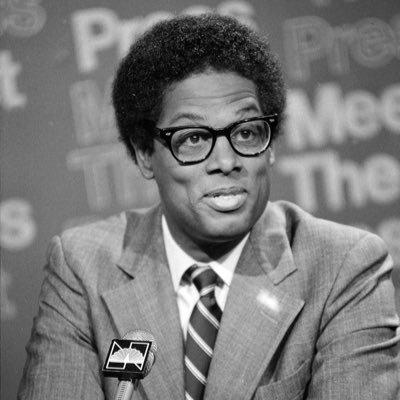
"One of the most important reasons for studying history is that virtually every stupid idea that is in vogue today has been tried before and proved disastrous before, time and again."
— Thomas Sowell


Do-Gooders retweeted

Errors in the research of Emmanuel Saez and Gabriel Zucman marginalrevolution.com/margi…

Do-Gooders retweeted

Bernie Sanders says the top 1% owns more than the bottom 93%, that fewer than a thousand billionaires got $2.2 trillion richer last year, and that it's "obscene."
It's the most seductive and most wrong economic argument of our time. Let me explain why.
First, wealth distribution follows a power law. Always. Everywhere. Books, music, startups, followers on X, goals in soccer. A small minority captures most of the value. That's not a bug of capitalism. It's the mathematical signature of every system where value gets created.
So the only question that matters isn't "how big is the rich's slice?" It's "is the cake growing, and is the slice of the poorest growing with it?"
And the answer is yes. In 1990, more than one human in three lived in extreme poverty. Today it's about one in ten. During exactly the period when billionaires multiplied.
Bernie shows you the slice. He never shows you the cake.
Second thing he won't tell you: past a certain level, wealth stops being consumption. It becomes capital allocation.
Elon Musk isn't sleeping on a pile of cash. He owns stakes in Tesla, SpaceX, xAI. Jeff Bezos owns Amazon stock. That "$2.2 trillion" isn't sitting in a checking account. It's factories, rockets, data centers, millions of jobs. Nobody can eat $100 billion. You can only decide where to invest it.
Once you understand that, the whole debate changes. The real question becomes: who allocates capital better?
The people who built Amazon, SpaceX and Nvidia? Or politicians?
A 5% wealth tax isn't "taking money from the rich." It's taking investment decisions away from people who proved they can create value and handing them to people who proved the opposite.
Because the fundamental difference between an entrepreneur and a politician is consequences.
The entrepreneur invests his own money. If he allocates badly, he loses everything. The market corrects him brutally, no appeal. That's why most startups die: the system kills bad decisions.
The politician invests other people's money. If he allocates badly, nothing happens. Worse, he gets a bigger budget to "fix the problem."
Milton Friedman put it better than anyone. There are four ways to spend money. Your money on yourself: you care about price and quality. Your money on others: you care about price. Others' money on yourself: you care about quality. Others' money on others: you care about nothing.
Government is the fourth box. By design.
Perfect example: California high-speed rail. Approved in 2008 for about $33 billion. Current estimated cost: over $100 billion. Passengers carried: zero. No entrepreneur would have survived that. The politicians who pushed it built careers on it.
And when allocation has no consequences, it eventually finds a buyer. A politician who controls billions without accountability becomes the most profitable target in the world for anyone who wants to steer that money.
The irony is that the left that rails against billionaires is itself funded by billionaires. George Soros is one of the biggest Democratic donors in history. The Gates Foundation shapes public health policy across the planet.
Politicians don't fight billionaires. They pick their own. The ones who fund the state over the ones who compete with it.
So if we actually want fewer poor people, we have to stop judging ideas by their intentions and start judging them by their results. And the results are brutally clear.
China, 1978: Deng Xiaoping opens the economy to markets. More than 800 million people escape extreme poverty. The largest retreat of misery in human history. Not through redistribution. Through the freedom to build.
India, 1991: liberalization. Same movie.
South Korea and North Korea: same people, same language, same starting point in 1953. One became one of the most advanced economies on earth. The other has famines.
Poland and Ukraine: comparable living standards in 1990. Today the average Pole is more than three times richer than the average Ukrainian.
Argentina: a year and a half of liberalization, and the poverty rate falls from over 50% to around 30%.
No country in history escaped poverty by punishing the people who build. Every single one did it by letting them build.
And if you want to see what Bernie's program looks like in real life, you don't have to imagine it. It exists. It's called France. We've been running it for 45 years.
Mass nationalizations in 1981. Two years later, Socialist president Mitterrand has to reverse course into austerity.
Retirement at 60. The 35-hour workweek.
A wealth tax for 35 years. Hundreds of wealthy households left every year for Belgium, Switzerland, London, taking their capital, their companies and their future taxes with them. Macron finally scrapped it in 2018.
Hollande's 75% tax: raised a few hundred million, drove talent out, abandoned after two years.
One of the highest tax burdens in the OECD. Public spending around 57% of GDP, a record in the developed world.
Last balanced budget: 1974. Public debt: over €3.4 trillion. Mass unemployment for four decades.
If taxing the rich and growing the state made people prosperous, France would be the richest country on the planet.
It isn't. GDP per capita in France is barely more than half of America's. It's lower than Mississippi, the poorest state in the US. Not a single global tech giant. Our best engineers build Silicon Valley instead. I've been going back and forth between Paris and San Francisco for years. I see it every week.
And California is about to replay the movie. Prop 40, on the ballot November 3rd, would take 5% of billionaires' net worth. Even Gavin Newsom, a Democratic governor, opposes it. The state's own nonpartisan budget analyst warns that income tax revenue could drop every year if the wealthy leave. Larry Page, Sergey Brin and Peter Thiel have reportedly already started moving their assets out.
You don't fight poverty by shrinking the top. You fight it by growing the cake.
Bernie wants a society where nobody has too much. I want a society where nobody has too little.
The first has been tried everywhere and produces equality in stagnation. The second lifted a billion people out of misery.
Choose.

Do-Gooders retweeted

Milton Friedman was the most intellectually courageous person I have ever known, willing to say something if he believed it was right, damn the consequences ~
Gary Becker, Nobel laureate
wsj.com/opinion/milton-fried…

Do-Gooders retweeted

Ro, thanks for the Wisconsin history lesson. You skipped the ending.
In 1911 Wisconsin's income tax started at 1% on income over $1,000, about $18,500 today. Most people paid nothing. It was sold as a tax on the few.
Today Wisconsin taxes working families starting at 3.5% and tops out at 7.65%. Washington copied the idea in 1913, and fewer than 10% of Americans paid it as late as 1939. Now it's in every paycheck.
That's the real lesson of 1911... a tax on "the few" is how you build the machine that taxes everyone.
And California already did this before... Prop 30 in 2012 was a "temporary" tax on high earners. Prop 55 extended it to 2030. Temporary in Sacramento means forever.
Now look at Prop 40...
A 5% grab on net worth, which means paper wealth and private company stock valued by a state formula, not money anyone actually made.
Written into the state Constitution, with a clause letting the Legislature amend it by a two-thirds vote if it "furthers the purposes" of the act.
"One-time" money for permanent health programs. When it runs out, guess who they come for next.
Even Gavin Newsom says it "makes no sense" and is "really damaging to the state."
Larry Page, Sergey Brin and Peter Thiel didn't wait around to find out. The LAO warns the state loses income tax revenue every year after the ones who leave are gone.
And his chart makes the case against you... 5% "takes them back 31 days." So this wrecks California's reputation for capital, chases out the people who pay a huge share of the income tax, and doesn't even dent the "inequality" you claim to care about.
It's not innovative. It's the oldest socialist trick there is... promise it's only them, then come for you.
Vote NO on 40.
Do-Gooders retweeted
Thomas Sowell: “One of the big problems about social justice is that what they say sounds so good—it’s only after you study history that you find out just how horribly it actually turned out.”
Do-Gooders retweeted

In 3 days, the incomparable USA turns 250 years old. In honor of this milestone, here’s some cool stuff about Founding Father Thomas Paine.
Thomas Paine — author of Common Sense and The Rights of Man — was one of the most radical and influential thinkers of the American Revolution.
Paine grew up in a working-class Quaker family in rural England. He tried several trades (corset maker, sailor, teacher, excise officer) but repeatedly failed financially. He was fired twice as a tax collector, lived in poverty, and lost his first wife young. These experiences made him deeply sensitive to economic injustice and the struggles of ordinary people.
He was heavily influenced by Enlightenment thinkers like John Locke, Voltaire, and especially Rousseau. Meeting Benjamin Franklin in London in 1774 was a turning point — Franklin encouraged him to emigrate to America and gave him a letter of introduction. Paine arrived in Philadelphia just as tensions with Britain were exploding.
Once in America, Paine was shocked by the arrogance of British rule — the taxes (Stamp Act, Townshend Acts), lack of representation, and the heavy-handed response to colonial protests. He saw the conflict not as a simple tax dispute but as a fundamental battle between tyranny and liberty. Common Sense was written in late 1775, just months after he arrived.
Common Sense (1776) was a massive bestseller — it sold an estimated 100,000–150,000 copies in the first few months in a country of only about 2.5 million people. It convinced many fence-sitters to support full independence.
Paine was a deist who believed strongly in reason, natural rights, and human equality. He hated monarchy and hereditary privilege on principle. Unlike many Founders who were wealthy landowners, Paine’s working-class background gave him a more populist, uncompromising edge.
However, his book The Age of Reason (1794–1795), which criticized organized religion in favor of deism, made him deeply unpopular in America upon his return.
Paine was brilliant, fearless, and uncompromising — often too radical even for his fellow Founders. John Adams once said of him, “Without the pen of the author of Common Sense, the sword of Washington would have been raised in vain.”
Paine’s final years were difficult. He suffered from severe gout, arthritis, and other ailments. In his last days, he was bedridden and in considerable pain.
Despite his enormous contributions to American independence, Paine died largely forgotten and in relative poverty, largely due to the backlash against his religious writings in The Age of Reason.
The man who helped ignite two revolutions (American and French) ended his life quietly.
Thomas Paine died on June 8, 1809, at the age of 72 in New York City.


Do-Gooders retweeted

Remember when Tim Walz celebrated Tesla’s stock going down?
Elon just became the world’s first trillionaire
Fuck you @Tim_Walz
Do-Gooders retweeted

Hooray, @elonmusk! Showing us that capitalism works, and drives progress. Everyone benefits. Electric cars, self driving, free speech, internet connections for the poor and outliers, bringing speech to the speechless and mobility to the immobile, robots to eliminate hard or mundane labor, tunnels to ease traffic, truth-seeking AI, data centers off the planet, moon base, on much more to come.
If you're one of those Elon haters, wake the ƒ$#@ up!


Do-Gooders retweeted

If KAT didn't tip the inbound pass, the Spurs would've had a WIDE OPEN dunk for the win 😳
Do-Gooders retweeted

20 years ago, An Inconvenient Truth put climate change at the center of global debate, shaping politics, influencing leaders, and inspiring a generation of activists.
Two decades later, we can assess not just its impact, but its accuracy. Many of the film’s most alarming predictions did not materialize, while many of the policies it inspired have proven costly and ineffective.
The lesson? Panic is a poor guide for public policy. Focusing on innovation, adaptation, and economic development can do far more to help both people and the climate—at a fraction of the cost.
financialpost.com/opinion/bj…

Do-Gooders retweeted
"The man who reads nothing at all is better educated than the man who reads nothing but the newspapers." – Thomas Jefferson

Do-Gooders retweeted

Love Piketty’s claim that he and his 45 collaborators spent two years thinking deeply, truly considering the world anew, before concluding “degrowth communism, that’s what we need.”

The world today is characterized by large-scale inequalities. And a climate crisis is looming over us.
We urgently need a new vision for global progress in the 21st Century. One that grounds human development and equality in planetary habitability.
What would it take to achieve high prosperity and equality while remaining within planetary boundaries?
The World Inequality Lab is very excited to launch the #GlobalJusticeReport.
[1/7]

Do-Gooders retweeted

Ça fait un moment que je me pose des questions sur le bilan (provisoire) de Milei en Argentine. On lit tout et son contraire. Alors j'ai arrêté de lire les commentaires et j'ai regardé les chiffres bruts.
L'Argentine, c'est l'expérience grandeur nature que les économistes attendaient depuis 50 ans. Même pays. Même peuple. Même culture. On change UNE variable : la méthode économique.
Avant : des décennies de gestion étatiste et péroniste, "redistributive". Le résultat concret ? 211% d'inflation, 42% de pauvreté, un État en déficit permanent qui finance son train de vie en faisant tourner la planche à billets.
Puis arrive Milei. Méthode inverse, brutale, assumée : on coupe, on déréglemente, on arrête d'imprimer.
Deux ans plus tard (photo à son arrivée (fin 2023) vs aujourd'hui) :
Inflation annuelle : 211% → 31%
Inflation mensuelle : 25% → ~2%
Déficit public : −5% du PIB → +1,8% (excédent)
Croissance : −1,6% → +4,4%
Pauvreté : 42% → 28%
Sans débat. Jugez par vous-mêmes.
Et le point essentiel : ces gains ne vont pas "aux riches" ou "aux marchés". Ils vont d'abord aux plus pauvres.
L'inflation est l'impôt le plus injuste qui existe — elle frappe ceux qui n'ont aucun actif pour se protéger. La diviser par 7, c'est rendre du pouvoir d'achat à ceux d'en bas. Et 14 points de pauvreté en moins, ce sont des millions de gens, pas une ligne Excel.
Pendant un siècle, on a expliqué aux Argentins que l'État les protégerait en dépensant toujours plus. Résultat : un des pays les plus riches du monde en 1910, ruiné. On vient d'inverser la méthode. Regardez le résultat.
À un moment, il faut accepter ce que les faits racontent : sur le terrain économique, la méthode libérale a livré en deux ans ce que des décennies de socialisme avaient promis sans jamais tenir. Et ça profite d'abord aux plus modestes.
On peut détester le style de Milei — la tronçonneuse, l'outrance, les sorties improbables, il n'a rien d'un homme d'État classique. Mais on ne juge pas une politique économique au style de celui qui la mène. On la juge à ce qu'elle fait à la vie des gens.
Et les chiffres ont parlé.
Do-Gooders retweeted

Every socialist scheme boils down to the same formula: take wealth from those who create it and redistribute to those who vote for you. They dress it up as "justice" but socialists fundamentally believe productive people owe them something simply for existing.
Look at Venezuela's oil revenues or Cuba's sugar wealth—socialists always inherit functioning economies, then systematically destroy them through redistribution schemes. They call entrepreneurs "exploiters" while living off the taxes entrepreneurs pay.
The productive class builds civilization. Socialists then vote to confiscate it. Pathetic.