

Postdoc in @naoshigeuchida's lab, Harvard @MCB_Harvard former Ph.D student in @blsabatini lab
Cambridge
Joined December 2017
- Tweets708
- Following919
- Followers756
- Likes3.6K





Pinned Tweet
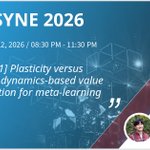
🚨🚨New Preprint Alert!🚨🚨
biorxiv.org/content/10.64898…
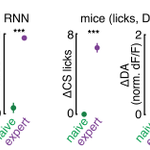
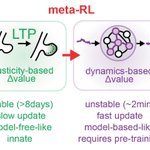
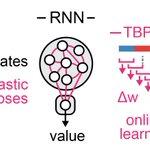
Animal learning is painfully slow (at least initially). Yet, well trained animals can learn very fast, sometimes displaying few-shot inference. How does this transition occur?
Jaeeon Lee retweeted

Our recent work presents a 1-gram wireless mesoscope for cortex-wide imaging at single cell resolution in naturally behaving mice, published in @Nature . It's interesting to see large-scale neural activities in multiple mice within a very natural habitat. rdcu.be/iGFq4KbdWuza
Jaeeon Lee retweeted

Join us Nov. 4 for "Comparative Neuroscience: Lessons from Biodiversity," our Fall symposium! What can we learn from the differences and similarities across the diversity of nervous systems that have evolved? picower.mit.edu/events/picow… @MITBiology #neuroscience

Jaeeon Lee retweeted

CHECK THE DATES | MARK YOUR CALENDARS! Join us for the #MSNSeminarSeries 2026–2027 @IcahnMountSinai! This year's series brings together researchers from leading institutions to share exciting discoveries, innovative approaches, and new perspectives in neuroscience. NOT TO MISS!

Jaeeon Lee retweeted

Congratulations to @lab_plotkin on the great paper in Neuron! In it, they investigate the connectivity between the amygdala and dorsolateral striatum in a mouse model of OCD. Read more about the work in this @sbunewsdesk feature: news.stonybrook.edu/newsroom…
Jaeeon Lee retweeted

We’re sharing a solution to the Navier-Stokes Millennium Prize Problem, one of the deepest problems at the frontier of mathematics.
The proof was produced by a group of agents, using an OpenAI next-generation model significantly more capable than GPT-6 Astra.
The problem concerns whether the description of smooth three-dimensional fluid motion modeled by the Navier-Stokes equations can break down. It has remained unresolved for roughly 90 years.

Jaeeon Lee retweeted

First study out! Using a new cooperative paradigm and multi-agent inverse RL, we show that mice spontaneously adopt leader/follower roles, and the prefrontal cortex encodes these role dynamics and an egocentric social value map of the partner’s position.
nature.com/articles/s41586-0…

Jaeeon Lee retweeted

PhD work finally out! 🥹 This work saw much blood, sweat and tears — but it also embodied the beautiful joy of discovery that I’m so grateful to experience as a scientist
Thank you most of all to Rathi who carried the revision experiments to the end! ❤️
science.org/doi/10.1126/scie…

Jaeeon Lee retweeted

1/10 Our paper is out today in Science!
During artificial hibernation, hippocampal firing rates fell by ~70% and synapse density fell by more than half—yet mice retained memories formed beforehand.
How can memory survive such extensive brain remodeling?
doi.org/10.1126/science.aee7…

Jaeeon Lee retweeted

Chromatin has long been proposed to "store" memory related information; but what kind of information, contents or rules does it hold?
Check out our new preprint: biorxiv.org/content/10.64898… 1/13
Jaeeon Lee retweeted

Proud to share this new preprint led by Mélanie Druart!
Membrane potential recordings from 300+ identified striatal neurons reveal the cellular and synaptic actions of dopamine during behavior. 💪🧠⚡
biorxiv.org/content/10.64898…
Also on Bluesky: @missippy.bsky.social 🦋
Jaeeon Lee retweeted

A new study shows that dopamine D2 receptors form a direct complex with NMDA receptors in the nucleus accumbens region of the brain, tuning glutamate signals to control plasticity and aversive learning. scim.ag/4fN3Ppn

Jaeeon Lee retweeted

Online now: A sync state in the midbrain dopamine network for interoceptive nutrient learning dlvr.it/TTflx3
Jaeeon Lee retweeted

From @TheAthleticFC: Argentina disgraced themselves and the World Cup final with their charmless petulance, our columnist writes. It was "a tetchy, petulant and distasteful performance by the now deposed world champions." nyti.ms/4aZbFJW

Jaeeon Lee retweeted

How does the brain track how much sleep has occurred, and gauge the likelihood of waking at each moment? Check out our new preprint: “A molecular integrator of sleep duration and interruption” biorxiv.org/content/10.64898… (1/10)

I’m honored to be recognized by the @AsteraInstitute as one of the highlighted essays in the essay competition!
If you’re interested, I’d love for you to give it a read and share your thoughts!
astera.org/essay-competition…
Jaeeon Lee retweeted

Neuroscience Graduate Vanessa Frelih Wins Glushko Prize for Research on Cognitive Flexibility and Aging
#Academics
mcb.harvard.edu/department/n… @Harvard @harvardbrainsci @RachelleGaudet @sjo09 @Franklandlab @SickKidsNews

Jaeeon Lee retweeted

A decade ago in Korea, AlphaGo showed AI’s potential.
Together with the Korean government, we’re now looking at how this technology can help accelerate scientific discovery and create new opportunities for economic growth across the region. 🇰🇷
Find out more → goo.gle/4wbqUbJ
crazy!

A paper in Nature describes an AI-based robotic system capable of outperforming elite table tennis players, developed by Sony AI. go.nature.com/4cI2xt8
Jaeeon Lee retweeted

A paper in Nature describes an AI-based robotic system capable of outperforming elite table tennis players, developed by Sony AI. go.nature.com/4cI2xt8
Jaeeon Lee retweeted

New paper in Nature Neuro! We found dopamine is severely impaired in the lateral entorhinal cortex of Alzheimer’s mice. Optogenetic stimulation of entorhinal dopamine and LEVODOPA treatment restored their memory – dopamine treatment may be a future treatment for AD patients!

ALT https://www.nature.com/articles/s41593-026-02260-w

My postdoctoral work is finally published in Nature Neuroscience after six years!
We show that dopamine signaling in the lateral entorhinal cortex, previously identified as being involved in memory, is disrupted in an Alzheimer’s disease mouse model.
nature.com/articles/s41593-0…
