







O Good Lordy! Grokkie @grok compare how many people died of American Gunshots & How many died of Canadian MAiD

1
1
10

Please learn from the Canadian Press Gallery how to write a story. 🤡


Dear @nypost I was not hired by anyone. Please learn from the Canadian Press Gallery how to write a story. By asking questions. Please correct? And in Canada we say ‘sorry’, eh?
2
92


🎷🎷Solomon Asch: The Man Who Measured
Conformity🎷🎷
_______________________________
🎷In an age of social media pile-ons, political tribalism, and mass messaging that pushes people to deny what they see with their own eyes, the work of Solomon Asch feels newly urgent. He asked a question that still cuts close: how far will ordinary people go along with a group when the group is obviously wrong, even when doing so contradicts common sense and their own clear self-interest?
🎷Asch was born in Warsaw in 1907 into a Jewish family. When he was thirteen the family emigrated to the United States. He arrived speaking little English, learned the language by reading Dickens, and eventually found his way into psychology. He studied under Max Wertheimer, one of the founders of Gestalt psychology, and absorbed a lifelong respect for careful observation.
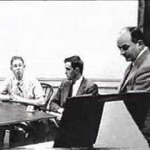
🎷He came of age as a scholar while the world watched fascism rise and ordinary people submit to it. The question of conformity was never abstract for him. After the war he designed a series of experiments that became classics. A subject was placed in a group and asked to match the length of lines. The task was easy. The correct answer was clear. But the other members of the group were actors, instructed to give the same wrong answer on certain trials. Asch wanted to know what the real subject would do.
🎷Many people went along with the majority even when their own eyes told them the group was wrong. Some did it to avoid discomfort. Some began to doubt their own perception. A smaller number held firm. Asch did not present these results as proof that humans are weak. He was equally interested in the conditions that allowed independence. He showed that the presence of even one ally dramatically increased a person’s willingness to trust their own judgment.
🎷Conformity was powerful, but it was not inevitable.
The experiments were elegant and restrained. Asch reported the data with precision and let the implications speak. Later generations would link his work to questions of obedience, propaganda, and social pressure. His student Stanley Milgram pushed the inquiry further into darker territory. Asch himself remained focused on the everyday mechanisms by which people yield or resist.
🎷He taught at Brooklyn College, Swarthmore College, and the University of Pennsylvania. He continued writing about how we form impressions of others and how social context shapes judgment long after the conformity studies had made his name.
🎷Today the pressure Asch measured appears in new forms: online consensus that punishes dissent, institutional messaging that asks people to deny biological or statistical reality, political movements that demand loyalty over evidence. People still abandon their own perception and even their own interests in order to stay aligned with the group. Asch showed that this tendency is real, measurable, and often invisible to the person yielding to it.
🎷He also showed that independence remains possible, especially when even one other person refuses to look away. In an era of groupthink and mass persuasion, that finding has not lost its force.


Carnage epidemic is wholesome.


There are only 2 places @MarkJCarney is respected:
1) The @liberal_party caucus
2) His own mind
#ElbowsUp🤡
#cdnpoli🇨🇳

1
11
247
In the past 24H, I’ve been blocked by numerous Canadian Liberal trolls, particularly from Ontario & Calgary! I’d call that a win against leftist derangement.
2
19
137


Latina loosing it @RositaStellar
Blocking me, wont make you any genius, liebral retard.
You are just good for selling stuff in temu.

6
228