







🟢 BehavioralEdge 🟢 retweeted

I’d like to formally invite $HIMS CEO @AndrewDudum to the pod
Would be great to have @hubermanlab on simultaneously
I think retail investors are not understanding the strategy $HIMS is executing and this pod would help
🟢 BehavioralEdge 🟢 retweeted

As a pharmacy owner, $HIMS could put me out of business whenever it wants.
Here’s why I’m bullish on the stock.
Getting testosterone cypionate through my pharmacy:
Doctor’s consultation: £300
Blood tests: £350
Testosterone cypionate (3-month supply): £233
Total: £883 (~$1,185) for 3 months
Getting it through $HIMS:
$79/month = $237 for 3 months.
Same treatment. A fraction of the cost.
This is what disrupting healthcare looks like.


🟢 BehavioralEdge 🟢 retweeted
Some thoughts on compounding free cash flow per share in the AI race, after this week’s $PLTR, $SPOT and $META earnings
1/ There are now two distinct ways to do it. Own the data: build infrastructure that generates proprietary data, then post-train any available model to deliver more value per token than anyone else. Or own the frontier: push the frontier of intelligence and sell it at a premium
2/ $PLTR’s Q3 shows the first can disrupt the second. Its customers are beating frontier models on their own tasks by post-training open-weight models on proprietary data. At a PACOM exercise, a 30B model beat a 3T frontier model. L3Harris beat the frontier model it had been using in under 48 hours, with costs down 95% in preliminary results. McCarthy got better-than-frontier results from a 4B Nemotron and will save 30,000 hours a year
3/ For those who own the frontier, this is deflationary: every cheaper model that clears the bar erodes their premium. For those who own the data, it’s the opposite. Their cost of intelligence falls while the value of their data rises
4/ $SPOT is the hallmark of running this playbook inside a P&L. It routes each task to the model that fits, open-source included, and spends those cheaper tokens on personalization no one else can generate: custom mixes, personal podcasts, book recaps. Every mix and agent request feeds its taste model, which is already lifting discovery by double digits. The result: 100M+ users active 28 days a month, ARPU +7.5%, gross margin +140bp, and LTM FCF/share from 0.1 to 17.2 since Q4 2022
5/ Neither $PLTR nor $SPOT funds the frontier. Both sit downstream of it, which makes them relatively immune to hyperscaler capex risk. $META shows the other side: $34.9B of capex in Q3, negative FCF, a $135–145B capex guide for the year, and now net debt. Over two years, LTM FCF/share went $META −44%, $SPOT +74%, $PLTR ~4x
6/ Yet $META’s core proves the point. AI trained on data only Meta has lifted time spent to records, app ad conversions +9.6%, price per ad +14% and ad revenue +26%, while cutting per-unit content-processing costs by more than 80%. FCF/share isn’t falling because of the core. It’s falling because Meta also chose to own the frontier
7/ My conclusion is that companies owning the data and running this playbook are set to compound FCF/share remarkably. $PLTR and $SPOT prove it, and $HIMS and $DUOL, my next two big bets, are built the same way. Whatever happens at the frontier, $PLTR wins: it’s the diffusion layer if closed models keep a premium and the model factory if intelligence commoditizes. I believe Palantir is set to become the world’s converter of tokens into value

🟢 BehavioralEdge 🟢 retweeted
Once AI can read the proteome, the human condition changes forever.
$NAUT CEO Sujal Patel and CFO Anna Mowry join me on the podcast to discuss what it takes to get there.
We record November 2. Community members watch first.
🟢 BehavioralEdge 🟢 retweeted

iPhone Duo: $1999
Duo on your iPhone: free

The iPhone Duo will start at $1999 (256GB).
Apple’s first foldable smartphone will be available on Oct. 23.
variety.com/2026/digital/new…


🟢 BehavioralEdge 🟢 retweeted
This is $DUOL
But it will be too late by the time most of you realize

🟢 BehavioralEdge 🟢 retweeted

So excited that United Arab Emirates (UAE) Emirates Drug Establishment (EDE) @EDE_UAE took the lead to approve the broadest indication to date for both non-muscle invasive bladder cancer in patients who had failed BCG therapy and for metastatic non-small cell lung cancer in patients who failed chemotherapy and checkpoint inhibitors. The power of NK cells.
finance.yahoo.com/healthcare…

🟢 BehavioralEdge 🟢 retweeted

To the $HIMS crew:
I don’t have a position, but I saw what happened over the last 2 days.
I was invested in pharmaceutical stocks for over 10 years…and what I experienced then, eerily reminds me of what I see here today.
Most of my big winners which were multi multi baggers were cut down right after good news. I saw many people sell on the drops and be left hanging on the rip back….It sometimes took days, weeks, even months for the stock price to align with the news.
I believe the pharma sector is the most corrupt, most manipulated sector…and that is your competition now, so be prepared for games, which I’m sure many of you have already noticed.
Just my 2 cents. Not financial advice. Just wanted to let you know not everything is always what it seems.
🟢 BehavioralEdge 🟢 retweeted
Consensus is there's no treatment that restores function after spinal cord injury.
These are people from the latest $NGEN trial.
Some got NVG-291, a peptide that blocks the CSPG/PTPσ brake on axon regrowth. Some got placebo.
I'm not telling you what it means. They will.
🟢 BehavioralEdge 🟢 retweeted
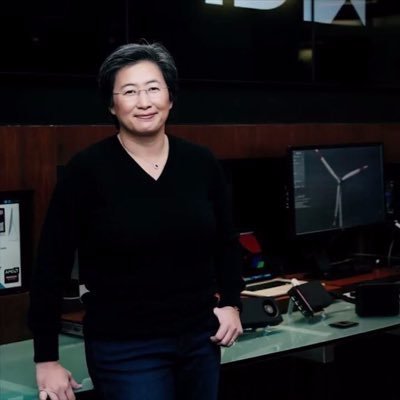
As we celebrate America’s 250th birthday, I’m thankful for all the opportunities this country has made possible for my family and so many others. My parents came to the US as students with big dreams and the hope of building a better life for us. It’s been an amazing journey. Happy 4th of July. 🇺🇸


🟢 BehavioralEdge 🟢 retweeted
$hims is an AI company now, which means AI has basically already disrupted it

🟢 BehavioralEdge 🟢 retweeted
I bought $PLTR at $7 because I spent years studying AI before anyone cared.
Biology is next. I've been studying it for years.
Peptides are just the tip of the iceberg.
It will drive the majority of returns over the next 20 years.
Here's everything you need to know.
🟢 BehavioralEdge 🟢 retweeted
Why Duolingo is a behavioral compounder
1/ Humans must be trained before new business models can work
2/ Social media trained us for micro-attention
3/ Subscriptions trained us for recurring payments
Duolingo's success wouldn't have been possible without TikTok and Instagram.
4 billion DAUs vs. 50M. Duolingo doesn't need to take their market share—just a few minutes a day.
Duolingo is not just a language app — it’s a product of societal conditioning (and a beneficiary of it).
Acquired podcast (2024): “You can do them while you’re waiting for the bus or while you’re literally going to the bathroom.” "Ultimately for us, because we are direct-to-consumer, we learn more from games companies like Spotify, Netflix, any of the Meta apps." Luis von Ahn
At the dawn of cinema, early audiences famously panicked when the Lumière brothers projected a train approaching the screen. People ran. Not because the image was dangerous, but because the human brain was not yet trained to interpret moving images as representation rather than reality.
Fast-forward a century, and that same process of collective training is happening again — this time at a planetary scale.
Over the last decade, humanity has been quietly conditioned to interact with technology in a very specific way:
short sessions, high frequency, low friction, constant feedback. We check our phones while waiting for the bus, during commutes, in queues, and in every small gap of the day.
This behavioral shift did not start with Duolingo. Platforms like Meta, TikTok, mobile gaming, and notification-driven apps trained attention spans, reward loops, and habitual micro-engagement. Duolingo simply understood this new cognitive environment better than traditional education models.
By turning learning into:
- bite-sized sessions
- gamified rewards
- streaks and loss aversion
- instant feedback
Duolingo aligned perfectly with how modern humans already behave — instead of fighting against it.
The same logic applies to its business model.
Subscription models initially felt alien in many parts of the world. Early adopters — cable TV, gyms, newspapers, and later SaaS companies like Adobe, Netflix, and Spotify — had to train users to accept recurring payments for intangible, continuously updated value.
Today, in countries like the US, UK, and much of Northern Europe, subscriptions are no longer questioned. They are the default. People manage dozens of recurring payments with little cognitive resistance. Once again, the training came first — monetization followed.
Duolingo benefits directly from this shift. A recurring, low-ticket subscription fits seamlessly into modern consumer psychology: always on, always improving, always justifying “one more month.”
This is where the moat lies.
Not just in content or brand, but in behavioral fit — cognitive, cultural, and economic.
As mobile dependency, micro-attention, gamification, and subscription normalization continue to deepen globally, Duolingo doesn’t need to change human behavior. It simply scales alongside it.
In short:
Just like cinema trained the brain to stop fearing the oncoming train, digital platforms trained humanity for micro-engagement and subscriptions.
Duolingo arrived at exactly the right moment — and is positioned to keep benefiting as this conditioning spreads further.
🟢 BehavioralEdge 🟢 retweeted
The U.S. is number 1 in doctors, medical centers, pharma, medtech, but consistently ranks outside the top 40 worldwide in both life expectancy at birth and healthy life expectancy.
The solution is $HIMS, the "Amazon of healthcare".

To our customers (both future and current):
I have always believed that in order to change something, you have to be willing to have a tough conversation. We’ve done that as a company since we launched in 2017 because we know progress requires honesty before it provides hope.
Our latest ad, which will air at the big game next weekend, is meant to provoke a long overdue tough conversation. It’s meant to recognize that you deserve better. No one should be satisfied with a system that requires you to get sick before you’re allowed to get healthy.
This isn’t about advertising any one specific treatment. This is about speaking directly to you about the future we know all Americans deserve, whether you live in a rural community, a big city, or somewhere in between. This is about being a loud, unapologetic advocate for what we know care can and should look like for everyone in this country: affordable, proactive, and built to empower the individual.
In order for health outcomes in the US to really improve, we have to stop gatekeeping innovative, proactive tools and care. Real, lasting health requires having access to transparent information *and* innovation that can help prevent - not just treat - disease.
Meaningful change requires two things: the conviction to reimagine a better way and the stamina to make it a reality. My promise to all of you is that I’ll make sure Hims & Hers always has both.
Let’s close the health gap.
🟢 BehavioralEdge 🟢 retweeted
$HIMS was founded as a result of a regulatory battle.
Andrew: "We basically waited for Teladoc to sue the state of Texas and win, because that established the precedent that asynchronous telehealth was legal. Once that happened, the floodgates opened." On the Timing of 2017: In an interview with The Verge, he explained why they couldn't launch any earlier: "The infrastructure of trust—both for the consumer and the regulator—wasn’t there in 2015. We spent 2016 and early 2017 building the medical protocols so that the second the law changed, we were the first ones through the door."
He is aware of the ground beneath his feet.
🟢 BehavioralEdge 🟢 retweeted

Over the last 24 hours, $HIMS got free advertising all around the world that they now sell a fat-loss pill.
🟢 BehavioralEdge 🟢 retweeted
$DUOL 's chess campaign in India.
youtube.com/shorts/ZlFdRBO6a…
I have played chess online from time to time.
I always quit after some weeks: blitz chess is too addictive.
$DUOL’ s ad campaign featuring Praggnanandhaa (“Pragg”), a young and famous Indian chess grandmaster, launched recently, is aligned with Duolingo's growth strategy, freemium model, data harvesting, and Luis’ 2026 New Year’s message.
New year's message:
"Here's what I'm focused on for 2026: 1.- Making the free version of Duolingo the best it's ever been. This is how we grow."
On India
Q3 '24: "in a country like maybe India, where we just haven't been operating for that long. This is a pretty major opportunity"
Q2 '22: "now the thing with India is that it has been great for user growth, free user growth in particular" "so we were making no money from India for a while. And we're back -- we're either -- like either we're already back -- we're about to be back. This is one of those things we're experimenting on to be making money in India. But so far, I think it's a lot of users."
