

Discerning investor seeking market-disrupting innovators poised for substantial long-term appreciation | Sharing what I learn | Engagement welcomed | NFA
Connecticut
Joined January 2023
- Tweets5K
- Following198
- Followers1.5K
- Likes2.1K


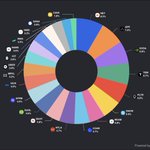

Pinned Tweet
$NET
$APP
$NVDA
$TEM
$PLTR
$SNOW
$BEAM
$COHR
$NTLA
$SKHY
$DUOL
$AFRM
$VICR
$MRVL
$UBER
$IOT
$NAMS
$IREN
$HIMS
$SANA
$CAVA
Since last update: Trimmed $NET and $PLTR. Never thought and didn't intend for NET to be this big.
Exited $PRCT (-20%) and $SYM (-7%).
Moved all that into
$COHR, $MRVL, $SKHY, and added to $VICR.

Pretty much exactly this LOL! $SKHY

오늘 하이닉스 3분기 어닝콜 요약
우리 실적 미쳤어. 그리고 28년까지 장기계약 50% 이상 했어.
그리고 29년까지 사실상 DRAM과 HBM 물량은 솔드아웃이야.
그리고 지금 수요가 넘쳐나는데, 너네가 혹시나 걱정하는 수요 감소의 경우에는 걱정할 필요가 없는 게 지금 빅테크뿐만 아니라 전 세계 모든 나라에서 AI를 구축하려고 해. 그 수요가 엄청나.
그리고 캐파 늘린다고 공급이 늘 거라 걱정하는데, HBM 같은 고부가가치 제품 때문에 공정이 더 복잡해져서 공급이 늘기 힘들어.
그리고 씨발, 우리가 빅테크한테 한두 번 속아보냐? 니네가 필요하다고 해서 바로 캐파 안 늘리고, 니네 재무제표부터 다 뜯어보고 캐파 늘려. 구라치다 걸리지 마라.
그리고 니네가 걱정하는 HBM4는 수율이 계획보다 잘 나와서 목표도 상향했고 4분기부터 출하해.
HBM4E도 이미 2분기에 샘플 보냈고 순조롭게 잘되고 있어.
적층 단수 내린 거? 적층 단수를 내려야 그나마 부족한 공급을 늘릴 거 아니야.
그리고 4F²? 제발 기술 구현과 상용화 개념 좀 알고 이야기해.
$BEAM
"I think if there is a general just kind of comment that I have that I think these LNPs are really doing quite well. This is a great delivery modality where we are talking about temporary headache, fever, flush kinds of infusion reactions or lab abnormalities in return for a one-time dose that gets you potentially transformative durable efficacy like we are seeing here. It is a pretty good delivery vehicle. We are quite happy with it."
—John Evans, CEO, this morning throwing shade at analysts who are obsessed with the transient side effects of LNPs at dosing vs the permanent effect of the therapy: being cured of their genetic disease.
NotebookLM for research (10k, 10Q, transcripts, study updates/presentations), but "hire" Muse to gather/update sources.
Will kickflip and barrel roll be in the Halloween update for $TSLA model 3?
Asking for a friend....
Tesla has figured out hire to make cars fly, but auto wiper technology still more difficult than getting to the moon.
$ARWR
"Yeah, I think the BIlB080 program, look, I thought those data were generally supportive. The phase II data, I know there was some questions around their inverse or lack of dose response. But at the end of the day, they showed reductions in CSF tau that corresponded to an improvement in tau PET, and that corresponded to improvements in multiple different clinical rating scales. All in all, we thought those were positive and supportive of the tau hypothesis. Now, those were with an ASO, an intrathecally administered ASO. We're of the belief that not only that route of administration, but the ASO may lead to some safety issues which could have muddied the water on the cognitive rating scale efficacy side of things.
In terms of what we're looking for, we feel like we at least need to achieve knockdown on par with what BIIB080 achieved, so 50%-60%. It's unclear if that's sort of the sweet spot or if more knockdown you'd see more improvements. One thing to consider additionally is if you administer the drug with an intrathecal route, the distribution's really heterogeneous."
—James Hamilton, CMO and Head of R&D at HC Wainwright Investment Conference
Is Tau upstream enough for AD vs IL-6 for CVD (where ZEUS failed presumably because too far downstream).
$ARWR


The $GLUE update call for GFORCE-1 is fantastically thorough!
And trading down!
Non-commercial biotech is so fun!
$GLUE
Monte Rosa Therapeutics Announces Positive Results for MRT-8102 in GFORCE-1 Phase 1 Study Showing Normalization of Key Pathogenic Drivers of ASCVD in Subjects with Elevated CVD Risk
"In obese subjects at elevated cardiovascular disease (CVD) risk, MRT-8102, a NEK7-directed molecular glue degrader in development for the treatment of NLRP3/IL-1-driven inflammatory diseases, normalized multiple atherosclerotic cardiovascular disease (ASCVD) pathogenic drivers of local plaque inflammation, thrombosis, and systemic inflammation
Robust and sustained NEK7 degradation observed across 5 mg, 20 mg, and 40 mg once-daily dose levels, with similar biomarker reductions at all three doses
HMGB1, calprotectin, S100A12, and SAA, damage-associated molecular patterns (DAMPs) linked to atherosclerotic plaque progression and instability, and IL-1β, all established key pathogenic drivers of ASCVD, were reduced to levels comparable to normal physiological levels seen in the healthy volunteer population of Phase 1 study
MRT-8102 was safe and well tolerated over four weeks of dosing and four weeks of follow-up, with no serious adverse events, treatment-emergent adverse event rates comparable to placebo, and no evidence of increased infection risk"
$VICR
"On September 30, 2026, Vicor raised its Q3 sequential growth guidance from more than 20% to more than 30% in view of increased royalties from the previously announced first non-exclusive license to Vertical Power Delivery (VPD)."
previously....
"On September 21, 2026, Vicor raised its Q3 sequential growth guidance from nearly 10% to more than 20% in view of royalties from a recently announced non-exclusive license to Vertical Power Delivery (VPD)."
🤔

Yesterday, the founder of a well-known, successful company called me to reference check two people he was considering for a senior role. He wasn’t looking for reassurance. He was genuinely trying to understand them, including anything that might cause him to reconsider either hire. He’s called me before about other hires, including people who wouldn’t even report directly to him. He doesn’t delegate this to others. He calls himself. I'm sure that kind of rigor is part of why his company has been so successful.
The call stuck with me because it happens so rarely. Many people I’ve worked closely with have gone on to senior roles, including C-level positions, at other companies. It’s shocking how infrequently I get called. These are among the most consequential decisions a founder makes, yet companies routinely make them without talking to people who actually worked closely with the candidate.
Part of the problem is timing. Most reference checks happen after the hiring manager has effectively decided to make the hire. You like the candidate, you’ve invested weeks in the process, and you’re under pressure to fill the role. You want the process to be over, so you’re looking for validation rather than truth. That defeats the purpose of doing reference checks.
A real reference check should attempt to disconfirm what you already believe. What am I missing? Where is this person weaker than they appear? What will I wish I had known six months after they start? You aren’t trying to build the case for the hire. You’re trying to find the flaw in the case while you can still do something about it.
I’ve learned a few rules. Start by putting limited weight on the references the candidate gives you. Nobody hands you the name of the boss or colleague who thought they were a disaster. The references that matter most are blind references, so find former bosses, peers, direct reports, and customers who aren’t on the candidate’s list. Each has seen the person from a different angle.
You also have to adjust for human nature. Most people don’t like being brutally honest when they know their words could affect someone’s career. They inflate praise and soften criticism, so my rule of thumb is to discount the positive by 3x and amplify the negative by 3x. That gets you closer to a balanced view.
When someone says, "He's a great leader, although some very good people struggled working for him," the second half of that sentence matters far more than the first. Who struggled, why, and where are those people now? When someone says, "She surrounds herself with people she trusts," ask whether those are the best people for the job or simply people who always agree with her. Hesitations, qualifications, and carefully chosen words often tell you more than the compliments.
Ask questions that make vague answers difficult. What would their direct reports say is the hardest part of working for them? What feedback did you give them repeatedly? What was their biggest blind spot? How do they behave when things are going badly? Tell me about a serious conflict they had and how they handled it. If this hire fails, what is the most likely reason? Would you hire them again?
My favorite is a forced ranking. Of everyone you’ve worked with in a similar role, where does this person rank? Top 1%? Top 10%? Top 25%? Then ask why. Adjectives can be misleading. Rankings force people to make an actual judgment and explain it.
I’ve hired many exceptional people and made some bad hires. The most important lesson I’ve learned is that the goal of a reference check isn’t to prove you made the right decision. It’s to discover why you might be making the wrong one while you can still change it.
Current status.

$NET
$APP
$NVDA
$TEM
$PLTR
$SNOW
$BEAM
$COHR
$NTLA
$SKHY
$DUOL
$AFRM
$VICR
$MRVL
$UBER
$IOT
$NAMS
$IREN
$HIMS
$SANA
$CAVA
Since last update: Trimmed $NET and $PLTR. Never thought and didn't intend for NET to be this big.
Exited $PRCT (-20%) and $SYM (-7%).
Moved all that into
$COHR, $MRVL, $SKHY, and added to $VICR.


Ubiquitous persistent agents (muse, etc) dramatically increase the frequency and duration of inference, memory access, and data movement.
Which seems fine for $MRVL.
$VICR
Border-enforced IP protection and licensing options for hyperscalers to import from unlicensed suppliers turns AI factory supply chain risks into pure-profit royalties for Vicor.
$VICR
"On September 21, 2026, Vicor raised its Q3 sequential growth guidance from nearly 10% to more than 20% in view of royalties from a recently announced non-exclusive license to Vertical Power Delivery (VPD)."
Seems good.
$VICR
"On September 21, 2026, Vicor raised its Q3 sequential growth guidance from nearly 10% to more than 20% in view of royalties from a recently announced non-exclusive license to Vertical Power Delivery (VPD)."
Seems good.
$NAMS
"NewAmsterdam Pharma and Menarini Group Receive European Commission Approval for Ubeslo® (Obicetrapib Monotherapy) and Evlarco® (Obicetrapib Plus Ezetimibe Fixed-Dose Combination)"