

ml research and eng @groundlightai ex. @meta @harveymudd
seattle
Joined December 2012
- Tweets430
- Following641
- Followers1.5K
- Likes2.6K



Pinned Tweet
We just released an open-source framework that makes it easy to build visual reasoning agents (with GRPO).
github.com/groundlight/r1_vl…
sunil kumar retweeted

🚨 Big news! We decided that @huggingface’s post-training library, TRL, will natively supports training Vision Language Models 🖼️
This builds on our recent VLM support in SFTTrainer — and we’re not stopping until TRL is the #1 VLM training library 🥇
More here 👉 hf.co/blog/trl-vlm-alignment
Huge thanks to @mervenoyann , @SergioPaniego , and @ariG23498 🔥

I’m struggling to find problem domains (outside of code/math) where GPT5’s router consistently chooses the “thinking” mode.
Even on difficult long context text parsing tasks, where extra compute would be helpful, the model is consistently avoiding thinking unless prompted to do so…
2
1
328
I’m looking for a survey paper on mixtures of experts to familiarize myself with the state of the art and how we got there. Any suggestions?
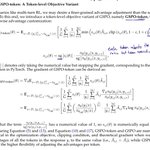
I wrote up a more formal explanation for the stop gradient trick in GSPO-token with some help from @QGallouedec and @yigitokar!
Hope it helps other GSPO readers :)


Does anyone have an intuitive explanation for the stop gradient “trick” in GSPO-token?
I’m interpreting it as “each token inherits the same importance ratio but token specific gradient”.

section 3 (titled “motivation”) of the GSPO paper is so concise - less than half a page, yet so clarifying on everything wrong with GRPO.
5
440
sunil kumar retweeted
Training vision language model to use tools with GRPO and TRL. This is dope 😍
Excited to share some new work: we show how to efficiently train small vision-language models to use a zoom tool with GRPO. We identify key points for doing small-scale RL for tool use in VLMs generally, and share what works (and what doesn’t) under significant resource constraints. arXiv link below ⬇️

Excited to share some new work: we show how to efficiently train small vision-language models to use a zoom tool with GRPO. We identify key points for doing small-scale RL for tool use in VLMs generally, and share what works (and what doesn’t) under significant resource constraints. arXiv link below ⬇️
arXiv link: arxiv.org/abs/2506.14821

sunil kumar retweeted
We built a fun demo that helps visualize how Vision Language Models - like GPT4o, Qwen2.5VL, Moondream, and SmolVLM understand images. Our demo maps image patches to language tokens, allowing you to see what your images look like through a model’s eyes. Upload any image you want to try it for yourself.
I find it really interesting how models can represent semantic detail, localize objects, and do OCR all at the same time!
groundlight.ai/blog/how-vlm-…
We built a fun demo that allows you to visualize how a VLM understands and interprets images.
We built a fun demo that helps visualize how Vision Language Models - like GPT4o, Qwen2.5VL, Moondream, and SmolVLM understand images. Our demo maps image patches to language tokens, allowing you to see what your images look like through a model’s eyes. Upload any image you want to try it for yourself.
I find it really interesting how models can represent semantic detail, localize objects, and do OCR all at the same time!
groundlight.ai/blog/how-vlm-…
We've open-sourced a MCP that allows big models to use huggingface computer vision models as tools.
This allows Claude to act as a "visual agent", using other task specific models to help it solve problems.
Below, is an example of Claude using an open vocab object detector to zoom in on small details to solve a hard problem that it could not solve natively.
Additionally, we've written a blog post discussing why outsourcing vision capabilities from large models is something you should consider.
MCP Repo: github.com/groundlight/mcp-v…
Blog post: groundlight.ai/blog/vision-a…

Woah! Just found that the good folks at @PrimeIntellect just proposed a similar data filtering step to what we found late last week - they filter their dataset to examples where pass@8 is between 1 and 4.
If any of the authors happen to see this, I would love to know if they tried an ablation including examples with pass@8 = 0 (cc: @willcb).

We've struggled a lot with convincing vision models to use visual tools during GRPO training (e.g. zoom). Intuitively, these tools should help the model solve a given problem, but often do not provide obvious value. In the absence of a tool specific reward, we found that the model often used tools in unhelpful ways and stopped using the tools provided after enough training.
Our "aha" movement came on Friday morning. If we constrain our dataset to only the hardest problems, effective tool use emerges and downstream performance improves!
