

VP Product @TelerikAcademy. 11+ years as Product Manager and Entrepreneur. Father, continuous learner, AI-optimist, and tennis enthusiast.
Bulgaria
Joined April 2010
- Tweets2K
- Following747
- Followers629
- Likes5.3K





Top tweet of the day.
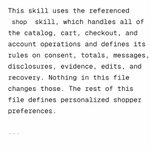
Was really thinking how Skills relate to Harnesses and how you can protect them if they become a form of IP.
Now the internet just needs to figure how to monetise these new "apps"

there’s now a new mental model for the software stack
- skills are the new “apps”
you install them to get more functionality. people are starting to build and share skills more than real “apps”
many skills are very simple today but i think we’ll eventually see increasing sophistication
- mcp servers and CLIs are the new “APIs”
they allow services to encapsulate their core capabilities behind an interface the can be invoked in a composable way
many skills will be calling mcp servers or clis behind the scenes just like how a lot of apps call APIs today
- agent harnesses are the new “operating systems”
it sits between the user and the underlying resources, helping the user manage common concerns such as compute, memory, security etc
if you look closely, it’s hard to unsee the resemblance - claude is the new macos. codex is the new windows. pi is the new linux
skills run in agent harnesses just like apps run in existing OS
- LLMs are the new “computers”
they process instructions coming from the user, the skills, the agent harnesses, and compute the output
the model weights is the cpu. context window is the memory. actual computers are becoming more like the power source
ok so why do we need this mental model? i think it helps us think about where we play
if you want to be the new app developers - start to learn to write good skills
if you want to build a saas, figure out how to package things as good mcp servers and CLIs
if you want to be linus and write the new linux, build an agent harness. otherwise, you can still try to learn about how agent harness work like how CS students used to learn about OS
if you want to be the new apple or samsung, start to learn how LLMs are trained and play with open weight models - you may end up inventing the new raspberry pi!
Listening to latent.space/p/devday-2026
where Ari talks Computer Use, how agents are learning to debug and recover from failures, why combining screenshots with accessibility data, DOM, Playwright, and generated code works really well, and why the next frontier is superhuman CUAs


This list misses two incredible skill makers:
- @kunchenguid (firstmate and many others)
- github.com/obra (superpowers)


My top 3 skill makers:
- @poteto
- @dexhorthy
- @emilkowalski
Always learn a ton from reading their skills.