



Save the Date
The 16th Arab-Austrian Economic Forum will take place on 10 November 2026 in Vienna.
This year's theme:
"Strategic Industries: Shaping the Future of Arab-Austrian Economic Cooperation"
Join high-level representatives, business leaders and investors from Austria and Arab countries for a day of dialogue, networking and new partnerships.
More details on the programme, venue and registration coming soon.
#AACC #ArabAustrianEconomicForum #Austria #ArabWorld #Business #Investment #Networking
18
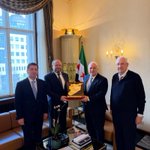
On 29 June 2026, AACC Secretary General DI. Mouddar Khouja paid a courtesy visit to His Excellency Dr. Hisham Al-Alawi, Ambassador of the Republic of Iraq to Austria, accompanied by Mr. Munzer Al Hassani, Counsellor Dr. Ghanim Kaabi, and Counsellor Dr. Zahim Muslim.
The meeting focused on exploring new avenues for economic cooperation between Austria and Iraq and identifying promising sectors for future bilateral partnerships and investment opportunities.
The discussions highlighted the significant potential for collaboration in a number of strategic industries, including petrochemicals, food processing, health care administration, construction and building materials, as well as agriculture and agricultural technologies. Particular attention was given to Austria's expertise in sustainable industrial development, modern production technologies, quality assurance systems, and vocational training.
Furthermore, both sides exchanged views on strengthening cooperation in the fields of water supply and wastewater management, information technology and digital transformation, renewable energy, and the banking and financial sector. These sectors are expected to play a vital role in Iraq's ongoing economic development and modernization efforts.
The participants emphasized the importance of enhancing business-to-business contacts and creating suitable platforms that facilitate dialogue between public institutions, investors, and companies from both countries.
In this context, it was agreed to organize an Arab-Austrian Economic Forum dedicated to advancing mutual economic cooperation and promoting sustainable partnerships between the two countries.
The Austro-Arab Chamber of Commerce (AACC) remains committed to fostering strong economic ties between Austria and the Arab world and to supporting initiatives that contribute to long-term prosperity and regional development.


19
On July 9th, a significant visit was organized by the Aleppo Chamber of Commerce, led by Board Member and textile industrialist Mr. Ahmad Sabouni. The delegation included DI Mouddar Khouja, Secretary-General of the Austrian-Arab Chamber of Commerce, who toured the premises of the Vocational Training Academy in Aleppo. This institution operates under the auspices of the Syrian Ministry of Industry. Upon arrival, the delegation was received by the Academy Director, Mr. Saleh SHEIKH-AHMAD, his Deputy, Eng. Mohamad BELLOU, and the Head of the Technical and Production Department, Eng. Nour-Eddin HAJJAR.
Following the initial welcome, Mr. Khouja presented the Austrian model of vocational training. He explained that this system, a dual education model that combines practical on-the-job training at a company with theoretical instruction at a vocational school, is considered a benchmark within the EU, largely due to Austria's low youth unemployment rates. He elaborated that young Austrians choose this path after the eighth grade and must pass a final examination to complete their apprenticeship. Mr. Khouja proposed that a similar approach could be adapted and introduced in Aleppo, a concept that has already attracted significant interest from international bodies such as UNIDO and several Austrian companies. The core idea involves securing a hall within the Academy, fully renovating it, and using it to deliver targeted training programs to the local youth, potentially under the name "Austrian Academy for Vocational Training."
The Academy's leadership then invited the Secretary-General on a comprehensive tour of the 27,000 square meter facility, which has sustained severe damage to its buildings due to the conflict and is in urgent need of extensive rehabilitation. The tour revealed that certain sections have been partially renovated through the efforts of UN organizations and various local and international aid agencies. These areas are now functional, featuring donated sewing machines used for tailoring courses and offering training in the installation of photovoltaic systems and related electrical work.
The Academy's management enthusiastically welcomed the initiative proposed by the AACC. They confirmed their willingness to provide a dedicated hall on the premises for the project. The space would be prepared to host training sessions and workshops offered by Austrian companies, institutions, and international organizations, marking a tangible step towards the reconstruction and revitalization of vocational education in the region.


28
A high-level AACC delegation comprising Arab President Mr. Louai Kuzbari, Secretary-General Mr. Mouddar Khouja, Aleppo Chamber President Mr. Mhd. Said Chekh-Alkar, Mr. Tarek Kuzbari, and Mr. Saeed Al-Zaim & Tarek Kuzbari conducted a strategic mission to Damascus from 28 to 30 June 2026 to assess reconstruction priorities, facilitate private sector engagement, and address critical banking hurdles. With Minister of Transport Dr. Yaarub Badr, a major railway rehabilitation project was discussed, alongside plans for a 420-kilometer motorway from Jordan to Turkey, divided into four sub-projects to accelerate execution. The Minister welcomed Austrian and international participation. On the second day, the delegation was joined by Austrian Ambassador Arad Benkö, Ambassador Christoph Weidinger, and Commercial Councilor Herwig Neuper, underscoring strong bilateral interest in Syria's recovery.
On 30 June, the delegation held a series of high-level meetings. With the Federation of Syrian Chambers, led by President Alaa El Ali, the outline of a reconstruction conference was presented, identifying four core pillars: banking, infrastructure and industrial rehabilitation, healthcare, and education. With Minister of Economy Dr. Nidal Chaar, Ambassador Benkö presented Austria's initiative to host a Syrian Reconstruction Conference in Vienna, which the Minister warmly welcomed. Minister Chaar proposed establishing a Syrian-Austrian Business Council as the primary entry point for mutual economic cooperation.
With Mr. Talal Al-Hilali, Chairman of the Syrian Investment Authority, recent recovery indicators were highlighted, including airport modernization, electricity sector improvements. Austria expressed strong interest in Syria's recovery as both a humanitarian imperative and strategic necessity.
With Central Bank Governor Mr. Mohamad Safwat Raslan, discussions focused on reactivating banking relations with Western countries. The Governor outlined a roadmap to restore financial transactions and reintegrate Syrian banks into the international system, providing a clear timeline, correspondent banking, and compliance frameworks, while addressing SDN and SSD hurdles.
On 29 June, the delegation participated in a joint webinar hosted by the Federation of Syrian Chambers with the European Union, focused on the EU's new fund for Syria covering training, capacity building, and agriculture. Secretary-General Khouja stressed the absolute necessity of facilitating banking transactions, arguing that without functional financial corridors, international funds would fail to deliver meaningful impact on the ground.
Key outcomes included mutual commitment to organizing the Syrian Reconstruction Conference in Vienna, the proposal and acceptance of the Syrian-Austrian Business Council and consensus on resolving banking hurdles as a prerequisite for reconstruction. The AACC will now prioritize establishing the Business Council.


1
169
On 22 June 2026, AACC Secretary General Mr. Mouddar Khouja participated in the high-level working meeting “Private Sector-Led Industrial Recovery in the Syrian Arab Republic, the State of Palestine and Sudan” at the Vienna International Centre, organized by UNIDO, the Union of Arab Chambers and the Regional Network for Social Responsibility. The event brought together public- and private-sector stakeholders together. to discuss concrete pathways for private sector engagement in Syria, Sudan and Palestine, with the participation of UNIDO Director General H.E. Gerd Müller, representatives of Arab funds, joint Arab chambers and institutional partners.
Mr. Khouja contributed to the session chaired by H.E. Dr. Khaled Hanafy on “Translation of country priorities into business cases. Identification of initial engagement pathways and pilot opportunities.” He highlighted the severe destruction of Syria’s factories of 4,600 factories, while about 2,000 are now back in operation in sectors including textiles, carpets, steel, agricultural goods, pharmaceuticals, soap production..etc. He also noted that 1,516 factories are currently operating in the Sheikh Najjar industrial zone in Aleppo, with around 2,500 additional industries are under licensing.
Mr. Khouja underlined the importance of industrialization as a key driver of employment and economic recovery. Referring to Syria’s former trade volume with Germany, he emphasized that the restoration of industrial production and international trade could generate substantial job opportunities, estimating that a comparable level of trade today could support around 220,000 jobs in Syria and approximately 4,000 jobs in Germany. Syria’s industrial recovery is a source of economic opportunity for international partner countries.
He also presented several AACC-supported initiatives, developed in cooperation with Pfeffer & Partner, aimed at strengthening Syria’s human capital & recovery prospects.. These include plans to establish a vocational training centre in Aleppo, a training programme for Syrian football coaches and young talents involving Austrian, German and English football clubs, as well as a programme organized by the Kreisky Forum to support Syrian widows in rural areas through training in handicrafts and small-scale workshop activities.
A central point of Mr. Khouja’s intervention was the urgent need to restore banking connectivity with Syria. He stressed that, despite the lifting of sanctions and efforts by the Syrian Central Bank to reconnect to the international financial system, political decisions are still needed to enable practical banking transactions. He expressed hope that Austria could be among the first countries to help reopen such channels, emphasizing that without functioning banking transactions, no sustainable investment, trade or project implementation can take place.
The discussion featured a contribution by Mr. Mohamad Mourad, Secretary General of the Arab-Brazilian Chamber of Commerce.


7
Web-Meeting between MODON, the Austro-Arab Chamber of Commerce (AACC), and VIMPEX
A Web-Meeting was held between Mr. Majed Al-Arqubi, Director General of the Saudi Authority for Industrial Cities and Technology Zones (MODON), together with Mr. Mohammad Alrajeh, Mr. Ahmad Alhariri, and Mr. Saleh Al-Sulami from the National Industrial Development Center (NIDC), and Mr. Louai Kuzbari, Arab President of the Austro-Arab Chamber of Commerce (AACC) and CEO of VIMPEX, accompanied by Eng. Mouddar Khouja, Secretary General of the AACC.
The meeting focused on exploring opportunities for cooperation in industrial development and investment promotion throughout the Arab region. During the discussion, Mr. Al-Arqubi presented MODON’s achievements and its strategic role in supporting Saudi Arabia’s industrial transformation under Vision 2030. As one of the Kingdom’s leading economic development institutions, MODON has successfully developed and manages a network of industrial cities and technology zones that provide world-class infrastructure, advanced logistics services, and an integrated environment for industrial and technological investments.
The participants exchanged views on the growing need for industrialization across several Arab countries and discussed how MODON’s successful model could contribute to industrial development initiatives beyond Saudi Arabia. Particular attention was given to the development and management of industrial cities, investment attraction, technology transfer, and the creation of sustainable industrial ecosystems that support economic diversification and job creation.
Mr. Louai Kuzbari and Eng. Mouddar Khouja highlighted the extensive practical experience of VIMPEX and the Austro-Arab Chamber of Commerce in numerous Arab markets. Through decades of engagement with governments, investors, development institutions, and private-sector stakeholders, both organizations have acquired valuable expertise in industrial development, market access, investment promotion, and project implementation throughout the region. This experience, combined with MODON’s internationally recognized know-how in industrial city development and management, creates significant opportunities for future cooperation.
In this context, both parties reaffirmed their intention to formalize their partnership through the signing of a Memorandum of Understanding (MoU) between MODON and the Austro-Arab Chamber of Commerce. The signing ceremony is expected to take place by the end of next week and will provide a framework for future collaboration, knowledge exchange, joint initiatives, and the promotion of industrial development opportunities in Austria and the Arab region. Louai Kuzbari

10
The Austrian-Arab Chamber of Commerce (AACC), represented by its Arab-President Mr. Louai Kuzbari and Secretary General Eng. Mouddar Khouja, together with Wien Energie represented by Georg Baresch; Benedict A. Raho and Peter Safer, welcomed the Council of Arab Ambassadors to Austria to a site visit and presentation at the Spittelau Waste-to-Energy Plant in Vienna.
The event was attended by 14 ambassadors and diplomats from Algeria, Egypt, Iraq, Jordan, Libya, Qatar, Sudan, Syria, Tunisia and Yemen, providing a valuable platform for exchanging views on sustainable energy solutions and urban infrastructure.
During the visit, participants received an overview of Vienna’s energy strategy and Wien Energie’s role as Austria’s largest regional energy provider. A special focus was placed on the iconic Spittelau Waste-to-Energy Plant, which converts municipal waste into electricity and district heating and supplies approximately 80,000 households with district heating, making it a key component of Vienna’s circular economy and sustainable energy infrastructure.
The delegation also learned about Wien Energie’s renewable energy strategy. Today, approximately 67% of its electricity supply originates from renewable sources. During the summer months, electricity and district heating demand can largely be covered through renewable energy sources and recovered waste heat. During the winter season, however, additional energy generation from natural gas and other conventional sources remains necessary to ensure a secure and reliable energy supply.
Wien Energie is pursuing an ambitious decarbonization strategy, investing in geothermal energy, large-scale heat pumps, and waste heat recovery, with the goal of achieving climate-neutral district heating by 2040.
The visit highlighted the growing importance of Austrian-Arab cooperation in the fields of renewable energy, sustainability, and innovative urban solutions.


5
AACC Secretary General Mouddar Khouja at UNIDO Forum “Rebuilding Future” – 10 April, Hofburg Vienna
On 10 April 2026, the UNIDO Forum “Rebuilding Future” took place at the Hofburg in Vienna, focusing on green industrialization in crisis contexts and recovery. Among the high level speakers were the Minister of Industry and Entrepreneurship of Sri Lanka, Ms. Lisa Sachs from Columbia University, representatives of the European Bank for Reconstruction and Development, ambassadors of Sudan HE. Magdi El-Nour, Palestine HE. Salah Abdelshafi and Ukraine HE. Vitrenko, as well as delegates from Agora Industry, OSCE, UNIDO, Dena and the North East Commission.
Mr. Mouddar Khouja, Secretary General of the Austro Arab Chamber of Commerce (AACC), delivered a stark assessment of Syria’s industrial destruction and the opportunities for green recovery. He reported that more than 30 percent of Syria’s total assets have been destroyed. Beyond the immense damage to infrastructure, housing, schools and hospitals, a total of 4,490 industrial facilities were wrecked, the majority located in the country’s industrial cities. In Aleppo’s Sheikh Najjar Industrial City – once the largest of its kind in the Middle East – the destruction was massive and, in many cases, systematic.
Mr. Khouja also criticized the former Assad regime’s energy policy. Not only did it fail to provide basic electricity supply (cities received at most one to two hours of power per day, if any), but it actively prevented remaining industrial plants from installing photovoltaic systems on their roofs. Industrialists who tried to use solar energy were subjected to heavy penalties, including the demolition of their PV installations.
Following Syria’s liberation, the situation has changed fundamentally. Today, around 2,000 industrial facilities are back in operation, of which roughly 1,700 are in Sheikh Najjar alone. Infrastructure in the industrial city – electricity, water and transport – is being restored, and all enterprises are now free to use photovoltaic energy without any barriers. Regarding the current power grid, coverage stands at 40 to 60 percent of demand. The electricity mix consists of 55 percent gas, 39 percent oil products, 4.5 percent hydropower, and approximately one percent solar and wind. The official target for 2030 is to raise the share of photovoltaics in total electricity generation to between five and ten percent.
On a parallel track, the University of Natural Resources and Life Sciences (BOKU) in Vienna is developing a “Greening the Desert” project for arid Syria. The aim is to finance an initiative that, within five years, will be able to sell carbon credits, thereby contributing to both climate mitigation and sustainable recovery. Mr. Khouja concluded that Syria’s reconstruction must be green, resilient, and free from the energy suppression of the past.


20
Report on Exclusive Visit to Vienna International Airport
On 31 March 2026, the Austro Arab Chamber of Commerce (AACC), in cooperation with C Jet, organized an exclusive guided visit to Vienna International Airport for Arab ambassadors, offering insights into airport operations and private aviation.
The delegation included Arab President Louai Kuzbari, 15 Arab ambassadors and diplomats, and Mr. Omar Al Rawi, AACC Board Member and Vienna City Council MP. Host side participants were Mrs. Antonia Gilbert (M Jet), CEOs Schmidt and Schellhorn, Dr. Strobl (CEO of C Jet), and Julian Jäger (Vienna Airport Board Member).
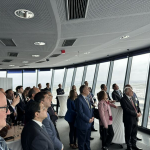
After a welcome by AACC Secretary General Mouddar Khouja, Dr. Strobl, and Julian Jäger, the group gathered at the airport tower for a presentation on facilities and operations. Ambassadors including HE Dr. Tawla (KSA), Dr. Khaddour (Syria), and Shojaeddin (Yemen) raised questions on diplomatic procedures, fostering constructive dialogue.
Participants then toured the aircraft hangar by bus, viewing small and large cabin private jets. The group split for closer inspection, including an Airbus Corporate Jet, exploring cabins, cockpits, and onboard amenities.
The tour ended with an exclusive visit to the VIP Lounge, where attendees relaxed, networked, and experienced premium services. HE Dr. Salah Boucha / League of Arab States thanked the organizers on behalf of the Arab Diplomatic Corps.
Overall, the event showcased Vienna Airport’s sophisticated private aviation facilities and exemplary VIP services, highlighting its commitment to excellence and providing valuable networking for Arab diplomatic representatives.


19
The Austro-Arab Chamber of Commerce (AACC) and Aleppo Chamber of Commerce met UNIDO experts on 30 March 2026 at UNIDO HQ in Vienna. The AACC delegation was led by Arab-President Louai Kuzbari and SG Mouddar Khouja, together with Aleppo Chamber President Said Cheikh Alkar and Treasurer Hanna Egho. Private sector representatives included Richard Pfeffer (Pfeffer & Partner), Manfred Pagitsch, Hajo Muller Bornemann, Lars Bode, Chris Faris Adib Choukeir, and Wolfgang Bayer. UNIDO fielded 15 experts from various departments. Thirteen UNIDO representatives participated, including Moustafa Yamada, Ayman Ahmad, and Luca Longo.
The main topic was UNIDO’s Industrial Recovery Program for Syria (signed November 2025, USD 150 million over five years). Its three pillars are: modernising industrial ecosystems, rebuilding human capital, and green/digital transformation. Targeted sectors include agro-processing, textiles, construction, chemicals, and pharmaceuticals.
Vocational training was the top priority. Aleppo needs skilled labour for reconstruction. Plans for training centres in Aleppo and Damascus with industry-led curricula and learning-by-doing were discussed. UNIDO shared successful TVET models. On MSME competitiveness, UNIDO outlined its macro-meso-micro approach. Cluster development in Aleppo was highlighted. ITPO Bahrain proposed its EDIP model for Syria, linking start-ups to Islamic finance. Richard Pfeffer advocated a phased reconstruction approach from small projects to large infrastructure.
The meeting resulted in follow-up agreements. UNIDO and AACC will cooperate at the Syria Reconstruction Conference (September 2026). Syrian counterparts were invited to the Vienna Energy and Climate Forum (9-10 April 2026) and UNIDO’s Industrial Recovery Conference (July 2026). ITPO Bahrain’s EDIP model could support Aleppo’s businesses. Further joint efforts will focus on industrial policy, banking system capacity, and market-led TVET interventions. The meeting closed with a commitment to climate-resilient recovery in Syria.


12
From 28 March to 1 April, Mr. Mohamad Said Check Alkar, President of the Aleppo Chamber of Commerce, newly elected board member of the Arab Austrian Chamber of Commerce (AACC), and prominent industrialist, undertook a working visit to Austria together with Mr. Hanna Egho, Treasurer of the Aleppo Chamber of Commerce. Upon arrival, they were warmly received by Arab President Louai Kuzbari and Secretary General Mouddar Khouja of the AACC, who facilitated several high-level meetings throughout the mission. The visit aimed at strengthening bilateral economic ties, exploring reconstruction partnerships, and benchmarking Austrian excellence in various sectors.
On Monday, 30 March, the delegation held a series of meetings. They first visited Octapharma, a global leader in human protein products, to discuss potential cooperation in pharmaceutical supply chains and technology transfer. Afterwards, they met with the United Nations Industrial Development Organization (UNIDO) for talks focused on industrial rehabilitation and SME support in the Aleppo region. In the afternoon, a strategic discussion took place with Ambassador Dr. Arad Benkö, BMEIA Special Envoy to the Middle East, covering political and economic frameworks for Austrian Syrian business engagement. The day concluded with an evening gathering of the Syrian community in Vienna, where Mr. Check Alkar and Mr. Egho exchanged views on diaspora investment opportunities and reconstruction challenges.
On Tuesday, 31 March, the delegation visited Vienna International Airport, accompanied by several Arab ambassadors and Mr. Omar Al Rawi, a member of the Vienna State Parliament. They were received by Mr. Julian Jäger, member of the Airport Management Board, who provided a comprehensive tour. The programme included presentations by C Jet, Dr. Strobl and his team, M Jet represented by Ms. Antonia Gilbert, and the Private Aviation Center, showcasing executive aviation, aircraft handling, and VIP services. Later that day, the group travelled to the McArthurGlen Outlet Centre in Parndorf, where Mr. Philippe Schrader delivered a professional presentation on the centre’s business model, brand strategy, and logistics – offering insights for potential retail development in Aleppo.
On Wednesday, 1 April, the final day of the visit, the delegation toured Pankl Racing Systems, a world renowned manufacturer of high performance drivetrain and engine components. The company presented its full production cycle, including the VectaCor Productions and the production of a state of the art battery production for energy Supply. These demonstrations highlighted advanced manufacturing and clean energy technologies relevant for post conflict industrial modernisation. Further detailed reports will follow.


27
The Austro-Arab Chamber of Commerce (AACC) had the honor of receiving H.E. Dr. Abdulkader Husrie, Governor of the Central Bank of Syria, during his official visit to Vienna. He was welcomed by AACC President Dr. Werner Fasslabend, AACC Arab President Louai Kuzbari, and Secretary General DI Mouddar Khouja, in the presence of the Syrian Ambassador to Austria.
This meeting marked the second encounter with H.E. the Governor, following the first meeting held on 16 June 2025, and reflects the ongoing dialogue to strengthen financial cooperation.
The discussions focused on reactivating banking relations between Austria and Syria, including the development of a practical roadmap to restore financial transactions and facilitate trade and investment. Key challenges such as compliance requirements, sanctions frameworks, and correspondent banking constraints were addressed. In this context, the possible supportive role of the Austrian government was also discussed, particularly in terms of regulatory facilitation and political-economic backing aimed at reducing risks for commercial banks engaging in transactions with Syria.
The AACC will arrange and coordinate follow-up meetings between H.E. the Governor and relevant Austrian institutions, including the Austrian National Bank, the Austrian Kontrollbank, and selected Austrian commercial banks, with the aim of enhancing institutional cooperation and advancing practical solutions.
The meeting represents a further step toward rebuilding financial channels and strengthening economic cooperation between Austria and Syria.


6
On 10 March 2026, a meeting took place at the headquarters of the Austro-Arab Chamber of Commerce (AACC) in Vienna between representatives of Pfeffer & Partner GmbH - Ingenieurbüro für technische Gebäudeausrüstung (Mr. Richard Pfeffer, Mr. Manfred Pagitsch), ILF Consulting Engineers (Mr. Chandrasekhar Ramakrishnan, Mr.Phillipe Floch), and the Secretary General of the AACC, Mr. Mouddar Khouja.
The discussion focused on the initiative to establish a Training Academy in Syria based on the Austrian dual education and apprenticeship system.
During the meeting, participants noted that significant progress has been achieved in recent weeks. A small but highly qualified expert team with extensive international experience has been assembled and is working in close professional coordination. In parallel, a partnership structure with an established company in Damascus has been initiated. The company has strong expertise in project management, particularly in the oil and gas sector and in infrastructure projects. This local cooperation reflects a key principle of the initiative: combining local value creation with international expertise and support.
The overall objective of the project is to contribute to revitalizing the international labor and project market in Syria, to systematically involve local professionals, and to create tangible development opportunities in cooperation with international partners. A network of local and international experts is being developed, including architects, engineers, project managers, and specialists from different disciplines. A central component of the initiative is the establishment of training structures aligned with international standards. The proposed training academies will apply methodology and quality standards “Made in Austria”, adapted to local conditions, with a strong focus on education, knowledge transfer, and capacity building.
Secretary General Khouja outlined potential Syrian partners beyond the Syrian Ministry of Economy and Industry, including chambers of commerce and local governorates, particularly in Aleppo, which hosts more than half of Syria’s industrial base. He also referred to the possibility of cooperation with UNIDO and highlighted the upcoming Syria Reconstruction Conference planned to take place in Vienna on 29 September 2026.
As a next step, Pfeffer & Partners will present a concrete concept for the proposed Training Academy initiative next week, providing a more detailed framework for the project structure, partnerships, and implementation approach.


5
On 2 March 2026, upon UNIDO’s invitation, AACC Secretary General Mouddar Khouja visited the United Nations Industrial Development Organization (UNIDO) at the UN in Vienna and met senior representatives. The UNIDO delegation included Hanan Hanzaz, Chief of the Regional Bureau for the Arab Region; Dr. Stefan Kratzsch, Head of the Sustainable Investments and Responsible Business Unit; Moustafa Yamada, Programme Expert at the Regional Bureau for the Arab Region; and Stefan Windberger, Associate Project Officer.
Following a welcome, Mrs. Hanzaz introduced UNIDO’s Industrial Recovery Programme for the Syrian Arab Republic 2026–2030. Developed with the Syrian Ministry of Economy & Industry, the 5-year programme addresses the severe damage to Syria’s industrial sector after more than a decade of conflict. With a budget of $150 mill., it aims to restore productive capacity, revive the private sector, and promote sustainable industrial development. Instead of rebuilding outdated structures, the programme seeks to create a modern, resilient, and competitive industrial base aligned with sustainability, digitalization, and green growth.
The programme is built around three reinforcing outcomes: strengthening the industrial environment through modernized zones, rebuilt quality infrastructure, and improved regulations; developing a skilled workforce through market-oriented training and greater inclusion of women and youth; and enhancing competitiveness through digital technologies, green solutions, and better market access.
Implementation rests on five pillars: updated industrial policies to attract investment; upgrading industrial zones into integrated hubs; digital transformation; rebuilding standards and certification systems; and promoting circular, low-carbon production. Dr. Kratzsch outlined the investment promotion component and cooperation opportunities, while Mr. Windberger emphasized the training dimension. UNIDO expressed its intention to work closely with the private sector and the Syrian diaspora.
AACC-SG Khouja emphasized the longstanding cooperation between AACC and UNIDO and outlined AACC’s recent activities in Syria, including four visits over the past year, culminating in a major forum in Damascus organized with Ghorfa in cooperation with the Syrian Ministry of Economy. He briefed participants on the state of the Syrian economy, industry, and the Federation of Syrian Chambers, including insights from his visit to Sheikh Najjar Industrial City in Aleppo, the largest industrial zone in the region. He also reported on a roundtable with Austrian Foreign Minister Beate Meinl-Reisinger and proposed UNIDO’s participation in a planned Syria Reconstruction Conference in Vienna in September 2026. Finally, he informed the delegation about the upcoming visit of Mr. Shekh-Elkar, Industrialist President of the Aleppo CC, to Austria in late March 2026, suggesting a follow-up meeting at UNIDO headquarters to exchange views and explore concrete cooperation.


7
On 17 February, His Excellency Ambassador Mohammed Hindawi paid a visit to the Austrian Arab Chamber of Commerce (AACC), where he was received by Secretary General Mouddar Khouja.
The meeting focused on the current economic situation in Austria and Europe, as well as on prospects for strengthening economic cooperation between European partners and Jordan. Particular attention was given to the forthcoming Jordan-EU Investment Conference 2026 between Europe and Jordan, which will take place in Amman on 21 April and will be opened by His Majesty King Abdullah II of Jordan and European Commission President Ursula von der Leyen.
During the discussion, the importance of mobilizing European participation, including Austrian companies, was emphasized, especially in key sectors such as energy, ICT, water management, and logistics, ..etc.
Secretary General Mouddar Khouja expressed the Chamber’s readiness to actively support outreach efforts and facilitate contact with relevant Austrian companies interested in participating in the conference and exploring investment opportunities in Jordan.
It was further agreed that His Excellency the Ambassador, together with his staff member Ms. Büşra Öztürk, and in coordination with the AACC Office Manager Ms. Rauda El-Bahtimy, will establish a small joint working group to prepare the event and coordinate the necessary follow-up steps.
The meeting concluded with a shared commitment to intensifying institutional cooperation and ensuring effective engagement of the Austrian business community in this high-level investment platform.


7
Meeting between HE Ambassador Dr. Osama Abdulhadi and SG Mouddar Khouja with Minister Councilor Ms. Eva Maria Ziegler and Ms. Franzisca Henning:
Date: February 16, 2026
On the Libyan side, the meeting was led by His Excellency Ambassador Dr. Osama Abdulhadi, who was accompanied by Secretary General Mouddar Khouja. Representing the Austrian Federal Ministry for European and International Affairs was Minister Councilor Ms. Eva Maria Ziegler, Dr. iur., whose departmental portfolio encompasses the Middle East, North Africa, the Gulf Region, the League of Arab States, the Organization of Islamic Cooperation, and the EU's Southern Neighborhood Policy, together with Ms. Franzisca Henning from Ministry Department 6.II.
At the outset of the meeting, Ambassador Abdulhadi provided a comprehensive and detailed overview of the current political situation in Libya. He offered a historical contextualization tracing the country's trajectory from the era of Muammar Gaddafi through the 2011 revolution to the present day. This historical background served to illuminate the complexities of the current political landscape and the challenges Libya continues to face in its efforts toward stabilization and state-building. The Ambassador's account helped situate the subsequent discussions on bilateral cooperation within the proper framework of Libya's ongoing transition and its aspirations for the future.
Following this political briefing, the dialogue centered on the current state and future potential of bilateral relations between Austria and Libya, with a strong emphasis on economic collaboration. The discussions aimed to identify practical steps to revitalize ties and create a more favorable framework for business exchange between Vienna and Tripoli.
A primary topic of discussion was the re-establishment of direct flight landings between Austria and Libya. This infrastructure element is considered critical for facilitating business travel, trade, and broader movement between the two nations. In addition to air connectivity, the delegations explored mechanisms to foster closer cooperation between Austrian and Libyan firms.
These discussions occur against a broader backdrop of evolving economic ties, particularly in the energy sector. Austrian company OMV is already active in Libya as one of the major European oil and gas companies working to accelerate exploration projects and boost hydrocarbon production in the country.

15
AACC Secretary General Mouddar Khouja paid today, 10. February 2026, a courtesy visit to H.E. Synthia Chidiac, Ambassador of Lebanon to Austria. The meeting was held in a constructive and positive atmosphere and focused on matters of economic relevance and bilateral cooperation.
The discussion included an exchange of views on the current economic situation in Austria and Europe, particularly in light of evolving regional and global economic conditions. Both sides addressed the implications for trade, investment flows, and opportunities for enhanced economic engagement between Austria and Lebanon.
Further, the role of institutional cooperation in supporting business relations was emphasized. The Secretary General presented the upcoming activities and initiatives of the AACC aimed at strengthening dialogue between economic stakeholders, promoting networking platforms, and encouraging bilateral trade and investment partnerships.
A significant point of discussion was the resumption of direct flights between Beirut and Vienna, highlighted as a strategic measure to facilitate business exchange, tourism, and wider economic interaction.
The meeting underscored the mutual interest in deepening Austrian–Lebanese economic relations and maintaining close coordination regarding future cooperation initiatives.

6
Report on the Meeting Between Mr. Louai Kuzbari and Eng. Abdullah Al-Obaikan.
On February 9, 2024, Mr. Louai Kuzbari, President of the Arab-Austrian Chamber of Commerce (AACC), held a productive meeting in Riyadh with Eng. Abdullah Abdulrahman Al-Obaikan, Chairman of the Board of Directors of the Riyadh Chamber of Commerce and Industry. The discussions centered on enhancing the economic partnership between Austria and Saudi Arabia and reviewed the ongoing efforts of the AACC in facilitating this bilateral relationship.
At the heart of their talks was a common drive to strengthen economic ties between Austria and Saudi Arabia. They highlighted key areas for cooperation, such as green technology, logistics, and tourism, which fit perfectly with the economic diversification aims of Saudi Vision 2030.
Mr. Kuzbari detailed the AACC's recent initiatives to support this goal. Looking ahead, both sides discussed practical next steps—like arranging specialized trade missions and industry workshops—to keep up the positive pace and turn talk into tangible deals.
In the end, they agreed to tighten the collaboration between their two organizations, vowing to build directly on the progress made at earlier events. The meeting serves as a clear signal of the ongoing dedication to fortifying the important economic bridge linking Austria and Saudi Arabia.

12
Round-Table with Austrian companies on reconstruction in Gaza and Syria
On 22 January, the Austrian Federal Ministry for European and International Affairs hosted a Round Table on reconstruction in Gaza and Syria. Foreign Minister Beate Meinl-Reisinger opened the discussion, underlining the strategic importance of early coordination between diplomacy and the private sector for long-term stability. The event was chaired by Special Envoy Ambassador Dr. Arad Benkö.
During the Round Table, representatives from the European Union, AUSSENWIRTSCHAFT AUSTRIA, the Industriellenvereinigung (Federation of Austrian Industries), and other key institutions provided updates on the political and economic framework. The Austrian-Arab Chamber of Commerce (AACC) participated actively, with its Arab President, Mr. Louai Kuzbari, attending alongside delegates from 26 Austrian companies. AACC Secretary General DI Mouddar Khouja presented an in-depth overview entitled “Investment Opportunities for Austrian Companies in Syria,” drawing on direct regional expertise.
From 1971 onward, Syria’s economy under President Hafez al-Assad was shaped by a centralized, state-controlled system marked by nationalization, restricted foreign investment, and inefficient allocation of public revenues. While major infrastructure projects were implemented, structural inefficiencies and systemic corruption limited economic development. Under Bashar al-Assad, reform attempts remained superficial and failed to dismantle entrenched clan-based economic structures. Following the outbreak of the conflict in 2011, Syria experienced massive physical destruction, international isolation, currency collapse, and severe shortages across energy, water, healthcare, and transport.
By the end of 2024, Syria’s GDP had declined to approximately USD 29.5 billion, GDP per capita to below USD 900, and public debt exceeded 120 percent of GDP, with nearly 90 percent of the population living in poverty. The scale of destruction is profound, affecting housing, hospitals, schools, and industrial facilities nationwide, with estimated reconstruction needs of up to USD 400 billion.
After the collapse of the Assad system in December 2024, Syria entered a new transitional phase. In 2025, key international sanctions were lifted or significantly eased, enabling Syria’s reconnection to the international banking system and the gradual reopening of the economy. Currency stabilization, the resumption of industrial production, visible reductions in corruption, and signed reconstruction contracts exceeding USD 40 billion indicate a cautious but tangible shift toward a market-oriented economic framework.
This transformation creates significant opportunities for Austrian companies, particularly in infrastructure, energy, housing, transport, industry, telecommunications, and public-private partnership projects. Austria’s technological expertise, experience in complex infrastructure delivery, and strength in PPP models position Austrian firms as credible partners in Syria’s reconstruction.
To facilitate responsible and compliant engagement, representatives of the Austrian economy emphasized the need for clear legal guidance on sanctions compliance, reliable payment mechanisms, export and investment guarantees, effective investment protection, and strengthened economic diplomacy. In this context, a working visit by Foreign Minister Beate Meinl-Reisinger to Syria, with a clear economic focus, was highlighted as an important signal to support Austrian companies and deepen bilateral economic dialogue.
As Henry Kissinger once observed, “There can be no peace without Syria.” Syria’s economic recovery is therefore not only a humanitarian necessity but a strategic requirement for regional stability. Early, coordinated Austrian engagement—linking political dialogue, private-sector expertise, and multilateral cooperation—can contribute meaningfully to reconstruction while opening sustainable opportunities for Austrian businesses.


28
A productive meeting was held on Monday, 24th November 2025, between the Austrio-Arab Chamber of Commerce (AACC), represented by Secretary General Mouddar Khouja, and a delegation from the Dubai Airport Freezone - DAFZ.
The DAFZ delegation was comprised of Mr. Gary Hooper, Assistant Director of Sales & Business Accounts, and Ms. Mariam Saleh-Rohparwar, Assistant Manager of Business Accounts. The session was also attended by Ms. Zehra Fattah of Kent Consulting & Events.
The primary objective of the meeting was to strengthen bilateral economic relations and explore synergies between the two organizations. SG Khouja opened the proceedings with a detailed presentation on the history and extensive service portfolio of the AACC, underscoring its mission as a pivotal bridge for trade and investment. In response, the DAFZ representatives provided a comprehensive overview of their own strategic development and the compelling value proposition they offer as a world-class business and logistics hub.
The constructive dialogue resulted in a mutual agreement for enhanced cooperation, specifically to co-host an event for Austrian companies in 2026 promoting DAFZ's advantages and facilitating new market entry. This successful outcome was facilitated by Mrs. Kim Hohdorf, Managing Director of Globalia Connect.

1
68