
Husband, Father, Trauma Surgeon, SWAT Doc, #AmericanDream
Connecticut, USA
Joined October 2022
- Tweets32
- Following110
- Followers24
- Likes48




Adrian Maung retweeted

Important presentation by @JJcolemanMD at @traumadoctors #AAST2024 on surgeon burnout and call. The percent of ACS surgeons who either stay to finish work or have a usual workday after overnight call (63%!) demands attention and action!


Adrian Maung retweeted
Small but mighty! Started the 1st official day of @traumadoctors #AAST2024 meeting w/ the Communications Committee meeting with Drs. Shannon Foster, Adrian Maung, and @JJcolemanMD. PM me if you want to get more involved in amplifying the amazing science and programming of AAST!

Adrian Maung retweeted

Introducing The Cutting Edge Podcast!🎙
Join us as we explore the dynamic world of trauma & acute care surgery. Our first episode features current AAST President, Patrick M. Reilly, MD. Hear his stories, insights, and wisdom that every surgeon can learn from.
Stay ahead with "The Cutting Edge," your new go-to surgical podcast! 🎧
Listen to Episode 1 Now: podcasts.apple.com/us/podcas…
#AASTCuttingEdge #TraumaSurgery #SurgeonsLife #AAST @JJcolemanMD @reillyp648 @traumadoctorsam @TSACO_AAST @JTraumAcuteSurg
Adrian Maung retweeted

I was explaining to a student recently how we did literature searches in the 1980s and 1990s.
We had to look up articles in a printed copy of Index Medicus, and then pushed a trolley around the library to collect the journals so we could photocopy the articles.
We also had to pay for the photocopies, which made us very selective about the articles we used in our literature reviews. There was an incredulous look in her eyes.
And when we got to the photocopier, we had to hope that it had not broken down or that the queue to use it was too long. Arriving well before library closing time was also important. Online articles did not exist then and sometimes we had to wait for weeks for articles to arrive using the Inter-Library Loan Service if they were not in the library’s own collection.
Eventually, printed copies of Index Medicus were replaced by a CD-ROM version (which you have to book a slot in advance to use) and then eventually by online bibliographic databases. And now, we have immediate access to online journal articles.
I then went onto explain that the terms 'cut' and 'paste' in modern computer programs are there because that is once what we had to do. We cut out graphs and diagrams with scissors and then pasted them into documents using glue. More incredulous looks followed.
When we presented our work, we used hand written acetates on an overhead projector. Moving to printed acetates was a big step forwards (or so it seemed at the time). Presenting at professional conferences meant using (expensive) slides. Errors that you couldn't correct were common. Eventually acetates and slides were replaced by PowerPoint projectors.
When I was a student in the 1980s, all our course work was hand-written. Most of us did not have typewriters and very few of us could type. When word processing software became common later in the decade, it meant no more Tippex or retyping whole documents to correct errors.
My first printer was a 9-pin dot matrix. It was noisy, slow and the quality of the print was poor. But it produced much more legible output than hand-written documents. Moving to 24 pin dot matrix printers was a big advance in the quality of printed documents. Eventually, affordable ink jet and laser printers became common.
Moving from cassettes to floppy disks and then hard disks for storage were big advances. My first hard disk was 20MB in capacity. Such was the small size of computer programs and their data files in the 1980s, I couldn’t come close to filling it. Now a word document with some embedded images can often be larger than 20MB.
My student clearly thought I had grown up in a technological stone age. In many ways, her reaction was like mine when older people used to tell me what life was like in the 1930s and 1940s during the Great Depression and World War Two.
But although the 1980s and early 1990s were a more technologically-backwards era than now, there were benefits in being a student then. We had our course fees paid and received a grant to cover our living costs, so we did not graduate with the vast debts that current students have.
Adrian Maung retweeted
Dr. Wayne Meredith’s Fitts lecture today was one to remember. Hearing about his journey with leukemia and his mantra during his battle - “endure, adapt, survive, thrive” - was a reminder of what really matters @traumadoctors #AAST2023 1/3


Adrian Maung retweeted

Spending time with the Boss, mentors, colleagues & mentees @traumadoctors at the First Annual @ShockTrauma_CC social 2023!!! @SteinSister @aamaungMD @CBerryTraumaMD @jckhalfpint @mlissauer @HabeebaPark @surgeonbaker @rwjsurgery @evmssurgery


Adrian Maung retweeted

One of my true heroes - he’s been an incredible and inspiring mentor to me and so many others. The epitomize of a true servant leader
I have my Kleenex ready…

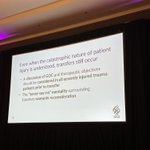
Great presentation by Nellie Trenga-Schein a fourth year medical student and an important question raised by the @OHSUTraumaCtr #AAST2023. Should goals of care discussion be a routine part of trauma transfers?

1
4
215
Adrian Maung retweeted

@traumadoctors is ready to go thanks to this group who makes it happen
#AAST2023
@bulgercot @kBraselDazzle with new innovations in poster rounds looking forward to a great meeting

Adrian Maung retweeted
Fantastic presentation by former @traumadoctorsam Council Chair @LisaMKnowlton at the @traumadoctors #AAST2023 meeting on the benefit of hospital based emergency Medicaid programs for the uninsured. 👏👏👏

Adrian Maung retweeted

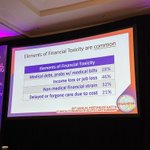
Congrats to @DrJohnScott for his fantastic plenary presentation at #AAST2023 @traumadoctors on financial toxicity among our trauma patients - everyone is affected, not just the uninsured @uwsurgery @UMichSurgery Great discussion led by Dr. Kristan Staudenmayer @StanfordSurgery


Dr. John Scott raising awareness of the under appreciated but important financial effects of trauma on our patients. #aast2023

3
32
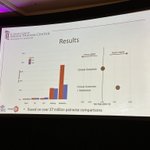
Dr Stein presenting on behalf of 21 center research group challenging “what we all know.” Is low molecular heparin really better than aspirin for VTE prophylaxis in orthopedic trauma patients? Not surprisingly patients prefer ASA and outcomes may be the same. #aast2023

78
Yale Trauma at the #aast2023 Presidential Dinner! @kadtraumamd @kevinMschuster @CherylZoggPhD @YaleSurgery

Adrian Maung retweeted
Join the Social Media Showdown! Win prizes every day during the #AAST2023! Use #AASTHunt and tag us on Instagram or Twitter!
Wednesday’s challenge: Take a selfie in front of the lighted “AAST” letters 📸
Bonus points if you use our Instagram filter⬇️
instagram.com/ar/23251699809…

Adrian Maung retweeted
The AAST Program Committee is hard at work selecting the science that will be presented at #AAST2023🙌
We can't wait to share it with you in September!
For annual meeting updates visit: aast.org/annual-meeting/2023…
#AAST2023 #TraumaSurg #SurgTwitter #MedEd #SoMe4Surgery #MedTwitter #MedStudent
