
Data Labs Director, Pew Research Center
Washington, DC
Joined March 2008
- Tweets858
- Following110
- Followers1.6K
- Likes1.4K


Thread: A few of my favorite findings from the report we just put out with the help of the awesome @skyejinx and @pvankessel (pewrsr.ch/2Dqishn) …
More from our "random walks" analysis. In the absence of any data about your personal preferences, the recommendation engine will point you toward what everyone else is watching (i.e. stuff with lots of views)


I don't tweet much, but when @mary_madden sends out the bat signal I jump to attention...very cool opportunity here!

Calling all researchers, advocates, community groups + city leaders: Our wonderful colleagues @RWJF just announced a NEW funding opportunity! Do you have an idea to explore tech’s impact on our infrastructure + efforts to improve health equity? Apply here! rwjf.ws/2wnC5le

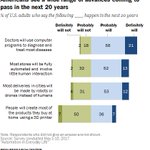
75% of Americans in @pewresearch study expect self-driving cars will help older Americans live more independently pewinternet.org/2017/10/04/a… teapawt.net/daiwaka/status/9155661…

1
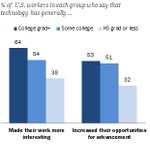
24% of workers with a HS diploma or less say that *none* of these six technologies has had a positive impact on their job or career

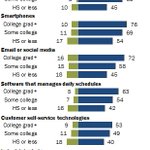
Beyond these emerging technologies, we found huge disparities when it comes to the impact of today's generation of tech tools


We were surprised at the relatively positive response to robot caregivers. People's verbatim responses helped make sense of those attitudes

Algorithms are widely used today in hiring decisions -- but few Americans have considered the idea that machines might choose job candidates

Many Americans are skeptical of the safety arguments for autonomous vehicles: 30% actually think they will *increase* traffic fatalities

But despite high interest, public expresses major concerns about safety and giving up control to machines in life-or-death situations


But others -- like limiting machines to dangerous and dirty jobs, or limiting how many jobs companies can automate -- have broader support

As one might expect, the response to some policy solutions to widespread automation of jobs (such as a UBI) fall along partisan lines

