

Federal agency supporting the wellbeing of children & families, led by Assistant Secretary @ACF_Adams. Engagement ≠ endorsement. https://xitter.cf/t.co/wFDjfjYkdP
Washington, DC
Joined April 2013
- Tweets10.2K
- Following256
- Followers13.8K
- Likes4.6K





Pinned Tweet
🚨All 50 states, plus Washington D.C. & Puerto Rico joined ACF’s A Home for Every Child!
They committed to improve their ratio of foster homes to children in care, creating bipartisan momentum to strengthening families & recruiting foster families.
More: acf.gov/50-states-join-home-…

.@ACF_Adams joins @americanmoment to discuss the Trump Administration’s progress ending the "orphan tax" across the country, and the work that remains.
South Carolina has one of the best ratios of available foster homes to children in need of care across the nation. To improve their ratio, they have:
• Modernized foster family licensing.
• Prioritized placement with relatives whenever possible, making kinship care a central foster parent recruitment and permanency strategy.
• Expanded supports for families to help reduce entry into foster care.
Learn more about South Carolina’s approach to achieve A Home for Every Child: aspe.hhs.gov/sites/default/f…

👏

In recognition of American Pharmacists Month, HHS leaders @ADM_Christine , @ACF_Adams & RADM Kelly Battese joined @usphscc pharmacy officers to discuss pharmacy priorities, including the benefits of standard-of-care regulatory models that help expand access and improve health outcomes for the American people.


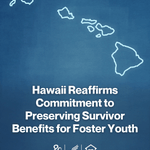
Hawaii announced their commitment to preserving survivor benefits for foster youth.
Social Security survivor benefits can be a critical lifeline for children aging out of foster care, and often represent the last, or only, financial support a deceased parent can provide to their child.
“I applaud Governor Green for continually prioritizing the best interest of foster youth and encourage the remaining states who continue to steal from orphans to do right by these children who need our support and protection the most.”—@ACF_Adams
Learn more: humanservices.hawaii.gov/haw…

Watch @ACF_Adams discuss how states can influence their ratio of foster homes to children in foster care on the @goodcitizenus podcast.
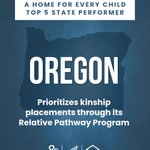
Oregon is among the top 5 states in the nation with the best ratio of available foster homes to children in need of care.
Oregon is making great strides to achieve a 1:1 ratio by:
✔️ prioritizing kinship placements through its Relative Pathway Program.
✔️ employing Resource Family Retention and Recruitment Champions in each of the state’s 16 districts to focus solely on recruiting and retaining foster parents.
✔️ increasing caseworkers’ contact with families and promoting collaboration between child welfare staff and economic support staff so families have access to concrete supports early and often.
Learn more about Oregon’s work to support foster children: aspe.hhs.gov/sites/default/f…

📢When it comes to preventing foster care entry and keeping families together, states have more flexibility than they may realize.
This brief overviews how states can identify children at risk of entering foster care, determine who can receive prevention services, and outlines ways to reach families before a crisis leads to a child being removed from their home.
Read more: acf.gov/cb/policy-guidance/b…

ACF welcomed 42 South African refugees to America earlier this week with patriotic welcome packages containing the Constitution, the Declaration of Independence, an American flag, and other resources to help them learn about our great nation.
Tina, a South African refugee, shared how she was feeling about the experience with @breccastoll. “I want to mean something. I want to give something of myself to your country to say thank you for what you are doing for me. To give me the opportunities to start a new life, a better life than I’ve had in South Africa.”
Read more from @thedailywire: dailywire.com/news/exclusive…

Welcome to the United States!
The ACF team was at Dulles International airport this week to welcome South African refugees to America. These men and women shared how grateful they are to come to a country where they can work and pursue a better future for themselves and their families while not constantly fearing for their safety.
To date, the Trump Administration has welcomed more than 17,000 South African refugees.


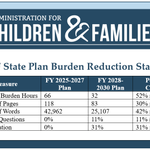
ACF continues to remove red tape that takes states’ valuable time and resources away from providing direct services to children and families.
One recent example: ACF’s Office of Child Care has cut burden hours in half for Child Care and Development Fund state plans. Child care professionals can now use that time previously spent checking boxes and filing paperwork to serve the needs of their community.
Read more about ACF’s commitment to reducing administrative burden: forbes.com/sites/jamesbrough…

.@ACF_Adams joined @JosHershberger on the @goodcitizenus podcast to discuss the bipartisan effort to achieve A Home for Every Child.

ACF launched A Home for Every Child nearly a year ago with a simple mission: improve the ratio of foster homes to children in need of care. Now that all 50 states have joined the initiative, there is nationwide commitment to ensure we have homes waiting on kids, instead of kids waiting on homes.
A new HHS report examines the current five states with the best ratios of foster homes to children and identifies strategies that have led to their success:
1. Recruiting foster parents
2. Updating foster home licensure and approval
3. Supporting and retaining foster parents
4. Preventing entry into foster care
5. Promoting permanency and placement stability
ACF encourages all states and stakeholders to learn from the range of approaches that have helped Idaho, Oklahoma, Oregon, South Carolina, and Vermont strengthen foster care capacity and move towards A Home for Every Child.
Read more: acf.gov/policy-guidance/brie…

After nearly a decade of Comprehensive Child Welfare Information Systems (CCWIS) implementation, the question of whether child welfare agencies need better technology is clearly settled in the affirmative. A recent op-ed from former ACF Senior Advisor Cody Cathey asks a bigger question: Is the way government buys technology helping states modernize—or making modernization harder?
A recent ASPE brief reports “that combined federal and state claims related to child welfare information systems had reached approximately $2.28 billion over a decade, but that only a fraction of CCWIS projects were operational.”
Cody Cathey breaks down the problems hindering progress in the Weekly Wonk newsletter.
Read more: childwelfarewonk.com/p/weekl…

By providing access to mental health, substance use, and parenting services before a child is born, we can strengthen families and help prevent children from entering foster care.
ACF recently announced that states can now use federal Title IV-E prevention funding to support expectant mothers and fathers and address the safety and well-being of their unborn children.
@ACF_Adams joins @EWTNProLife to explain.
ACF is cutting red tape and delivering more results for American families.
The @WSJ highlights our commitment to regulatory efficiency and transparency, which included rescinding 74% of outdated and unnecessary sub-regulatory guidance. That’s 35,781 pages of outdated guidance, gone.
Read more: wsj.com/opinion/how-many-gov…


Preserving Social Security survivor benefits for foster youth can provide them with a financial foundation that leads to better outcomes. Yet New York is one of a handful of states that continues to divert these earned benefits away from foster youth and instead use these funds to reimburse state child welfare costs.
On average, the “orphan tax” only accounts for 0.2% of a state’s child welfare budget. This is budget dust for a state, but resources that could make all the difference to a child aging out of foster care.
New York could end the “orphan tax” today.
@ACF_Adams joins @NY1 to explain.
A new ASPE brief found that children in child welfare are more likely to be prescribed psychotropic medication than other children on Medicaid.
Using data from Kentucky and Florida, the brief shows children in foster care placed in congregate care facilities or group homes were more likely to be prescribed a psychotropic medication than children in family foster homes. And children in non-relative family foster homes were more likely to be prescribed a psychotropic medication than children in relative family foster homes.
Read the study’s findings: aspe.hhs.gov/reports/psychot…
