

AI-native cybersecurity audits and tools | Contributors of @WakeFramework ▮
EVM
Joined January 2022
- Tweets363
- Following1.5K
- Followers10K
- Likes23.2K







Pinned Tweet
We completed the security review of @LidoFinance NEST: automated LDO buybacks and DAO-owned liquidity.
The report is public.
How NEST works, what we found, what shipped ↓
anon, are you ready for Devcon? we are ▮
ack3.ai/research/ack3-at-dev…


アセンブラ短歌. Assembly tanka: a program that runs in exactly 31 bytes of machine code, written as five phrases of 5, 7, 5, 7 and 7 bytes. No instruction may cross a line break.
@meditationduck wrote the poetry for EVM▮
The counter accepts exactly 32 bytes of calldata and saves a byte with MSIZE. The proxy is not an ERC-1167 clone: it loads the implementation from storage slot 0 to keep room for a log, so a STATICCALL to it reverts (EIP-214).
solc reaches 31 bytes too, from Yul, once the length check is phrased as sub(calldatasize(), 0x20). Over a hundred phrasings of that one check did not fit.
Byte tables, the Solidity deployers, the Yul versions and the Wake test:
ack3.ai/research/evm-assembl…

Build Station, the Solana event of the year for Czech and Slovak devs, starts October 3 in Prague: five days of building, then Colosseum, Solana's global hackathon with a $100K+ prize pool.
We're supporting it. Free entry, no web3 experience needed: buildstation.cz

ack3 retweeted
Yes.

How to make security interesting to a wider audience?
Apparently, add AI.
Had a great time talking with @pashov, @allypry and @jgattermayer at @ETHSofiaBG.

Our kernel patch to @luceboxai helped speedup DeepSeek V4 Flash on AMD ROCmFPx cards
Sharing is caring, enjoy!

On LocalMaxxing our DS4 quantization Lucebox/DeepSeek-V4-Flash-0731-ROCmFP3 beats FP8 on Hellaswag bench. 😵
Concurrency 4 + Reasoning on Max.
90% (ROCmFP3) vs 86.7% (FP8)
Incredible work together made possible by our friends at @GeometricAGI and thanks for testing the limits of Lucebox engine @jgattermayer


Lately we use GPT far more than Claude
The @OpenAI Daybreak verification provides @ack3ai access to unrestricted cyber defense ▮

ALT Two cards from the ack3 workspace's OpenAI Trusted Access page. Business verified: your organization is verified for Daybreak. Organization access: access level Daybreak Blue, source organization approval.
ack3 retweeted
there were some questions about fuzzing efficiency lately, so I better explain how manually guided fuzzing works. let's use the @LidoFinance stonks CI wake tests as an example
lido stonks: sells lido treasury tokens on cow swap at chainlink prices. isValidSignature accepts an order only while the quote stays within tolerance and improvement cap
wake fuzzing sequence (4x per CI run):
- fork mainnet at a random block (21.0M to 25.7M)
- deploy stonks against the forked chainlink feeds and cow swap contracts
- draw a fresh stonks config: margin and tolerance 0 to 10%, improvement cap 0 to 10% or off, max chainlink feed age 60s to 24h
wake fuzzing flow (100x per sequence):
- fund stonks with a random amount of the token it sells
- python model predicts the quote: decimals math minus margin
- place the order: a signed cow swap order that any solver may fill at or above floor = max(quote, minBuyAmount set by the lido manager)
- call isValidSignature, the check cow runs before filling: it recomputes the quote vs the floor. model predicts pass or the exact revert: zero quote, down past tolerance, up past improvement cap
- move the chainlink price ±10% by writing the aggregator's storage, call isValidSignature again
- expire the order, recover the tokens
model vs contract mismatch = failed run
416 lines of python. bookmark it now, thank me later
github.com/lidofinance/stonk…


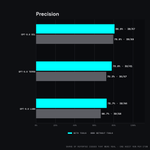
Static analysis increased precision for all 3 GPT-5.6 models in Michal Převrátil's ETHBelgrade audit benchmark.
Each model audited the same Go codebase with and without static-analysis MCP tools.
Precision is the percentage of reported issues that were real:
Sol: 80.9% with MCP tools, 79.6% without
Terra: 78.0% vs 72.3%
Luna: 72.7% vs 66.7%
All 3 models dismissed more false positives with the MCP tools, which is why precision rose.
The models used the MCP tools:
Sol: 128/168 audit runs
Terra: 54/168
Luna: 162/168
The two models that used the MCP most also had the largest LLM cost increases: Luna +14.3%, Sol +13.2%. Terra used it least and cost rose 1.1%.
Recall is the percentage of known issues found. It improved for 0 of 3 models. Higher MCP use and higher LLM cost did not produce higher recall.
Full method, results and cost breakdown >
ack3.ai/research/ablating-st…
▮

