

A virologist studying how viruses outsmart innate immunity. I teach frontier LLMs to reason like biologists. Mitochondria, viruses, antivirals, AI x Bio.
India
Joined March 2020
- Tweets556
- Following983
- Followers669
- Likes605




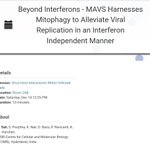


MAVS is in every textbook as the adaptor that fires interferon when an RNA virus shows up. In our paper it suppressed SARS-CoV-2 with no interferon anywhere in the chain. What it's doing instead is in the video below, and it isn't signalling.
1
44
No extra IRF3 phosphorylation, no IFN-beta, and the restriction still held in primary MEFs from mice lacking both MAVS and IFNAR1. Whatever MAVS is doing there, it is not the signalling job it is known for.
1
10
All cell culture work, so therapies are a long way off.
Sah et al., mBio: doi.org/10.1128/mbio.02071-2…
What would convince you that import competence is the antiviral effector here?

6
14 of 14 volunteers got dengue on purpose. A year later, 6 took the same virus again and none developed detectable infection. First-in-human challenge model for dengue serotype 4, out in The Lancet Microbe.

1
45
On rechallenge, the antibody, plasmablast and antiviral gene responses from first exposure never fired. Limits: 14 people, one site, homologous rechallenge only. We still have no dengue antiviral, and this is how you'd triage candidates.
1
12
I evaluate AI models for a living. So when I built my own voice assistant, I put none of them in charge.
In Jugnu, the models peer-review each other, and this morning's brain is this afternoon's Reviewer 2.
Free and open source. Link below.
#opensource #AI #buildinpublic
12
9
300
Any model can be the brain: Claude, GPT, Gemini, Grok, DeepSeek or a local one. I say "switch to Gemini" and Gemini takes over my desktop. The old brain stays on the council for second opinions.
Windows, v0.1.0: github.com/vishal9045/Jugnu
Which model would you make Reviewer 2?

1
59
Thanks again to @hesamhakim for this write-up of our MAVS paper. What keeps us excited is that MAVS holds back viruses just by keeping mitochondria healthy, even when interferon is missing. If that holds up in vivo, protecting mitochondria could become its own route to antiviral therapy. teapawt.net/hesamhakim/status/2120…

MAVS is known as the adaptor that fires interferon when RNA viruses are detected. This paper gives it a second job: keeping mitochondria importable.
@acurious_one and colleagues in Krishnan Harshan's lab at @ccmb_csir found that losing MAVS fragments and depolarises mitochondria, drives mitophagy and drops both bioenergetics and protein import—because MAVS sustains the expression and assembly of the TOM complex, the outer-membrane gateway most mitochondrial proteins come in through. Restoring MAVS restores the organelles and, with them, an antiviral state that needs no interferon: it restricts SARS-CoV-2 under interferon-deficient conditions and runs alongside the interferon pathway during Japanese encephalitis virus infection.
Cell culture throughout. The separation is the part that stands out—mitochondrial integrity doing antiviral work on its own account, rather than as a platform for the signalling.
doi.org/10.1128/mbio.02071-2…

2
59
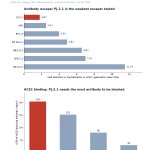
The SARS-CoV-2 variant growing fastest in US wastewater is the weakest antibody escaper in the panel.
Plasma from LP.8.1 booster recipients lost only 1.8-fold against PJ.2.1.

2
127
Paper (open access): journalofinfection.com/artic…
doi: 10.1016/j.jinf.2026.106886
Related Cao lab preprint on PJ.2.1 receptor binding: doi.org/10.64898/2026.09.03.…

55
Hoffmann, Pöhlmann and colleagues, Journal of Infection, 24 Oct. First detected in Ontario on 2 May, New York by 30 June; skews toward people 70+.
I spent part of my PhD reading SARS-CoV-2 variants. Escape was the lens. Receptor affinity sat in the footnotes.
1
12
Vishal Sah, PhD retweeted

@IndianEmbassyUS @USAndIndia @USAmbIndia @USAndHyderabad @MEAIndia @DrSJaishankar
#MedicalEmergency Sister critical, on life support. Hyderabad family MUST travel TODAY. No visa appointments available.
URGENT intervention for #EmergencyVisa
Every moment counts. PLEASE HELP.
Please do give it a read!

Why is dengue so hard to control?
The answer lies in a centuries-long evolutionary partnership between the dengue virus and the mosquito Aedes aegypti. Originally from African forests, this mosquito adapted remarkably well to human settlements, thriving in stagnant water and urban environments.
Read more: buff.ly/EoqTaAB
Written by @acurious_one
The original article was published in SciTales by @ccmb_csir - buff.ly/N1aeapc
@CSIR_IND @SomdattaKarak
About the image: The voyage of Aedes aegypti, by Greeshma Murthati

1
272