
Software Engineer
Brazil
Joined April 2012
- Tweets127
- Following501
- Followers32
- Likes2.3K



Infisical has raised its Series B led by Elad GIl, at a 600M valuation!
Security is one of the most important problems of this decade, and I'm excited to be working on it. Infisical challenges me every day and has a unique culture. If that sounds fun, check our careers page!

Today, we’re announcing Infisical’s $40M Series B at a $600M valuation, led by @eladgil.
AI has made it 10x easier to write code, 10x easier to find vulnerabilities, and given autonomous agents access to some very sensitive systems.
The problem is that much of today’s security infrastructure wasn’t built for any of this.
We’re changing this with @infisical. Today, over 1,300 organizations trust us to secure their infrastructure, including Airbus, First American Financial, Hugging Face, OpenRouter, and Wise.
Proud of what our team has built so far. Even more excited about what we have ahead of us.
Back to work.
Adilson retweeted

If you’re a Railway user acting on today’s security incident, here are some best next steps:
> Rotate any potentially exposed secrets and credentials
> Review audit logs for suspicious access
> Set up automated rotation for DB credentials and API keys
> Use short-lived, dynamic credentials wherever possible
> Consider fetching secrets at runtime instead of storing them directly in Railway
@infisical supports automated rotation for 50+ secret types, dynamic secrets, and Railway secret sync if you need a place to start.

An urgent notice from the Railway team
blog.railway.com/p/security-…

Adilson retweeted
oh and we made this game too: infisical.com/403

Adilson retweeted
over the past few weeks, we leaked thousands of API keys across the NYC subway!
please don't try this at home.


Adilson retweeted

Most developers aren't aware of this hack but you can actually run coding agents without any API keys and substantially reduce any risk associated with agents leaking keys.
This is generally a best practice and we implement this using a transparent proxy at @infisical.
The general idea is that you scaffold the agent's environment to proxy all traffic through a transparent HTTP proxy. This is non-intrusive and covers all CLI, local MCP, LLM provider traffic.
On a more practical level this means:
- OpenCode invokes the GitHub CLI to raise a PR without holding a GitHub PAT.
- OpenCode connects to any LLM Provider (e.g. Anthropic) without holding any API key.
- You get the point.
We've open sourced Agent Vault which holds agent credentials as part of Infisical and Agent Proxy, the standalone companion transparent proxy that fetches back credentials and brokers them for agents like OpenCode.
Linking the docs below; you're welcome 👇


Adilson retweeted
If you're using OpenCode, here's what I'd do following today's breach:
1. Rotate potentially exposed API keys immediately. (@infisical can automate rotation for OpenAI, OpenRouter, etc.)
2. Stop handing raw API keys to AI agents. Use a transparent proxy like Infisical Agent Vault instead.
3. Use dynamic secrets so database credentials are short-lived rather than permanent.
4. Review audit logs for suspicious activity and unauthorized access.

We had a security breach last night related to a large scale distillation attack that impacted 1.4% of OpenCode Console users
We have notified them all this morning via email. If you did not get an email you were not impacted, it was a subset of users who had external providers linked
The incident is ongoing so we cannot share more details at this point but we are working with Anthropic, OpenAI, and Google to remediate
Adilson retweeted
Dropping some alpha for anyone who doesn't want their coding agent to leak their API keys.
teapawt.net/dangtony98/status/2111…

Most developers aren't aware of this hack but you can actually run coding agents without any API keys and substantially reduce any risk associated with agents leaking keys.
This is generally a best practice and we implement this using a transparent proxy at @infisical.
The general idea is that you scaffold the agent's environment to proxy all traffic through a transparent HTTP proxy. This is non-intrusive and covers all CLI, local MCP, LLM provider traffic.
On a more practical level this means:
- OpenCode invokes the GitHub CLI to raise a PR without holding a GitHub PAT.
- OpenCode connects to any LLM Provider (e.g. Anthropic) without holding any API key.
- You get the point.
We've open sourced Agent Vault which holds agent credentials as part of Infisical and Agent Proxy, the standalone companion transparent proxy that fetches back credentials and brokers them for agents like OpenCode.
Linking the docs below; you're welcome 👇


Adilson retweeted
Access denied. Credential required.
On October 21 at 1 PM ET, see how Agent Vault gives AI agents access to the services they need without ever exposing the credentials behind them
We’ll walk through Agent Vault live and show how it works with tools like Claude Code and Codex, and answer your questions.
Save your spot: infisical.com/webinars/live-…
Se você ainda não está usando algo como Agent Vault para impedir que suas credenciais sejam vazadas, você não tem um bom fluxo de trabalho com IA.
A credential an AI agent can read, is a credential it can leak.
Introducing Agent Vault: a new Infisical product that lets Claude Code, Codex, and other agents call the APIs and services they need, without holding real credentials.
With Agent Vault:
> Your agents work as they normally do, with no code changes
> A prompt-injected agent can only reach preapproved HTTP services, down to exact methods and paths
> Agent sessions expire on a schedule you set, and every request is logged
Adilson retweeted
If your agents run in @daytonaio sandboxes, you can now manage their keys in Infisical alongside every other secret your team uses!
Infisical now syncs copies of secrets straight into Daytona's secret store. Daytona keeps the real values out of the sandbox, and Infisical keeps the secret values current. Rotate a key in Infisical and every sandbox that references it gets the new value on the next sync, with no changes to your create calls.
Available on all plans, including free!
Adilson retweeted

"How do you share .env files as a team?"
I see this question all too often. The answer is "You don't". And you actually don't need a .env file at all!
In this video I break down what environment variables are, what the environment really is, and how runtime injection with centralized secrets can help deliver env vars to the environment and solve the problem of secret sprawl.
Ditch the .env file. There's a better way.
Adilson retweeted
You can now give someone access to production Redis without giving them the password!
You put the password into Infisical once. After that, you decide who has access. Anyone with permission can open Redis from their browser or terminal without ever seeing the password. Infisical keeps logs for every command.
Live in Infisical PAM today! If you haven't looked at Infisical for privileged access management yet, the list of supported account types is growing every week. Docs below 👇
Adilson retweeted
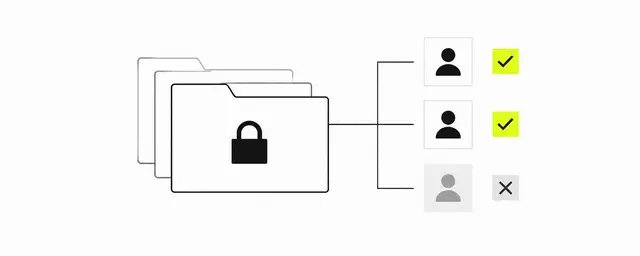
introducing Access Controls v2 in Infisical!
you can now grant one-off access to a single folder or environment in just a few clicks without needing to create custom roles
Adilson retweeted
New in Infisical: Postgres account discovery!
Infisical PAM can now scan your Postgres instances and surface every account that can log in, including the ones no-one is tracking. Pick the accounts you want to bring under management, and rescan on a schedule to catch what changes.
No network exposure: the scan runs through your Infisical Gateway.
Live today on Enterprise. See it in action 👇
Adilson retweeted
Devs: Are you using dynamic secrets or still using long standing static credentials on resources like Postgres?
Not sure where to start with dynamic secrets?
See the video below for a refresher:

Adilson retweeted
Infisical now writes your secrets into your Spacelift contexts!
You choose an Infisical folder and the @spaceliftio context to write to. When a value changes in Infisical, Infisical updates the context, and every stack attached to it gets the new value on its next run, with support for environment variables or mounted files.
Available on all plans.