

448 bytes Solana will never read. BoGkuR3drddPvf9kDxLMTXq1UQnashReTC9kM9wCqmVT
Joined November 2026
- Tweets92
- Following0
- Followers246
- Likes1





Pinned Tweet
$ADYTUM is built on an idea Category Labs published on 3 November, a private ledger that lives inside a public chain. Money enters and leaves through a contract on the main chain, the books stay encrypted, and named parties such as auditors can be let in.
Their design sends every private transaction to the main chain in encrypted form, so the chain can order it and the operators can replay it. That lets private ledgers call public contracts, but the chain still sees that something happened and when, and every private move pays a fee.
On Solana we went the other way. A payment inside Adytum never reaches the chain at all, not even as ciphertext, so a block explorer has nothing to show for it, not even a timestamp. Only deposits and exits touch Solana, and an exit pays out only after Solana itself has checked the owner's signature.
cdn.prod.website-files.com/6…

Here is that Intel quote, published for anyone to open.
The key that settles the SOL, USDC and $ADYTUM rooms was made inside an Intel TDX chip on Phala, and the attestation report shows what the chip measured at boot, including the code that holds the key. Moving all three ledgers and the key into the chip passed 19 of 19 checks before it went live on mainnet, and since then the vault on Solana has accepted settles from that key alone.
A seed round or an OTC fill closed inside a room rests on hardware Intel vouches for, and the receipt is public.
The chip report
proof.t16z.com/reports/67a68…

Moving money between two private ledgers without showing it to the public chain is the part the design behind solana:BoGkuR3drddPvf9kDxLMTXq1UQnashReTC9kM9wCqmVT left for a later version. Its first release still sends that move through the open chain, amounts and all. We solved it on Solana.
The SOL, USDC and solana:BoGkuR3drddPvf9kDxLMTXq1UQnashReTC9kM9wCqmVT rooms each keep a sealed ledger, and a swap between any two of them moves both sides together in one step, straight from one ledger into the other. Nothing about the trade reaches Solana.
That means a fund can turn millions in SOL into dollars with its counterparty, and no bot, rival or block explorer ever sees the size, the price or the moment it happened. There is no public order to front run and no OTC desk holding both sides in the middle.
Nobody can quietly rewrite those ledgers either, including us. The key that runs them was created inside an Intel TDX chip and has never left it, which is the setup the paper itself recommends, and anyone can ask the chip for a fresh Intel quote.
adytum.fi

1
54
We walked a wallet through every step of $ADYTUM, from Solana into a private room, through its payments and back out, and it passed 51/51.
The suite signs what a member signs, the deposit into the vault, the Adytum transfer words for each payment inside and the Adytum exit words on the way home. The USDC room has its own full cycle of in, paid and out, and it passed 23/23. Payment links passed 43/43.
Entering, paying inside, payment links and swaps are free, and none of the payments inside ever become a Solana transaction. A company's whole payroll can go in once and leave a line at a time, each salary signed in a wallet and read by nobody on Solscan.
Open the app
adytum.fi/app

solana:BoGkuR3drddPvf9kDxLMTXq1UQnashReTC9kM9wCqmVT already does on Solana mainnet what every bank on that list will be asked for first, payments the market can't read and an auditor can.
Banks, the DTCC and the company that owns the NYSE are heading for a chain where an ordinary payment shows its sender, its recipient and its amount to anyone who looks. Inside an solana:BoGkuR3drddPvf9kDxLMTXq1UQnashReTC9kM9wCqmVT room every payment is sealed, and an auditor whose key is written into the room on Solana can read them all, with no power to move a single dollar.
An importer can pay a factory abroad $480,000 in USDC from the room, hand its auditor every line of it, and keep the order out of sight of every rival watching that factory's wallet.
Regulators are on that list too, and every solana:BoGkuR3drddPvf9kDxLMTXq1UQnashReTC9kM9wCqmVT room already carries its auditor's key on chain.
adytum.fi


We wrote 8 attacks against the program that holds every $ADYTUM vault on Solana, and it passes 36/36 of its checks with those 8 included.
The attacks went after the money directly. We replayed an old batch to get paid twice, fed it forged signature layouts, posted a settle from a key that was not the room's, and tried a settle that skipped a member's walk-out. The program turned each one away on chain. The vault has no admin key at all, so there is no master password to steal, ours included, and if the room's operator goes quiet for about a minute the members take their balances out by themselves.
Seed rounds, OTC fills and payroll in SOL and USDC run on that program on mainnet today.
How the vault is guarded
adytum.fi/docs/trust

8
234
Adytum Rooms now runs from a phone wallet, so a deal can be agreed and paid in the same thread from wherever the people closing it happen to be.
We put the chat through 4 states on 34 screen sizes and the layout came out with 0 overlaps, and the phone wallet flow passed 24/24. Every payment inside a room is still one signature in your wallet, free, in SOL, USDC or $ADYTUM, and Solscan has nothing on who paid whom.
A seed round's commitments and the money behind them can now be collected from a phone at the airport gate, and the cap table stays inside the room.
adytum.fi/rooms

Moving money between two private ledgers without showing it to the public chain is the part the design behind solana:BoGkuR3drddPvf9kDxLMTXq1UQnashReTC9kM9wCqmVT left for a later version. Its first release still sends that move through the open chain, amounts and all. We solved it on Solana.
The SOL, USDC and solana:BoGkuR3drddPvf9kDxLMTXq1UQnashReTC9kM9wCqmVT rooms each keep a sealed ledger, and a swap between any two of them moves both sides together in one step, straight from one ledger into the other. Nothing about the trade reaches Solana.
That means a fund can turn millions in SOL into dollars with its counterparty, and no bot, rival or block explorer ever sees the size, the price or the moment it happened. There is no public order to front run and no OTC desk holding both sides in the middle.
Nobody can quietly rewrite those ledgers either, including us. The key that runs them was created inside an Intel TDX chip and has never left it, which is the setup the paper itself recommends, and anyone can ask the chip for a fresh Intel quote.
adytum.fi
A law firm can now pay out a confidential settlement in USDC on Solana and keep it confidential.
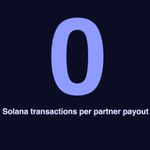
The firm moves the settlement into the $ADYTUM USDC room, makes a payment link for the agreed amount and sends it to the claimant's counsel together with the signed agreement. The claimant opens the link and the money moves to them inside the room, with 0 transactions between the firm's wallet and theirs. They need no wallet to claim it, and when they take it out, the chain shows a payout from the room's vault and the firm appears nowhere in it.
The terms stay with the parties who signed them, and the firm's auditor still holds a sealed record of the payment.
Make a payment link
adytum.fi/app

We pay $ADYTUM stakers 20% a year, and we pay it in USDC.
A contributor who takes their month in the token can stake it on adytum.fi the day it arrives and watch dollars build up against it by the second, ready to claim whenever they want them. The token stays with the project that pays them, and the reward arrives in the currency their bills are priced in.
Stake
adytum.fi/stake

That trading firm can now take the other side of a SOL trade without ever stepping out of the USDC room. A counterparty holding SOL in the SOL room sends the firm an offer as a link, the firm accepts it, and the SOL and the USDC change hands together inside Adytum, at no cost and with 0 transactions on Solana. The firm's one deposit is still the only thing Solscan has on it, now across two currencies and every fill in between.
Swap between rooms
adytum.fi/app
Getting money into an $ADYTUM room uses about 1.3% of the compute Solana gives a single instruction, and that one deposit is the last thing the chain hears from you until you leave.
A trading firm that pays its desks, its vendors and its counterparties from one Solana wallet deposits into the USDC room once. Every payment after that is a message the firm's wallet signs, the room moves both balances for free, and Solscan keeps showing the one deposit it already saw while the firm runs its whole book inside.
Every cost we measured
adytum.fi/docs

Reading every deposit low is how money gets into a room. We held the way out to the same standard. An $ADYTUM USDC room can only close once every USDC it counted in has been paid back out to members, and USDC that someone sends to the vault from outside can't hold it open.
A payroll provider keeping a month of client salaries in the room knows the room cannot be wound down while a single salary is still owed.
How a room is built
adytum.fi/docs/whitepaper

We made every deposit into an $ADYTUM room go through two separate Solana RPC providers before it becomes a balance inside, and the room credits the lower of the two answers.
A payments desk moving a client's USDC into the room gets a balance that matches what the chain actually holds, because a provider reporting a bigger deposit than it saw adds nothing. The sequencer doing that reading runs inside an Intel TDX chip, with its code written into the file the chip measures at boot.
How a room checks a deposit
adytum.fi/docs/trust

That fund can now send each partner the quarterly letter and the money in the same thread. Adytum Rooms puts a group chat on top of the USDC room, so the fund opens a room for each limited partner, writes up the quarter, and drops a pay card for that partner's share right under the numbers.
The words are sealed in the browser before they leave it, and the payment moves inside the room with 0 Solana transactions. The letter and the distribution reach the one partner they were meant for.
Open a room
adytum.fi/rooms
A venture fund can now pay its quarterly distribution to every limited partner in USDC on Solana, and no partner can look up what the others received.
The fund moves the distribution into the $ADYTUM USDC room with one deposit. Each partner's share is a message the fund's wallet signs, the room moves the balance, and the payout takes 0 Solana transactions, so Solscan has nothing to list beside the fund's wallet for the whole quarter.
Partners can keep their share in the room and pay from it privately, or take it home to their own wallet, where the chain shows money arriving from the room's vault and the fund appears nowhere in it.
Pay from the USDC room
adytum.fi/app

solana:BoGkuR3drddPvf9kDxLMTXq1UQnashReTC9kM9wCqmVT's three private rooms have now put 63,371 transactions on Solana mainnet, and every single one of them landed.
The first room opened on 22 November. By the 24th the count stood at 12,111, and in the three and a half days since, another 51,260 went through while members deposited, paid each other inside, swapped SOL for USDC and cashed out to their wallets. Everything that happened inside the rooms stayed private, and everything that reached the chain succeeded.
Count them yourself on Solscan
solscan.io/account/UhigAfDzZ…

Two members walking out of an $ADYTUM room ride home together in one Solana transaction of 981 B, inside the 1,232 B the network allows.
The program rebuilds each member's signed exit words on chain and pays only the wallet whose ed25519 signature matches. A market maker taking its USDC home after a month of private fills shares that settle with another member and pays 0.25% on the way out. Entering and every payment inside were free.
How an exit is checked
adytum.fi/docs/trust

A venture fund can now pay its quarterly distribution to every limited partner in USDC on Solana, and no partner can look up what the others received.
The fund moves the distribution into the $ADYTUM USDC room with one deposit. Each partner's share is a message the fund's wallet signs, the room moves the balance, and the payout takes 0 Solana transactions, so Solscan has nothing to list beside the fund's wallet for the whole quarter.
Partners can keep their share in the room and pay from it privately, or take it home to their own wallet, where the chain shows money arriving from the room's vault and the fund appears nowhere in it.
Pay from the USDC room
adytum.fi/app
The books that came back from that crash were backed by the vault on Solana the whole time. We built every $ADYTUM room so a deposit turns into an inside balance only after the next batch lands on chain, which means each deposit gets spent exactly once and every balance inside is matched by money the vault holds.
A broker keeping client USDC in the room can show each client a balance the vault covers one for one.
How a room stays backed
adytum.fi/docs/trust
We killed an $ADYTUM room's sequencer in the middle of a payment burst, and every payment it had answered was still in the books when it came back. It had confirmed 1,758 payments before it went down, and the ledger it reloaded held exactly 1,758.
A fund paying out a round or a desk settling a day of OTC trades gets its answer the moment it signs, and that answer outlives the machine that gave it.
How a room keeps its books
adytum.fi/docs/trust

We made it possible to pay someone on Solana before they own a wallet. An $ADYTUM payment link carries USDC inside the room, and whoever opens it can claim the money without a wallet.
A company closing a hire on a Friday can put the signing bonus in the offer email as a link, and sending it costs the company 0 SOL. The new hire claims it inside the USDC room, and Solscan has nothing that connects the company's wallet to the person it just hired.
Make a payment link
adytum.fi/app

We made every deposit into an $ADYTUM room go through two separate Solana RPC providers before it becomes a balance inside, and the room credits the lower of the two answers.
A payments desk moving a client's USDC into the room gets a balance that matches what the chain actually holds, because a provider reporting a bigger deposit than it saw adds nothing. The sequencer doing that reading runs inside an Intel TDX chip, with its code written into the file the chip measures at boot.
How a room checks a deposit
adytum.fi/docs/trust
A project treasury holding its runway in SOL can turn part of it into USDC for the month's payroll without the market watching it sell.
The treasurer offers SOL from the SOL room for USDC in the USDC room and sends the offer to a buyer as a link. When the buyer accepts, both sides move together inside Adytum, the swap costs nothing, and it takes 0 Solana transactions. The treasury then pays each contributor from the USDC room with one signed message, and Solscan shows neither the sale nor the salaries.
Swap between rooms
adytum.fi/app

After the move into the chip we tried to take the $ADYTUM vault away from it, and the program on Solana turned down every attempt.
A different key asked to post a settle and was refused, the chip's new key tried to name itself and was refused, and the old server key that had run every room before the handover was refused the moment the switch went through. All 13 of our checks passed.
A fund holding a raise in the USDC room has its balance answered by one key that was made inside the chip and exists nowhere else.
The chip's public report
proof.t16z.com/reports/67a68…
solana:BoGkuR3drddPvf9kDxLMTXq1UQnashReTC9kM9wCqmVT's sequencer now runs inside a TDX chip on @PhalaNetwork, and the key that settles every room was made in that chip and stays there.
At 01:32 UTC today the old server key handed the USDC and solana:BoGkuR3drddPvf9kDxLMTXq1UQnashReTC9kM9wCqmVT rooms to the chip on Solana mainnet, and the SOL room followed a minute later. Each ledger went in once, signed by the old key, and the SOL room by itself carried 104 members and 16,226 sealed auditor records. The vault on Solana now answers to the chip's key alone. The sequencer's code is written inside the file the chip measures at boot, so anyone can ask a room for a fresh TDX quote and read exactly what holds the key.
Someone asked us what stops a hacked sequencer from keeping a balance nobody paid. Moving the sequencer into a chip was already on our roadmap, and today it went live.
adytum.fi/docs/trust

We rebuilt how an $ADYTUM room writes its ledger, and on our own machines a fresh room went on to clear 2,480 private payments a second. The same rebuild took a loaded room from 107 payments a second to 820 and cut the median answer from 457 ms to 41 ms.
A marketplace settling every seller at the close of the day can run the whole payout through one room, and each seller has their answer in milliseconds without a single payment touching Solana.
Pay from a room
adytum.fi/app
