
Head of insights @figma. Former @Forrester analyst. Parenting at https://teapawt.net/t.co/zgIV0NOPJv
San Francisco
Joined June 2008
- Tweets1.2K
- Following1.6K
- Followers684
- Likes851


"I actually don't see agents as our new users. They are intermediary software, like RNA. It's important they are successful in their task, but I'm not willing to sacrifice the importance that the ultimate persona in the matrix is the human.
So in this context, whether you're working on interfaces, or agentic workflows, or model behavior, we're all working in service of the people trying to derive value, efficiency, and meaning out of the things we are creating."

Design in the wilderness
There was a time 10 or so years ago when we got really focused on human centered design. I think it's time to retrieve that earnestness. When we were designing web sites we could perfectly architect every touchpoint.
Then apps, with their algorithms, where we did our best to provide users a map but they ultimately chose their own journeys.
Now, they are in the wilderness, and we can't possibly craft every potential experience or interaction they will encounter. So we have to think differently.
I'm increasingly seeing experience design merge with service design. In the former, we shaped the thing itself. In the latter, we shape the inputs, improve the connections, make it easy to pass data out and make it legible and true when it's received, reduce inefficiencies, improve predictability, always focused on the humans in the center.
I actually don't see agents as our new users. They are intermediary software, like RNA. It's important they are successful in their task, but I'm not willing to sacrifice the importance that the ultimate persona in the matrix is the human.
So in this context, whether you're working on interfaces, or agentic workflows, or model behavior, we're all working in service of the people trying to derive value, efficiency, and meaning out of the things we are creating.
Because honestly, technology sometimes feels like a pretty meaningless industry to work in. Staying centered on what people need, and how I can make their lives easier and better is what drives my engagement and my ambition
“A broader question is whether most tasks in the economy are like chess, where there is a clear performance metric that can be optimized, or whether they’re like writing, where quality is a multidimensional balancing act without clear training signals beyond human mimicry.”
Yes

What would the writing of superintelligent AI sound like? You might expect it to have the characteristics of good human writing — figurative language, high information density, coining new terms, and punchiness — but dialed up to 11. Well, that’s what Claude did, until Anthropic dialed it back recently because of user complaints. It didn’t sound superintelligent to most of us. Instead, the neuralese writing style sounds like a “stupid person’s idea of a smart person”.
Our response to information density and metaphor-laden writing looks something like the cartoon graph I've drawn. Beyond a point, it completely backfires. The reason human writers don’t overdo it isn’t because they aren’t capable, but because they are aware of the reader’s cognitive burden. One of the hardest skills to learn as a writer is to simulate the reader’s experience.
It’s easy to train AI to mimic mediocre human writing. But optimizing it to be (perceived as) good is really hard, and made much harder by the fact that when everyone uses the same few AI models we get tired of their tics very quickly. Most Claudeisms are individually pretty good. I hate that I can’t use “load bearing” in my writing any more. If it weren’t for AI overuse it would be a neat metaphor.
A broader question is whether most tasks in the economy are like chess, where there is a clear performance metric that can be optimized, or whether they’re like writing, where quality is a multidimensional balancing act without clear training signals beyond human mimicry.


Andrew Hogan retweeted

Yes, this is why I tried to make it clear in my keynote intro that you can’t delegate your thinking to AI !
At the same time, what I called “building to think” in the keynote can definitely be useful… a vibe coded throwaway prototype or AI generated design or production code written by a coding model can help push a designer past the blank canvas problem + bootstrap critical thinking about how to shape a product experience / improve a surface. It can be useful to react to something, even when what you are reacting to is very obviously wrong.
Of course there are many other ways to get started. User research, data analysis, brainstorming with your team, sketching in a notebook, a nice walk or cup of tea… all of these and more can kickoff a creative / design process. The pre-AI approaches work just fine and sometimes are even preferable. AI is another tool in the toolbox, not the entire toolbox.
Self awareness around the mode you are in is important. “Building to ship” is different than “building to think.” And in terms of “building to ship” there are benefits and drawbacks to every medium you might decide to target.
For example, static designs can under-specify key behavior or obfuscate non-ideal scenarios through carefully curated data / content.
Prototypes can over-emphasize flashy details while not actually solving the problem at hand… and sometimes they are more painful to translate to production code than static designs.
Depending on the codebase, working with production code might be significantly slower, implicitly guide a designer to assume false constraints or discourage broad exploration of an option space.
Shipping to production is very cool and powerful! It is nice to be self sufficient. But thinking about code quality and what an engineering counterpart might accept / reject requires a different headspace than freeform creative exploration. So again… know what mode you are in.
Ultimately the optimal process is dependent on your goal, context, setup and preferences. Everyone loves to post their thought leadership on social media and claim they have found (or - better yet - invented!) the brand nee best way to work ever, but let’s be real: there is no “one size fits all” process or method for design. Personally I think the workflow diversity of designers is really cool and worth celebrating :)
That’s why we’re always trying to accommodate different ways of working in Figma. We want to provide a flexible yet powerful canvas that is inviting, supportive and empowering.
Ideally Figma gets out of your way as much as possible… and to be honest sometimes we miss here. No team is perfect, including us. Sometimes we are too opinionated and other times we are not opinionated enough. Thankfully designers are never shy when it comes to giving us feedback and telling us when we need to course correct!
At the end of the day, whatever your preferred process is, we want Figma to be the place that enables you and your team to do your best work. As workflows evolve, we do our best to keep pace without adding unnecessary complexity. It isn’t our place to condemn or encourage… we “simply” want to support design and designers. And like most good design problems… this is rarely simple, which is a big part of the fun.
Andrew Hogan retweeted

If you want to know whether you have good taste, a pretty reliable test is whether you can evaluate the validity of a piece of content in your domain, with logic, without bias, without any regard to the number of likes its received, who created it, who’s endorsing/amplifying it.


Andrew Hogan retweeted

Today’s Figma MCP update makes it one of the strongest integrations with Claude Code I’ve seen.
You can now use Claude Code to design in Figma with the the full context of your design systems.


Andrew Hogan retweeted
Companies are starting to fully understand that design and craft is the differentiator.
Designer talent war is just the start.
Everyone’s saying "you can just do things," but I ask, "should you always?"
I boil it down and give a TLDR and analysis for @figma's blog. Thanks to @carlyayres and so many others for their perspectives!


Andrew Hogan retweeted
"The good news is: If you’re finding that making good work is still pretty tough, you’re not alone."
@ahhogan digs into how we move forward, together → bit.ly/3LwLjCl


Sometimes it's hard to do your best work. New @figma blog on the forces shaping our work and the barriers to working together that we need to overcome. figma.com/blog/work-has-chan…
Sometimes it's hard to do your best work. New @figma blog on the forces shaping our work and the barriers to working together that we need to overcome. figma.com/blog/work-has-chan…
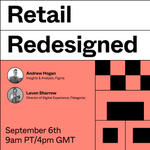
From "don't make me think" to "think before you buy." @patagonia in conversation with me/ @figma and all of you on Sep 6 bit.ly/3spb68A


Life side quest: find overlooked data about design and make it meaningful.
Every year @Figma asks people to submit proposals to talk at Config about the topics they care about most
Let's see what it all says about the state of design, tech, and dev...
figma.com/blog/insights-from…

Andrew Hogan retweeted
The FULL Config agenda is live 🥳
With talks ranging from AI to design systems, prototyping to code, there's something for the whole product team.
Plus, we’ve added new speakers.
Start planning out your day and register.
config.figma.com/agenda