

Sharing inspiring stories, moments of awe, and one-of-a-kind artifacts from aviation and space history. Start exploring: https://xitter.cf/t.co/Nw4JxChkHI ✈️ 🚀 🪐
- Tweets50.1K
- Following531
- Followers399K
- Likes4.6K



ALT A stunning view of a crescent moon above the horizon with colorful bands of blue and orange twilight in the sky.

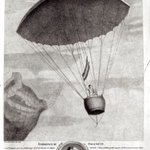
ALT An historical illustration depicting the early parachute design showing a person descending in a parachute with a balloon-like canopy and a basket attached beneath.

ALT A vintage black and white photo showing a hot air balloon, in flight with one person suspended below it. Several individuals are watching from an open field.

ALT A Navy helicopter hovering over the ocean near a small raft with astronauts sitting inside, having just completed a space mission.

ALT Two U.S. Air Force YF-105 Thunderchief jets flying in formation above a mountainous landscape.

ALT Illustration of a canal lock with a futuristic design, featuring a large wheel-like structure labeled "PROMISE" in the center. The background includes abstract representations of water and sky.

ALT A person in a stylish coat and hat is stepping off a Western Air Express plane. The airplane door behind them is open, and the words "Western Air Express" are visible on the plane and a step stool.

ALT A vintage glider in flight, featuring logos for Varta and Bosch.. The glider's design includes a high wing and a sleek fuselage.

ALT A black F-117 Nighthawk stealth aircraft is displayed inside an aviation museum hangar. The hangar has a high arched ceiling with white beams and skylights. A few other aircraft with visible decals and designs are situated in the background.

ALT A sleek, black F-117 Nighthawk stealth fighter jet is parked on a concrete surface in front of a large, closed hangar. The jet's angular design and distinctive shape are prominently visible.

ALT An orange and yellow vintage airplane, named the 1931 Curtiss-Wright Junior, is suspended from the ceiling. The aircraft has distinctive yellow wheels and an exposed propeller. The surrounding setting is an indoor exhibition space with a high, metal-structured ceiling.

ALT View from a Space Shuttle in orbit, showing the Earth below with visible landmasses, oceans, and cloud formations. The shuttle's payload bay is open and part of the shuttle structure is visible.

ALT A large cylindrical module, covered with a reflective material, is displayed indoors. It is the Harmony module from the International Space Station, mounted on blue supports. Various informational plaques and a monitor are placed nearby.

ALT A military helicopter is displayed in a dimly lit museum setting. The helicopter is positioned on the floor near an informational sign. The background includes another military aircraft partially visible with US Marines markings.

ALT A jet engine with multiple cylindrical components arranged in a circular pattern. The engine has a metallic finish with visible rivets and tubing, displayed against a black background.

ALT Cover of Air & Space Quarterly Fall 2026 issue featuring a U.S. Marine Corps AV-8B Harrier jet in flight. The background is a clear blue sky. Text highlights the jet's final sorties after 41 years in service.

ALT A Concorde aircraft in a hangar under construction, surrounded by scaffolding and various pieces of equipment. The fuselage displays logos that read "BAC - Aviation France - British Aircraft Corporation.

ALT A vintage photograph depicting the Eiffel Tower with a zeppelin flying closely overhead.

ALT Concept art of a space shuttle next to a spacecraft in orbit, with the Earth visible in the background.

ALT A cylindrical shaped spacecraft with solar panel that look like wings across its body

ALT Close-up shot of space shuttle launching from the perspective of the launch pad.