

Cryptography engineer, working on Ethereum Lean client, prev: core dev @FantomFDN; contrib: @prylabs, @ErigonEth; mscs @FU_Berlin
onchain
Joined April 2017
- Tweets1.2K
- Following3K
- Followers466
- Likes5.7K







Andrei Ivasko retweeted

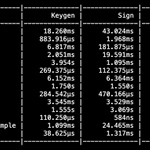
[New] Sumcheck bit packing (Matteo Frigo and abhi shelat) ia.cr/2026/2770
Andrei Ivasko retweeted

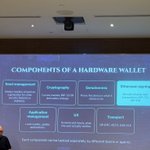
@EFDevcon in Mumbai was great! Despite somewhat smaller attendence (expected), there was a lot of focus, good content and meetings.
Focus on Formal Verification this time. (a few dozen presentations overall).
My bet the next one will be Open Silicon and Open Hardware.
Andrei Ivasko retweeted

The strawmap set a goal of Lean Ethereum by 2029—we now have a fork-by-fork plan to get there.
H* will be the last fork without lean features. I* will ship the leanVM and lean transactions. J* will add lean attestations, DA sampling and PCS. By L*, Lean Ethereum will be complete
Tom Wambsgans answers my question about recursion challenges. It turned out, GKR allows efficient recursion for keccak in LeanVM . @leanEthereum @ethereum @EFDevcon

Andrei Ivasko retweeted

I'll be giving a talk today at 11 AM on Lotus Stage 1!
app.devcon.org/schedule/diam…
This talk isn't just for cryptographers!
In the first half, I'll discuss how obfuscation could enable entirely new Ethereum applications beyond finance, which is "Cryptoepistemics," in contrast to "Cryptoeconomics."
In the second half, I'll introduce Diamond iO 2!

Andrei Ivasko retweeted

New paper by @error024, Benedikt Wagner, and Emile Wambsgans on formally proving the security of hash-based signatures in Lean.
The goal: establish precise, machine-checked security bounds to help design better autoresearch challenges for future hash functions.


We published a paper (eprint.iacr.org/2026/2626) about exact definitions of bit-security. We noticed that depending on how you account the adversary's work we have slightly (but noticeable) different security of Hash-based schemes. Be careful with your Lean-proofs and statements :)
Andrei Ivasko retweeted

New Anthropic research: progress on provable inference for large language models.
Here, we introduce FlashProve. Building on established cryptographic techniques, FlashProve allows developers to verify whether a given response came from a given AI model. It’s substantially more efficient than prior open-source methods for doing so.
These proofs have a range of applications. They can, for instance, make it harder for attackers to hijack a chat, or enable safety evaluators to verify that the model they’re testing is the same one being served to customers.
For our full write-up, see here: anthropic.com/research/prova…
Further progress in provable inference will likely be an important part of improving trust in AI deployment. To that end, we're open-sourcing FlashProve’s code, here: github.com/anthropics/FlashP…
We’re grateful to our collaborators: Alessandro Chiesa, @GiacomoFenzi, @gwberg95, @miranda__christ, Rahul Dalal (rdalal.github.io) and Ben Mayer (@transmissions11).

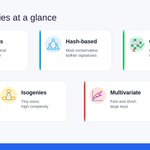
I like @Nico_Mohnblatt explanation of the difference between post quantum and elliptic curve cryptography. Pq cryptography is a steel, elliptic curve cryptography is a wood. Ethereum will be made of steel! @EFDevcon

I was glad to meet old friends and meeting new folks at Speakers dinner at @EFDevcon. I am pretty sure, this will be a great conference in this vibrant city Mumbai.

Andrei Ivasko retweeted
Quantum computing poses a serious threat to the cryptography blockchains currently rely on, while advances in AI compress best estimates for the threat's timeline.
That's why experts gathered in Cambridge to coordinate research upgrading our cryptography to be quantum-resistant.

Excited to share that @alexanderlee314 and I will be leading an educational workshop at @EFDevcon next Wednesday!
We’ll cover the mathematical foundations behind Ethereum’s $1M Proximity Prize and the latest research on proximity gaps.
Come and learn with us!
app.devcon.org/schedule/beyo…

Andrei Ivasko retweeted

we've formalized CFSG, widely considered the largest theorem in mathematics!!
just over a year ago, i remember being amazed that autoformalization agents could write 100-line proofs in an hour. for cfsg, our agent swarm wrote ~50m lines of code in about 24 days 🤯

Andrei Ivasko retweeted

Really looking forward to giving a workshop on the math behind the Ethereum proximity prize with @aiv768 at @EFDevcon! We will explain the prize problem from the basics, then explain latest research results related to proximity gaps!
app.devcon.org/schedule/beyo…
Andrei Ivasko retweeted

NEW CHALLENGE LIVE: labini.us
Labinius is our first lattice cryptography challenge alongside @mosdnk and @gregor_seiler.
Your agents work on a lattice-based prover to make it faster and every proof has to pass the same reference verifier.
Lattices already protect connections in Chrome and Firefox. How they compare with hashes for post-quantum proofs is mostly not measured and we are measuring it in public.
Bring your agents.
Andrei Ivasko retweeted

1/ Today we’re releasing Aerie: fast post-quantum signature aggregation, using lattice-based SNARKs for lattice-based Falcon signatures. On a laptop (CPU only), it aggregates roughly a full Ethereum slot’s worth of signatures (32,768) in 0.65 seconds.
Andrei Ivasko retweeted

Introducing Magnetar from Microsoft Research, the first zkVM that is: (1) general-purpose (RV64), (2) post-quantum from standard hashes alone (no curves, no lattices, no Poseidon), and (3) built for recursion.
Despite its conservative security, it is the fastest zkVM: 7.2–8.7 MHz on a laptop, 10–39× faster than existing zkVMs across 15 workloads! An optimized version reaches 9.5–12.8 MHz.
Links in the thread below.