

Senior research fellow at University of Buckingham specialising in 20th century British naval history.
Joined April 2017
- Tweets2K
- Following235
- Followers889
- Likes1K






My review of Edward Abel Smith's 'A Hateful Decision' is here:
naval-review.com/book-review…
Those historians who provided enthusiastic endorsement should reflect on their motives and judgement in applauding a work which is substantially fiction. As should publisher, Penguin.

Andy Boyd retweeted

Now available in paperback:
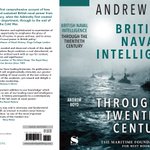
📖 British Naval Intelligence through the Twentieth Century by @ajcboyd, with a foreword by Andrew Lambert
🔗 buff.ly/LwCcRbY

Andy Boyd retweeted

A thoughtful piece:
The cost of scrapping Trident: What would Britain lose? open.substack.com/pub/britai…

Thank you!

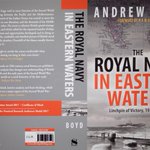
While @ajcboyd's "The Royal Navy in Eastern Waters" remains one of the best accounts of the @RoyalNavy's Eastern Fleet in the buildup to & early years of the war in Asia #WW2 amazon.co.uk/Royal-Navy-East…


Ref my earlier post. The prominent historians who enthusiastically endorsed Smith's book should ask themselves hard questions. They won't because toadying to broadsheet review editors, big publishing houses, and the celebrity circuit takes precedence over historical integrity./1


An important, thoughtful and refreshingly honest re-evaluation by @robert_lyman of Edward Abel Smith's 'Hateful Decision'. As this extract from my forthcoming piece for the 'Naval Review' shows, I had already reached the same view on Smith's free resort to fiction: /1
spoke, acted and experienced events. Defenders of this practice, a long established technique in television documentaries, argue that it lends vital colour and renders the past more accessible to a wider audience. In Smith's case too much of his 'colour' ranges between the /3
Look forward to your conclusions! The Enigma 'Red' key used by the GAF was broken in early May 1940 and read currently and continuously by BP for the rest of the war. Hinsley summarises its contribution before and during the Battle of Britain, value and limitations, in British/1

Super excited as im taking delivery of the ULTRA records for the Battle of Britain at the moment.
These are interesting as the records for 1940 were declassified a long time after the rest of the ULTRA records for ww2.
It will be interesting to see if there is a tangible reason for that from the contents.
“Speculation” might be that the government maybe felt that disclosure might harm the “few” legend which has become such a part of British national celebration. But if that was the case why release them at all ?
We will see what the contents say, not that anything inside could detract from the fact that someone still has to go and shoot planes down and somehow also not die.
SIGINT all goes out the window once the planes engage.
Or as succinctly described by Mike Tyson “everyone has a plan until they get punched in the face”…

on the actual source. Ironically, it was the Admiralty who could best exploit Red decrypts through 1940 and 41. This was because BP shared all sigint relevant to naval operations with the Admiralty Operational Intelligence Centre. The reasons for this unique relationship are/4

UK SSBNs have always had many options to ensure security when deploying on patrol. Despite the fixation of journalists and others on SSN 'delousing', this has never been a necessary requirement either in the Cold War or after. Indeed direct SSN escort was/is vanishingly rare.

In 1941, she also had a passionate affair with the fighter pilot Richard Hillary, author of 'The Last Enemy'. Merle empathised with Hilary's disfigurement as a result of injuries she had received in a 1937 car crash.

The bewitchingly beautiful Merle Oberon: the star with too many secrets.
Born Estelle Merle O'Brien Thompson, Oberon was a major leading lady during the 1930s and ‘40s. Born in Bombay, India in 1911, she was of Anglo-Indian and Ceylonese descent. Her biological mother gave birth to her aged only 14, which resulted in the decision that Merle’s grandmother, Charlotte Selby, would raise her and pretend to be her mother. After Oberon had become a star, Selby posed as her maid to conceal her “daughter’s” bi-racial background. Brought up in poverty In Bombay and Calcutta, Oberon travelled to England and danced in nightclubs before being spotted by Alexander Korda, the head of London Films, who gave her her big break playing Anne Boleyn in “The Private Life of Henry VIII” (1933). Because Oberon was bi-racial, her career would have been ruined had anyone rumbled her, living, as she did, at a time when racial prejudice was rife in the film industry. To protect her, Korda and his publicists constructed a phoney backstory for Merle, claiming she had been born in Tasmania, Australia to a socially prominent family. Korda went to great lengths to convince people of this tale, even forging documents. In 1934, Oberon starred in the huge hit “The Scarlet Pimpernel”, opposite Leslie Howard, with whom she had an energetic affair. By 1937, Korda had fallen in love with her and they married in 1939, with Mrs Korda becoming Lady Korda when her husband was knighted in 1942. It was a far cry from the streets of Bombay. Oberon's career benefited from the relationship. Korda sold part of her contract to producer Samuel Goldwyn and she moved to Hollywood. Her "mother", who had joined her in England, stayed behind. Goldwyn put her in “The Dark Angel” (1935), with Frederic March, which earned her an Academy Award nomination, “These Three”, with Joel McCrea (1936), and “Beloved Enemy” (1936). The latter featured David Niven, with whom Oberon had a serious romance. She wanted to marry him, but Korda’s nephew Michael, speculated that the affair ended when she confided in Niven about her past. Her most famous film was the classic “Wuthering Heights” (1939), opposite Laurence Olivier. Oberon thought hard about putting her name forward for the role of Scarlett O’Hara. On paper she would have been perfect; she matched the book’s physical description of Scarlett and had her fiery temperament. Micheal Korda said later, “She WAS Scarlett. She could be an absolute bitch!” but either David Selznick knew of her origins or she developed cold feet, for she was practically the only major actress never to be tested. Charlotte Selby eventually joined her in America, as her increasingly elderly maid servant, and in 1949, two years after her death, Oberon commissioned paintings of Charlotte, based on an old photograph, but depicting her with much lighter skin, which she hung in all her homes. No one recognised the woman in the paintings as Oberon’s former employee.After her divorce from Korda in 1945 (during the end of the marriage Merle had a an on-off relationship with John Wayne), she wed cameraman Lucien Ballard, and then Italian industrialist Bruno Pagliai. She adopted two children with Pagliai and moved to Malibu and Cuernavaca, Mexico. In 1973, Merle met Dutch actor Robert Wolders,who was 25 years her junior. Oberon divorced Pagliai and married the 36-year-old Wolders in 1975. (Wolders would later become the companion of Audrey Hepburn.) Merle Oberon died in 1979 aged 68, still keeping her secrets from the world.

Cunningham was indeed an outstanding RN leader. But he still made mistakes. RN losses in the Eastern Mediterranean in Nov/Dec 1941 far exceeded those off Malaya. For that he had significant responsibility. Comparison with Phillips here is facile. We must get the history right.

While one British admiral was busy proving airplanes could sink battleships by getting his own sunk, another was on the far side of the Mediterranean doing everything right. His name was Andrew Cunningham, ABC to the whole navy, and he is widely called the finest British admiral since Nelson.
November 1940. The Italian battle fleet sits safe in the harbor at Taranto. Cunningham does not wait for them to come out. He sends 21 Fairey Swordfish, slow fabric covered biplanes that look like they belong in the last war, off the deck of HMS Illustrious at night. In a couple of hours they cripple three Italian battleships at their moorings. It was the first time in history a fleet was gutted by carrier aircraft alone, and Japanese officers studied it closely before they planned Pearl Harbor.
March 1941, off Cape Matapan. Cunningham catches the Italian fleet at night and does something almost unheard of. Using radar and perfectly drilled gunnery, his battleships open fire at point blank range in the dark. In minutes three Italian heavy cruisers and two destroyers are gone. He loses one aircraft. There is a great story that on the eve of the battle he slipped away from a shore golf game so Axis spies would think nothing was happening, then sailed out that night to spring the trap.
Then came the hardest test. May 1941, Crete is falling and the army has to be pulled off the beaches under relentless German air attack. The navy is getting hammered, ships going down, and his own staff urge him to stop before he loses the whole fleet. Cunningham refuses. He says it takes three years to build a ship and three hundred years to build a tradition, and the evacuation will continue. The navy keeps going back into the bombs and brings the soldiers home.
By 1943 the wheel has fully turned. As the Axis tries to flee Tunisia by sea, Cunningham gives the order, sink, burn, destroy, let nothing pass. And when Italy surrenders and its once proud battle fleet steams in to give itself up, he sends one of the great signals in naval history. Be pleased to inform their Lordships that the Italian battle fleet now lies at anchor under the guns of the fortress of Malta.
Same ocean, same war. One admiral bet against air power and took two ships and 840 men to the bottom. The other mastered every tool he had, air, radar, night, nerve, and never lost his fleet or his nerve. That is the difference between the worst and the best.

Andy Boyd retweeted

Sorry, there’s a rather lot of poor history here. Phillips had his flaws but this post is an injustice. Recommend @ajcboyd ‘The Royal Navy in Eastern Waters’ as a starting point.