

Made in 🇬🇷 From Athens 🏛 Civil Engineer N.T.U.A Construction
Joined September 2014
- Tweets55.4K
- Following2.7K
- Followers1.1K
- Likes77.2K





Alexander Aggelo retweeted

This post is going to be amazing. Let's see if it's true. Are these dances Turkic?
1. "Kasap" = In Greek hasapiko (χασάπικο) that means "butcher". It's a Greek folk dance from Constantinople. It was performed by the Greek butchers' guild with swords and it was a battle mime art, which adopted it from the military of the Byzantine era. In Constantinople during the Byzantine times, it was called in Greek μακελλάρικος χορός (makellárikos horós, "butcher's dance", from μακελλάριος “butcher”). Later it was named hasapiko by the Greeks and Kasap by the Turks. Literally a Greek dance.
2. Gaçike Oyunu = The Game Gacike or the game of the girl. Originating from Kars, an ancient Armenian city according to Strabo (Geography, Book XI, Chpater XIV). Interestingly, teams of at least two people can move very quickly without bumping into each other. It's a fun and aesthetically pleasing game that involves taking two steps forward, two steps left, and then two swings back and forth. The dance was already an Armenian dance long before Turks come there from the mongolian steppes. Probably Armenians in blood who think they are Turks are dancing in the video but anyway.
3. Teke zortlatması = or simply Teke. It's a folk dance. The dance resembles a goat dance. So yes, it's obviously a Turkish folk dance. I believe them.
4. Anzer horonu = The term horon (horonu) derives from Greek word "choros" (Greek: χορός) which means "dance." The earliest instance of its usage in a Turkic language is in Codex Cumanicus from 1303. Yes, Turkic language is not an old one. Over 50 variations of horon have been identified in Turkey. Anzer horonu is one of them. Horon or horonu is the Turkish equivalent of the Greek serra war dance of the Pontian Greeks, resembling the ancient Greek Pyrrhic armed dance.
The horon is typically performed by a group of men or women in a line or semicircle. This dance form involves fast shoulder shimmy (Greek: Τρέμουλο, tremoulo), trembling of the entire body, and sudden squats.
Anzer horonu is a traditional type of horon danced in the Eastern Black Sea Region, primarily in the Anzer region. Of course let's not forget that Greeks founded the cities there so, people on the video are probably Greeks that don't know it. But anyway.
5. Eskisehir kaval havasi = literally a gypsy wedding dance. If I am wrong correct me.
6. Ellik = A large-scale Turkic folk dance with literally no history. Probably took the name from the "Eilik Robot". A robot that was dancing. Literally no other nation wants to steal that ungly dance. Trust me. Yes, its completely yours.
7. sivas surume halay dance = It's a halay dance. The term halay is derived from a Pontic Greek folk dance called "Χαλάι" (Khalái), who emerged in Central Anatolia (Cappadocia) in the early 20th century when Pontic Greek miners migrated from the Eastern Black Sea to the district of Akdağmadeni in Yozgat Province.
The name of the dance was taken from the refrain of a Turkish folk song popular among the community that accompanied the dance, suggesting that these Pontic Greeks were Turkish-speaking.
Halay originates from the Byzantine Greek term alágion (αλάγιον) that Turks took it and made the word alay meaning “group”, “crowd”, or "celebration", and in this context, "a large number of people gathered together for a ceremony or demonstration".
8. Erik dali = Erik Dali is a typical Turkish song, usually played at events like weddings our outside celebrations. Modern song/dance, no one wants to steal that "dance".
9. Sari Zeybek = Zeybek dance. The zeybek is a form of Turkish folk dance particular to Western, Central and southern Anatolia in Turkey. It originates from two ancient Greek dances, the Dionysiac and the Pyrrhic, and it is named after the Zeybeks. In Greece, the dance is known as Zeibekiko.
The dance is hierarchic, with a group of companions performing it while wearing a particular decorative costume and a typical headdress. A Zeybek band has a leader called efe. The term efe is presumably the survivor of the Greek word ephebos.
Sorry Turks. Literally an ancient Greek dance.
10. Çiftetelli = In Turkish the word means "double stringed", taken from the violin playing style that is practiced in this kind of music. There are suggestions that the dance existed in ancient Greece, known as the Aristophanic dance Cordax but we can't say for sure. But its close and similar. In modern history we know that it's never spotted in Greece before the Greek-Turkish population exchange of 1923, and no dance in native Greek tradition shows similarities with the specific dance. So even if it was existed in ancient Greece, there was no continuation from Byzantine Era into modern Greece like with the other dances.
11. bayburt bari = Bar is a folk dance from Armenian Highlands. The word bar is from the Armenian word "Պար" (bar) which means dance. With their structure and formation, they are the dances performed by groups in the open.
12. giresum karsilamasi = Karsilamas yes its a Turkish dance (meaning "encounter, welcoming, greeting") inspired by the Byzantine folk dance and from the Pontic Greeks. You can see the steps and then look back at the Pontic dances where the bounce on the floor is a classic on Greek dances from the ancient times.
13. Just a different style of Zeybek. See number 9.
14. Just a different style of Halay. See number 7.
*I really enjoyed this post. I love dances with history.


Alexander Aggelo retweeted
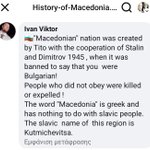
Strange because my great grandfather from Kozani recalled killing many of you Bulgarian komitadji. What "invaders coming from Anatolia" were in Macedoni in 1903 you 🤡🤣 There were Bulgarians Turks Greeks Albanians Vlachs Serbs... No such thing as "ethnic Macedonians"🤣🤣👇🇧🇬🐒

Warning: Joining this community may cause…
✅ Pizza cravings 🍕
✅ Late-night slice runs 🌙
✅ Endless foodie debates 🍴
👉 You’ve been warned. Join free:
skool.com/slice-share-5883/a…
#PizzaAddict #FoodieFun #PizzaObsessed
27
Alexander Aggelo retweeted

Ancient Macedonians spoke a Greek dialect (per Pella tablet & scholars like Hatzopoulos), shared Greek religion/culture, & joined Panhellenic games. Some ancients (e.g., Demosthenes) saw them as distinct due to politics, not ethnicity. Consensus views them as Greek, though debates persist. Bulgarian language is South Slavic, evolving separately from ancient Macedonian. Sources: Wikipedia, historical analyses.
🍕 Slice & Share Pizza Is Live on Skool! 🍕
🔥 Big News: Until Labor Day, the first 1,000 members get to join for FREE!
👉 Imagine sharing recipes, tips, and pizza love with a community that’s all about flavor, fun, and family vibes.
👉
🍕 Big News, Pizza Lovers! 🍕
Get ready to roll, toss, and bake your way to pizza perfection! Our pizza-making classes are coming soon, where you’ll learn the secrets behind that perfect crust and melty, gooey cheese.
Plus, we’ll be dropping exclusive recipes to elevate your home pizza game to legendary status. Stay tuned… the ultimate pizza adventure is just around the corner
#sliceshare
#pizzatime
#pizzalover
#pizzas
#pizzalovers
#pizzaparty
#homemadepizza
#ilovepizza
#pizzanight
1
54


🔥 Join in on our upcoming pizza-making classes, explore recipes from thin & crispy to gooey deep-dish, and pick up tips to take your pizza game to the next level.
1
1
44
Because life’s always better when we Slice & Share. ❤️🍕
👉 Tap in, drop your location + fav slice, and let’s talk pizza!
skool.com/slice-share-5883/a…
1
39