
IT Services Expert (30 years), Company Director, Crypto advocate, Entrepreneur and Rugby fan.
Dartford, South East
Joined July 2009
- Tweets595
- Following596
- Followers188
- Likes2.6K







Chris Camm retweeted

The British Army Red Devils doing us proud with the parachute flag drop 🇬🇧
Share this if you love our flag ❤️


Chris Camm retweeted

Sir Ian McKellen has made a statement on the tragic passing of Sir Patrick Stewart.
“He wore his heart on his sleeve, which made him a man to rely on, to admire and in my case, love.”


Chris Camm retweeted

Those fighting for our country need protection from lawfare. Our investigation reveals the legal torment suffered by the SAS. No one should be above the law but these brave soldiers have been badly mistreated:
thetimes.com/comment/the-tim…

Chris Camm retweeted

Imagine jumping from a helicopter behind enemy lines at night to capture an ISIS cell leader, not knowing if you'll come home. Then imagine coming home to a double murder investigation.
In July 2022, five SAS soldiers came under fire in a pitch-black field in Syria. The two people in front of them refused calls to surrender, and the soldiers believed their lives were in danger. They fired. An internal review cleared them on self-defence grounds.
Days after a BBC Panorama on the SAS, the Director of Special Forces overturned that review and referred them to the military police. The soldiers were arrested at secret bases in Syria and Iraq, and their homes were raided. Detectives asked for a sleeping baby to be moved so they could search under its cot.
Forty-eight hours after their police interviews, the same men were sent back to jump out of helicopters into enemy territory, with life sentences hanging over them.
Their legal support was one sheet of A4 listing legal aid solicitors, plus no more than £500. After nearly three years of limbo they were told there would be no charges, but the case could be reopened at any time. They have never been formally cleared.
All five have now left the Army. They've been through broken relationships, drinking, and in one case an attempted suicide. The SAS is losing more experienced soldiers than ever, and the Defence Secretary has refused to meet them.
This is outrageous. They aren't asking to be above the law. They're asking for a fair process. Our soldiers deserve protection from lawfare, not to be treated like criminals by the state they serve.
#SAS #Lawfare #StandWithOurSoldiers


Chris Camm retweeted
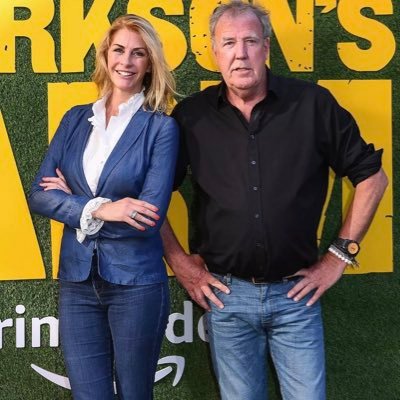
The original Top Gear that launched in 1977 was a useful programme. The 2002 reboot, cooked up by Clarkson and producer Andy Wilman, was something else: a studio with a live crowd, a mute racing driver in a white suit called The Stig, celebrities sent around a track in a “reasonably priced car,” and three presenters who treated cars as punchlines, characters and passports.
When James May replaced Jason Dawe in series two, the chemistry locked. Clarkson was the loud, power-obsessed ringmaster. Hammond was the sharp witted, enthusiastic hamster who would try anything. May was Captain Slow, the pedant with the soul of an engineer. Their arguments weren’t bits. They felt like three mates who actually liked each other and enjoyed winding each other up. The show became a sitcom that happened to have supercars in it.
Cars stopped being appliances. They became the excuse for “how hard can it be?” challenges, £1,500 sports cars that immediately exploded, races against trains and boats and planes, and specials that sent three middle-aged men across Botswana, Vietnam, Bolivia, Patagonia and the Arctic. The cinematography - helicopter shots, dusk light, engines echoing off mountains - made a car show look like cinema. People who had never cared about torque curves suddenly cared about whether Hammond would survive the next cheap-car challenge.
The numbers were absurd -
In the UK it regularly pulled six million-plus viewers and peaked near seven or eight million. At its height it was the BBC’s most valuable commercial property, worth tens of millions a year in overseas sales, DVDs, tours and merch. The UK version was sold into 170-plus countries. BBC figures put the cumulative worldwide audience around 350 million people - not every week, but over the life of the show, an astonishing reach for a programme that started as a poky little motoring magazine.
Sunday night became a ritual. Families who couldn’t name a camshaft still sat down together. Kids who would never own a Veyron learned what one sounded like. People in countries with no British TV tradition quoted “POWERRRR,” “Oh, cock,” and “Some say…” as if they were local slang.
They invented the template everyone still copies -
Look at YouTube car culture. Cinematic reviews. Personality-first presenting. Budget road trips with mates. “We bought three terrible cars and drove them across a continent.” That whole language exists because Clarkson, Hammond and May made it look like the most fun job on earth, years before every 22-year-old had a gimbal and a channel. Writers have argued, not unreasonably, that for a generation they mattered more to car enthusiasm than many of the great manufacturers. Ask a random person to name someone famous associated with cars. They will not say Enzo Ferrari. They will say Jeremy Clarkson.
They also made loving cars socially normal. You didn’t have to be a garage hermit. You could be a bloke who liked engines and jokes and scenery. The specials doubled as travel films. A lot of people booked flights to Vietnam or Botswana because three idiots on BBC Two made the world look reachable.
The impact wasn’t just ratings. It was companionship. For more than a decade, millions of people had three familiar voices in the living room every week. Bad day? Cheap-car challenge. Need wonder? Polar special. Need to laugh at human incompetence? Almost any episode. The friendship on screen - real enough that it survived crashes, controversies, a BBC firing and a move to Amazon - made the show feel like hanging out with people you knew.
They were messy. They caused diplomatic incidents. They said things that would not survive a modern compliance meeting. That is part of why they felt like television from a different era: three men who were allowed to be large, rude, authentic, sentimental and ridiculous in the same hour. When they finally signed off from The Grand Tour, it really did feel like the end of something that television no longer quite knows how to make.

Chris Camm retweeted

The idea that we now have a government that is actively discouraging people from improving their homes blows my mind. It seems care for your home, your street & your community is no longer regarded as a positive. You cannot tax people for improving their environment, it is wrong.
Chris Camm retweeted
Harriet is overjoyed to be on the cover of The Telegraph Magazine, representing women in farming all over the world!!!❤️

Chris Camm retweeted
When most people picture a British farmer, they still imagine a middle-aged man in a checked shirt. Harriet Cowan walked onto Clarkson’s Farm and quietly made that image seem outdated.
The Derbyshire farmer joined Season 4 of Jeremy Clarkson’s hit series as a stand-in while Kaleb Cooper was away on tour. Producers wanted someone who could actually run Diddly Squat — and they were keen for that person to be a woman who could do the job well.
Harriet did more than fill a gap. She arrived as a third-generation livestock farmer from Belper, someone who grew up on her grandfather’s beef and sheep farm, learned to drive a tractor at about 12, and spent years balancing NHS community nursing with early mornings and late nights on the land.
She had barely watched the show. She still put Clarkson in his place, fixed what needed fixing, and made competence look ordinary.
That last part is the point.
“If Harriet can do it, I can as well.”
Harriet has said she took the job partly so a young girl might see her and think exactly that.
Mothers have written to say their daughters now want to farm. Little girls ask for toy tractors at Christmas. Students at agricultural colleges name her when they talk about why they enrolled. At Suffolk Rural, farming student numbers have grown from five (all male) in 2004 to 115, with women making up nearly 40% of the current cohort - and Harriet is one of the role models they mention.
That matters because the official picture of farming is still heavily male. Defra figures put female principal farmers and holders at around 16%. Women have always farmed - wartime land work is proof - but ownership, succession, and public imagination have lagged behind the work itself.
Harriet’s answer to the stereotype is simple and hard to argue with:
“Just because I’m a small blonde who likes to curl her hair and wear make-up, it doesn’t mean I can’t be a farmer.”
She is not asking women to become someone else. She is showing that skill, stamina, and livestock knowledge do not come in one look.
Chris Camm retweeted

PLEASE 🙏 join me in remembering the Big Man, #rugby icon DODDIE WEIR, on his Birthday,
@jk_rowling....
#MND #MoreNeedsDoing!

Chris Camm retweeted

Every time England step onto the pitch in a World Cup, the country gears up for ninety minutes of hope, tension and national pride. But away from the stadiums and fan zones, another pattern plays out, one that’s far less celebrated and far more predictable.
Domestic violence rises when England play. It rises when they win, when they lose, and even when they draw. The data is consistent across multiple tournaments and multiple police forces. Abuse increases by more than a third when England lose. It still rises by over a quarter when they win. Alcohol‑related abuse jumps sharply. The day after a match, the risk remains elevated. Some forces report their busiest domestic abuse days of the entire year during England fixtures. NHS services see more injuries linked to domestic abuse during tournaments. None of this is new, and none of it is accidental.
Football doesn’t cause abuse. Abusers cause abuse. But the World Cup amplifies the risk. Heightened emotions, alcohol, gambling stress and late‑night fixtures all combine to create a pressure point that victims feel long after the final whistle.
For those of us working in healthcare, safeguarding, policing, education or community support, this is a warning. A reminder that preparation matters.
If you or someone you know is affected, support is available. The National Domestic Abuse Helpline is open 24/7 on 0808 2000 247. Men can contact the Men’s Advice Line on 0808 8010 327 or the ManKind Initiative on 01823 334244. LGBTQ+ victims can reach Galop on 0800 999 5428. Childline is available for young people on 0800 1111.
The World Cup is a celebration for many. For others, it’s a danger period.
#domesticviolence
#football #england
Chris Camm retweeted

We need your help to #SaveDenby!
We are sad to share that we may be forced to close and a British institution could be lost.
We need your help:
1. Share this post
2. Sign the government petition
3. Buy Denby
4. Visit us at the Pottery Village
Read more: denbypottery.com/pages/save-…


#traitors firstly, best series to date. Secondly, so happy that Rachel and Stephen won. Thirdly but should have been first. Claudia OMG this show was created for you. Nobody I mean Nobody does it better. You are the show. Thank you so much xx
1
128
