

@UVARadiology Abdominal Imaging #Radiologist Vice Chair, Quality and Safety |#AI| #PFCC| @MGHImaging alum |#GoHeels | #Radiology| Tweets are my own.
Charlottesville, VA
Joined April 2011
- Tweets4.2K
- Following807
- Followers2.3K
- Likes7K





Arun Krishnaraj MD MPH MBA retweeted

AI will not automate radiologists like you think
We have been talking for years now about AI automating jobs. Radiology has been a prime target, with Geoff Hinton once claiming, “people should stop training radiologists now, it’s just completely obvious that within five years, deep learning is going to do better than radiologists”, which is funny since he said that in 2016. There is now more demand for radiologists than ever, so clearly things did not turn out the way many thought. Here I will make a prediction that while radiology will change in the coming decade, radiologists will not be automated away any time soon. I will use radiology as an example but I think these principles will broadly apply to any field where demand can be elastic and quality can scale with increased intelligence.
First of all, we have seen in the short history of language models that there is a “jagged edge of intelligence”, where AI excels at verifiable tasks with a lot of data but is underwhelming on less common tasks. One thing most AI researchers underestimate about radiology is that it is actually extremely multi-task. There are at least a hundred conditions that can be diagnosed from x-rays alone, and thousands using CT and MRI. AI will first master common and easy-to-see conditions and it will not be as good as experts at less-common diseases just because there is less data for that. This jagged edge will certainly improve over time but this means that AI will certainly be used as a triage tool at first, rather than full automation in one go. I would guess that this process from solid triage tool to full automation would take 3-5 years in the best case scenario, because training AI to get all the edge cases right will be bottlenecked by data collection of rare diseases, and also because radiology isn’t currently a focus for frontier labs.
Second, there will be elastic demand for radiology as it gets cheaper per unit. I think elastic demand (“Jevons paradox”) is the most underrated phenomenon when people think about AI automation. In software, it is obvious that I have way more demand than before because Claude Code makes it so easy. These days I ask Claude Code to build a custom three-thousand line html viewer to help me visualize every little RL run that I do. The same thing will happen in radiology. If there is essentially no cost or latency of interpreting an MRI, a physician can order many scans preemptively to better diagnose a case. So with AI tools, a radiologist might have to read only 20% of inbound scans, but there might be 5x more scans inbound. Many developing countries have fewer than one radiologist per million people and they will also want to send a lot of radiology to be interpreted.
Longer term, cheap and fast radiology interpretation will also drive incentives to build cheaper radiology scanners. If an MRI had essentially no latency for interpretation, medical devices companies will want to build much cheaper MRI machines that can be used more frequently, perhaps even in the middle of a surgery. AI will accelerate the development of scanning technology, too. If a full body MRI was only $100 dollars I would totally want to get one every month instead of every two years. I can imagine a world where people get 10 or 100x the number of scans they do today, largely for preventative care, if radiology were 10-100x cheaper.
Third, even if we did have a model that could outperform the world’s best radiologists today, that would not be the end of all work on radiology. Medicine is a field of change. We may develop new treatment protocols that require reading radiology images in a way that radiologists currently aren’t used to. New scanners may reveal diseases that we cannot currently diagnose today with radiology alone. Some radiologists will change their work from reading scans to doing frontier research to advance our understanding of radiology and translate new knowledge into updated models.
Moreover, I am sure that we will ask for more out of our AI models than ever before. With a good flywheel, we may one day train AI models that can use radiology images to predict disease probabilities far into the future. With good prediction algorithms, cancer may be detected months earlier than we can detect it now. Society will invest a lot into this research and this will contribute even more to increased demand for radiology and the best AI around it.
On top of all of this, the medical system is typically slower to adopt new technology and has more regulation compared to technology companies. There is legacy infrastructure and medical centers need to constantly support patients which makes it hard to integrate new technology. This is even more true in developing countries. Moreover data access tends to be limited due to HIPAA, deidentification, IRBs, etc. So I think radiologists will be in demand for a while.
While some worry about radiology being totally automated, I think there is a more exciting future for radiology than ever before—one where there is more demand and we ask for more predictive power from our intelligence. This is similar to how many of us feel that programming will thrive more than ever before despite drastic change in the field. More generally, any domain where demand can be elastic and quality can scale with increased intelligence will, like radiology, similarly flourish with the development of AI. This is certainly a more exciting and nuanced future than what Hinton described in 2016!
(Finally, to be fair to Hinton, he did acknowledge in a recent podcast that he was wrong and also agrees with the elastic demand argument.)
Thanks @JayRothschild and @engyziedan for feedback on this post.
Arun Krishnaraj MD MPH MBA retweeted

Get your weekend started with #WeekendReads and the #ACRBulletin. From career insights to patient-focused lessons, this collection of articles brings a fresh perspective of medical students as they shape the future of the specialty.
Using AI as a second reader can help with mammography screening cases. ➡️ bit.ly/4dActGv
How can we introduce students to radiology early in their academic career? ➡️ bit.ly/3SZ7cNT
By using the patient's perspective, radiologists can develop a more patient-centered approach to care. ➡️ bit.ly/4bYrNKJ
Understanding the patient behind the scan can build better patient relationships. ➡️ bit.ly/4hYWB2w
@RadiologyACR @AKrishnarajMD @woojinrad @DaniaDaye @DrIanWeissman @HaleyLetterMD @koolkpMD

Such an honor to be back @UNCRadiology this week for the Joe KT Lecture. Dr. Lee taught me to look past the data to the humans behind it, a lesson I carried into talking about AI this week. Thank you @DrOlingerK for helping host me!

Thank you to Dr. Arun Krishnaraj for joining us this week at UNC for the Joseph K. T. Lee Grand Rounds and sharing his thoughtful perspective on “The Human Touch in the Age of AI.” It was an engaging, thought-provoking and timely discussion! @UNCRadiology @AKrishnarajMD

Arun Krishnaraj MD MPH MBA retweeted
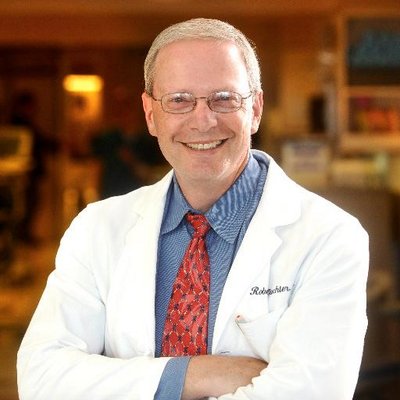
We're in the midst of a Category 5 AI backlash that will likely slow the progress of frontier models. Fine – the frontier can wait.
But given healthcare's problems with quality, safety, access, & cost, thoughtful adoption there can't.
My latest Substack:
robertwachter.substack.com/p…

Excellent perspective from the always sage @Bob_Wachter on how important and necessary AI is to address some major failings and inadequacies of our current system. With caution and discretion we must continue to deploy trusted AI in healthcare.

Now that we've hit Peak AI Backlash, I'm resurfacing my May Substack on what happens to healthcare AI in the face of a major AI backlash. Up until now, healthcare has been the one area in which the public has been unambiguously enthusiastic about AI.
substack.com/home/post/p-199…
Arun Krishnaraj MD MPH MBA retweeted

See you tomorrow at the Interventional Radiology Symposium!
Sign up: docs.google.com/forms/d/e/1F…
UVA Hospital
Sept. 12 | 9 a.m.–3 p.m.
#UVARadiology #IR #InterventionalRadiology #IRSymposiu
Thank you to all the residents and fellows who have taught me more than I ever taught them

Congratulations to Arun Krishnaraj, MD, MPH, MBA, recipient of the 2026 GME Master Educator Award from the UVA Office of Graduate Medical Education!
Read more: med.virginia.edu/radiology/2…
#UVARadiology #MedEd #GME #Radiology


Arun Krishnaraj MD MPH MBA retweeted
Congratulations to Arun Krishnaraj, MD, MPH, MBA, recipient of the 2026 GME Master Educator Award from the UVA Office of Graduate Medical Education!
Read more: med.virginia.edu/radiology/2…
#UVARadiology #MedEd #GME #Radiology
Arun Krishnaraj MD MPH MBA retweeted
In @WIRED, @StevenLevy dives into the "Will we need MDs?" debate, fueled by the recent @ZekeEmanuel @VinodKhosla @nealkhosla & @AbeBakerButler @JAMA_current article.
I'm quoted, and Zeke describes how his interest in AI vs. MD came from reading my book.
wired.com/story/ai-has-human…

Arun Krishnaraj MD MPH MBA retweeted

Geoffrey Hinton the renowned AI computer scientist and Nobel laureate said in 2016 he said we should stop training radiologists because deep learning would obviously surpass them within five years. Ten years later, a JAMA piece arguing AI will replace physicians has to REMOVE radiology out as the one domain where it can't make the claim stick. Meanwhile radiology went from "dying specialty" discourse to one of the hottest job markets in medicine. The tech consensus got the direction right and the target exactly backwards.
Quick lesson for everyone confused about why radiology didn't die. There's an old idea in robotics called Moravec's paradox. The stuff that feels hard to humans is easy for computers, and the stuff that feels easy to humans is nearly impossible for computers. A computer beat the world chess champion in 1997, and almost 30 years later no robot on earth can fold your laundry. The reason is evolution. Your brain spent hundreds of millions of years perfecting vision, movement, and picking things up without crushing them, so all of that feels effortless. Math and logic showed up "five minutes ago" in evolutionary time, so they feel hard to us, but that layer is thin and new, which makes it the easy part to copy in software. Now apply it to medicine. For a decade everyone swore radiologists would be replaced first because reading images looked like simple pattern matching, and now a JAMA paper arguing AI will outthink doctors has to admit radiology is the one place it can't make the claim stick. AI can already reason through a diagnosis, but nobody has a machine that can thread a catheter into a brain artery at 3 in the morning. The thinking was never the hard part. The hands were.
One honest caveat before radiologists celebrate too hard: read the disclosures. Neal Khosla runs Curai, an AI-first virtual care company, and Khosla Ventures is invested in OpenAI.

Arun Krishnaraj MD MPH MBA retweeted
Some thought AI would be the demise of radiologists, but instead, it has worked hand-in-hand with those in radiology. @waldchristoph and @asset25 take us through the specialty's AI journey. #ACRBulletin 🔗 bit.ly/4xieZZB

Arun Krishnaraj MD MPH MBA retweeted

Nearly 40% of radiologists surveyed say 21st Century Cures Act has increased job-related stress. @RadiologyACR @JACRJournal @AKrishnarajMD @UTSWMedCenter ow.ly/Po0h50X81nN

Arun Krishnaraj MD MPH MBA retweeted

Nearly 40% of radiologists surveyed say 21st Century Cures Act has increased job-related stress. @RadiologyACR @JACRJournal @AKrishnarajMD @UTSWMedCenter ow.ly/EWj150X81o4
Arun Krishnaraj MD MPH MBA retweeted

Thank you @29news for the opportunity to discuss gastroparesis care in our community!
Advanced treatment options are available right here in Charlottesville at @UVAHealth.
Ready to explore your options? We're here to help.
#Gastroparesis #cureGP
29news.com/video/2025/08/06/…

Arun Krishnaraj MD MPH MBA retweeted

UVA Health’s Dr. John Angle explains the president’s recent diagnosis of chronic venous insufficiency. uvatoday.me/46GtaNR
Arun Krishnaraj MD MPH MBA retweeted

New @AJR_Radiology Accepted Manuscripts:
"Clinical Decision Support"
🟡Point: By Drs Guenette & Lacson @BrighamRad
🟡Counterpoint: By Drs Moriarity & @AKrishnarajMD @AdvancedRad @UVARadiology
ajronline.org/doi/10.2214/AJ…
ajronline.org/doi/10.2214/AJ…

Arun Krishnaraj MD MPH MBA retweeted

The ISS is excited to announce our next webinar in the “Consciously Addressing Unconscious Bias" series.
🗓️Thursday, May 29th
⏲️5:00pm EST
Open to ISS Members and Non-Members, including #RadRes and #RadFellow.
Details below!
Registration: veritasamc.zoom.us/webinar/r…

Arun Krishnaraj MD MPH MBA retweeted
In late 2022, the ACR Commission on Patient- and Family-Centered Care (PFCC) Patient Engagement Committee created a series of animated videos to help patients understand imaging procedures they may be about to undergo. Since the launch, the program has gone above and beyond to help ease patient's tension, releasing over 40 new videos and even creating content in multiple languages. Look at how the program has progressed with the #ACRBulletin. bit.ly/4keOQnw @RadiologyACR @NinaVincoffMD @AKrishnarajMD @koolkpMD @pfccdirector @DrIanWeissman

Bittersweet night bidding farewell to our outstanding colleague @RachitaKhot . Dr. Khot has been a member of the @UVARadiology division for 14 years most recently serving as director of ultrasound. She is an excellent educator, researcher, and clinician; a true triple threat.


Enjoyed making this video with one of our awesome incoming @UVARadiology fellows Dr. David Ruohoniemi and current resident. As a specialty we must think strategically about potential disruption from many angles including NPRPs plus AI.

Growing imaging values and a radiologist shortage open the field to disruption by AI and NPPs. Arun Krishnaraj, MD, MPH discusses how radiologists should respond.
ajronline.org/doi/10.2214/AJ…