






Pinned Tweet
WHO GETS THE GOLDEN EGGS? 🪿🥚
Canton's institutional adoption is real. But who captures the value: those rewarded with $CC or those buying it?
SEC filings. Real numbers. Uncomfortable questions.
LOVE THE NETWORK. AUDIT THE TOKEN.

👇🏻🧵 1/3
CANTON CAN SUCCEED. YOU CAN GO BROKE BUYING $CC.
What if Canton becomes one of the world's most important financial networks… and you still lose money buying its token?
Imagine this.
Major banks start using Canton.
More and more transactions happen on the network.
Banks save millions.
Canton becomes a huge success.
But the CC you bought is worth less than you paid.
How is that possible?
Because a successful network and a profitable investment are NOT the same thing.
I'm not predicting anyone will go broke.
I'm challenging one very common belief:
"If Canton succeeds, CC must go up."
Let's test that idea with eight simple examples.
━━━━━━━━━━━━━━━━━━━━
1. THE RESTAURANT IS FULL. BUT YOU DON'T OWN IT.
Imagine the world's most popular restaurant.
Every table is booked. More customers arrive every day.
You buy the tokens people use to pay for their meals.
Great!
But owning those tokens doesn't mean you own the restaurant.
You don't receive a share of its profits.
And just because more people eat there doesn't mean someone will pay you more for your tokens.
More customers could increase demand for them.
But you still need to explain why their price should rise.
A fantastic business doesn't automatically mean a fantastic investment.
━━━━━━━━━━━━━━━━━━━━
2. WE'RE BURNING MILLIONS OF CC!
Imagine a factory making gold coins.
Every month, it creates 666 million coins.
Then it melts down 455 million.
Everyone cheers:
"Look how many coins we're destroying!"
But wait.
666 million created.
455 million destroyed.
That leaves 211 million MORE coins.
Now let's look at Canton.
According to our historical CC Space figures from November 13, 2026, at 14:04 CET, covering the previous 30 days:
NEW CC CREATED: 666.28 million.
CC DESTROYED: 454.63 million.
EXTRA CC: +211.65 million.
In crypto, creating new coins is called "minting."
Destroying them permanently is called "burning."
Both things happen in Canton.
Does that mean CC must fall?
No.
Does it mean everyone receiving new CC is selling?
No.
But it means we shouldn't celebrate the coins being destroyed without counting the new ones being created.
If a factory makes 666 toys and destroys 455, there are still 211 more toys than before.
The same basic arithmetic applies to CC.
━━━━━━━━━━━━━━━━━━━━
3. MORE MONEY SPENT. FEWER CC BURNED.
Imagine customers spend $100 using Canton.
The network uses a reference price of $0.10 per CC.
That means 1,000 CC are burned.
Now imagine customers spend $150.
That's 50% MORE spending!
But the network's CC reference price has doubled to $0.20.
How many CC are burned now?
Only 750.
Let's compare:
Spending: UP 50%.
CC reference price: UP 100%.
CC burned: DOWN 25%.
Sounds strange?
It's simple.
If one coin is worth twice as much, you need fewer coins to pay the same bill.
Canton's network fees are priced in dollars and converted into CC using the protocol's reference price.
This is just an example, not a prediction.
And notice something important: the reference price actually DOUBLED in this example.
So fewer coins burned doesn't mean CC is losing value.
It means something else:
MORE ACTIVITY DOESN'T ALWAYS MEAN MORE CC BURNED.
You have to look at how much money is spent, how much each CC is worth, and how many new CC are created.
━━━━━━━━━━━━━━━━━━━━
But here's another question.
Who receives all those new CC?
And what happens if they decide to sell?
👇🏻🧵 CONTINUED IN 2/3
🤖 Made with AI

👇🏻🧵 2/3 — THREAD CONTINUED
CANTON CAN SUCCEED. YOU CAN GO BROKE BUYING $CC.
Does Canton's success guarantee profits for CC buyers?
We've seen that a network can grow, burn millions of tokens, and still increase its net supply.
Now, who gets CC, who captures the value, and what does economic equilibrium really mean?
━━━━━━━━━━━━━━━━━━━━
4. SOME EARN CC. OTHERS BUY IT.
Imagine two people.
One earns 10,000 CC for providing a service.
The other spends their savings buying 10,000 CC, hoping the price rises.
One may sell to cover expenses. The other buys expecting a return.
Different incentives.
Canton rewards certain participants with newly minted CC.
How much do they sell, hold, or use?
We don't know. And we shouldn't pretend otherwise.
But if reward recipients sell, who's buying?
Minting doesn't automatically mean selling pressure. But potential supply matters.
━━━━━━━━━━━━━━━━━━━━
5. THE BANK SAVES MILLIONS. WHAT DO YOU GET?
Imagine a bank saving millions using Canton.
Great for the bank.
But does owning CC entitle you to those savings?
No.
What matters isn't just how many institutions use Canton.
It's how much they actually pay, how much demand for CC that creates, and whether that demand outweighs available supply.
Institutional adoption proves usage, not that CC is undervalued.
A bank can win without every CC buyer winning.
━━━━━━━━━━━━━━━━━━━━
6. AN EQUILIBRIUM PRICE ISN'T A GUARANTEE.
Someone calculates that a token should be worth $1.
You buy it.
Tomorrow, you need to sell, but buyers offer only $0.60.
Who's required to pay you $1?
Nobody.
Canton's BME aims for a dynamic balance between minting and burning.
There's a real stabilizing mechanism: when CC's conversion price falls, the same dollar-denominated fee burns more tokens.
But that's not a buyback promise, a guaranteed floor, or protection against losses.
A calculated price isn't a buyer willing to pay it.
━━━━━━━━━━━━━━━━━━━━
7. UNIVERSAL BURN: MORE BURN, MORE PROFIT?
Universal Burn could significantly improve Canton's economics.
CIP-0129 is approved, with a phased rollout planned to bring dedicated synchronizer traffic into the burn mechanism.
But approval isn't proof of economic impact.
Imagine a store announcing:
"Next year, we'll have twice as many customers!"
Before investing, you'd ask:
How much will they spend?
What discounts will they get?
Are they new customers or coming from another store?
How much additional profit will remain?
Universal Burn deserves the same scrutiny.
How much burning will be genuinely new?
What discounts will reduce effective fees?
How much traffic previously generated no burns, and how much may shift from activity already burning CC?
How will existing rewards be shared as more activity joins?
Importantly, CIP-0129 doesn't increase scheduled issuance or change reward-category allocations.
It also introduces potential CC collateral commitments.
Locked CC could reduce available supply temporarily. That's not burning, but it matters.
We need to measure how much gets locked, for how long, and whether total burning actually exceeds new minting.
A technical upgrade can succeed without guaranteeing investment returns.
APPROVING A MECHANISM IS ONE THING.
PROVING ITS ECONOMIC IMPACT IS ANOTHER.
━━━━━━━━━━━━━━━━━━━━
Now imagine Canton succeeds, major banks adopt it, and Universal Burn works.
Does that automatically make buying CC today a good investment?
👇🏻🧵 CONTINUED IN 3/3
🤖 Made with AI

1
5
381
👇🏻🧵 3/3 — FINAL PART
CANTON CAN SUCCEED. YOU CAN GO BROKE BUYING $CC.
Here's the biggest mistake an investor can make:
Being right about the future… but paying too much for it.
━━━━━━━━━━━━━━━━━━━━
8. YOU CAN BE RIGHT ABOUT CANTON AND STILL OVERPAY.
Imagine a bicycle shop.
Today it sells 10 bikes a month.
You believe that in five years it'll sell 100.
That's ten times more!
You decide to buy the shop.
But the owner asks such a high price that, for your investment to make sense, the shop would need to sell 200 bikes a month.
You were right about the growth.
The shop became much more successful.
But you still paid too much.
Now imagine Canton five years from now.
Network activity has exploded.
Major banks are using it.
Universal Burn is working.
Fees have grown.
Canton is a huge success.
But CC has barely increased in price because investors had already expected even more growth.
Did Canton fail?
No.
Was buying CC necessarily a great investment?
No.
YOU CAN BE RIGHT ABOUT CANTON'S FUTURE AND WRONG ABOUT THE PRICE YOU PAY FOR CC.
━━━━━━━━━━━━━━━━━━━━
NOW IMAGINE IT'S YOUR $10,000.
You worked hard for that money.
Before buying CC, you want to know what would need to happen to turn your $10,000 into $20,000.
"More banks are coming!"
That's not enough.
How much will they actually pay to use Canton?
How many CC will those payments destroy?
How many new CC will be created?
Who will need to buy CC, and why?
And how much of that future success is already included in today's price?
These are the questions that matter.
I'm NOT saying CC can't be a great investment.
I'm NOT saying Canton will fail.
I'm saying a great network doesn't automatically make its token a great investment at any price.
━━━━━━━━━━━━━━━━━━━━
MY CONCLUSION
Don't confuse these four things:
1. Canton becomes successful.
2. More people pay to use Canton.
3. Those payments improve the balance between CC created and CC destroyed.
4. Buying CC at today's price makes you money.
They're connected.
But they're NOT the same thing.
You can be right about the first three and completely wrong about the fourth.
And the fourth one is what determines what happens to YOUR money.
"Canton will succeed" and "buying CC at this price will be profitable" are two different bets.
YOU CAN BE RIGHT ABOUT THE FIRST AND LOSE MONEY ON THE SECOND.
LOVE THE NETWORK.
QUESTION THE PRICE.
PROVE THE VALUE.
━━━━━━━━━━━━━━━━━━━━
SOURCES AND EXAMPLES
Historical CC Space figures recorded on Friday, November 13, 2026, at 14:04 CET, covering the previous 30 days:
CC created: 666.28 million.
CC burned: 454.63 million.
Net increase: +211.65 million CC.
The examples are hypothetical, not price predictions. No sales are attributed to specific CC reward recipients.
TECHNICAL SOURCES
Canton Network — Tokenomics of the Global Synchronizer:
docs.canton.network/overview…
Canton Network — Canton Coin Tokenomics:
docs.canton.network/overview…
Canton Foundation — CIP-0129, Universal Burn:
github.com/canton-foundation…
🤖 Made with AI

8
304
FRIDAY $CC WATCH | 13 NOV 2026
CANTON IS WINNING. WHEN WILL $CC FEEL IT?
Fees in dollars fell. More CC was burned. And supply kept growing.
Since Nov 6, 30D traffic fees fell $2.29M and burn rose 8.42M CC. Net issuance fell from +222.99M to +211.65M CC. The 7D figure barely changed. The windows overlap, so we can’t isolate the effect of price.
📊 NOV 13 SNAPSHOT · 14:04 CET
CC Space data unless stated otherwise.
• Network 30D · 25.30M transactions, 77.1% private. 435,543 active ledger identities, 23,847 new.
• Network 7D · 5.42M transactions, 111,656 active identities.
• Traffic fees · $10.95M in 7D, $45.03M in 30D. Nov 12, last full UTC day · $1.428M.
• 7D · 164.89M CC minted, 119.28M burned, +45.61M net. Burn covered 72.3% of issuance.
• 30D · 666.28M CC minted, 454.63M burned, +211.65M net. Burn covered 68.2% of issuance.
• Price · $0.0886 vs $0.0978 on Nov 6 (−9.4%). 30D chart · −24.7%. Down 54.4% from the Feb 3, 2026 ATH of $0.1943.
People and entities can have multiple ledger identities. Net issuance is mint minus burn. Sales require separate evidence.
CC Space · CoinMarketCap ATH
🔥 UNIVERSAL BURN — CODE MERGED, DEPLOYMENT UNCONFIRMED
On May 15, Yuval Rooz called subnet burn a “top priority.” Draft #289 is still open. PRs #100 and #104 in canton-network/splice-multi-sync were merged, the latter on Nov 12 at 22:13 CET. MainNet deployment and additional burn remain unconfirmed.
The estimated start is Q1 2027. Volume pricing and commitment discounts are estimated for Q3 and require another CIP. In my view, that’s late. Institutional adoption is moving ahead while its additional burn remains unmeasured.
Yuval, May 15 · CIP-0129 · Draft #289 · PR #100 · PR #104
🏦 DTCC ADDS SOLANA TO ITS MULTICHAIN ROADMAP
On Nov 12, DTCC announced plans to add Solana in H2 2027. Canton and DTCC’s private Besu network were integrated at the Oct 28 launch, giving Canton a head start. DTC holds $114T in custody. The announcement gives no volume forecast by network.
Solana announcement · Oct 28 launch
🇯🇵 JAPAN MOVES FORWARD AND CAPCONNECT+ SETS A TARGET
Progmat and Digital Asset signed an MOU on Japanese government bonds. Nomura/BOOSTRY’s CIP-0130 was approved with up to 10 units of Super Validator weight tied to milestones. CapConnect+’s CIP-0131 was still up for a vote. Its first target is $100M in commercial paper, with both asset and cash legs settling on Canton if approved and delivered.
Progmat and Digital Asset · CIP-0130 · CIP-0131
There’s also something in its tokenomics that particularly concerns me. Fees are denominated in dollars. If CC rises, the same dollar bill burns fewer tokens.
NETWORK GROWTH DOESN’T AUTOMATICALLY MEAN MORE CC BURNED OR BETTER RETURNS FOR PEOPLE WHO BUY IT.
And what frustrates me most is how the story is being sold. Big names, Wall Street, trillions in transactions, spectacular figures… We keep putting out big institutional numbers, but we still need to see how they translate into CC purchases, additional burn, and changes in supply.
I’m concerned we’ll keep seeing small tokenomics tweaks, one after another, keeping investors hopeful without showing that the underlying problem has been solved.
I genuinely hope I’m wrong. If the results change, I’ll change my conclusion.
BUT BIG PROMISES ARE NO SUBSTITUTE FOR RESULTS.
CANTON IS MOVING FORWARD. NOW WE WANT TO MEASURE WHAT CHANGES FOR PEOPLE WHO BUY CC.
LOVE THE NETWORK.
AUDIT THE TOKEN.
PROVE THE VALUE CAPTURE.
👇🏻🧵
🤖 Made with AI

3
12
552
UNIVERSAL BURN — SHOW US THE MATH
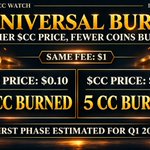
With the same $1 fee, a $0.10 CC price means 10 CC are burned. At $0.20, only 5 CC are burned. With the bill fixed in dollars, doubling the token price halves the number of coins burned. That’s how dollar-denominated fees work today. Universal Burn would extend that mechanism to dedicated synchronizer traffic.
NOVEMBER 6 → NOVEMBER 13
• 30D traffic fees · $47.32M → $45.03M
• 30D total burn · 446.21M → 454.63M CC
• 7D burn / issuance · 71.4% → 72.3%
• 30D burn / issuance · 66.7% → 68.2%
Of the 454.63M CC burned in the latest 30D snapshot, 454.28M CC were burned for traffic. The two snapshots show that dollar spending and token burn can move in different directions. We need more information to tell how much of the change came from price. CC Space
The draft proposes recording traffic, calculating the bill, and burning CC after the traffic is used. Once it goes live, I want to see how much is billed after discounts, when the CC are burned, and how much burn is genuinely additional. Moving traffic that already paid on the Global Synchronizer doesn’t add burn by itself. Draft PR #289
👇🏻🧵
🤖 Made with AI

2
3
117
WHO PAYS FOR CANTON’S SUCCESS?
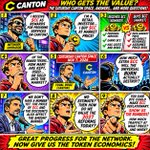
In February, someone asked Yuval where the price of $CC was going. He said he didn’t know and pointed to the burn-to-mint chart. Let’s look at that same math. In the latest 30-day snapshot, supply increased by 211.65M CC, compared with 222.99M CC in the previous snapshot. Yuval’s original post
For DTCC, CantonNews identified a one-off purchase of roughly $79,000 in traffic capacity by a DTCC node on October 26. How much of that capacity was used, and whether the CC were bought on the market to pay for it, remain unverified. CantonNews analysis
For Progmat, Nomura/BOOSTRY, and CapConnect+, I found no publicly verifiable figures for paid traffic, incremental burn, or new market purchases attributable to those initiatives. The notional value tells us how much the asset is worth. The traffic bill tells us how much was paid to use the network.
The next two halvings of the issuance cap are expected in 2029 and 2034. In the meantime, these are my questions for @CantonNetwork and @CantonFdn. CC Space issuance schedule
HOW MUCH ARE INSTITUTIONS PAYING TO USE CANTON TODAY?
HOW MANY ADDITIONAL CC DOES THAT USAGE BURN?
BY HOW MUCH DOES THAT REDUCE NET ISSUANCE?
🤖 Made with AI

1
84
🚨 CANTON: BIG NAMES. BILLIONS. WHAT ABOUT YOUR MONEY? 🧵 1/2
DTCC. Broadridge. Wall Street.
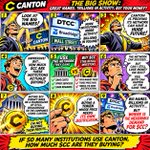
Canton showcases institutional adoption, enormous financial activity and impressive partnerships.
And the network’s progress is impressive.
BUT NETWORK SUCCESS DOES NOT GUARANTEE VALUE CAPTURE FOR $CC BUYERS.
After Saturday’s Canton Space with @yuvalrooz, there are questions the Canton team needs to answer.
🏦 1. WHERE IS THE REAL $CC DEMAND?
Billions in assets or transactions on Canton do NOT mean billions spent buying CC.
Institutions can benefit from Canton without purchasing equivalent amounts of its token on the market.
HOW MUCH $CC ARE THESE BIG NAMES ACTUALLY BUYING?
🔥 2. WHY CELEBRATE BURN WITHOUT SHOWING MINT?
CC Space — 30 days ending Nov 6:
• Minted: 669.20M CC
• Burned: 446.21M CC
• NET ISSUANCE: +222.99M CC
ALMOST 223 MILLION MORE CC CREATED THAN DESTROYED!
Minting doesn’t automatically mean selling. But celebrating burn without showing issuance doesn’t tell the full economic story.
SHOW BOTH SIDES OF THE EQUATION.
⚠️ 3. WHY DOES CANTON’S BALANCING MECHANISM WEAKEN TOKEN BURN PRECISELY WHEN $CC RISES?
EVERY RETAIL BUYER SHOULD UNDERSTAND THIS.
Imagine Canton succeeds.
Institutions arrive. Traffic surges. The network grows rapidly. CC attracts buyers and its price rises.
GREAT!
BUT THEN THE ECONOMIC MECHANISM KICKS IN.
Traffic fees are denominated in USD. The higher CC trades, the fewer tokens are burned per dollar of traffic.
Simplified example, assuming the entire fee is burned:
• CC at $0.10 → $100 burns 1,000 CC
• CC at $0.20 → $100 burns 500 CC
THE PRICE DOUBLES. THE SAME BILL BURNS HALF THE TOKENS.
And here’s the paradox:
IF CANTON’S BILLABLE ACTIVITY DOUBLES AND CC’S PRICE ALSO DOUBLES, THE NUMBER OF TOKENS BURNED DOES NOT INCREASE.
TWICE THE TRAFFIC REVENUE. NOT ONE EXTRA CC DESTROYED!
Meanwhile, reward issuance can continue.
DO YOU SEE THE PROBLEM?
This mechanism doesn’t prevent CC from rising. But it dampens the effect of network growth on token supply reduction.
THE NETWORK GROWS. THE PRICE RISES. BURN PER DOLLAR FALLS. ISSUANCE CONTINUES.
AND RETAIL?
@CantonNetwork, @CantonFdn, @yuvalrooz:
WHY PRIORITIZE THIS COST-BALANCING MECHANISM WITHOUT DEMONSTRATING THAT IT ALSO DELIVERS ATTRACTIVE VALUE CAPTURE FOR CC BUYERS?
Are alternatives being studied? Where are the simulations?
WE ARE NOT ASKING YOU TO MANIPULATE THE PRICE.
WE ARE DEMANDING AN EXPLANATION FOR WHY NETWORK GROWTH DOESN’T NECESSARILY PRODUCE PROPORTIONALLY GREATER TOKEN BURN AS CC APPRECIATES.
👇🏻🧵
🤖 Made with AI


🧵 CANTON: BIG NAMES. BILLIONS. WHAT ABOUT YOUR MONEY? — 2/2
💰 4. WHO GETS PAID — AND WHO PAYS?
Operators and applications can receive CC rewards for providing services. They also bear costs and risks.
RETAIL BUYS CC AT MARKET PRICE.
Some earn tokens by contributing to the network. Others risk their own money to acquire them.
How much rewarded CC is held, used or sold?
Who absorbs that supply?
Where is the recurring demand?
I DON’T WANT TO BE EXIT LIQUIDITY FOR THOSE RECEIVING CC REWARDS.
I’m not claiming every recipient sells. I’m demanding transparency to assess that risk.
⏳ 5. YUVAL, WHERE ARE THE UNIVERSAL BURN NUMBERS?
During the November 7 Saturday Canton Space, a participant asked how much additional CC CIP-0129 would burn.
Yuval explained that token price and discounts affect the outcome.
BUT HE COULD NOT PROVIDE A QUANTITATIVE ESTIMATE.
He also suggested DTC could eventually generate enough activity to make CC deflationary.
HOW MUCH PAID TRAFFIC WOULD DTC NEED TO ACHIEVE THAT?
At what price? With which discounts? What issuance? And when?
Universal Burn has phases planned for 2027, but it does not itself change scheduled issuance.
PROMISES FOR 2027. POSITIVE NET ISSUANCE TODAY.
🎙️ Saturday Canton Space — Nov 7, 2026:
🥚 THE GOLDEN GOOSE
Canton shows us a growing golden goose.
Institutions use the network. Operators earn rewards. Financial activity expands.
BUT WHO GETS THE GOLDEN EGGS?
And how much of that value actually reaches the people buying $CC?
⸻
TO @CantonNetwork, @CantonFdn AND @yuvalrooz:
Keep building. Keep attracting institutions. Keep celebrating adoption.
BUT STOP PRESENTING NETWORK SUCCESS AS IF IT AUTOMATICALLY JUSTIFIES BUYING CC.
We want verifiable numbers:
• Actual token demand.
• Mint versus burn.
• Rewards and observable selling pressure.
• Burn at different CC prices.
• Value-capture scenarios and timelines.
• An economic roadmap that considers retail buyers.
WE ARE NOT ASKING YOU TO GUARANTEE THE PRICE.
WE ARE ASKING YOU TO PROVE HOW CANTON’S GROWTH CAN TRANSLATE INTO VALUE FOR $CC.
Because Canton could become extraordinary financial infrastructure…
AND CC COULD STILL BE A BAD INVESTMENT FOR RETAIL.
THE NETWORK CAN WIN WHILE ITS TOKEN BUYERS LOSE.
WHY SHOW US THE BIG NAMES, BUT LEAVE RETAIL TO FIGURE OUT THE TOKEN ECONOMICS ALONE?
❤️ LOVE THE NETWORK.
🔍 AUDIT THE TOKEN.
🔥 PROVE THE VALUE CAPTURE.
I HOLD $CC. THAT’S EXACTLY WHY I’M ASKING. teapawt.net/yuvalrooz/status/21191…
🤖 Made with AI


1
144
CANTON: THE OTHER HALF OF THE STORY 🥚
Canton Network amplified CertiK's positive DeFi headline.
But the original analysis told a more nuanced story.
📈 THE HEADLINE
• TVL grew nearly 70%, from approximately $8M to $13.7M.
• DEX fees increased 80%, reaching $349K.
Impressive progress. Worth celebrating.
BUT DID YOU READ THE FULL ANALYSIS?
🔍 THE OTHER HALF
CertiK also reported:
• Total DEX trading volume declined.
• Temple accounted for roughly 85% of DEX volume.
• Temple represented approximately 54% of TVL.
• Just four protocols held around 98% of TVL.
YES, TVL AND FEES GREW.
BUT VOLUME FELL AND ACTIVITY WAS HIGHLY CONCENTRATED.
CertiK didn't hide these facts.
Canton highlighted the growth and linked to the original analysis. The less flattering figures were in the thread, not in the amplified headline.
THAT DISTINCTION MATTERS.
And there's another question for anyone buying $CC:
HOW DOES THIS ACTIVITY TRANSLATE INTO REAL DEMAND FOR THE TOKEN?
More TVL doesn't automatically mean more CC purchases.
More DEX fees don't automatically mean more CC burned.
And institutional adoption doesn't guarantee higher returns for token buyers.
🔥 THE TOKEN ECONOMICS
CC Space | 30 days ending Nov 6, 2026:
• 669.20M CC minted
• 446.21M CC burned
• +222.99M CC net issuance
More CC were created than destroyed during that period.
That doesn't mean those tokens were sold.
But it's essential context when discussing CC's economics.
🥚 THE GOLDEN GOOSE
Canton's golden goose is growing.
BUT WHO GETS THE GOLDEN EGGS?
Who receives the rewards?
Who actually buys CC?
How much of that success reaches people buying the token in the market?
I want Canton to succeed.
But investors deserve the complete picture, not just the most exciting headline.
THE HEADLINE WAS POSITIVE.
THE FULL ANALYSIS WAS MORE NUANCED.
THE INVESTMENT QUESTION STILL NEEDS ITS OWN ANSWER.
❤️ LOVE THE NETWORK.
🔍 AUDIT THE TOKEN.
🔥 PROVE THE VALUE CAPTURE.
$CC
Original CertiK analysis:
Canton Network post:
teapawt.net/CantonNetwork/status/2…
teapawt.net/CertiKCommunity/status…
🤖 Made with AI


DeFi on @CantonNetwork is growing.
Its TVL rose from $8M to $13.7M over the past 30 days, up 70%.
Track Canton on Skynet and read on for the breakdown 🧵👇: skynet.certik.com/projects/c…

🚨 FRIDAY $CC WATCH | NOV 6, 2026
CANTON IS WINNING.
BUT WHO CAPTURES THE VALUE?
🏦 DTCC. ⚖️ SEC. 🔥 Universal Burn.
Institutional adoption is accelerating. But network success does not automatically translate into returns for those buying $CC.
━━━━━━━━━━━━━━
📊 1. THE FOUR SIGNALS
━━━━━━━━━━━━━━
CC Space | Nov 6 | Rolling windows
① NETWORK
30D: 26.3M transactions (20.3M private), 464K active ledger parties.
7D: 6.4M transactions.
Ledger parties ≠ unique users.
Activity ≠ net external CC demand.
② FEES
30D: $47.32M
7D: $10.99M
Fees drive burn, but don't reveal when CC was purchased or how much new buying occurs.
③ MINT / BURN
30D:
Mint 669.20M | Burn 446.21M
Burn/Mint 66.7%
Net +223M CC
7D:
Mint 159.30M | Burn 113.76M
Burn/Mint 71.4%
Net +45.5M CC
The 7D ratio improved, but overlapping windows don't prove a lasting trend.
⚠️ NET ISSUANCE IS NOT PROOF OF SALES.
④ PRICE
$0.0978 | 30D: −17.4%
NETWORK SUCCESS ≠ TOKEN RETURNS.
━━━━━━━━━━━━━━
⚖️ 2. SEC: PROGRESS, NOT PROFITS
━━━━━━━━━━━━━━
On Nov 3, SEC Corporation Finance staff issued a no-action response concerning CC, based on Digital Asset's representations.
Important regulatory progress, but not a final Commission ruling or an investment guarantee.
WHO EARNS CC AS REWARDS?
WHO BUYS IT AT MARKET PRICE?
━━━━━━━━━━━━━━
🔥 3. UNIVERSAL BURN
━━━━━━━━━━━━━━
CIP-0129 aims to extend CC burn to dedicated synchronizer traffic.
Estimated rollout:
• Phase 1: Q1 2027
• Pricing phase: Q3 2027
Neither date is guaranteed. Scheduled issuance and reward splits remain unchanged by this CIP.
We must distinguish genuinely new burn from migrated traffic and account for discounts.
If CC doubles in price, the same USD fee burns roughly half as many CC.
LOCKED CC IS NOT BURNED CC.
━━━━━━━━━━━━━━
🥚 4. THE GOLDEN GOOSE
━━━━━━━━━━━━━━
Participants may earn CC rewards and service revenue.
Market buyers pay for CC and bear price risk.
Different economics. No accusation of wrongdoing.
How much rewarded CC is monetized?
How much external demand absorbs it?
WHO GETS THE GOLDEN EGGS?
━━━━━━━━━━━━━━
🏦 5. DTCC: FOLLOW THE MONEY
━━━━━━━━━━━━━━
DTCC's Tokenization Service initially integrates Canton AND a private Besu network.
Eligible assets ≠ tokenized assets ≠ CC fees or burn.
Show actual attributable usage and burn.
━━━━━━━━━━━━━━
🧮 6. THE BUYER'S EQUATION
━━━━━━━━━━━━━━
Burn alone is insufficient.
We must measure minting, rewards, monetization, external purchases, inventories, discounts and available supply.
IF CANTON ACTIVITY GROWS 10×, HOW MUCH DOES NET EXTERNAL CC DEMAND GROW?
━━━━━━━━━━━━━━
🎯 7. FIVE QUESTIONS
━━━━━━━━━━━━━━
① How much CC is bought externally for fees?
② How much rewarded CC is monetized?
③ What incremental burn will CIP-0129 deliver?
④ How much adoption already generates fees?
⑤ Will Canton publish regular reconciliations of mint, burn, rewards and external demand?
WE WANT TRANSPARENCY, NOT PRICE SUPPORT.
━━━━━━━━━━━━━━
🚨 THE BOTTOM LINE
━━━━━━━━━━━━━━
I believe in Canton.
But institutional adoption is a headline.
VALUE CAPTURE IS AN EQUATION.
Don't confuse the two.
❤️ LOVE THE NETWORK.
🔍 AUDIT THE TOKEN.
🔥 PROVE THE VALUE CAPTURE.
@YuvalRooz @CantonNetwork
@ShaulKfir @wesarn_real
$CC
🧵 3 replies: rewards, Universal Burn and the buyer's bill.
🤖 Made with AI

2/3 🔥 UNIVERSAL BURN
SHOW US THE EQUATION
━━━━━━━━━━━━━━
CIP-0129 aims to bring dedicated synchronizer production traffic into CC's burn-and-reward mechanism.
A genuine structural improvement.
But projected benefits are not yet measured results.
━━━━━━━━━━━━━━
🔥 FOUR CRITICAL VARIABLES
━━━━━━━━━━━━━━
① INCREMENTAL BURN
How much spending previously outside the burn mechanism will genuinely start burning CC?
② DISCOUNTS
What will effective network spending be after interim and future discounts?
③ REWARDS
How much CC will be distributed as rewards, and how much might be monetized?
④ TOKEN PRICE
If CC doubles in price, the same dollar-denominated fee burns approximately half as many tokens.
━━━━━━━━━━━━━━
More activity does not automatically mean proportionally more CC burned.
And locking CC is not the same as destroying it.
Estimated rollout:
• Phase 1: Q1 2027
• Phase 2 pricing: Q3 2027
Neither date is guaranteed.
UNIVERSAL BURN COULD BE TRANSFORMATIVE.
BUT WE NEED THE NET ECONOMIC IMPACT.
NOT JUST THE HEADLINE.
LOVE THE NETWORK.
AUDIT THE TOKEN.
PROVE THE VALUE CAPTURE.
$CC 🔥
🤖 Made with AI

1
117
3/3 💰 WHO PAYS THE BILL
FOR CANTON'S SUCCESS?
━━━━━━━━━━━━━━
📊 THE 7-DAY EQUATION
━━━━━━━━━━━━━━
Mint: 159.30M CC
Burn: 113.76M CC
Burn/Mint: 71.4%
Net issuance: ≈45.5M CC
The 7D burn/mint ratio exceeds the 30D ratio.
An encouraging signal, but not proof of a sustained trend.
IMPORTANT:
NET ISSUANCE IS NOT PROOF THAT THOSE TOKENS WERE SOLD.
It means actual minting exceeded burning.
━━━━━━━━━━━━━━
🏦 THE BIGGER QUESTION
━━━━━━━━━━━━━━
DTCC could be a major success.
Universal Burn could improve CC's economics.
Regulatory clarity could accelerate adoption.
But none replaces transparent economic accounting.
HOW MUCH SUSTAINABLE EXTERNAL DEMAND IS CANTON ACTUALLY GENERATING?
━━━━━━━━━━━━━━
🎯 A QUESTION FOR CANTON
━━━━━━━━━━━━━━
@YuvalRooz @CantonNetwork
Would you publish a periodic reconciliation of:
① Actual minting
② Actual burning
③ Rewards distributed and monetized
④ External CC purchases
⑤ Changes in available supply
That would be a powerful commitment to transparency.
We are not asking for price guarantees.
WE ARE ASKING FOR VERIFIABLE DATA.
━━━━━━━━━━━━━━
WORLD-CLASS FINANCIAL INFRASTRUCTURE DESERVES WORLD-CLASS ECONOMIC TRANSPARENCY.
I DON'T WANT TO BE EXIT LIQUIDITY.
I WANT TO UNDERSTAND WHO CAPTURES THE VALUE.
❤️ LOVE THE NETWORK.
🔍 AUDIT THE TOKEN.
🔥 PROVE THE VALUE CAPTURE.
$CC
🤖 Made with AI

1/3 🧵 $CC: REWARDS TODAY. REFORMS PLANNED FOR 2027. WHAT ABOUT VALUE FOR BUYERS?
Canton is demonstrating that it can build important infrastructure.
But buying CC does not give you a share of the profits earned by the companies using it.
And the price demands that we stop confusing network success with token returns.
Trailing 30-day performance in USD. CoinGecko snapshot, November 2, 2026, at 14:42 UTC:
• BTC: −8.23%.
• ETH: −14.75%.
• CC: −22.25%.
CC’s percentage decline was approximately 2.7 times Bitcoin’s and 1.5 times Ethereum’s.
That does not establish a single cause. But it demands explanations beyond another institutional logo.
@YuvalRooz @ShaulKfir @CantonFdn @CantonNetwork @neperien @waynecollier111 @wesarn_real
I invite you to address the economics in this thread. If there are errors, I will correct them. If the analysis is accurate, explain how these tensions will be addressed and how results will be measured.
A GREAT NETWORK DOES NOT GUARANTEE A GREAT INVESTMENT.
A company can save money using Canton.
An operator can earn revenue and rewards.
Someone buying CC can still lose money.
All three outcomes can coexist.
Answering questions about the token by listing banks and partnerships does not answer this:
WHAT ECONOMIC VALUE REACHES CC BUYERS, HOW MUCH, AND WHEN?
Some participants have already monetized CC.
Broadridge disclosed that it began converting CC into cash nearly immediately after receiving them during the first quarter of its fiscal 2026 and continued doing so periodically throughout the second quarter.
That does not establish current selling. It establishes that monetization has already occurred for a significant participant.
Operating involves costs and risks. Rewards should compensate a contribution.
But receiving CC for providing services and buying it with your savings are different economic positions.
NO PRESALE DOES NOT ELIMINATE CONCENTRATION.
Grayscale’s June 5, 2026 S‑1 reported that the largest 100 wallets held approximately 89% of circulating CC.
That is historical, not a current measurement. Wallets are not necessarily individual owners: custodians can represent many customers, and one entity can control several wallets.
Precisely why ownership, restrictions, and potential selling capacity deserve scrutiny.
The absence of a presale does not demonstrate widely distributed ownership.
That is the central question in “The Golden Goose”:
WHERE IS THE BETTER ECONOMIC OPPORTUNITY—BUYING CC OR RECEIVING IT?
Next: the mechanism every CC buyer needs to understand. ↓
teapawt.net/akyra_0/status/2115067…
🤖 Made with AI


WHO GETS THE GOLDEN EGGS? 🪿🥚
Canton's institutional adoption is real. But who captures the value: those rewarded with $CC or those buying it?
SEC filings. Real numbers. Uncomfortable questions.
LOVE THE NETWORK. AUDIT THE TOKEN.
2/3 WHEN CC’S PRICE RISES, THE SAME DOLLAR SPENDING BURNS FEWER TOKENS.
Traffic fees are denominated in dollars and paid by burning CC.
When CC rises, fewer tokens are needed to pay the same bill.
A simple example, holding other conditions constant:
A $100 bill:
• CC at $0.10: 1,000 CC burned.
• CC at $0.20: 500 CC burned.
THE PRICE DOUBLES.
THE NUMBER OF TOKENS BURNED HALVES.
Now imagine spending also doubles, from $100 to $200, while CC rises from $0.10 to $0.20.
Once again, 1,000 CC are burned.
SPENDING DOUBLES.
THE NUMBER OF CC REMOVED FROM CIRCULATION DOES NOT INCREASE.
That is the braking effect I question.
A price increase reduces the tokens burned per dollar spent. It weakens the scarcity effect that burning could otherwise contribute to reinforcing that increase.
It does not create an automatic price ceiling. Its effect on the market price also depends on demand and available supply.
But it exposes an asymmetry:
Institutional users retain a predictable dollar bill. Buyers need spending to grow sufficiently relative to price and issuance.
USER COST PREDICTABILITY IS BUILT INTO THE DESIGN.
THE ECONOMIC BENEFIT FOR BUYERS REQUIRES A SEPARATE DEMONSTRATION.
If price doubles, spending must also double just to maintain the same number of CC burned, holding other conditions constant.
And new issuance still needs to be considered.
This is why more institutions, more transactions, or more assets do not automatically establish stronger token scarcity.
The relevant question is how much additional paid activity they generate, how much CC that spending burns, and how those burns compare with issuance.
“More adoption will compensate” is a hypothesis.
Show the spending required.
Show the assumptions.
Show the timeline.
Show what changes if the results fall short.
Explaining why the network needs CC is not enough.
EXPLAIN WHY HOLDING IT MAKES ECONOMIC SENSE FOR BUYERS AT THE PRICE THEY PAY.
Next: the actual supply balance, the reforms, and who bears the risk while waiting. ↓
🤖 Made with AI

1
3
157
In the 30-day window viewed on CC Space on November 2:
• Minted: 679.36 million CC.
• Burned: 444.98 million.
• Net supply increase: 234.38 million.
FOR EVERY 100 CC BURNED, APPROXIMATELY 153 WERE CREATED.
Burning offset 65.5% of the tokens issued. The remaining 34.5%—234.38 million CC—increased supply.
That does not mean all those tokens were sold. It means burning did not offset new issuance during that period.
Celebrating burn without showing issuance tells only half the story.
LOCKING IS NOT BURNING.
A locked token still exists.
Locking can temporarily reduce supply available for sale. Its future effect depends on duration, conditions, and any restrictions that remain when the lock ends.
We need to know how much supply is available today and how much could become available tomorrow.
THE REFORMS ADDRESS A REAL GAP.
CIP‑0129 explains that traffic on dedicated synchronizers historically paid license fees to Digital Asset without burning CC for that traffic.
Economic activity existed within Canton without contributing to that burn.
Universal Burn seeks to change this. That is progress.
But it leaves issuance and the reward split unchanged. Expanding burn does not, by itself, demonstrate that the correction will be sufficient.
Its estimated schedule:
• Q1 2027: Universal Burn with interim discounts.
• Q3 2027: Volume pricing and commitment discounts, subject to another proposal.
These are estimates, not deadlines. Implementation, customer transitions, and pricing details remain to be completed.
AN APPROVED REFORM IS NOT AN ECONOMIC IMPROVEMENT ALREADY DELIVERED.
BEFORE BUYING, DEMAND THE COMPLETE PICTURE.
Concentration.
Issuance exceeding burn.
Fewer tokens burned for the same spending when CC rises.
Locked supply that still exists.
Rewards being distributed today.
Reform outcomes still to be demonstrated.
Every point deserves an answer.
“Canton will grow” is incomplete.
How much additional spending will it generate?
How much burn will remain after discounts?
What issuance will accompany it?
What supply could reach the market?
When will results be measured?
What will change if they fall short?
Infrastructure designed to solve institutional problems can be excellent for its users.
Its appeal as an investment for retail buyers requires its own evidence.
REWARDS EXIST TODAY.
REFORM OUTCOMES REMAIN PENDING.
BUYERS BEAR PRICE RISK WHILE THEY WAIT.
Retail patience cannot indefinitely substitute for demonstrated value.
YOU CAN BELIEVE IN CANTON AND QUESTION BUYING CC. THERE IS NO CONTRADICTION.
THE NETWORK IS ALREADY DEMONSTRATING THAT IT WORKS.
HAS THE TOKEN DEMONSTRATED WHY IT DESERVES YOUR MONEY?
🤖 Made with AI

2
84
🚨 FRIDAY $CC WATCH — OCTOBER 30, 2026
WALL STREET IS ARRIVING. $CC SUPPLY IS STILL GROWING.
DTCC has launched its tokenization service, integrated with Canton and Besu. CNTN is preparing tokenized shares. Institutional infrastructure is advancing.
These are real milestones.
But the network’s success must also be examined through the token’s economics.
WALL STREET ALREADY HAS THE HEADLINE.
HOLDERS WANT ITS CONTRIBUTION TO BURN MEASURED.
📊 LAST 30 DAYS
🪙 Mint: 678.57M CC.
🔥 Burn: 440.13M CC.
📈 Net issuance: +238.45M CC, as reported by the dashboard.
For every 100 CC minted, approximately 65 were burned.
The remaining 35.1% of minting was not offset by burning.
Compared with our October 23 snapshot:
• Mint: −0.23%.
• Burn: +0.03%.
• Net issuance: −0.71%.
There is an improvement. It is small. Net issuance remains positive.
🔎 LAST 7 DAYS
Mint: 168.02M CC.
Burn: 105.15M CC.
Net issuance: +62.87M CC.
Burn covered approximately 62.6% of minting. Net issuance remained positive.
Coverage was below the 64.9% recorded over the monthly window.
🌐 MEASURED ACTIVITY
Traffic fees: $49.45M over 30D and $10.50M over 7D.
Transactions: 26.6M over 30D and 6.2M over 7D.
Private share: 75.3% and 77.7%, respectively.
💵 DISPLAYED PRICE
$0.0963.
−7.3% over 7D.
−24.5% over 30D.
These figures do not establish that issuance alone explains the price decline. They do show institutional progress coexisting with expanding supply.
That is the asymmetry we need to discuss:
Eligible participants receive rewards today.
Holders remain exposed to price movements and supply growth today.
A sustained reduction in net issuance remains to be demonstrated.
HOW MUCH ADDITIONAL BURN DO INSTITUTIONS GENERATE, AND HOW MUCH DOES IT REDUCE NET ISSUANCE?
Recognising launches and demanding economic results are entirely compatible.
THE LAUNCH IS THE HEADLINE.
ATTRIBUTABLE BURN IS THE EVIDENCE.
MINT − BURN IS THE SUPPLY BALANCE.
LOVE THE NETWORK. AUDIT THE TOKEN.
Source: CC Space / ITRocket — cc.itrocket.space. Screenshots taken October 30, 2026, approximately 14:30–14:35 CET. Rolling windows including a partial October 30. Figures rounded; net issuance as reported by the dashboard.
🤖 Made with AI

🪙 BROADRIDGE: THE REWARDS ALREADY HAVE AN ACCOUNTING RECORD
Broadridge provides concrete figures for examining $CC’s institutional economics.
Its FY2026 disclosures, as of June 30, report:
• Approximately 1.5B CC.
• Fair value: $216.1M.
• Cost basis: $13.3M.
• Approximately 1.3B restricted CC, valued at $189.9M.
The implied valuation is approximately $0.144 per CC.
It recognised $16.5M in revenue related to its Canton activity and $58.4M in realised gains related to CC. These are different accounting categories.
Broadridge has disclosed converting CC earned as rewards into cash.
Therefore, “institutions never monetise their tokens” is not a defensible claim.
It also disclosed contributing 342M CC, then valued at $53.1M, in exchange for instruments linked to CNTN. That transaction must be distinguished from a spot sale on an exchange.
🔒 LOCKUPS MATTER
They constrain immediate liquidity and can align incentives.
But they do not eliminate economic ownership or all future monetisation.
Assessing supply requires understanding unlocking conditions, releases and observed monetisation. There is no need to invent an imminent mass liquidation to ask the relevant question:
DO INSTITUTIONS RECEIVE THE TOKEN WHILE INVESTORS ABSORB SUPPLY GROWTH?
The answer must be grounded in rewards, effective demand and liquidity conditions.
📐 PRICE ALSO CHANGES THE EQUATION
Denominating fees in dollars makes service costs more predictable. It does not fix CC’s market price.
For a fixed dollar fee, a higher conversion price means fewer tokens burned. Canton’s economic documentation acknowledges this relationship.
A simplified example:
$50M in fees at $0.10/CC → 500M CC burned.
$50M in fees at $0.20/CC → 250M CC burned.
This is not a complete protocol forecast. It explains why fees, price and issuance must be analysed together.
The question is:
WHAT FEE GROWTH AND ISSUANCE PATH WOULD SUSTAIN BURN > MINT EVEN IF CC APPRECIATES?
We are asking for a quantified model, with explicit assumptions and verifiable results.
Sources:
Broadridge FY2026 — holdings and activity tables:
sec.gov/Archives/edgar/data/…
Annual report:
sec.gov/Archives/edgar/data/…
Canton economic documentation:
canton.network/hubfs/Canton%…

1
1
105
🔥 UNIVERSAL BURN: APPROVED DOES NOT MEAN IMPLEMENTED
CIP-0129 was approved on October 23.
It aims to extend traffic burning to dedicated synchronizers running production workloads.
But one sentence is essential:
“Issuance and the reward split don’t change.”
Universal Burn does not directly reduce the issuance schedule or change the reward split.
Any reduction in net issuance will depend on actual additional burn.
Q1 2027 and Q3 2027 are ambitious estimates, not mandatory deadlines. Approval, implementation and economic results must be distinguished.
How traffic is measured also matters: the initial design relies on dedicated synchronizer operators reporting honestly. These measurements should not all be presented as cryptographically verified today.
What we need now:
• Additional traffic scenarios.
• Effective discounts.
• Associated rewards.
• Conversion-price assumptions.
• Resulting effects on burn and net issuance.
🔬 LIGERO: VERIFIABILITY UNDER DEVELOPMENT
Proposal #517 passed its vote with four binding votes in favour and none against.
The PR remained open and unmerged when checked.
It proposes a milestone-based grant of 10M CC to develop cryptographic proofs of supply-cap compliance while preserving privacy.
This is meaningful progress.
It also faces acknowledged challenges: Shaul Kfir raised concerns about completeness, security, acceptance criteria and optimistic timelines. The author subsequently extended early timelines.
Development, independent validation and adoption are separate stages. Approval does not establish that the tool is operational or that the grant has been fully disbursed.
The current scope involves off-chain proofs. Future validation concerning Canton Coin does not amount to complete transparency of its economics available today.
🔎 PROMISES VS FACTS
DTCC: launch confirmed; attributable burn not quantified in its release.
CNTN: agreements announced; trading remains prospective and conditional.
Universal Burn: approved; implementation and impact pending.
Ligero: vote passed; development, validation and adoption pending.
CME: attributed intention; operational scope to be confirmed.
These are different stages. They are not automatic evidence of broken promises.
Yuval’s openness to difficult questions is positive. The discussion should produce numbers, assumptions and verifiable milestones.
The roadmap recognises public verifiability and CC incentives as areas of work. Execution must be auditable.
PUBLISH THE INSTITUTIONAL CONTRIBUTION TO BURN.
EXPLAIN REWARDS AND DISCOUNTS.
SHOW LOCKUPS AND RELEASES.
QUANTIFY THE NET ISSUANCE PATH.
Canton has demonstrated its ability to attract institutions.
Now it must demonstrate, with data, how that growth can sustainably improve $CC’s economic balance.
PROMISES TOMORROW. ISSUANCE TODAY.
MINT − BURN IS WHAT MATTERS.
Sources:
CIP-0129:
github.com/canton-foundation…
Approval status:
cantonscan.com/cips/cip-0129
Ligero — proposal, funding, milestones, vote and discussion:
github.com/canton-foundation…
Roadmap:
github.com/canton-foundation…

2
60