

Research engineer in machine learning at Huawei
Joined November 2013
- Tweets332
- Following183
- Followers174
- Likes2.6K



"Because solveit dialogs are fluid and editable, it’s much easier to go back and edit/remove mistakes, dead ends, and unrelated explorations. You can even edit past AI responses, to steer it into the kinds of behaviour you’d prefer" This is such a good idea!

It's a strange time to be a programmer—easier than ever to get started, but easier to let AI steer you into frustration. We've got an antidote that we've been using ourselves with 1000 preview users for the last year: "solveit"
Now you can join us.🧵
answer.ai/posts/2025-10-01-s…

94
uv and mamba make package management much faster. I already use mamba and am considering moving to uv instead of pip. One thing I will miss from pip and conda: they are implemented in python so it was easier for me to read/debug their code if needed.
1
115
Machine learning researchers—struggling with Python development behind a corporate proxy? In my latest blog post, I share practical tips to manage proxies effectively in a scientific Python environment.
Read more here: albertcthomas.github.io/pyth…
1/🧵
Great thread describing our work to apply LLMs for in-context multivariate time series forecasting!

Looking to leverage LLMs for multivariate time series forecasting?
🎉 Search no more! You can do exactly that with our new package DICL (Disentangled In-Context Learning).
🖥️ Code & Demo: github.com/abenechehab/dicl
📜 New preprint: DICL for RL arxiv.org/pdf/2410.11711
1/🧵
Thanks to the organizers for such a track! Our blog post on the update frequency of model-based reinforcement learning algorithms and its impact on performance and real-life applications iclr-blogposts.github.io/202… Joint work with @abenechehab @_GPaolo and @balazskegl

📣The Blog Post Track 2024 is out!
22 Blog posts on ML topics ranging from optimisation to RLHF:
blog.iclr.cc/2024/04/02/blog…
Tell your colleagues and friends!
@iclr_conf
@gauthier_gidel @busycalibrating @velythyl @fpedregosa Léo Schwinn
I had a great experience publishing an updated version of my blog post on NumPy RNGs on the scientific python blog with great feedbacks and discussions with the reviewers.

💡Unleash the full potential of NumPy's random number generators! 🚀 Dive into our latest blog post by Albert Thomas for actionable tips and best practices: blog.scientific-python.org/n… 🌟
What a pleasure to just have to do 'pip install mujoco'... Thanks @DeepMind
Excellent tutorial on model-based RL and planning techniques

@jhamrick and I compare continuous trajectory optimization to MCTS in our tutorial: sites.google.com/corp/view/m… You can see summary of our thoughts on slide 123. We also discuss motivation for MPC (slide 168), but don't discuss it relative to MCTS. A linky answer, but hope is useful!
Very happy with this effort from @iclr_conf

1
What about an "ablation" track for ML conferences? Even if you take a well-known algorithm and show that you cannot remove anything from it I would be interested in this kind of work. Ablations are very often missing.
It is not an easy task to follow PRNG good practices which consist in setting seeds and passing the PRNGs around when using different libraries (python, numpy, pytorch, ...) and multiprocessing (CPUs/GPUs)

The pcg-random.org website/blog is a great source of information on Pseudo Random Number Generators
This post is from an account that no longer exists. Learn more
Great post with lots of useful information and practical tips if you are working on model-based reinforcement learning

Excited to share my first blog post in a while and a compilation of most of the practical things I have learned in my phd on model-based reinforcement learning (#MBRL).
Happy to add explanations and new points if you think there is anything I missed!
natolambert.com/writing/debu…
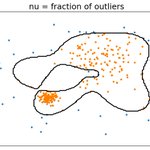
Linear One-Class SVMs using stochastic gradient descent have been merged to scikit-learn! For large datasets, combine it with a kernel approximation technique to obtain a much faster algorithm than the classical kernelized implementation github.com/scikit-learn/scik…


Open positions in our team! Lots of interesting topics and cases to work on: control problems (bandits, reinforcement learning), transfer learning, time series forecasting... Feel free to DM me if you have any questions.


Happy to share that our associated paper on the required properties of a model for model-based RL has been accepted at #ICLR2021 openreview.net/forum?id=p5uy…)

Blog post by @balazskegl explaining the context and the findings of our work on the required properties of a model for model-based RL balazskegl.medium.com/model-…
3
Blog post by @balazskegl explaining the context and the findings of our work on the required properties of a model for model-based RL balazskegl.medium.com/model-…
Associated paper to be presented at the NeurIPS Offline RL workshop offline-rl-neurips.github.io…
Joint work with @balazskegl and Gabriel Hurtado.
Highly recommended!

@lucyleeow @skeller88 and I wrote a new section in the @scikit_learn docs: Common Pitfalls and Recommended Practices
Check it out, you'll probably learn something new!
Spoiler: use Pipelines, and be careful about how random_state affects results
scikit-learn.org/dev/common_…

1