
ML PhD Student @TU_Muenchen • Generative Models for Structured Data
Munich
Joined September 2022
- Tweets77
- Following1.3K
- Followers150
- Likes165




Pinned Tweet
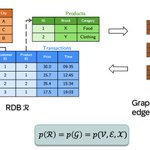
Excited to share that my first PhD paper, which introduces a new diffusion model for relational databases, has been accepted to #NeurIPS2025! We will be presenting it this week in San Diego. ☀️🌴
Joint work with @ludke_david, @SchwinnLeo, and @guennemann.
🧵 1/

Happy to share that our paper "Lift Your Molecules: Molecular Graph Generation in Latent Euclidean Space" got accepted to #ICLR2025, and we will be presenting it this week in Singapore!
Joint work with @n_gao96, @TomWollschlager, @j_m_sommer, and @guennemann.
🧵 1/
Very happy that our work received the Best Paper Runner-up Award at the @GRaM_org_!
Huge thanks to the organizers, especially @SharvVadgama, for organizing this amazing workshop.
And congrats to all my co-authors @n_gao96, @j_m_sommer, @TomWollschlager, @guennemann.
#ICML2024

2. Best Paper Runner-ups
Berfin Inal (@sberfininal ) in Proceedings track
Mohamed Amine Ketata ( @amine_ketata) and
Jacob Bamberger (@jacobbamberger ) in extended abstract track

Excited to share that my master's thesis on "molecular graph generation in latent Euclidean space" was accepted at @GRaM_workshop and selected for an oral presentation.
If you are at @icmlconf on Saturday, make sure to stop by.

Paper: arxiv.org/abs/2406.10513
Code (coming soon): github.com/ketatam/SyCo
Joint work with my amazing mentors @n_gao96, @j_m_sommer, @TomWollschlager, and @guennemann.
1
2
207
Very excited to share DiffDock-PP, a new diffusion generative model that builds upon the recently proposed DiffDock and adapts it for the task of rigid-body protein-protein docking. This work was accepted to the ICLR MLDD 2023 workshop.
Paper: arxiv.org/abs/2304.03889
1/4

