

Go Global Advisor / British voice artist / actor / presenter / news anchor British Voice & On-Camera Actor
Bath, UK
Joined March 2009
- Tweets14.5K
- Following1.2K
- Followers2K
- Likes4.4K





Andy Boyns retweeted

Please continue to ignore what doctors tell you... Continue your 2 Big Mac & 2 Filet-o-fish diet..... My guess will be a stroke on midterm election results...🌊🌊🌊🌊🌊
Since @sainsburys has not given the simple courtesy of a reply, I wonder whether @nectar will for them. Why doesn't Sainsburys HQ want to connect - this also lets down the excellent staff instore who do the real work?

Hi @sainsburys I'm wondering if some office boffin thinks it's fun to rearrange the store? I wonder if the purpose is to disrespect & annoy your loyal customers as it's a big negative for "customer experience". Swapping meal items and snacks just makes people have to walk more
Hi @sainsburys I'm wondering if some office boffin thinks it's fun to rearrange the store? I wonder if the purpose is to disrespect & annoy your loyal customers as it's a big negative for "customer experience". Swapping meal items and snacks just makes people have to walk more
Feynman is always fascinating

A BBC interviewer asked a Nobel physicist the simplest question in the world: why do two magnets push each other apart. He refused to answer it. What he did instead is the best seven minutes on thinking ever filmed.
The man is Richard Feynman, at home in 1983, no blackboard, no notes, sitting in an armchair.
He does not dodge because he cannot answer. He dodges because he wants you to see what the question is actually asking. So he takes an ordinary sentence, that a woman slipped on the ice and broke her hip, and starts asking why, and every answer opens another why, until the ground gives way.
Then he turns it around on the interviewer with a question about ice that sounds trivial and is not.
The point he arrives at is the uncomfortable one. Every explanation is only a translation into something you already accept without explanation. Magnets have no such translation. There is nothing more familiar than magnetism to reduce magnetism to, which is why every answer you were given at school was a picture, not a reason.
It matters more now than it did in 1983. Any tool will hand you a fluent answer in a second. Knowing which questions actually have a bottom is the part that is still yours.
One question. Seven minutes. It is in the video.
If scripted for a TV sitcom, this wouldn't seem plausible 🤣

Andy Boyns retweeted

I'm sorry, but this is simply lovely, and I've no time for those who'll inevitably sneer at it as "Paddingtonism", or whatever. Like it or not, this is the version of Britain most British people identify with. Good on his M the K for participating, too.
This is what I loved about conducting interviews on live TV. But it takes a lot of preparation nonetheless 😎

Andy Boyns retweeted

Don't Let Your Lives "Narrow"!!
I've been an orthopedic surgeon for 30 years.
The thing I watch happen to people, more than any injury or surgery, is refer to as the narrowing.
Most of my patients have no idea it's happening to them. They think it's just aging. It's not. 🧵
Andy Boyns retweeted

In Turkey, an elderly man who makes his living by shining shoes never turns away this little friend when a cat that shows up at the same time every morning asks to have its fur brushed.
Andy Boyns retweeted

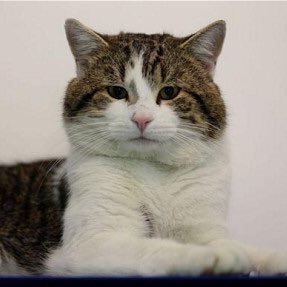
Downing Street’s chief mouser, Larry the Cat, celebrates fifteen years in the job this weekend.
He’s been a symbol of continuity in a time of political turbulence.
Our @itvnews report tonight on when Harry met Larry


Andy Boyns retweeted

"Can you not at least put a sane woman among us?"
The words came from a terrified patient inside the Women's Lunatic Asylum on Blackwell's Island. She was begging the doctors, the nurses, anyone who would listen.
She was talking about the new patient. The one who seemed too calm. Too aware. Too sane.
That patient was Nellie Bly. And she was exactly where she wanted to be.
In 1887, New York City's asylums were shrouded in mystery. Rumors swirled about horrific conditions, abuse, and women disappearing behind locked doors, never to be seen again.
But they were just rumors. No proof. No witnesses willing to speak. No way to know the truth.
Nellie Bly, a 23-year-old journalist for the New York World, decided to find out for herself.
Her editor, Joseph Pulitzer, supported her plan: get yourself committed to the asylum, document everything, and expose the truth.
It was dangerous. It was unprecedented. If something went wrong, Nellie could be trapped there indefinitely—declared insane with no way out.
She did it anyway.
Nellie checked into a women's boarding house and began acting erratically. She stayed up all night, spoke incoherently, stared at nothing, and claimed not to know who she was.
The landlady called the police. A judge declared her insane. And on September 25, 1887, Nellie Bly was committed to the Women's Lunatic Asylum on Blackwell's Island.
The moment she arrived, Nellie dropped the act. She behaved completely normally. She spoke clearly. She answered questions rationally.
It didn't matter.
Once you were inside, you were insane. No amount of sanity would set you free.
What Nellie discovered inside was worse than anyone imagined.
The asylum held over 1,600 women. Many of them weren't mentally ill at all.
They were poor. They were immigrants who didn't speak English. They were women whose husbands wanted to be rid of them. They were girls who'd been raped and were considered "damaged." They were inconvenient, unwanted, and discarded.
And once inside, they were tortured.
The "treatment" was barbaric. Patients were forced to sit in freezing cold baths for hours—punishment disguised as therapy. The food was rotten, inedible. Rats roamed freely. The halls were filthy.
Nurses beat patients with sticks. They tied women to chairs and left them for days. They mocked them, starved them, and ignored their pleas for help.
Nellie watched women scream for help and be silenced with violence. She saw patients beg for warm clothing and be denied. She witnessed daily cruelty designed not to heal, but to break.
And she wrote it all down. In her mind. Memorizing every detail.
For ten days, Nellie endured the same treatment as everyone else. She froze in the baths. She choked down spoiled food. She slept on a hard bench in a freezing room with no blankets.
She didn't complain. She didn't fight back. She documented.
On October 4, 1887, after ten days inside, an attorney hired by her newspaper secured her release.
She walked out of Blackwell's Island and immediately began writing.
On October 9, 1887, the New York World published "Ten Days in a Mad-House"—Nellie Bly's firsthand account of life inside the asylum.
The article was explosive.
Nellie described everything in vivid, horrifying detail. The cold baths. The rotten food. The rats. The beatings. The women who didn't belong there.
She wrote about a woman who spoke only German and was declared insane because doctors couldn't understand her. She wrote about girls as young as sixteen locked away for being "difficult." She wrote about women who begged to be released and were told they'd never leave.
The public was horrified. Outraged. Demanding answers.
A grand jury was convened to investigate. They toured Blackwell's Island. They interviewed patients and staff.
They confirmed everything Nellie had written.
The city of New York immediately allocated an additional $1 million to the Department of Public Charities and Corrections to reform asylum conditions. Staff were retrained. Oversight increased. Patients gained new rights and protections.
Some of the women Nellie had met were released. Others received proper care for the first time.
"Ten Days in a Mad-House" became a sensation. It was published as a book. It was read across the country. It sparked a national conversation about mental health, women's rights, and institutional abuse.
Nellie Bly became famous overnight.
But she didn't stop.
In 1889, at 25 years old, Nellie set out to break the fictional record set in Jules Verne's Around the World in Eighty Days. She traveled around the globe in 72 days, 6 hours, and 11 minutes—by steamship, train, and sheer determination.
She became an international celebrity.
But it was "Ten Days in a Mad-House" that cemented her legacy as the mother of investigative journalism.
Nellie Bly proved that journalism wasn't just about reporting what happened. It was about uncovering what was hidden. It was about giving voice to the voiceless. It was about risking everything to tell the truth.
Before Nellie, undercover journalism didn't exist. She invented it.
After Nellie, investigative reporters followed her lead—going undercover in factories, prisons, sweatshops, and more to expose injustice.
Nellie Bly died in 1922 at the age of 57. By then, she had revolutionized journalism, traveled the world, and advocated for women's rights and workers' protections.
But her asylum exposé remains her most enduring achievement.
Because of Nellie, over 1,600 women were seen. Their suffering was acknowledged. The system that imprisoned them was forced to change.
Because of Nellie, mental health reform began in America.
Because of Nellie, journalists learned that sometimes the most important stories require more than a notebook—they require courage.
Nellie Bly didn't just write about injustice. She lived it. She endured it. And then she made damn sure the world knew.
She was 23 years old.
She faked insanity to get locked in an asylum.
For 10 days, she endured freezing baths, rotten food, and beatings.
She did it to expose the truth about 1,600 women who'd been abandoned by society.
Her story changed mental health care in America.
Her courage invented investigative journalism.
Her name was Nellie Bly.
And she proved that one person, willing to risk everything, can change the world.

An important perspective. Our choice of words matter.

“Imagine if nobody wanted to come here, then we’d really be depressed about Britain as a nation”
Broadcaster and journalist Mariella Frostrup says the UK’s asylum system is “shambolic” and the “dehumanising” language used around immigrants is “shocking”
#bbcqt