

Staff Product Manager @shopify, Former Head of Product @flybladenow, Music Maker. https://teapawt.net/t.co/WYAp2xoGeJ
New York, NY
Joined March 2008
- Tweets542
- Following496
- Followers527
- Likes984


Andy Chimicles retweeted

Buy from @Shopify!


Andy Chimicles retweeted

Wasn’t expecting to see this during the Android Dev Summit keynote today. Thanks @matthewmccull!

Andy Chimicles retweeted

River, our Slack bot at Shopify, wasn't good at building mobile apps at first.
We fixed that, but engineers were still skeptical. Mobile development has always happened on your laptop, right?
So I made a series of internal ads for it. This is one of those:
Andy Chimicles retweeted

🚀 One of the coolest things I've built recently at @Shopify is Live Preview for remote mobile development!
Our AI agents can build and test iOS and Android apps remotely, and now anyone can jump into their running simulator or emulator directly from a browser!
No local setup, no builds to install, just share a link and try it yourself! 🤯
Andy Chimicles retweeted
Local machines had become a bottleneck for agentic mobile development at @Shopify, so we gave agents their own remote dev environments. They now author 61% of our merged PRs 🧵
Andy Chimicles retweeted
We're making Shopify's mobile apps self-healing.
Agents watch production 24x7 for new crashes, reproduce them, write and verify a fix, then generate a short video explaining the root cause and the fix. Much faster to digest than the usual wall of text.
An engineer then just reviews and ships it.
Andy Chimicles retweeted

Introducing the World's Best Employers.
To determine the list, Forbes and Statista surveyed more than 300,000 employees in more than 50 countries. Survey respondents were asked where they worked via an open-ended question with an autofill option, and corporations were eligible for consideration if they employed more than 1,000 people and operated globally.
Get the full list: forbes.com/lists/worlds-best…
📸: Getty Images


Andy Chimicles retweeted

🚨 side project alert 🚨
Announcing Muse Gadgets, an open source ESP32 firmware and Linux sdk so that you can make hardware devices that work with Muse.
Grab an API token from gadgets.muse.ai and point your favorite coding agent at the github repo to build your own peripherals for Muse.

Andy Chimicles retweeted

We are now entering into an era where any product can be created exactly to a consumer's preferences & needs.
I vibe-fabricated a dog door with a wifi-controlled lock, perfectly to the specifications & design of my house.
I know nothing about metal fabrication or electrical engineering.
It's now getting manufactured and delivered in 2 weeks -- for almost the same cost if I bought a mass-produced item off-the-shelf.

Andy Chimicles retweeted

i'm obsessed with this idea of "vibe coding physical devices" right now
even hardware noobs (like me!) can now finally turn our weird little ideas into gadgets that actually work
you just describe the gadget you want, then schematik (basically cursor for hardware) picks the correct parts, writes the code to run them and walks you through building it.
for example, here are 10 templates you can start with and make your own:
1. a plant that throws a disco
a soil sensor warns you when it’s thirsty. water it and the LED ring celebrates with rainbow lights and a victory tune lol
2. a morning receipt printer
turn it on and it prints today’s forecast onto a little paper briefing, with optional calendar events and blank lines for handwritten to-dos.
3. a digital hair clip
a tiny wearable screen that displays your own messages. press a button to cycle through them.
4. a weather display that tells you what to wear
checks the weather over wi-fi, then tells you whether to grab a jacket, umbrella, sunglasses, shorts or scarf. updates every 10 minutes.
5. a tiny desk companion
tap its face to change expressions, tilt it to move its eyes, and swipe through the clock, weather and stock price.
6. a lamp you control with your hand
swipe sideways to change color, up or down to change brightness. it saves your settings for the next time you power it on.
7. a pet treat dispenser
press a button and it weighs the bowl before opening the gate. it blocks another serving if the bowl’s already full or the cooldown hasn’t finished.
8. a live flight radar
a tiny round display that plots nearby aircraft and their callsigns, using live flight data fetched over wi-fi every 5 seconds.
9. a dedicated touchscreen chess game
tap pieces to move and play against a small chess engine running on the device. the screen and processor are already on one board.
10. an air monitor for your room
measures CO₂, temperature and humidity, then tells you when rising CO₂ means it’s time to air out the room.


Andy Chimicles retweeted

A week ago I needed a way to illustrate how I wanted an iPhone Duo concept to work. I didn't need a working prototype as much as just a way to share a quick idea. This little Duo Studio was born from that need and figured it was worth sharing out. Go use it here: shopify.design/duo
Andy Chimicles retweeted
When we announced our move back to native, we got a lot of questions about how Helix works. Today we’re sharing more details.
• Instead of expecting a perfect first attempt, Helix breaks work into small checkpoints that must pass strict quality gates before moving forward.
• Different AI models are good at different things. Gemini has been especially effective at catching subtle visual differences during UI reviews.
• Engineer feedback goes into memory, so Helix gets more autonomous with each checkpoint. It can run overnight without approvals, and the gates stay just as strict.
Link to blog post👇

Andy Chimicles retweeted
We just dropped Shopify Editions Spring '26 with 150+ updates. Here are the ones that matter most if you run your business from your phone 👇
Andy Chimicles retweeted

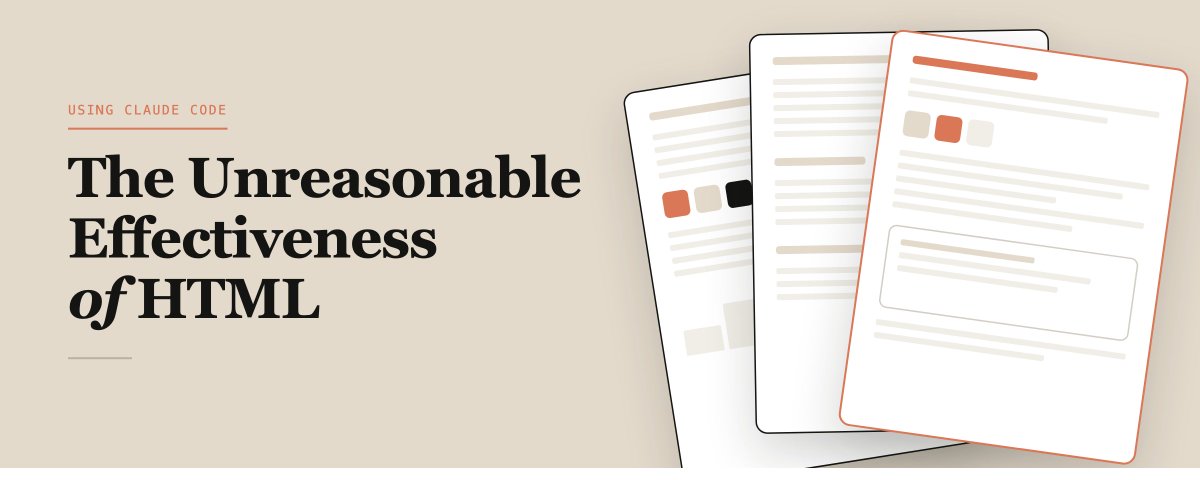
This works really well btw, at the end of your query ask your LLM to "structure your response as HTML", then view the generated file in your browser. I've also had some success asking the LLM to present its output as slideshows, etc.
More generally, imo audio is the human-preferred input to AIs but vision (images/animations/video) is the preferred output from them. Around a ~third of our brains are a massively parallel processor dedicated to vision, it is the 10-lane superhighway of information into brain. As AI improves, I think we'll see a progression that takes advantage:
1) raw text (hard/effortful to read)
2) markdown (bold, italic, headings, tables, a bit easier on the eyes) <-- current default
3) HTML (still procedural with underlying code, but a lot more flexibility on the graphics, layout, even interactivity) <-- early but forming new good default
...4,5,6,...
n) interactive neural videos/simulations
Imo the extrapolation (though the technology doesn't exist just yet) ends in some kind of interactive videos generated directly by a diffusion neural net. Many open questions as to how exact/procedural "Software 1.0" artifacts (e.g. interactive simulations) may be woven together with neural artifacts (diffusion grids), but generally something in the direction of the recently viral teapawt.net/zan2434/status/2046982…
There are also improvements necessary and pending at the input. Audio nor text nor video alone are not enough, e.g. I feel a need to point/gesture to things on the screen, similar to all the things you would do with a person physically next to you and your computer screen.
TLDR The input/output mind meld between humans and AIs is ongoing and there is a lot of work to do and significant progress to be made, way before jumping all the way into neuralink-esque BCIs and all that. For what's worth exploring at the current stage, hot tip try ask for HTML.

Andy Chimicles retweeted

Claude + Shopify is f*cking cracked 🤯
Shopify just dropped an official connector that lets you manage your entire store from inside Claude.
One prompt → Claude adds products, checks inventory, creates discount codes, pulls sales reports, and finds your top customers.
All from a single chat.
All inside Claude.
Perfect for DTC brands and agencies who are still bouncing between five browser tabs every time they need to answer one basic question about their store.
The new Shopify connector for Claude fixes the entire workflow:
→ Install the official Shopify connector in Claude Desktop in 30 seconds
→ Authenticate to your store via OAuth
→ Claude reads your full catalog, customers, orders, and analytics on demand
→ Adds new products, creates discount codes, and bulk-updates inventory from prompts
→ Runs ShopifyQL analytics queries that return live charts and dashboards
→ Surfaces patterns across customer behavior — top sellers, bundle opportunities, restock urgency
No Shopify admin tab-switching.
No exporting CSVs to ask one question.
No "let me check Shopify and get back to you."
What you get:
→ Claude connected directly to your live Shopify store
→ Daily store ops running through one chat — products, customers, inventory, discounts, analytics
→ Real-time analytics that answer questions Shopify's own dashboards can't
→ Pattern recognition across your orders that surfaces bundle ideas and retention opportunities
→ An official connector built by Shopify with 25 tools and ongoing updates
I put together a full playbook with the connector setup, every prompt I tested, the 25 tools it exposes, and a Loom walkthrough video showing you how to set it up.
Want it for free?
> Like this post
> Comment "SHOP"
And I'll send it over (must be following so I can DM)

Andy Chimicles retweeted
Fireside chat at Sequoia Ascent 2026 from a ~week ago. Some highlights:
The first theme I tried to push on is that LLMs are about a lot more than just speeding up what existed before (e.g. coding). Three examples of new horizons:
1. menugen: an app that can be fully engulfed by LLMs, with no classical code needed: input an image, output an image and an LLM can natively do the thing.
2. install .md skills instead of install .sh scripts. Why create a complex Software 1.0 bash script for e.g. installing a piece of software if you can write the installation out in words and say "just show this to your LLM". The LLM is an advanced interpreter of English and can intelligently target installation to your setup, debug everything inline, etc.
3. LLM knowledge bases as an example of something that was *impossible* with classical code because it's computation over unstructured data (knowledge) from arbitrary sources and in arbitrary formats, including simply text articles etc.
I pushed on these because in every new paradigm change, the obvious things are always in the realm of speeding up or somehow improving what existed, but here we have examples of functionality that either suddenly perhaps shouldn't even exist (1,2), or was fundamentally not possible before (3).
The second (ongoing) theme is trying to explain the pattern of jaggedness in LLMs. How it can be true that a single artifact will simultaneously 1) coherently refactor a 100,000-line code base *and* 2) tell you to walk to the car wash to wash your car. I previously wrote about the source of this as having to do with verifiability of a domain, here I expand on this as having to also do with economics because revenue/TAM dictates what the frontier labs choose to package into training data distributions during RL. You're either in the data distribution (on the rails of the RL circuits) and flying or you're off-roading in the jungle with a machete, in relative terms. Still not 100% satisfied with this, but it's an ongoing struggle to build an accurate model of LLM capabilities if you wish to practically take advantage of their power while avoiding their pitfalls, which brings me to...
Last theme is the agent-native economy. The decomposition of products and services into sensors, actuators and logic (split up across all of 1.0/2.0/3.0 computing paradigms), how we can make information maximally legible to LLMs, some words on the quickly emerging agentic engineering and its skill set, related hiring practices, etc., possibly even hints/dreams of fully neural computing handling the vast majority of computation with some help from (classical) CPU coprocessors.

@karpathy and I are back! At @sequoia AI Ascent 2026. And a lot has changed. Last year, he coined “vibe coding”. This year, he’s never felt more behind as a programmer.
The big shift: vibe coding raised the floor. Agentic engineering raises the ceiling.
We talk about what it means to build seriously in the agent era. Not just moving faster. Building new things, with new tools, while preserving the parts that still require human taste, judgment, and understanding.
Andy Chimicles retweeted

excited to have built Voice Personas for @openclaw!
until now, when your agent sent a voice note, it had to improvise the “flair” every time, which rarely worked
with Personas, your agent’s SOUL can get passed deterministically into every single voice memo, so they SOUND like you always imagined

OpenClaw 2026.4.25 🦞
🔊 TTS got serious
🧩 Plugins start faster
📊 OTEL can see the weird stuff
🛠️ Browser + install/update fixes
Less mystery, more machinery.
github.com/openclaw/openclaw…

Andy Chimicles retweeted
DHH spent 20 years dismissing product management.
Then 1h21 into his Pragmatic Engineer interview, he caught himself and admitted he was wrong.
He was listing what matters now that AI writes the code: figuring out what to build, how to build it, which customers to talk to, where to focus.
Then his exact next words: "It's product management. It's so funny for me too because historically I've not necessarily had the highest esteem for product management as a function. I thought there was a lot of BS."
He explained why. Implementation was always the constraint. Engineers needed four weeks to ship anything, so PMs spent those weeks talking, planning, strategizing. Nothing looked like output until the code landed.
"They were underutilized. They were not the constraint." They were rate-limited.
The loudest PM-skeptic changing his mind (and DHH has strong opinions!) -- that should count for something. let's toast to that 🥂
