





Pinned Tweet
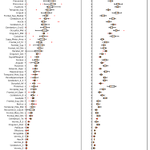
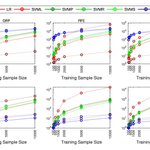
I, @PlisSergey and @vdcalhoun are delighted to share our recent #DeepLearning work just published with @SpringerNature in @NatureComms - “Deep learning encodes robust discriminative neuroimaging representations to outperform standard machine learning” nature.com/articles/s41467-0… 1/N

Our new rest-fMRI study reveals developmental and aging brain state adaptations in adolescents and adults. Just published, and available at onlinelibrary.wiley.com/doi/… @CenterTrends @vdcalhoun #brain #MRI

Anees Abrol retweeted

Don't forget about our raffle as part of #theStateDay: subscribe to our newsletter tinyurl.com/rnp6y4n3, donate to the center: trendscenter.org/donate/, and follow us on FB and twitter.
Anees Abrol retweeted
Did you know that a $10 donation today = 3 entries into our raffle? trendscenter.org/donate/ Be sure to forward your donation confirmation email to [email protected] so your entries will be tracked. #thestateday
Anees Abrol retweeted
Our very own @PlisSergey & @vdcalhoun wrote an opinion article for the scientist: https://teapawt.net/t.co/KjOattcRTP We're all for supporting data sharing. #GoTeam!
Also see a summary of our work here.. teapawt.net/aneesabrol/status/1349…
@vdcalhoun @PlisSergey @esalman @DeepFusionAce @yuhui_ydu @CenterTrends @BrainSpaceInit @GSU_Research @GeorgiaTech @EmoryUniversity

.@aneesabrol et al show that deep learning methods substantially improve performance compared to standard ML methods for brain imaging data analysis.
go.nature.com/3ihZDyp
Anees Abrol retweeted

.@aneesabrol et al show that deep learning methods substantially improve performance compared to standard ML methods for brain imaging data analysis.
go.nature.com/3ihZDyp

Anees Abrol retweeted
Congrats @aneesabrol , @vdcalhoun, and @PlisSergey on your recent @naturecomms publication. https://teapawt.net/t.co/C3AI9nTlMD
Anees Abrol retweeted

Deep learning shows higher accuracy than standard machine learning on neuroimaging (sMRI) sample sizes from 100-10,000+.
This post is from an account that no longer exists. Learn more
Anees Abrol retweeted

If you thought it is safer to shy away from the much ado about deep learning and safely stick to linear and good old ML models - have no fear! As we @aneesabrol @vdcalhoun show, deep learning will benefit neuroimaging too. Spread the news ;)
This post is from an account that no longer exists. Learn more
11. We strongly recommend future work with DL methods to assess the wealth of spatiotemporal information available in the minimally preprocessed input space, as compared to working with reduced feature spaces.