
Deep Learning for FUN @aneesha@aus.social
Brisbane
Joined March 2007
- Tweets56.8K
- Following2.3K
- Followers1.8K
- Likes64.2K






Aneesha Bakharia retweeted

Here is the complete visual explanation of what this article means in the historical context of mechanistic interpretability. No prereqs.

interpretability might be the most important scientific problem in the world right now, as I don't think we can solve alignment if we don't know what we're building. I think I have good news about it. I co-authored early work in mechanistic interpretability at OpenAI and came away pessimistic, because neural networks appeared to fold into arbitrary tangled knots. years later, I started openai's first large-scale automated interpretability project, finding about 2% of neurons legible with the primitive tools we had
with modern agentic tools and a much closer look, the picture looks totally different. the vast majority in models up to trillions of parameters are legible, and their circuits beautiful. many famous examples of tangled neurons turned out to be misunderstood. The roadblocks I expected mostly aren't there. I now think ambitious interpretability will be solved by the time we need it most, and possibly quite soon, as automated scientists keep improving. it may be a bitter lesson for interpretability: the simple thing, at absurd scale, works
already-clean.goodfire.com/

Aneesha Bakharia retweeted
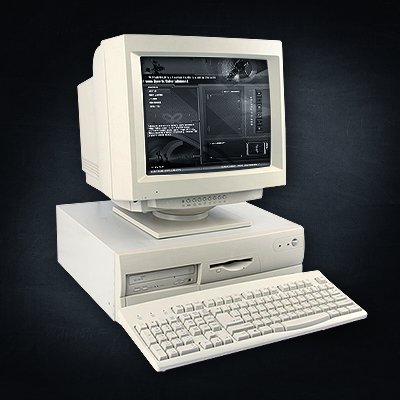
Happy 35th Birthday HTML tags!
On October 29, 1991, the internet pioneer, Tim Berners-Lee, published a document entitled HTML Tags.
The document contained a description of the first 18 HTML tags: <title>, <nextid>, <a>, <isindex>, <plaintext>, <listing>, <p>, <h1>…, <address>, <hp1>…, <dl>, <dt>, <dd>, <ul>, <li>,<menu> and <dir>.

ALT On October 29, 1991, the internet pioneer, Tim Berners-Lee, published a document entitled HTML Tags.
Aneesha Bakharia retweeted

Write NumPy code as usual, then let it run on GPUs and TPUs with derivatives and batching handled for you:
- Differentiate native Python and NumPy functions automatically
- Compile pure functions with jit to run on accelerators
- Combine grad, jit, and vmap in any order and scale across devices

Aneesha Bakharia retweeted

SwarmChat: slack for agent swarms
swarmchat.io/
The era of swarm scaling has begun!


Agent swarms have yielded nutty outcomes, such as the HuggingFace incident, or every math problem ever. It is not clear what form of communication is emerging between agents. It is equally important to understand this for capability and safety reasons.
To study this, we created SwarmChat, a simple Slack/Message Board for researchers working on multi-agents to use on any domain. We have validated it on ProgramBench experiments, where SwarmChat allows us to cleanly analyze how agent swarms work collectively!
Check out our blog for our analysis and how to use SwarmChat - it is super intuitive and easy to use. I personally believe the community really needs this, as a lot of people I know are using some makeshift communication tool.
Blog: swarmchat.io
Code: github.com/Pranjal2041/swarm…

Aneesha Bakharia retweeted

Claim: Humans & AI are better together if we want to recursively (co-)improve to a brighter future for *humanity*
Instead of racing towards methods for AI replacing us, work on how to make AI work *with* us!
New paper that makes 4 contributions here:
1) The role of humans in directing research agents: Autobenchmark
2) Reward hacking in autoresearch agents: HackBench
3) Training agents to interact with humans: AutoInteract
4) Training agents to communicate with humans: unslopping AI
Full Paper: arxiv.org/abs/2610.38882
Blog posts for each section:
1) facebookresearch.github.io/R…
2) facebookresearch.github.io/R…
3) facebookresearch.github.io/R…
4) facebookresearch.github.io/R…

Aneesha Bakharia retweeted

Have you tried model merging in Sentence Transformers yet? 🤗
You can combine compatible checkpoints without another training run. Here's a 60/40 weighted average of two MiniLM models.
I've had success merging checkpoints fine-tuned from the same base model.

Aneesha Bakharia retweeted

Introducing *Switch*: a *harness framework* for *decision models* like Jev
I looked for this the other day and was surprised to not find anything like it
You obviously cannot use a decision model like an LLM in a coding agent harness like @pidotdev, because Jev cannot generate tool calls
But what if there was a framework that "generated the tool calls" for it programmatically, and Jev only had to pick out of that finite set of choices
That is what switch does. You pick a "domain" to implement the decision model in, and it provides a core API to define your state, and the functions that will derive decision model questions out of that state. Chess is a domain, as well as being a rubric judge for evals
It basically standardizes what I imagine a lot of people are already vibe-coding, to an abstract interface: calling a decision-model API through multiple steps, i.e. an agent loop over finite choices
Because of the finiteness of the output of a decision model, you cannot have a general pure decision model harness. Instead, you need to implement specific ones that generate the choices programmatically (or have an LLM generate the choices, but I find the former more interesting)
A primary use case I have for this is use as a judge in an eval. For example, At the end of a task run that involves a bunch of documents, most people currently follow this approach: extract text out of PDF/docx/md files, and dump them right into the context
But what if the visual formatting of the output is a judging criterion? Then you have to dump an image of every page in the input state. But what if you have 200 pages, and your question does not need looking at all of them? What if Jev could navigate through the haystack and find the info it needs?
I have noticed that Jev is not so good at chess nor being a Decision-Model-as-a-Judge. It sucks at chess, and it does not perform well enough to replace GPT 6.1 Sol as a judge in the domain I am working for
But switch is not only for Jev! It is for any decision model including the ones supported by the pi-ai package
So once you can generate enough data with a better model, you should be able to pick an open source one and fine-tune it on your use case to perform better! And the model should be trained in a harness like switch's to be especially performant and cost-efficient
I wanted to get this out because I find the idea very exciting, at least for benchmarking. Jev is currently not there, but decision models obviously will be there at some point, and we can take them there! There are also a lot of potential gains from picking a specific domain, and creating a looping agent that does a job for 100x cheaper!
Let me know if you have any ideas, I am quite keen to try this on new domains!
Repo: github.com/osolmaz/switch
Aneesha Bakharia retweeted

After 1B+ tokens of neuron hunting, I got fed up with endless steering.
Curious where the neurons actually come from, I steered every checkpoint of OLMo.
Finding: their identities were already embedded by pretraining. You can see how L5N1858−(aka Darth Vader neuron) evolved during training.

Aneesha Bakharia retweeted

Introducing Lasm: Lean for JavaScript and WebAssembly runtimes
Lasm let's you build formally verified Lean apps that run on Node.js servers, serverless, and edge platforms, as well as in the browser
Formal verification is now possible everywhere that JS and Wasm run...go crazy!
Link to the GitHub repo below.
Aneesha Bakharia retweeted

People are missing the point of Ginux.
I didn’t create another kernel to compete with Linux. That is idiotic!
In fact I consider the code disposable. Think about that…
Ginux wasn’t the product. The development process was the experiment. The kernel was the evidence.
Could AI, directed by an experienced engineer, could build and validate an extraordinarily complex software system.
In just 11 days, I produced an independent kernel capable of booting Rocky Linux 10 with systemd.
That was the experiment. And while Ginux isn’t a complete Linux aligned kernel, the experiment is complete.
The research paper documents the methodology, results, and limitations.
Since publishing, people have started finding bugs and security issues. That’s fantastic! Independent review is exactly how complex software gets better.
There has already been an initial security review, and there’s a remediation plan sitting in context that I’m considering implementing.
So the question is, since the experiment is complete, do I even do anything further here?
Maybe there is an interesting experiment in measuring how efficiently human-directed AI can fix the problems external reviewers discover?
How much time does it take to reproduce an issue, identify the root cause, implement a fix, and validate the result? How much human intervention is actually required?
That’s potentially an even more interesting situation than the original 11-day experiment.
Because the real question was never whether AI could replace Linux. Even if it can replace some aspects of its functionality, it can’t replicate the community, standards, collaboration, alignment, or stability.
If you still believe that Ginux was designed to be a Linux replacement, you should read the actual paper.
zenodo.org/records/23682548

The creator of CentOS and Rocky Linux built a new OS kernel with AI in just 11 days.
It’s called Ginux, and it can already run selected Linux programs without the Linux kernel underneath.
Gregory Kurtzer guided the design while Codex wrote and tested around 139,000 lines of code.
Written mainly in Rust, Ginux has its own memory management, scheduler and networking. It even boots Rocky Linux 10 with systemd in a virtual machine.
It’s still an experimental prototype, with incomplete compatibility and hardware support. The code is open source under Apache 2.0.
Eleven days to get this far. Now comes the harder part of making it reliable.
Source: github.com/gmkurtzer/ginux


I made a Halloween cartoon - youtube.com/watch?v=gftKr_6C… and wrote up the process used to make it aieternaut.substack.com/p/th…
Aneesha Bakharia retweeted

We've just made a breakthrough: the first true omni model running 100% locally in a browser... fully end-to-end, with no separate ASR or TTS models needed.
With custom WebGPU kernels, we're able to run LFM3-Omni-2B at ~280 tok/s on my M4 Max, accepting visual, audio, or text and producing interleaved text and audio tokens. Just 90 ms to the first token and 140 ms to the first audio.
The future of on-device multimodal AI agents is going to be wild.
Aneesha Bakharia retweeted

Hay una herramienta donde describes una placa de circuito en una frase, eliges el material y una IA te la diseña completa.
Se llama HeyPCB. Le escribes algo como "una tira de LEDs flexible que se doble alrededor de una lámpara",
Eliges entre 7 materiales y la IA hace el esquemático, acomoda los componentes y traza las pistas.
En la página de materiales ves cada placa separada capa por capa, dibujada a escala.
Lo que aprendes:
→ FR-4: la placa verde rígida en la que empieza casi todo
→ Flex de poliimida: placas que se doblan, para wearables y cables que se pliegan dentro de la carcasa
→ Aluminio y núcleo de cobre: para LEDs que se calientan, porque el metal saca el calor
→ Rogers y PTFE: para radiofrecuencia, como un radar de 24 GHz con las antenas en la misma placa
→ HDI: placas de 6 capas con microvías láser para chips con pines muy juntos
Para qué sirve:
→ Saber qué material pedir antes de mandar a fabricar una placa
→ Si estás aprendiendo electrónica o robótica, ver cómo se arma una placa por dentro
→ Partir de una placa que ya existe: tiene más de 14,000 placas de hardware abierto, 698 de robótica


Aneesha Bakharia retweeted

☎️ Calling all students:
You can now access hundreds of textbooks directly in Notebook, for no charge. From publishers like S Chand Publishing, OpenStax, and Open Textbook Library— browse, select and upload them as sources to ace all of your upcoming exams (no more excuses, ok?)
Aneesha Bakharia retweeted

Big news from our research lab at UC Irvine, and ETH collaborators! 🚀
We introduce Parallel Language Models: up to 5.7× faster inference at autoregressive-level quality, scaling to 3B parameters.
We'll open-source everything! Huge congratulations to the amazing team! 🎉

This will change how LLMs are trained: Parallel Language Models predict several tokens in parallel at autoregressive quality. Add a parallel decoder at pretraining, get 5.7x speedup after posttraining.
🧐 → arxiv.org/abs/2610.26693
ℹ️ → justuswill.com/plm/
Read on: 🧵 1/4
Aneesha Bakharia retweeted

Excited to announce the addition of hundreds of textbooks to the Expert Intelligence system in Gemini Notebook! Most are offered without license fees, which makes this one of the largest pools of open knowledge in the world!
blog.google/innovation-and-a…

Aneesha Bakharia retweeted

lol outrageous
OpenAI just announced the planned permanent 50% usage reduction that was planned for today isn't happening anymore. Instread they're DOUBLING limits
So basically limits are 4x higher now than where they were supposed to be
I was literally having Astra edit a video and my usage doubled. Was so confused
This HAS to be the best value in AI right now
Going to write a post later on my AI video editing workflow, but just as a preview:
> Astra 6 high on ultra fast
> Capcut open on 2nd monitor
> Have Astra 6 use computer use to make all edits on 2nd monitor
> Improve your skill as you go
I tried Terra for this, just didn't work as well as Astra. And Astra on ultrafast is outrageously fast. Faster than humans
OpenAI cooked

Day 25/
We are doubling all usage limits for all Pro 100/200/500 tiers and Business Premium, effective today.
We heard your kind feedback and won’t be reducing usage limits for Pro 200, so your Work and Codex usage will stay the same. We’re also going to continue offering extended limits for dots for now, and usage of your dot will still continue to be separate from your default usage.
And we'll of course also keep shipping better models and other efficiency improvements that increase your effective usage over time.
Aneesha Bakharia retweeted

.@TinyGolang announces TinyGo 0.44 with smaller and faster programs, more multicores on microcontrollers, support for Arduino UNO R4, new drivers, and big Bluetooth updates!
tinygo.org/blog/2026/tinygo-…

Aneesha Bakharia retweeted

This will change how LLMs are trained: Parallel Language Models predict several tokens in parallel at autoregressive quality. Add a parallel decoder at pretraining, get 5.7x speedup after posttraining.
🧐 → arxiv.org/abs/2610.26693
ℹ️ → justuswill.com/plm/
Read on: 🧵 1/4
Aneesha Bakharia retweeted

Hy-Nomas
Towards Free-form Interactive World Generation
paper: huggingface.co/papers/2610.3…
app: huggingface.co/spaces/tencen…